Corridor
What does a building owe to the landscape it stands on? Creating a thoroughfare for bandicoots wanting a swim is one way to find out.
Did you know that when bandicoots are irritated, they make a ‘whuff, whuff’ noise? Or that when the small marsupials are trying to locate one another, they sound like high-pitched birds? And when they find food with their slender snouts, they grunt like piglets? For the family of four who live in Holocene House, designed by CplusC and with landscape architecture by Duncan Gibbs, these endearing and unusual sounds are probably familiar.
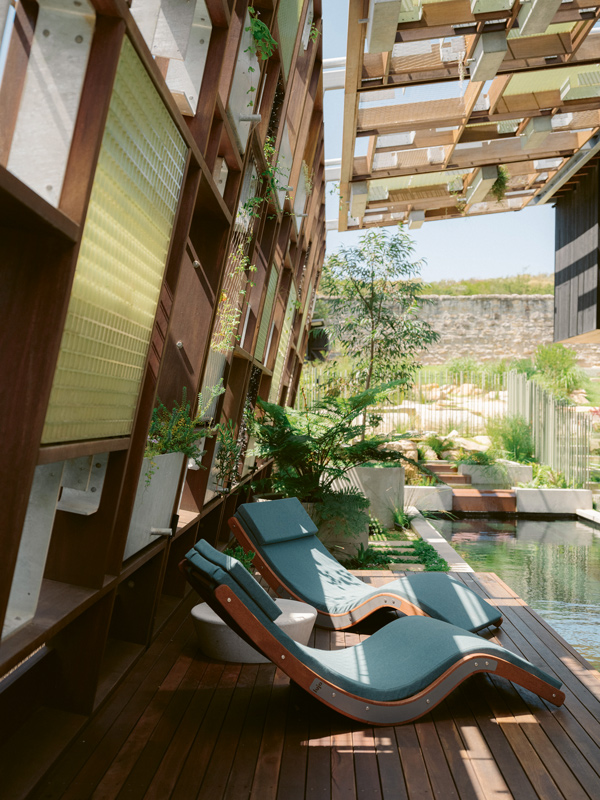
The carbon-neutral house, completed in 2023, was designed with a focus on the natural world. The clients asked for the house to “feel like they were walking knee deep through Eli Creek on K’gari,” describes Clinton Cole, CplusC’s founder and director, “with trees hanging overhead, dappled light dancing around and leaves blowing”. For Cole and Gibbs, who believe in taking on projects they consider “morally defensible”, this was a perfect brief.
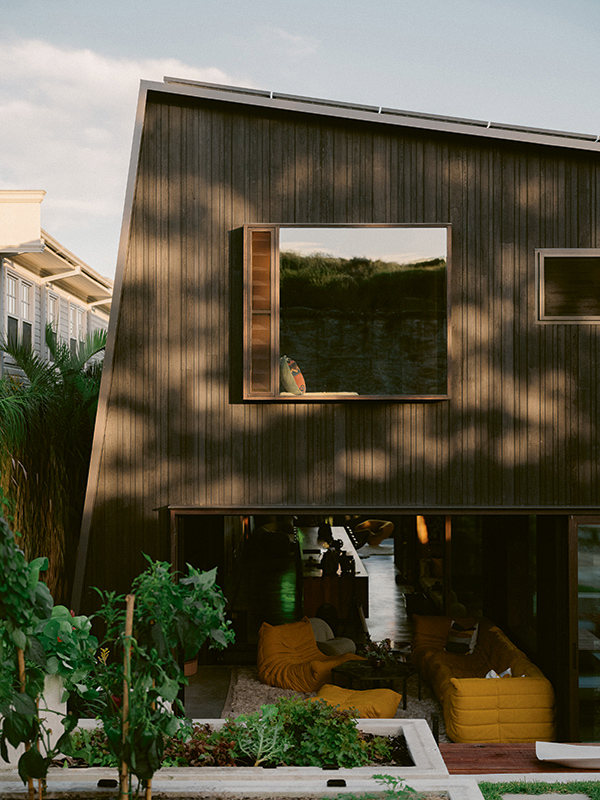
The brief also aspired to a climate-positive house – not just reducing environmental damage but actively doing good. To achieve this, the architect prioritised the exterior areas as living spaces, devoting about 80 per cent of their effort to designing the outside spaces – and that’s where our marsupials come in.
The Manly home occupies the site of a former church, backing onto a national park while sitting across the road from the beach. The bandicoots who live in the rear parkland need access through the neighbourhood’s properties to reach the water. As such, a condition of development from the council requires any new buildings to facilitate this safe passage. “That presented its own set of challenges,” Gibbs says. “We had to core a hole through the rear wall [of the garden] and ensure there were no obstructions like gates,” Cole adds. Furthermore, while all neighbouring properties are similarly required to create these holes, many have been blocked because, in addition to allowing bandicoots onto properties, they also facilitate stormwater overflow, which floods gardens. As a result of the blockages, “a torrential river [was] coming through our site,” Cole says.
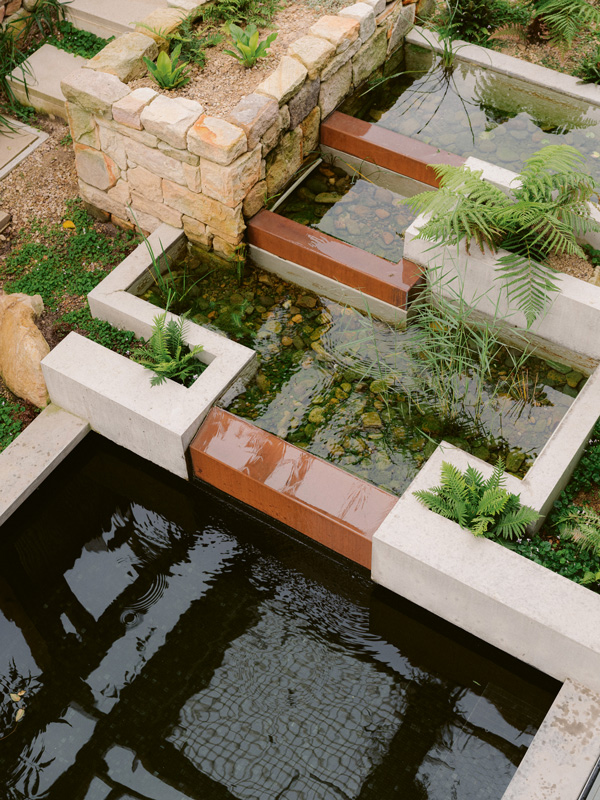
Rather than blocking the passage as many neighbours have, the team devised a three-part stormwater defence system, with a trough, trench and pit, that is robust enough to handle the overflow. The bandicoots have been thriving ever since, swimming in the garden’s sloped (rather than stepped) ponds, designed for their small legs.
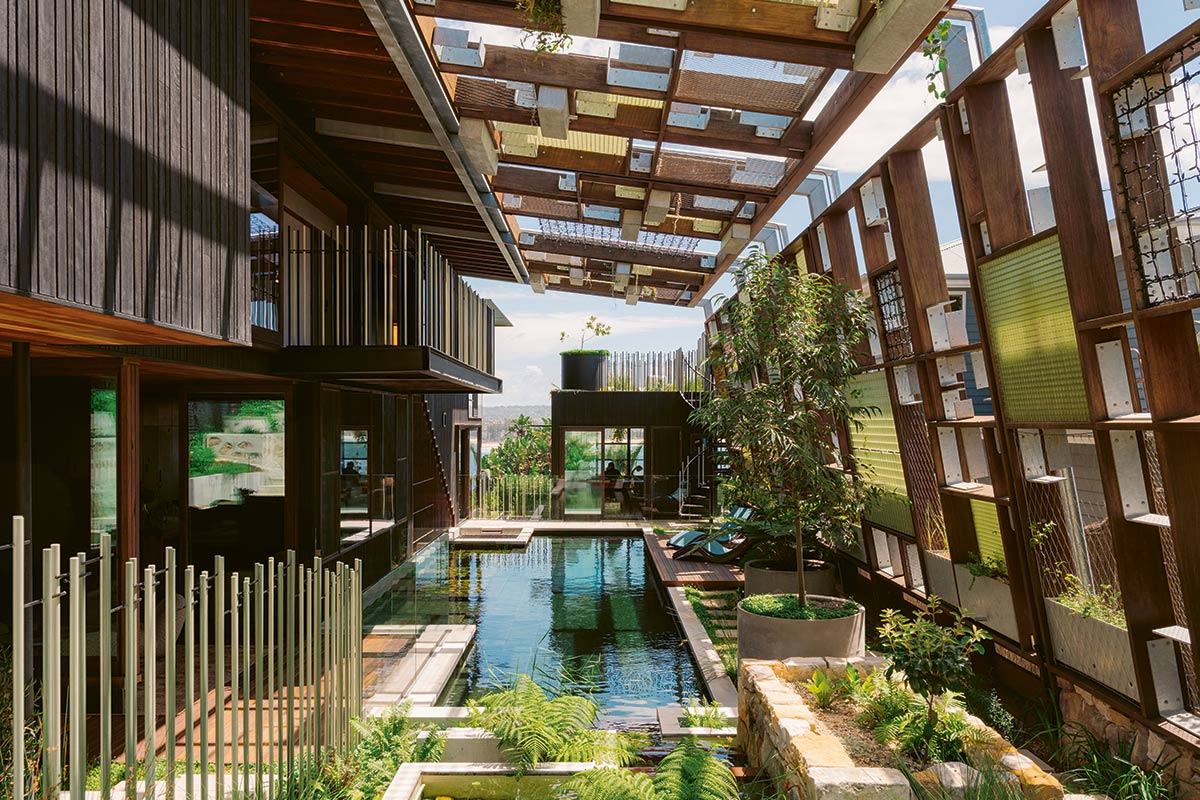
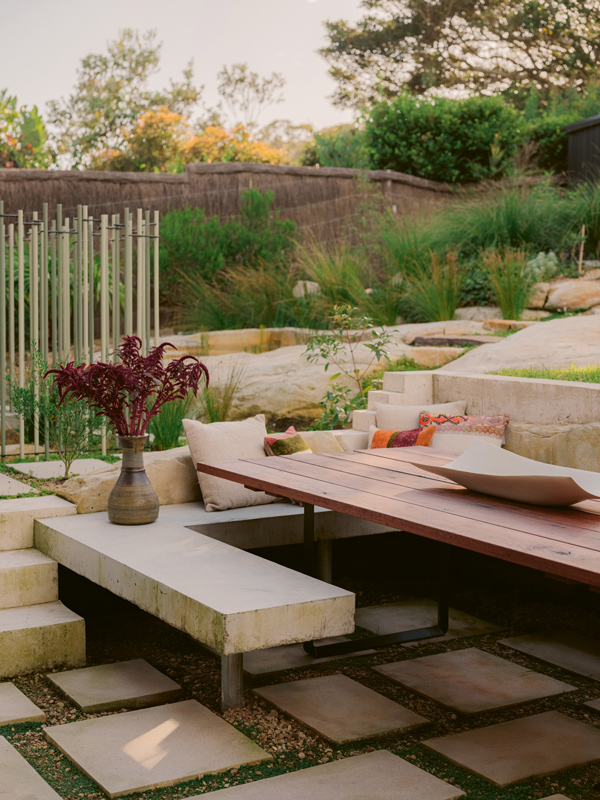
Other elements of the house similarly prioritise the environment. The build uses reclaimed materials where possible; the sandstone extracted to create the animal passage, for example, has been used to construct garden walls. Furthermore, the freshwater pool and other bodies of water – including polishing ponds in the elevated back garden and an entry pond which is crossed via stepping stones – are naturally cleaning, rather than relying on damaging chemicals.
The abundance of water, which Gibbs describes as a “silver thread of water that connects the whole site”, serves to regulate the temperature of the house by cooling the breezes in summer. It also provides a watery soundtrack, heightening the creek-like feeling alongside the mixed-material canopy and cascading plants.
While foregrounding nature, the house makes use of high-tech systems to help maintain it, informed by the owner’s tech background and CplusC’s expertise in creating net-positive houses. Each planter, for example, measures moisture volume and is connected to the Bureau of Meteorology, self-watering as needed. Solar panels generate more than enough energy to run the house, a hydronic heating and cooling system in the slab regulates temperatures, an energy-efficient heat pump provides hot water, and a 15 000-litre filtering tank provides the bathrooms, irrigation and pool with plenty of water.
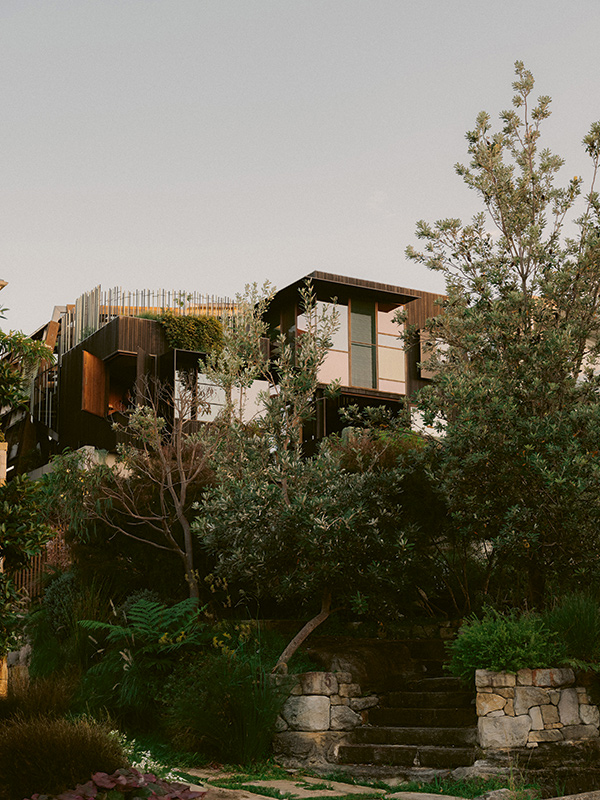
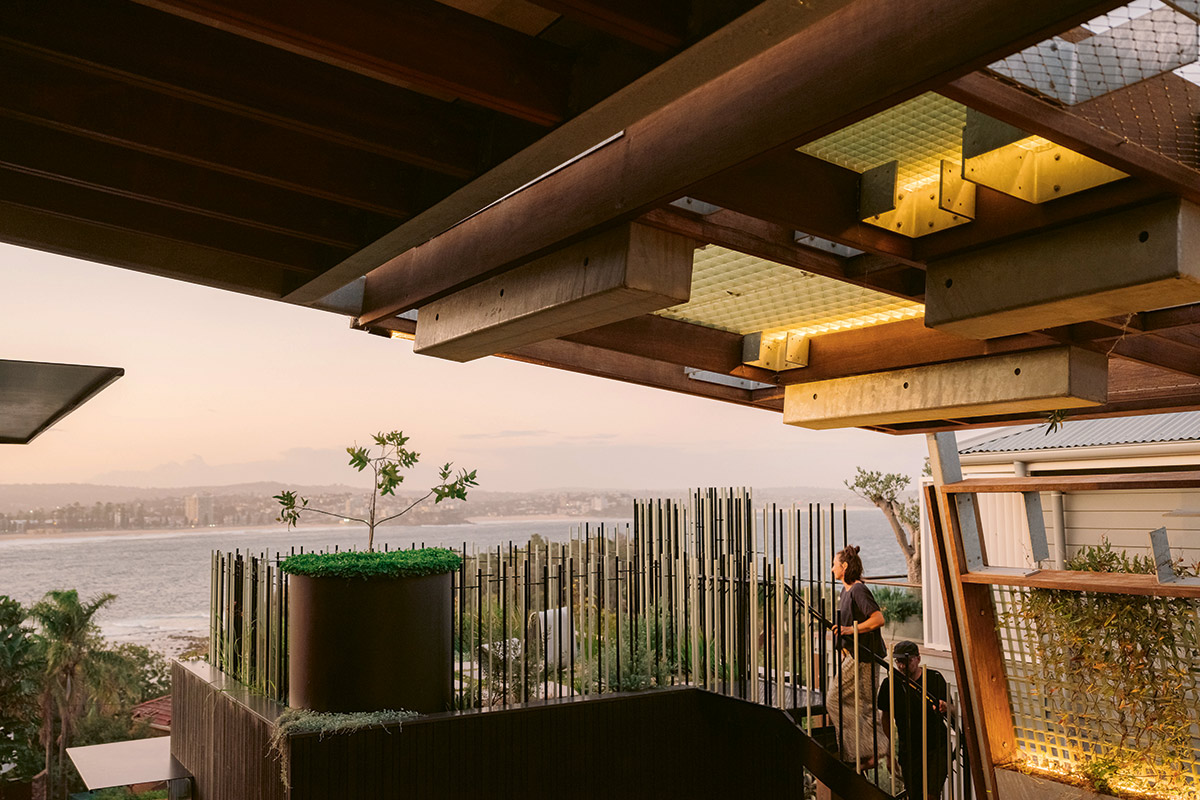
The house’s commitment to a strong connection with the land is embodied in its 360-degree outlook. The architects were keen not to take the typical route of focusing only on the stunning views of Shelley Beach, but to also face the national park and garden, which are full of endemic species including black sheoak, curly wig and coastal banksia. Gibbs explains these plants have evolved to live in this area across millennia. The garden, then, regenerates a small pocket of the native bushland to earlier times of the Holocene – the current geological epoch spanning 11 700 years since the end of the last major ice age – after which the house is named. Like this bushland and the creek it was inspired by, Holocene House invites more-than-humans to live there, and in doing so gives back to the land on which it sits,
Specs