One Stop Shop
What happens when we stop competing for expensive city real estate and start sharing it instead?
In 2017, the poet, writer and cultural critic Hanif Abdurraqib wrote an ode to corner stores. “I would like to insist upon the corner store as something not like a church but also kind of like a church,” he writes. “It represents a place where everyone with a need can have that need met.” His beautiful text, The Corner Store: Want vs. Need, lists the many roles this place can take: a bank, a shop, an opportunity for informal therapy, a video store, a pharmacy, a liquor cabinet and more. “What I appreciate about the all-purpose corner store is how it is just that: a thing serving all purposes for an underserved community.”
Around the same time that Abdurraqib was reflecting on the role of corner stores in America, a similar conversation was taking place across the oceans. In Sydney, a group of four friends, collaborators and architecture industry peers were asking whether a former corner store, built in the 1890s, could cater to their various needs.
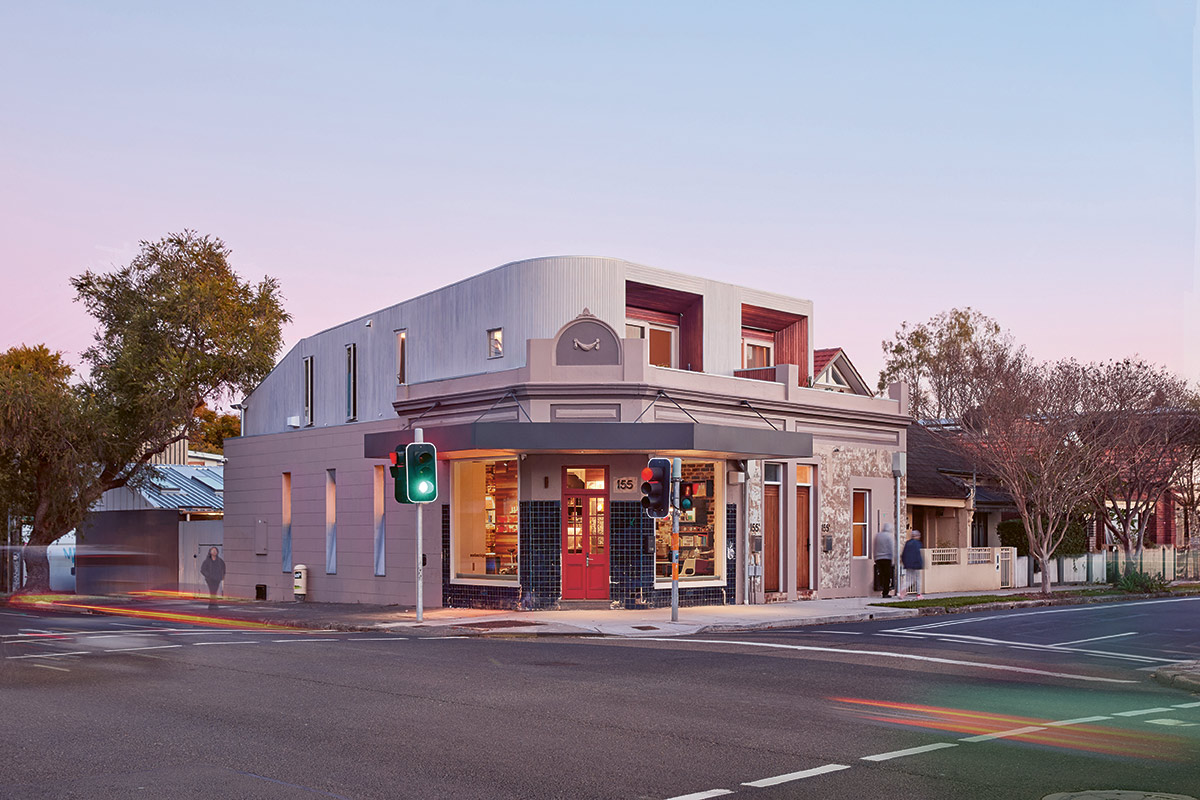
In 2018, Neil Mackenzie and Heidi Pronk of Mackenzie Pronk Architects (MPA) and Thomas Hume and Joscelyn Tarr of Make Projects purchased a run-down, graffitied corner shop in Marrickville. They had hatched a plan to pool their financial resources and professional expertise to expand and divide the former store into three distinct spaces – an architectural office, a three-bedroom home for a young family and a one-bedroom, shop-top apartment. This project, which they called Crossroads, would allow Hume and Tarr to enter the property market and MPA to expand their office and include an on-site workshop.
“We couldn’t have just bought and built this alone,” explains Pronk when I visit, “so you share it, you split it.” This communal purchase-construct-then-divide model isn’t new to MPA, which first successfully trialed this approach in 2007 (incidentally, covered in the very first issue of green magazine). “At that time, I could not have bought an apartment on my wage on my own, but I could buy a quarter of a shitty old building,” Mackenzie says, echoing the more recent scenario.
Many years later, MPA’s model still stands up, provided one is willing to navigate council approvals (and rejections and appeals), bank reluctance and the financial and friendship risks of working with others. “It’s not a model of home ownership for the faint-hearted,” Mackenzie tells me, laughing, especially when the architects themselves impose their own constraints, such as conserving the heritage building rather than demolishing it. Seeing the resulting properties however, it is clear that when the model works, it can be brilliant. Although it was stressful at points, Pronk says, “there was a great sense of joy in realising everything.”
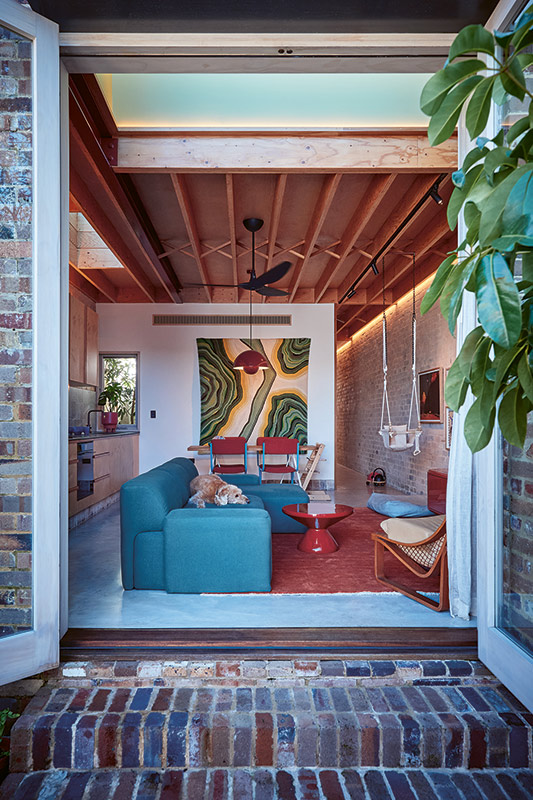
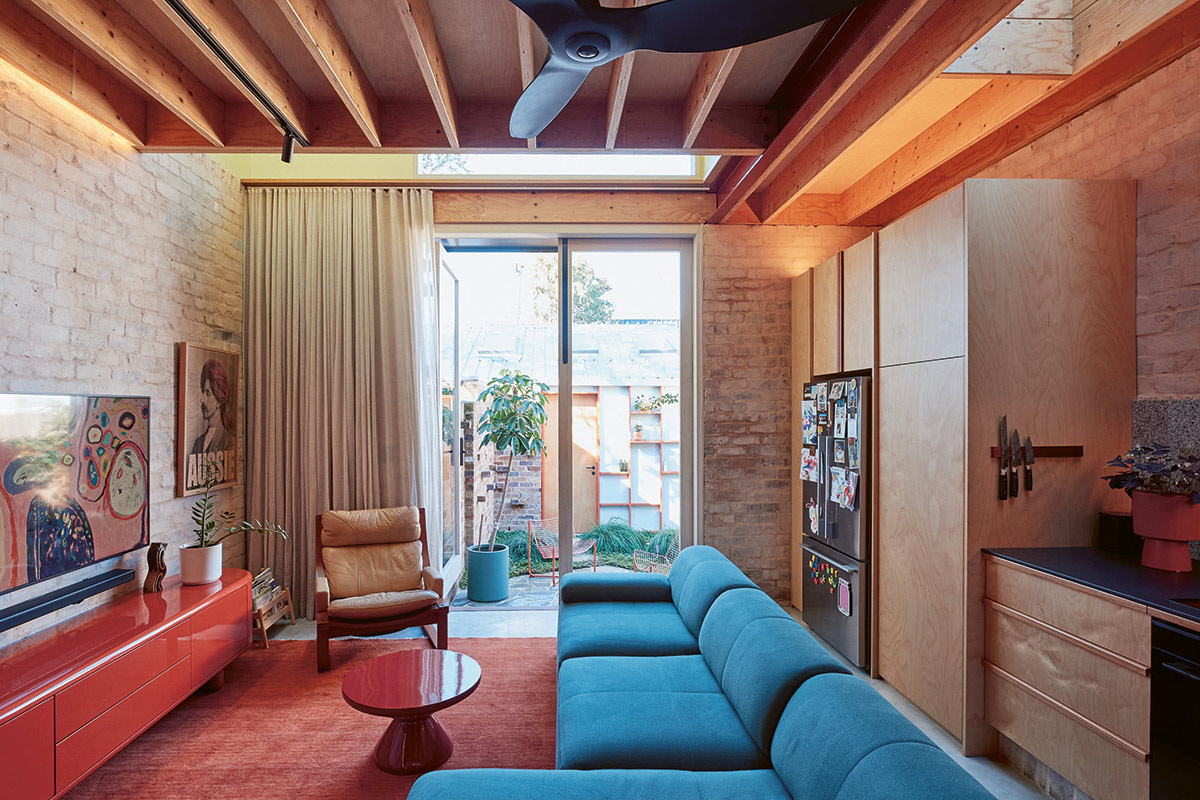
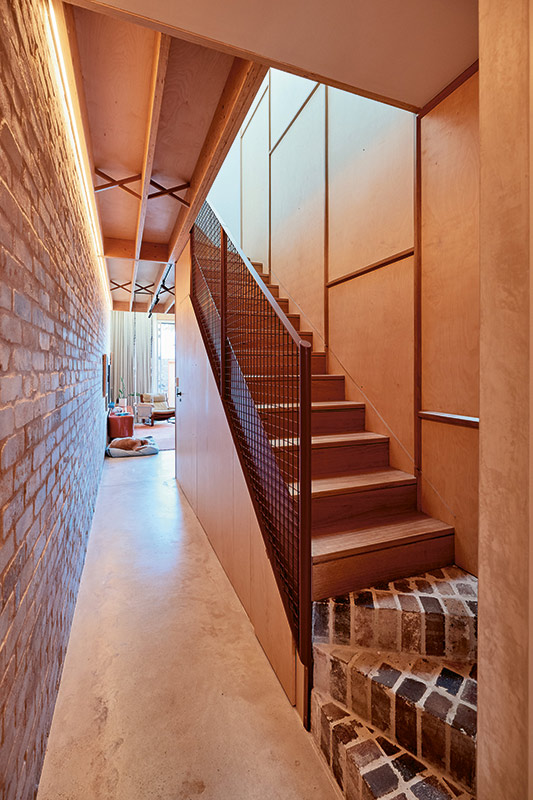
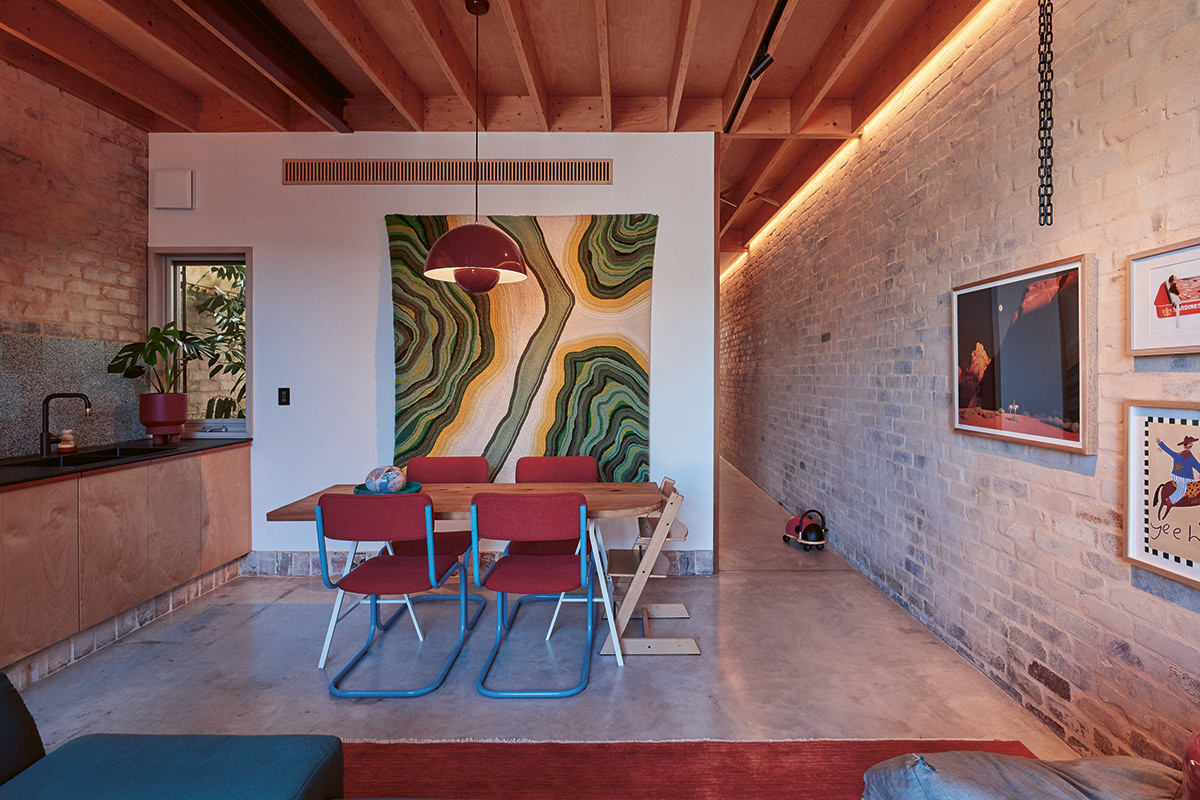
They point out details of the house, office and apartment – which have now been legally divided – with a palpable sense of pride and satisfaction. Hume highlights the thousands of salvaged local bricks, which required hours of cleaning, and the “bit of a risk” low-carbon, cast-concrete floor. Pronk exclaims at how much she loves the brick-to-wood stair detail in the younger couple’s house.
The front doors of the apartment and house reflect an ongoing sense of enthusiasm about sharing and being connected. Sitting side by side, they are distinct entries, but the arrangement of the timber paneling creates a complete frame when viewed together. The doors are sweetly accompanied by a local signwriter’s hand-painted numbers that pay homage to the site’s past typography. Nearby is the small window exhibition space in MPA’s office that passersby (including Anthony Albanese) have been stopping to look at.
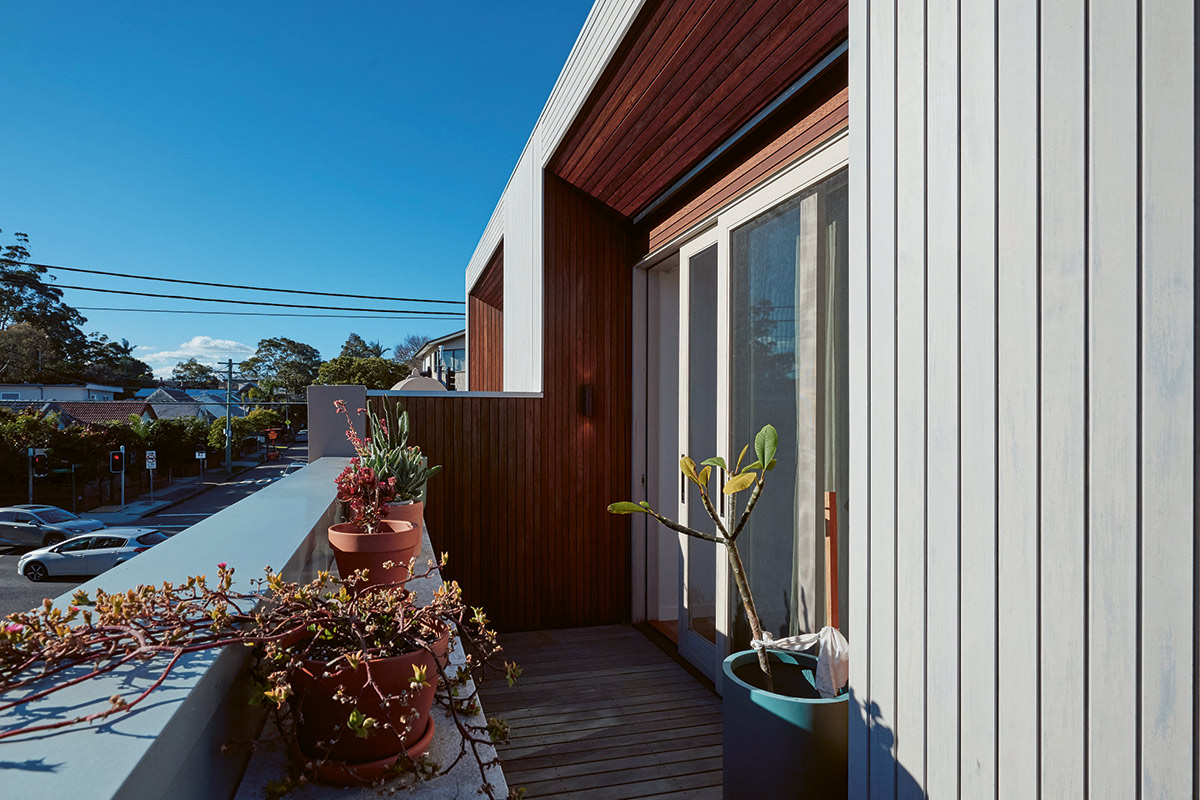
The street-facing presentation of the building was important to the architects who wanted it to feel part of the community, the way a corner store would. “You see all these dilapidated corner shops that aren’t in use,” reflects Tarr of the local area, suggesting that their model could be applied elsewhere. “More activated corners are a nice thing!” she says. Pronk agrees, adding, “I like that the community likes it. When you do something that’s a bit bigger or a bit newer, often the community are somewhat horrified or grumbles”. She says that people have been very complimentary of the project, and both studios have had enquiries about designing similar ones in the area. This community buy-in is likely due to the team’s sensitivity in not blocking the light of neighbouring properties by choosing a modest upwards extension, and their effort to conserve as much character of the existing building as possible.
Abdurraqib finishes his homage to corner stores with a reflection that feels fitting for this project, too. “I am invested in that which serves as many purposes as possible, I guess. I’m interested in that which gives my people the things they need, but I am also interested in that which – from time to time – gives my people the things they want.” While it will not be used as a corner store, this project certainly has this ethos at its heart. As entry into the housing market becomes ever more fraught and urban density needs addressing, this share-and-divide model feels both necessary and refreshingly joyful. •
Specs
PASSIVE THERMAL COMFORT
The existing site geometry informed a longitudinal east–west division, enabling outdoor spaces and habitable rooms to address both orientations. Two courtyards with northern and eastern exposure provide balanced solar access, allowing winter sun penetration while supporting shade and cross-ventilation in summer. Living spaces addressing Illawarra Road to the west are recessed and protected by external automated blinds, reducing heat gain during peak afternoon sun. Brick cavities were widened where possible to accommodate insulation, improving overall wall performance while preserving the original fabric. A relatively low glass-to-solid wall ratio, combined with the high internal thermal mass of the retained masonry, assists in moderating internal temperature fluctuations. Together, these measures improve year-round comfort and reduce reliance on mechanical heating and cooling.
MATERIALS
Envisia low carbon concrete was used for ground and first floor slabs. Recycled bricks were salvaged from the existing structure and various sites in Sydney’s Inner West. Accoya timber was used for external cladding, windows, and doors due to its durability and sustainability credentials. Waxed Finish White Set is a natural, breathable wall finish that supports indoor air quality. Resene paint finishes (external) were chosen for their environmental certifications and low-VOC content and natural lime wash, a hand-blended wall finish using natural lime, water, and red dirt, is sourced from Griffith, NSW. Durable, fully recyclable and with a long life span, exposed copper finishes were used for detailing. Exposed birch plywood was used for wall linings and joinery and is FSC-certified and finished with zero-VOC coatings. Blackbutt timber was used for flooring, battens, stair treads and ledges, and a durable, locally-sourced hardwood and recycled mixed hardwood provided cladding. Recycled Formply joinery was reused from a previous fitout for desks and cabinetry and recycled timber for flooring.
GLAZING
Areas are carefully proportioned to maintain a relatively low glass-to-solid-wall ratio. Living spaces addressing the western frontage are recessed and protected by external automated blinds, limiting summer heat gain. Courtyards to the north and east enable controlled winter solar access and promote cross ventilation during warmer months.
RENEWABLE ENERGY
A 3.2kW roof-mounted solar photovoltaic (PV) system on each lot offsets a significant portion of the building’s electricity consumption during the day with the excess exported to the grid, reducing operational carbon emissions. The building is supplied with 100 per cent GreenPower-accredited renewable electricity, further lowering its operational carbon footprint. While battery storage has not yet been installed, the PV system and electrical infrastructure allow for future battery integration as technology improves and energy demands evolve.
LANDSCAPE
Through adaptive reuse, material circularity, improved stormwater management, and the reintroduction of endemic planting, the project demonstrates how a previously hardened urban site can incrementally restore ecological function while minimising pollution and waste.