Make Sound
Downtrodden, broken and far from its share house glory days, clever fixes restore dignity to a classic Sydney terrace.
You can’t move for Victorian row houses in Sydney’s Surry Hills. Usually between one and three storeys, often with charming decorative wrought iron balustrades, many of them were share houses back in the day. And while the suburb has now been totally gentrified, there are still a few examples of the old Surry Hills house, grimy and decaying, with burglar-proof bars on the windows, and thoroughly unglamourous outdoor lean-to toilet.
Rows End was in a pretty bad way when local architects Jemima Retallack and Mitchell Thompson of Retallack Thompson took the project on. The owner had lived here back when it was a share house – in fact, one of her housemates was author John Birmingham, who famously wrote about dysfunctional share houses in He Died With a Felafel in His Hand. But she had moved to Brisbane with her young family and, since then, the house had stayed stagnant. Four camphor laurel and two jacaranda trees had grown on top of each other and into the retaining wall on the side, with roots cracking pipes, lifting tiles and clogging gutters. Layers of leaves and detritus in the side lane had to be removed just to get to the ground level. Another major problem was the deck, which had the advantage of creating a massive first floor terrace with views over the rooftops, but was made of timber that had started to rot.
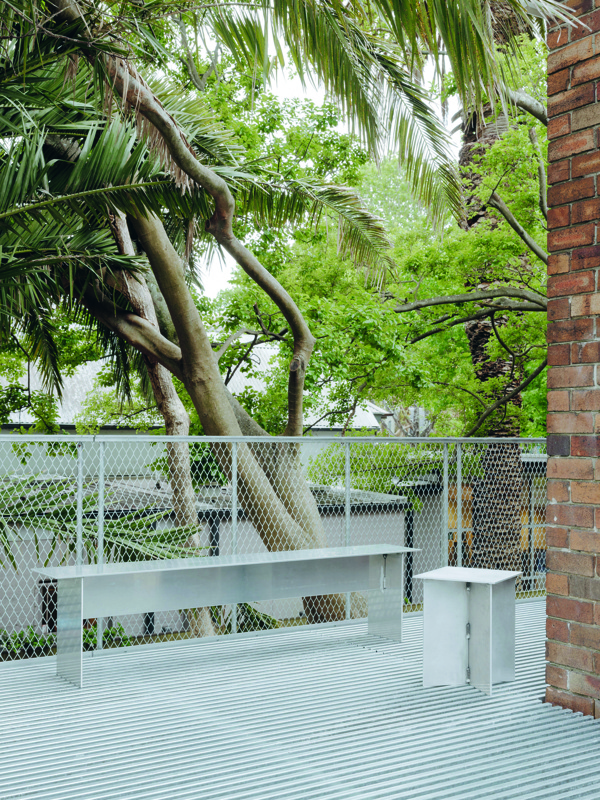
So, what to do? A first floor terrace of this size and scale would never be approved by council these days, but it was there and so could be replaced. But putting in another timber one would have just put another expiration date on the structure. Instead, the architects proposed a different material solution. Inspired by the mild steel of an existing external spiral staircase, they suggested a galvanised steel deck, one that would be long-lasting and hard-wearing, and would also let more light into the ground floor below thanks to its perforations.
The idea originally received pushback. “Council wanted it to all be reinstated as timber, which they saw as traditional,” says Jemima Retallack. “But our point back to them was, well, this is not traditional. This is not an original feature of the dwelling.” Mitchell Thompson adds: “We understand it as an alternative approach to conservation. Because of the maintenance, we wanted to explore a different way.”
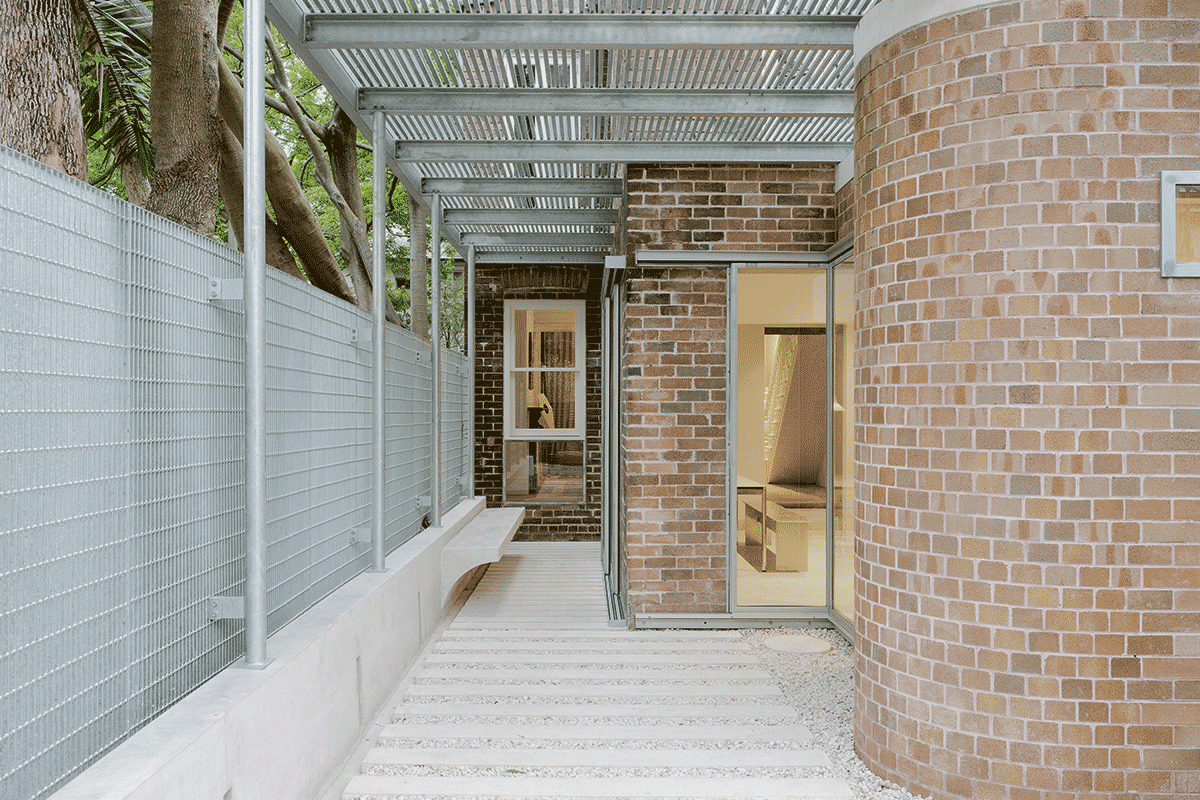
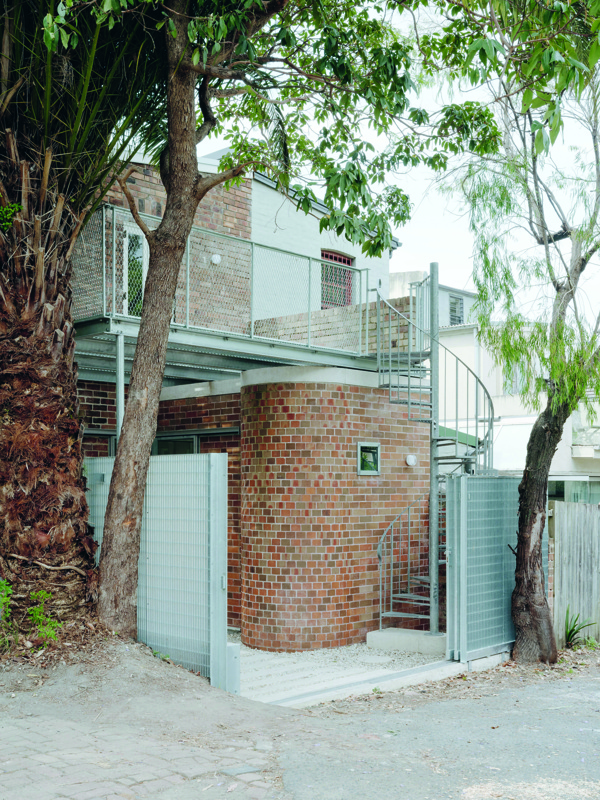
Council agreed, and the steel terrace was built, along with fencing down the side and back of the house, using a steel grid mesh that allows some visibility depending on where you stand, and more visibility from inside out. The side and back lanes were already private, with access only via this part of the row, so small amounts of visibility into the backyard are now for neighbours’ eyes only.
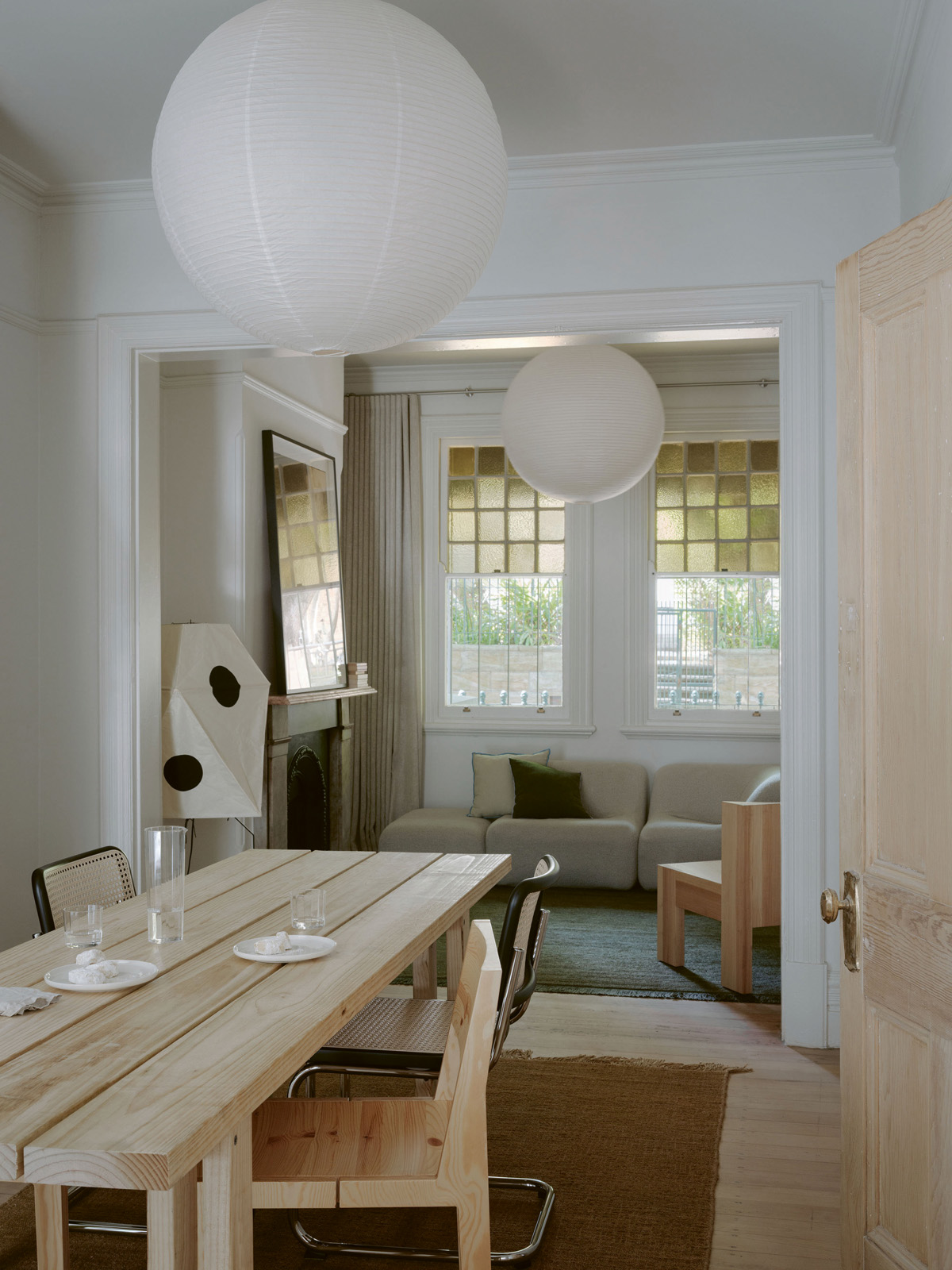
Inside, the house had a typical terrace plan, with each room gaining natural light from a window, so there was no need for alteration. “There’s some fundamentals that really work with that typology,” says Jemima. As a result, the renovation was low in construction waste. “Not a lot of material was taken off site,” says Mitchell.
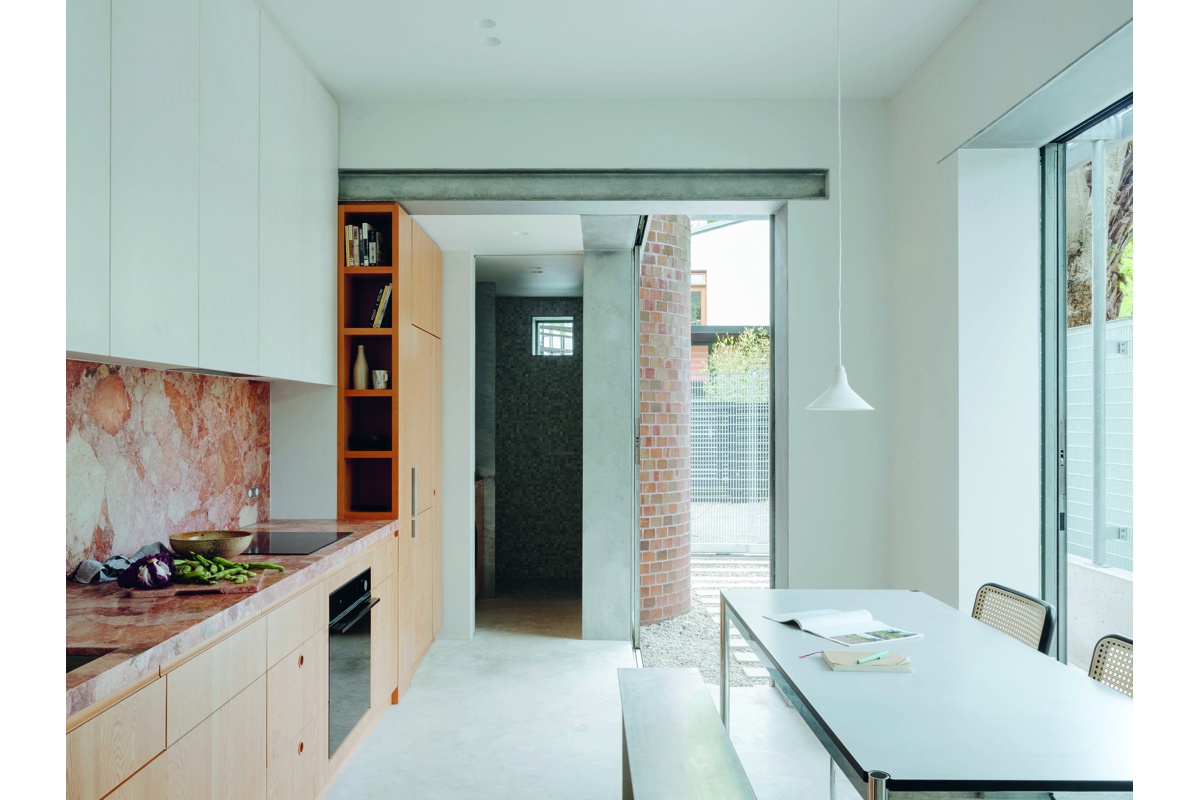
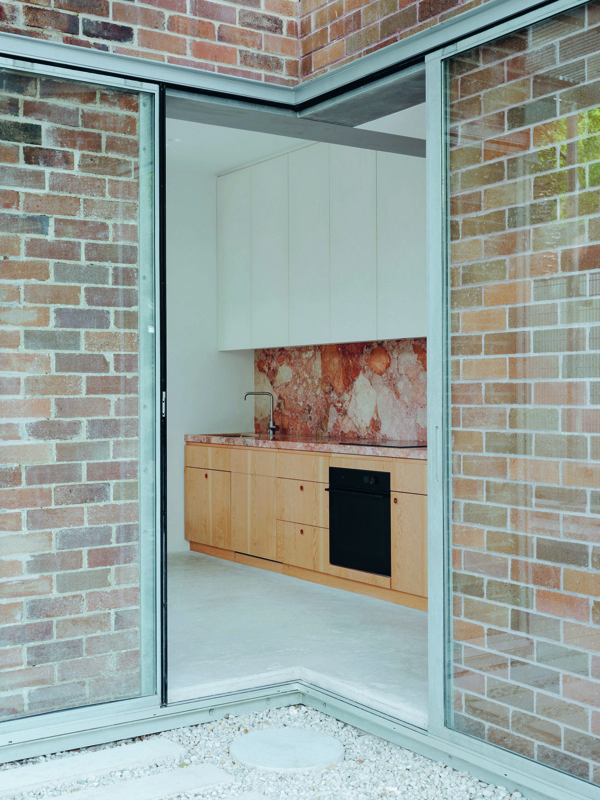
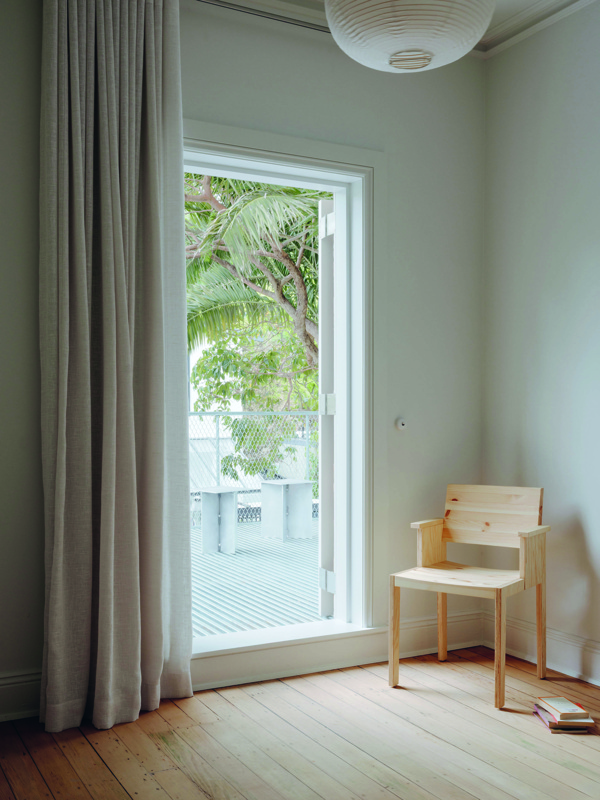
The front rooms were restored with their beautiful kauri pine timber floors retained, and the environmental performance of the house was improved with new, sealed windows. Some changes were made on the ground floor, including a vertical opening in the wall between the living room and kitchen to connect the rooms visually and bring in light, and a reconfiguration of the openings from the kitchen to the garden.
Outside, the toilet lean-to was demolished and a new structure built in matching brick. This new laundry bathroom is now connected to the back of the house and features a charming curve to the wall that relates to the curve of the spiral staircase beside it.
“I like that curve,” says Jemima. “It’s not original, it’s new, but it’s speaking to the forms and the proportions that were already there.”
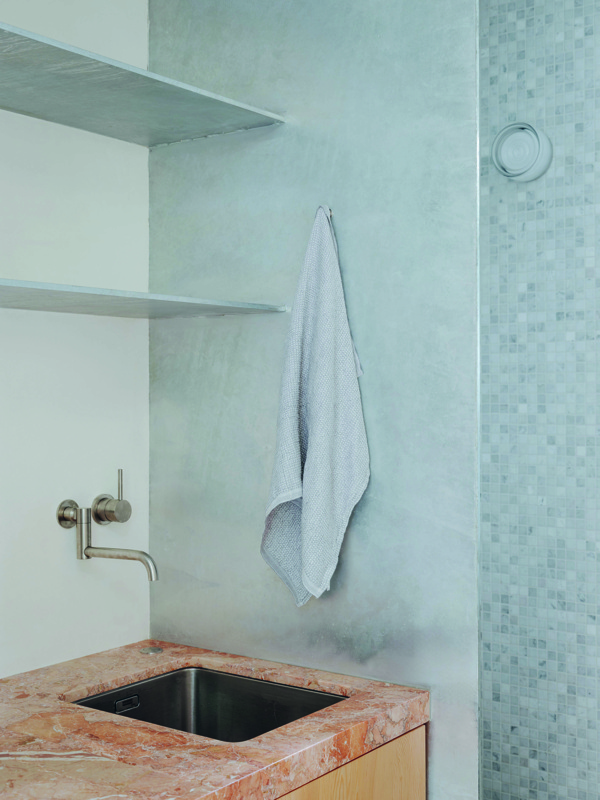
Steel is used on the inside of the doorways in this new part of the house and in the lintel above the bathroom door, while concrete steppers are used outside against white pebbles. Along the side of the back garden, a new low wall of concrete has been built to shore up the retaining wall and keep the roots at bay, and a bench opposite the kitchen is convenient for casual seating.
The garden does not contain planting, but greenery, and buckets of shade are provided by those trees in the side lane. They block western sun, and the pebbles in the garden are porous and made to accommodate their spreading roots. This outside area, once too dark and dank to use, now has dappled light thanks to the gridded steel terrace, while upstairs, there’s a feeling of being in the treetops.
“The approach overall was just about, okay, the house is nice, it’s imbued with memory, but how do you solve a problem?” Jemima says. “So, keep out the water. Bring in more light. Remove the rotting timber, remove the ongoing problem.” Mitchell adds: “It was a series of pragmatic decisions that result in something quite transcendent.”
Specs
ARCHITECT
Retallack Thompson
retallackthompson.com
BUILDER
Holmwood Constructions
PASSIVE ENERGY DESIGN
Much of the existing house was retained through repair rather than replacement. The reinstated deck provides passive shading to the ground floor living areas. New openings for windows and doors are positioned for effective cross-breezes and to capture/emit more natural light into the existing interior. The design provides comfortable living with low energy use year-round.
MATERIALS
A new concrete slab replaced the rotten timber subfloor to the rear of the building. Surface water and root ingress had caused much damage, so this was considered the most robust and suitable solution to the new floor structure while providing thermal mass, coupled with the enlarged ground floor north window openings. The new deck structure is galvanised steel. Again, the extent of leaf matter, tree cover and water damage had caused deterioration to the original decking structure. The new works sought to be low maintenance and robust to ensure longevity and reduce the need for replacement. The interiors feature a wax plaster finish to new walls. Existing white set plaster was repaired and maintained throughout the home. External finishes include Baltic pine timber weatherboards with compressed cement cladding and recycled face brickwork. Concealed Zincalume roof sheet is fixed to all roof areas. Roof drainage runs to a large in-ground storage tank.
FLOORING
The clear-sealed concrete floor slab is a steel-troweled, lightly honed finish. Original solid timber floors are retained throughout. Stone mosaic and tiles were used in new bathroom/wet areas.
GLAZING
Windows are galvanised steel framed or western red cedar timber framed, with Viridian VLam Hush clear glazing.
HEATING AND COOLING
The rear deck provides shading to the west and northern living areas below. The original terrace planning provided for effective cross ventilation. Ceiling fans are provided in all bedrooms. There is no central cooling or heating system needed. The ground floor slab has electric heating within. The double brick façade of the original terrace is fairly effective at maintaining internal temperatures, with the new extensions utilising the same construction for its robustness and durability. Original wood fireplaces were maintained.
HOT WATER SYSTEM
Hot water is provided by an electric storage hot water system.
WATER TANKS
No water tanks, but site permeability is increased to deal with stormwater catchment
LIGHTING
The house uses low energy LED lighting from Tovo Lighting, feature lights from RBW Ripple Sconce and HAY rice paper shades.
ENERGY
All electric, gas disconnected.