New Life – Conservationist’s Garden Transformation
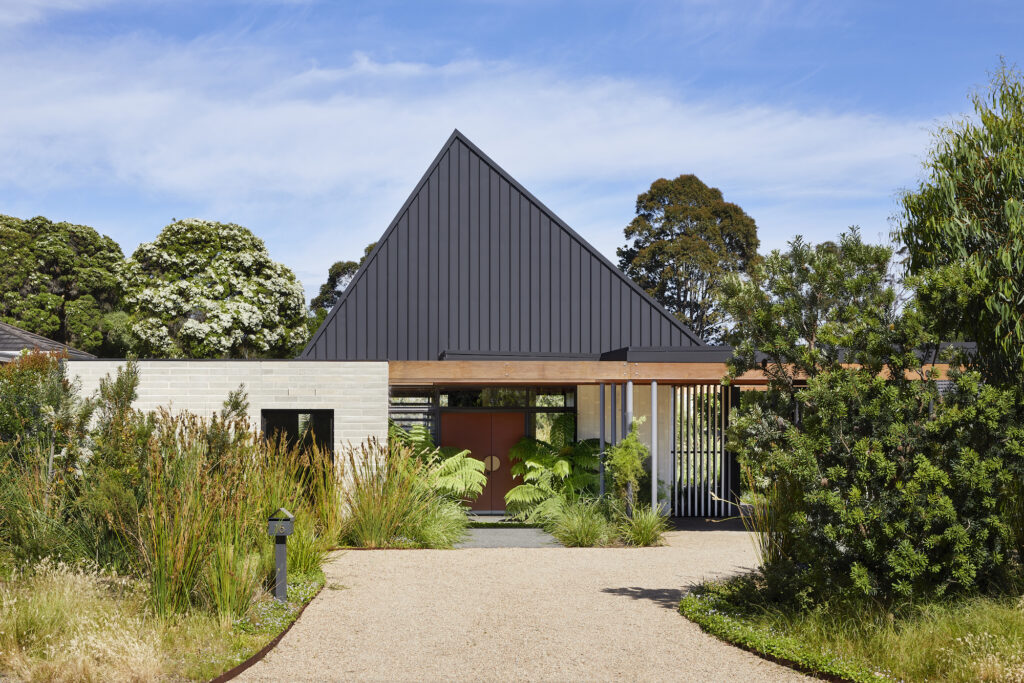
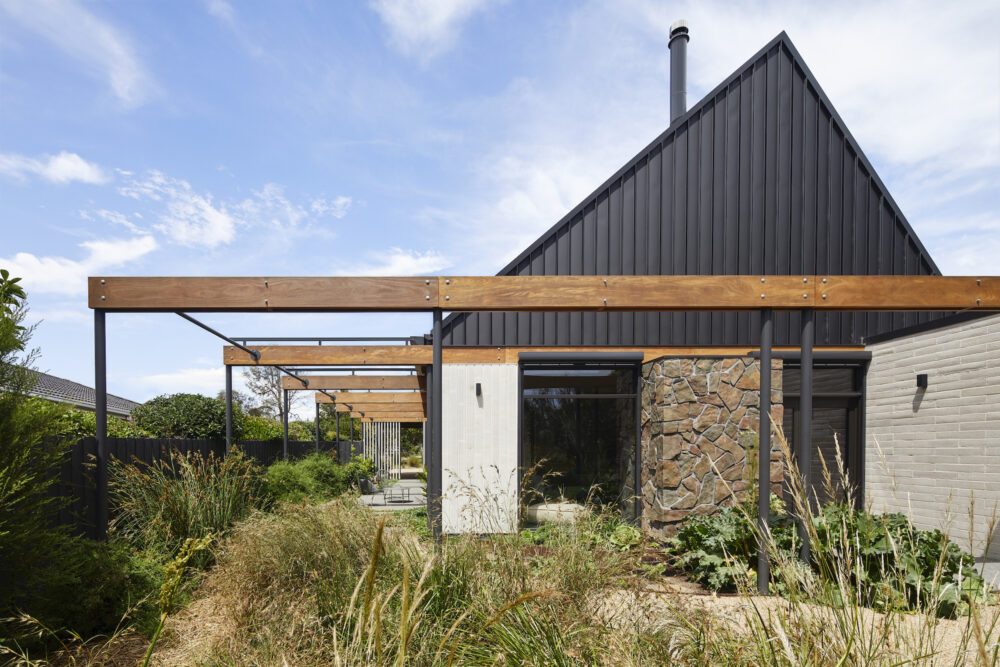
An evolving project, this garden is an experiment in quietly nurturing self-sown plants and complementing them with propagated smaller trees and shrubs – most native to the surrounding area.
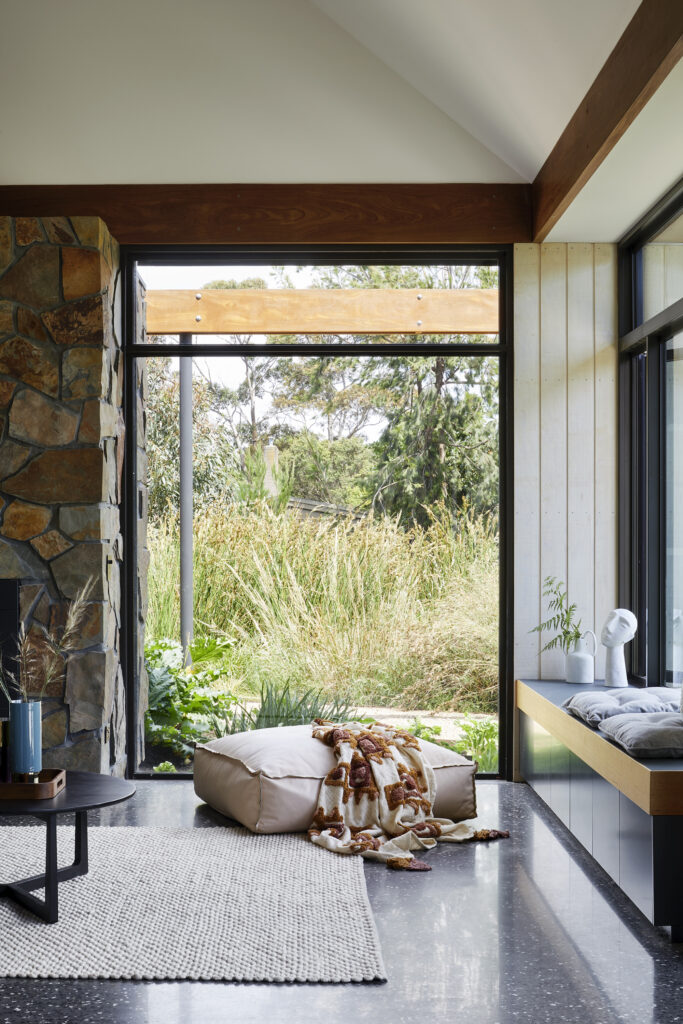
All signs of the underground tanks in the backyard are now hidden by tall grassy woodland species including kangaroo and soft spear grass.
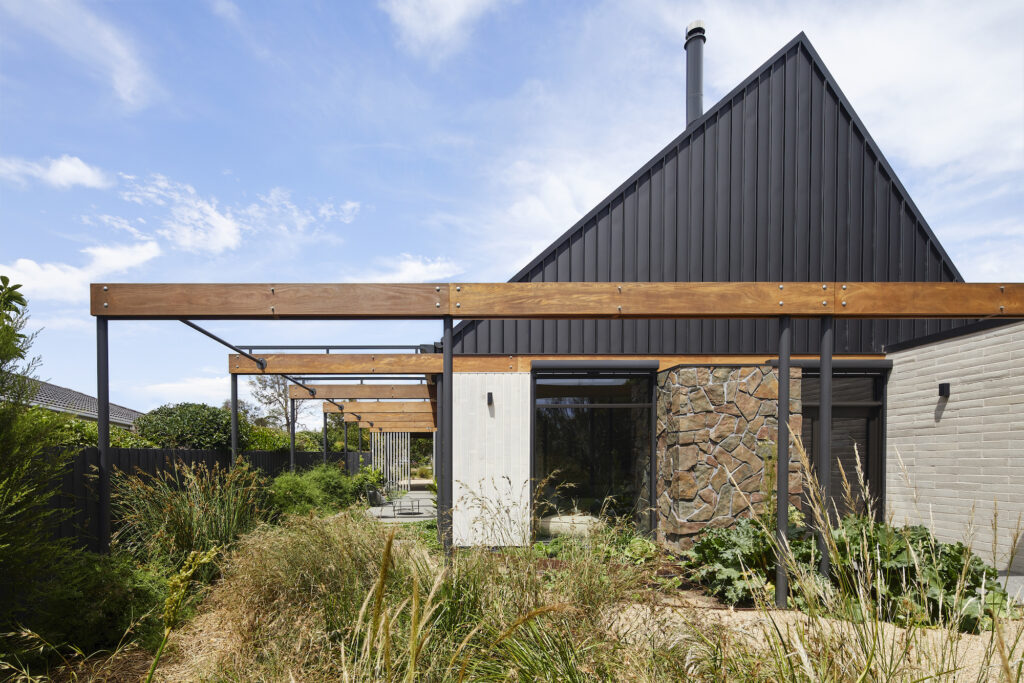
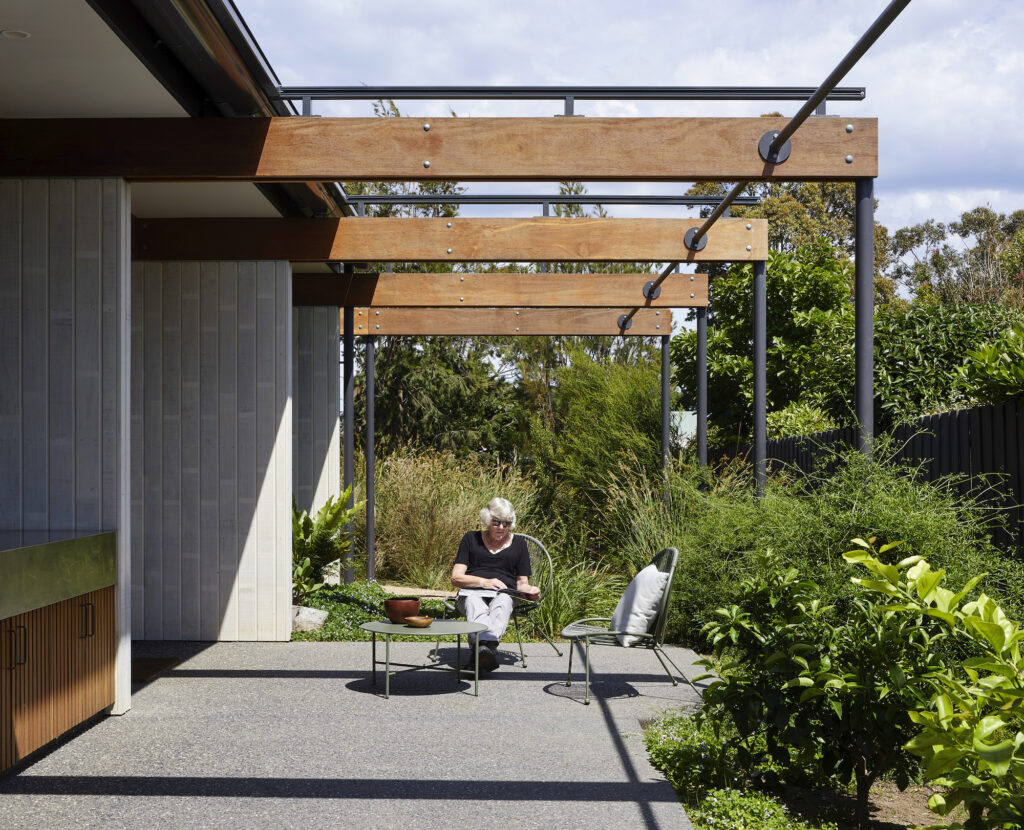
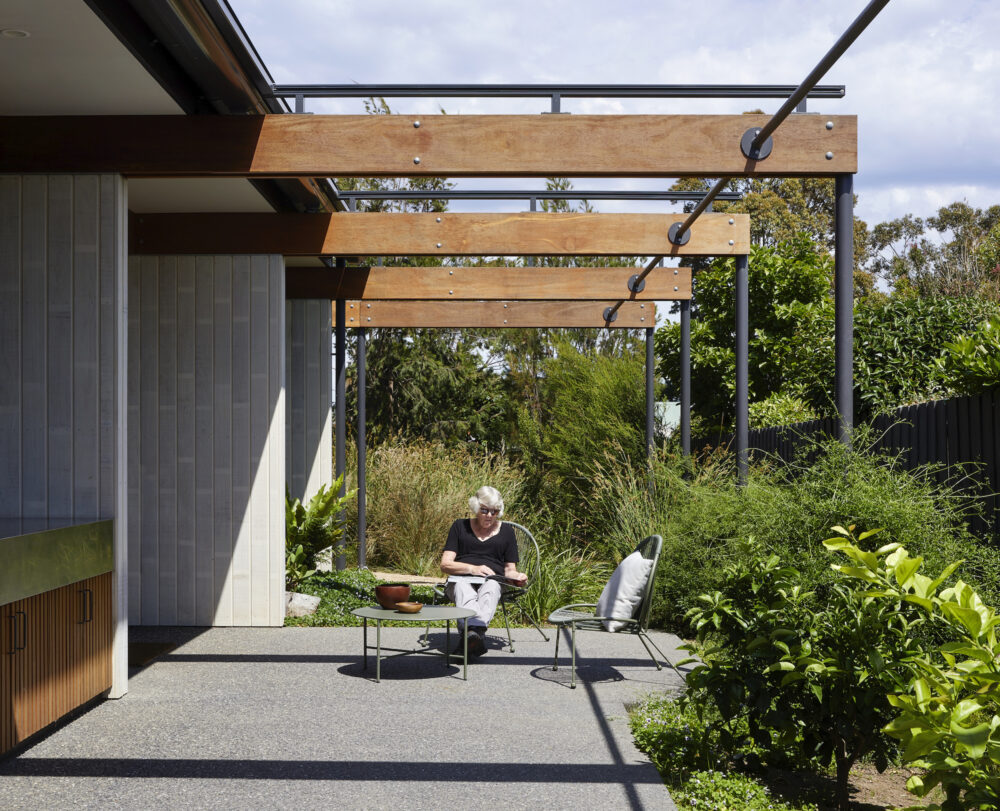
Ann enjoying the sun on her northern terrace where she is establishing a no-dig citrus and perennial ground-flora garden.
Conservationist Ann Scoles has transformed the garden of her new house in the suburbs into a regenerative project rich with native plants, a fern garden, veggie patch and returning microbial life.
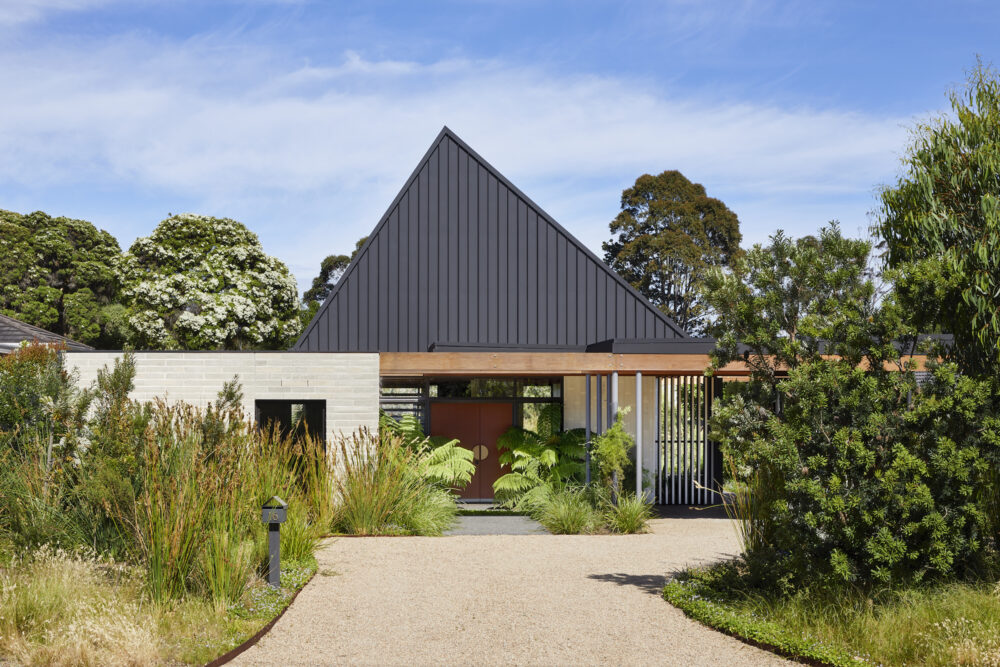
Downsizing from an acre of rambling gully slope to a level suburban block in Victoria’s Mount Eliza, keen conservationistAnn Scoles has guided this (mostly) native garden with plants she and her husband propagated over many years from the natural seedbed. In consideration of the challenge of saying goodbye to their lovely bush garden, as well as the needs of growing older, the house was designed for the couple with great care.
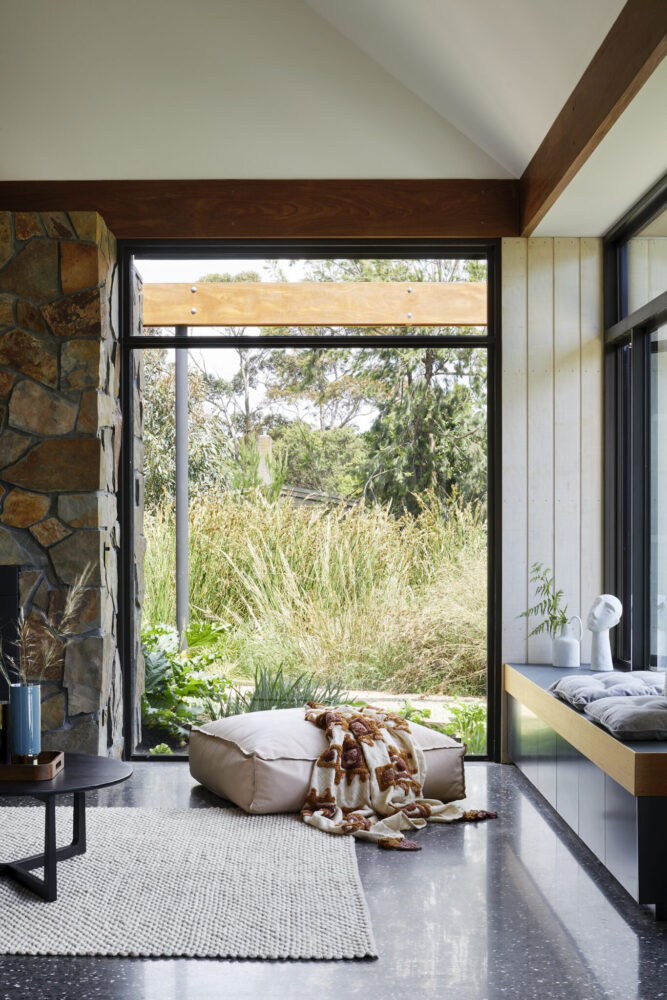
“[Our new house is] in an urban environment unlike the riparian bushland which had nurtured our life for 34 years.Nonetheless, it was a fresh beginning – a house commensurate with our physical needs and our necessity to be near shops and buses,” says Ann. “Through careful design, Bent Architecture produced a house that provides expansive views of the sky, the garden and, beyond the western boundary, borrowed landscape with fiery sunsets.”
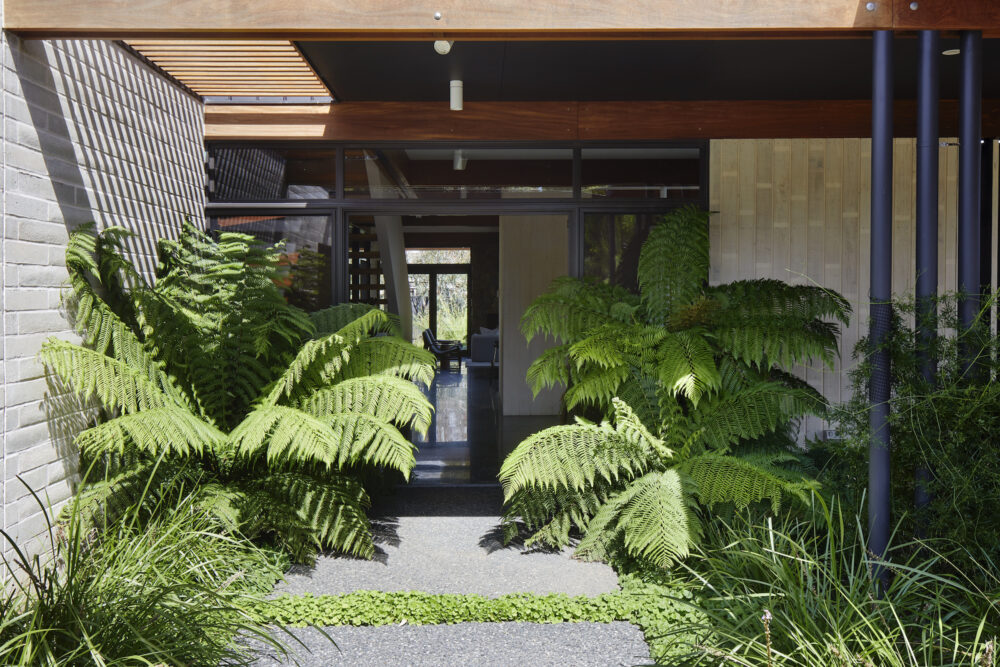
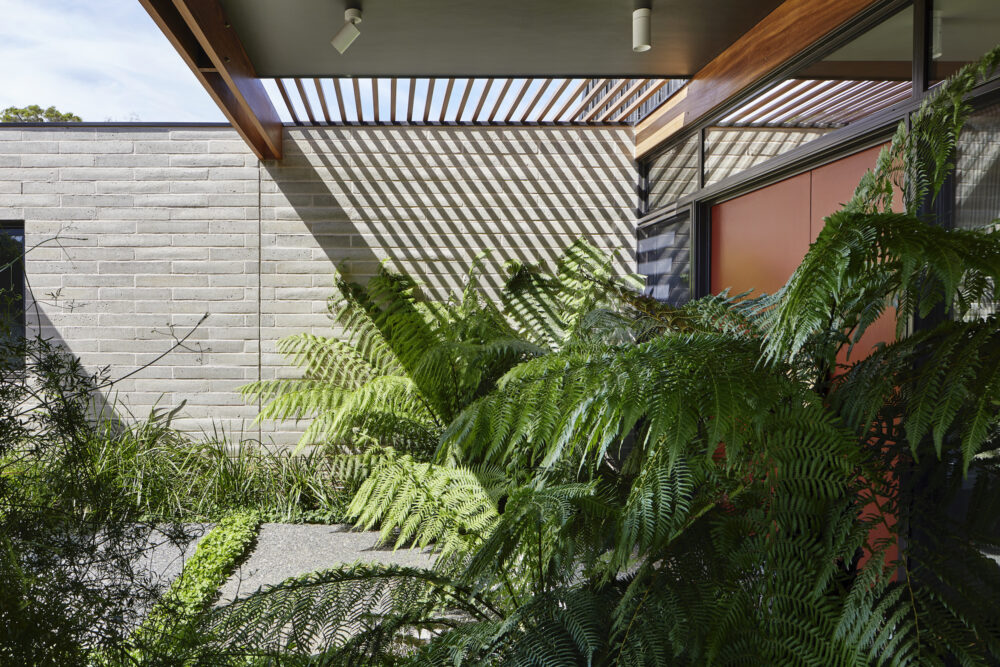
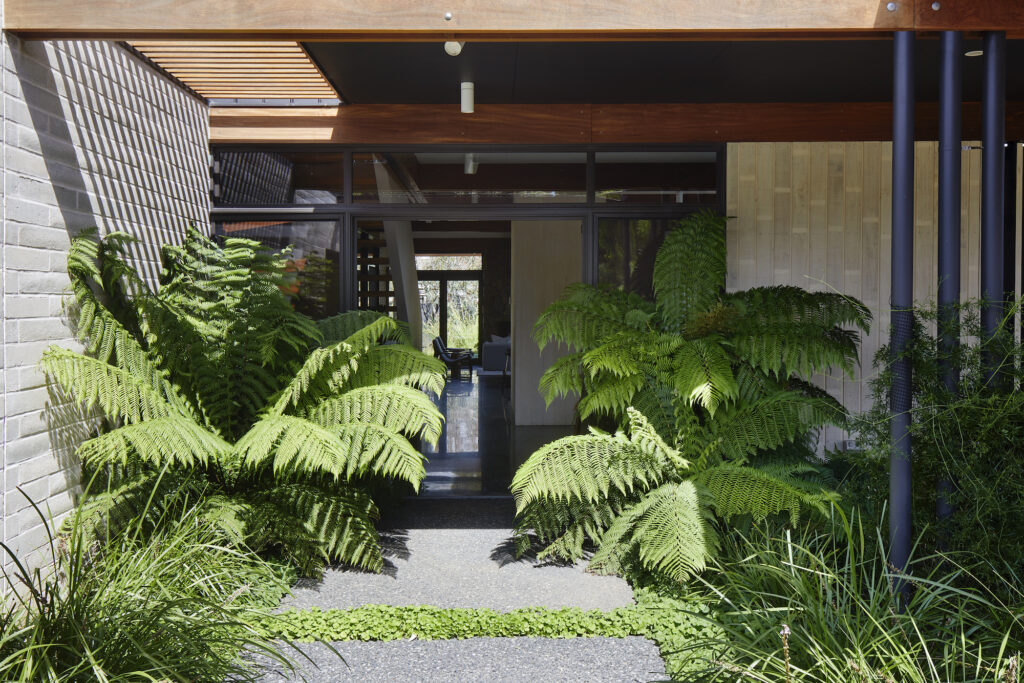
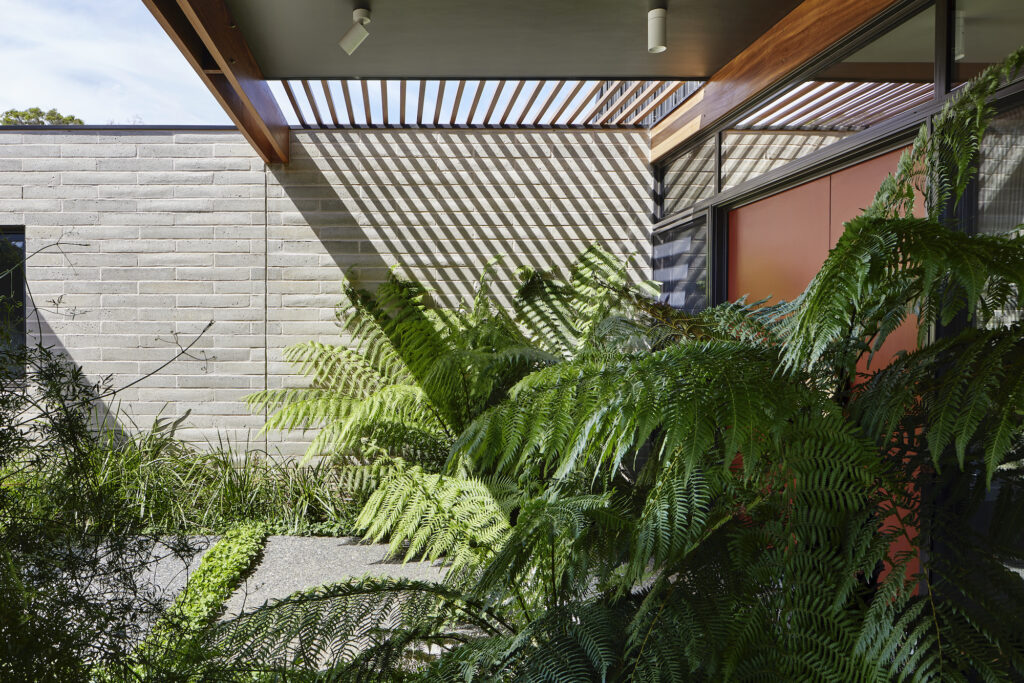
As a major feature of the design, the southern rooms wraparound an indigenous fern garden, and, from the living area, creates a visual link to ferns under the front porch. Ann says she can see out across the ferns to the sunset in the backyard.The northern eaves provide shelter for east coast rock orchids and nest ferns which are nestled in hollow logs, lovingly tended for many years and transported from the old house. They are a remembrance of holidays long past.
The design of the home supports a large solar array and a battery which keeps basic electrical needs operational during power outages. This fully electrical house includes hydronic heating and hot water. In addition, underground tanks on the west side of the garden support 43 000 litres of tank water.Although the idea of digging huge holes to accommodate the tanks and disturbing the careful balance of the minerals, worms, insects, micro-animals, viruses and bacteria wasn’tAnn’s favourite thing to do, she was encouraged by the recovery of the soil, and all signs of the underground tanks are now hidden by tall grassy woodland species including kangaroo and soft spear grass.
“Throughout the garden, Juncus species, including Juncus pauciflorus with its arching branches, have emerged from the seedbed. In addition, many plantings, lily species, include spiny-head and wattle mat-rush and newly emerging small grass trees,”says Ann. “They are among the perennial ground-flora which complement the herbaceous shrubs and trees – mainly located further away from the home.”
The small shrubs include rice flowers, hop bitter-pea and common correa. Among the larger plants, the garden supports silver banksia, sweet bursaria, black she-oak, and the magnificent snow gums – much loved by beautiful local possums.
“The garden is ever changing, and as seasons pass, I am increasing biodiversity through further planting indigenous ground-flora perennials and, when possible, am directly seeding these species,”says Ann. “This includes weeping grass which produces seed for prolonged periods throughout the year. The use of perennial species is, I believe, the best way I can efficiently increase photosynthesis (carbon storage) in my garden.”
Ann has planted a small vegetable patch just outside the western windows, she has two enormous crops at the time of writing:rhubarb and silverbeet. The big fleshy leaves of both look lush and beautiful through the window. “I just pick a leaf or two for dinner, so easy,” she says. To complement the northern terraceAnn has recently established a no-dig citrus and perennial ground-flora garden. With the addition of worm castings, mushroom compost, and eucalyptus mulch, Ann has noticed signs of the all-important mycorrhizal fungi and other microbial life necessary for balanced ecosystems. She has observed that this garden, and particularly the much-loved and well-used native violet, now requires far less water.
Ann is (of course) passionate about her own garden, however her enthusiasm for preserving and regenerating our Australian landscape also sends her on research reading journeys where she learns everything she can about different methods of rejuvenating soil and promoting natural, native growth. She also volunteers with a local bush regeneration group who are quietly transforming pockets of public land around the neighbourhood.
“I have decided that, for the future, I will substantially focus my climate change action on the potential power of regenerative landscapes to reverse this process. To this end, I wish to inspire and collaborate with others, particularly young people,” she says. I will continue trialling regenerative practices in my own garden. Living in this home, working its garden, combined with local volunteer bush-regeneration, creates an emotional sense of space which extends beyond the confines of suburbia.