Green Between – Garden Shared by Two Families
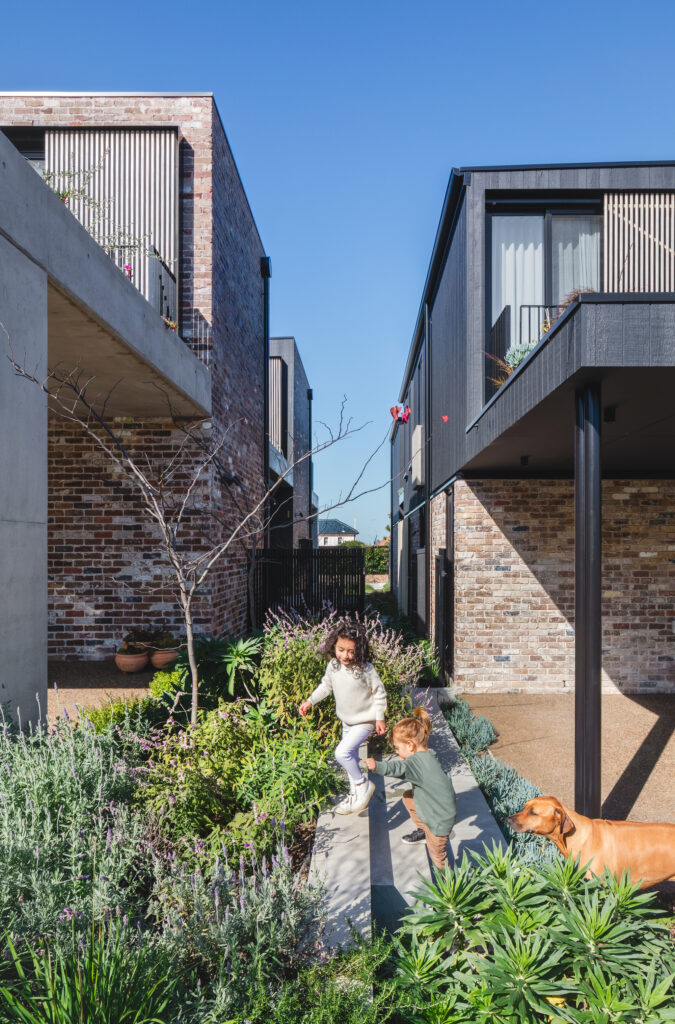
The shared garden is like a large outdoor living room for all family members to enjoy in different ways.
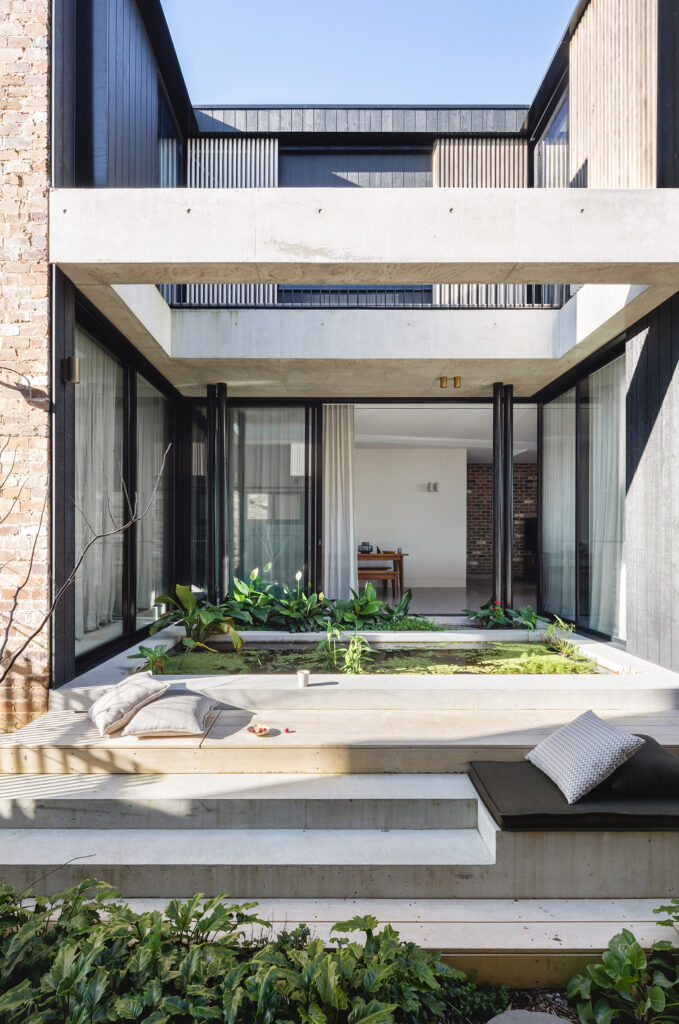
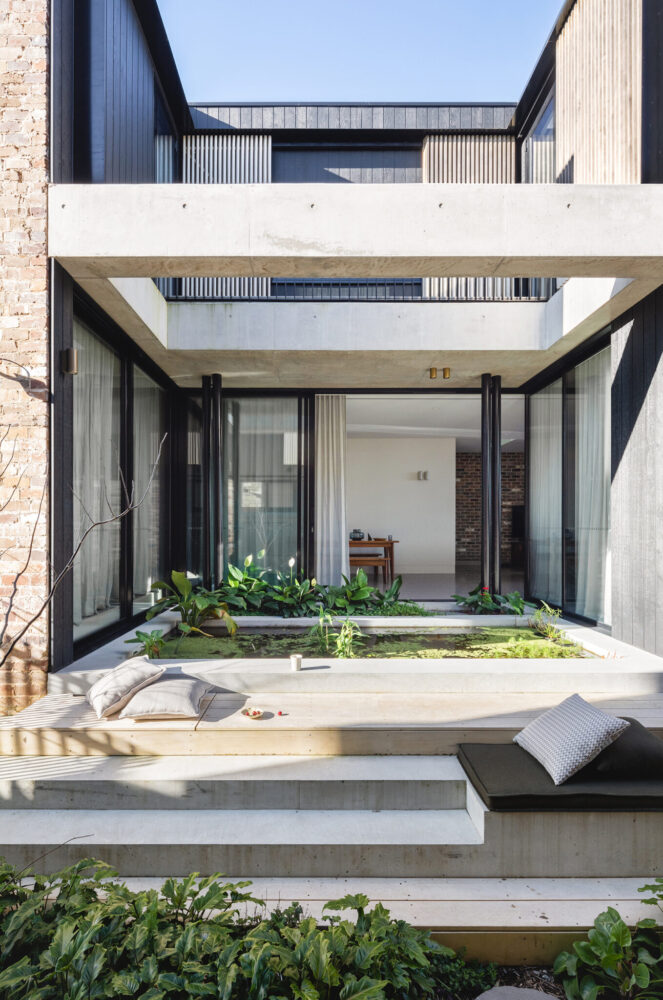
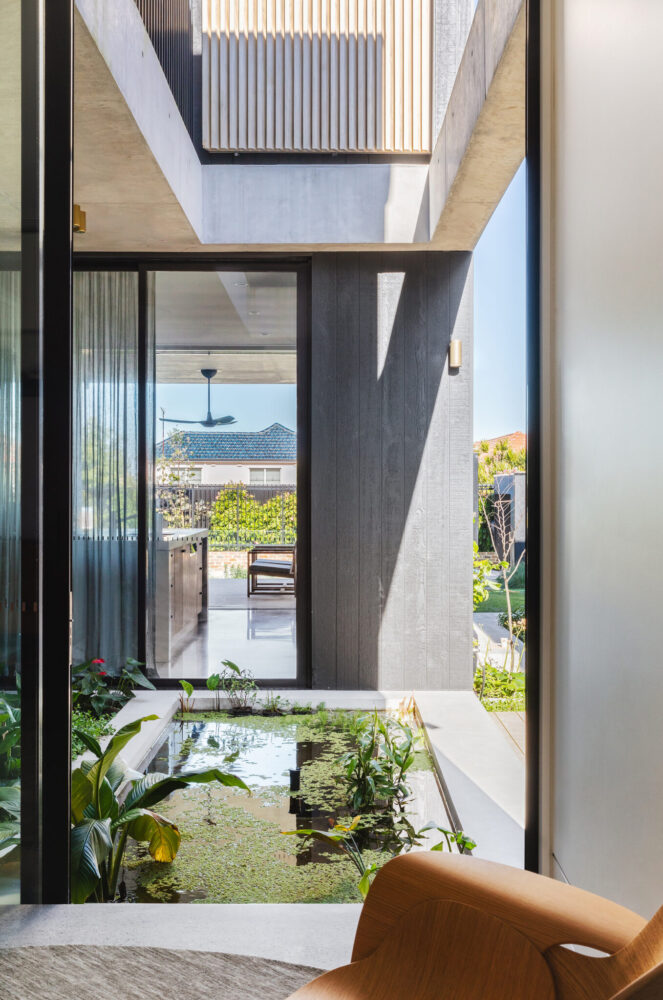
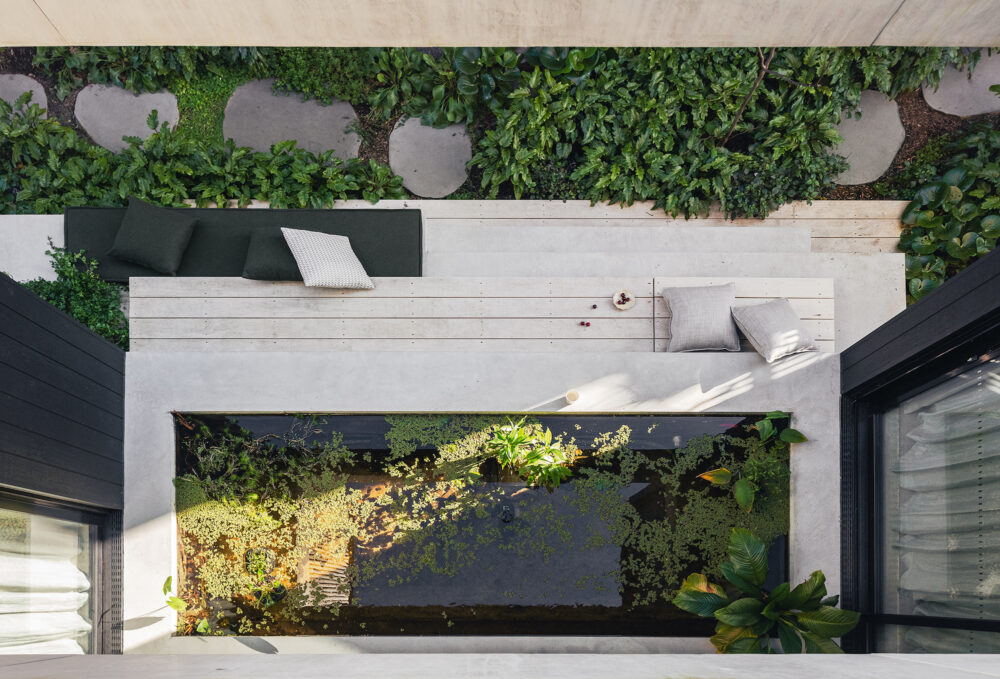
The single-dwelling house has a fishpond in a side courtyard, with steps cascading down to the garden.
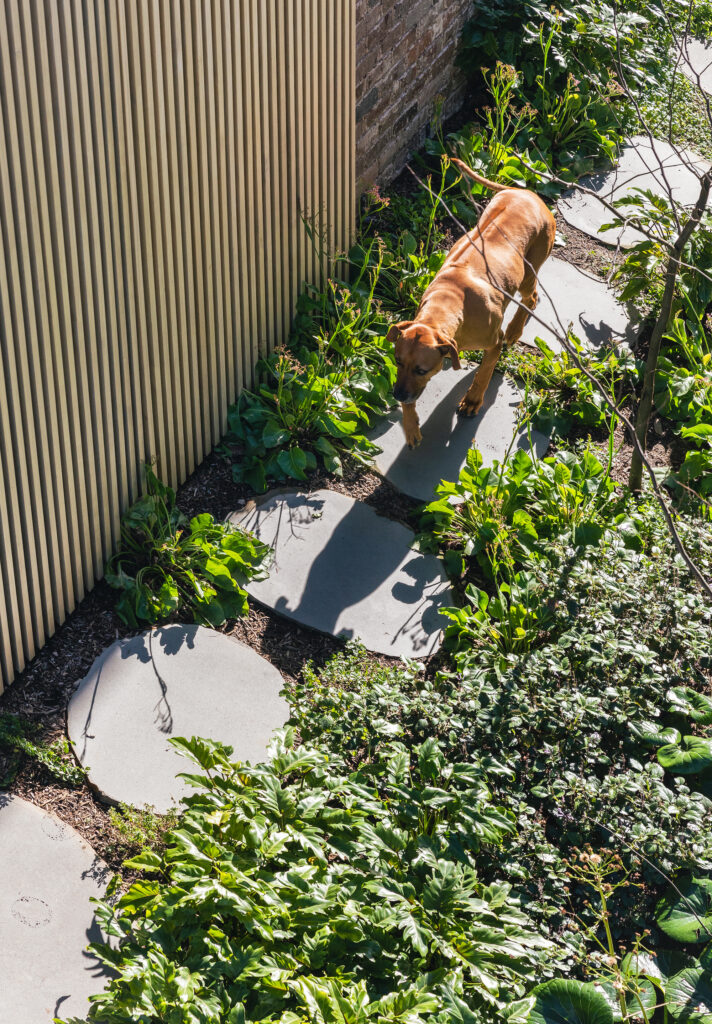
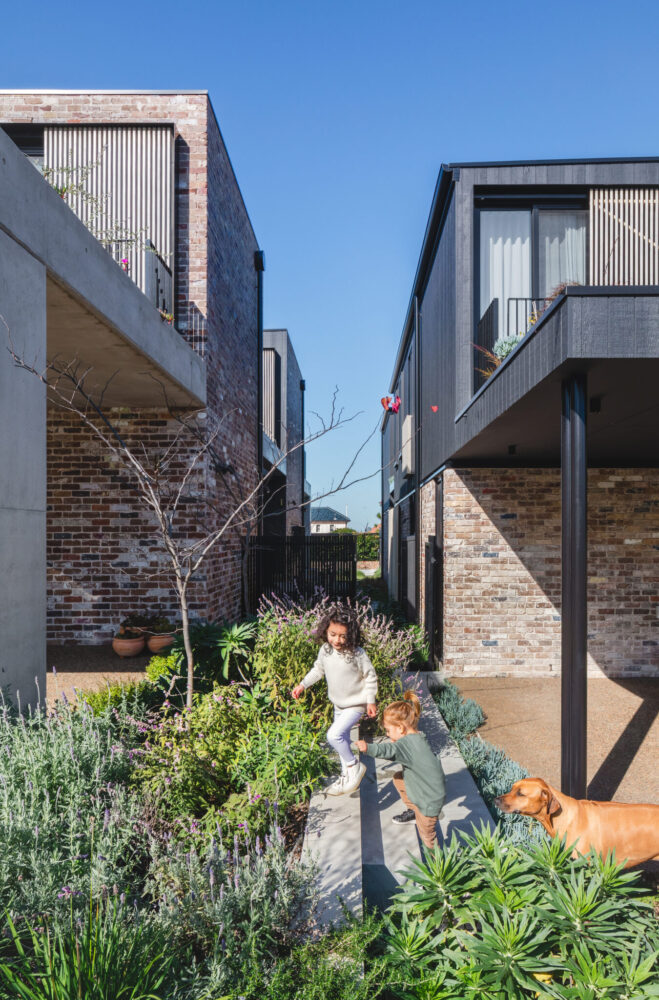
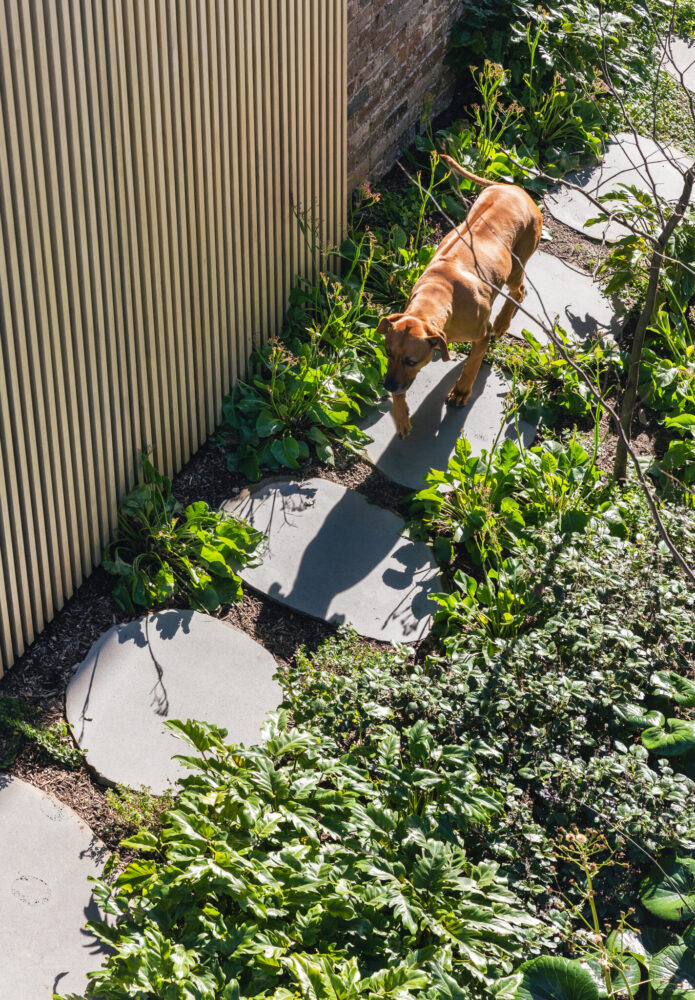
Bluestone pavers meander through the garden surrounded by perennials that flourish year-round.
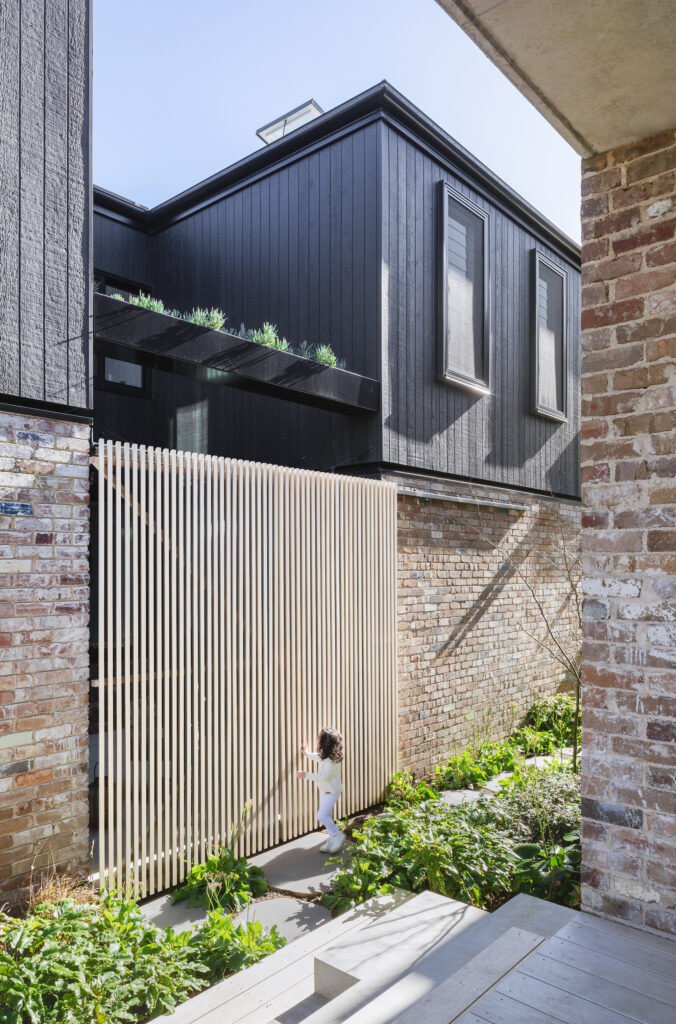
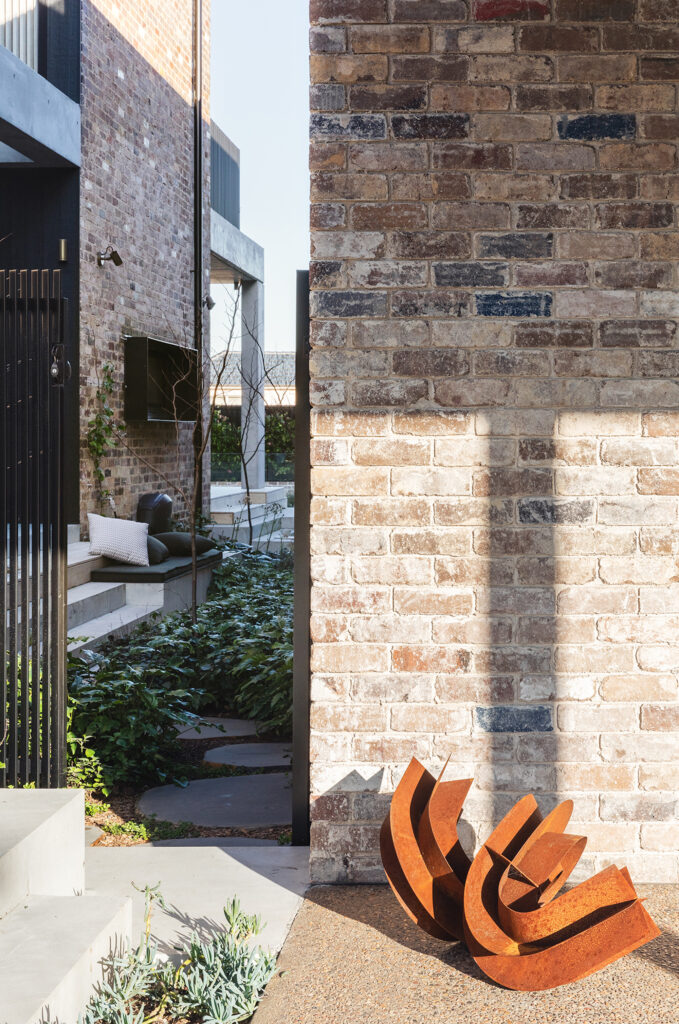
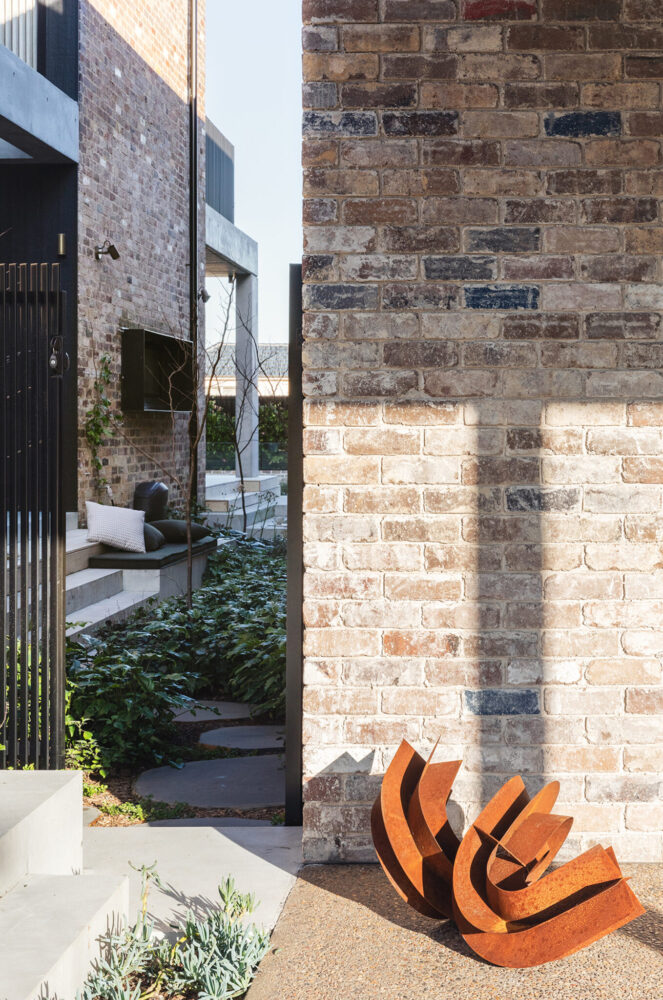
The entrance to the garden from the front of the houses, with a Corten steel sculpture by Korban/Flaubert.
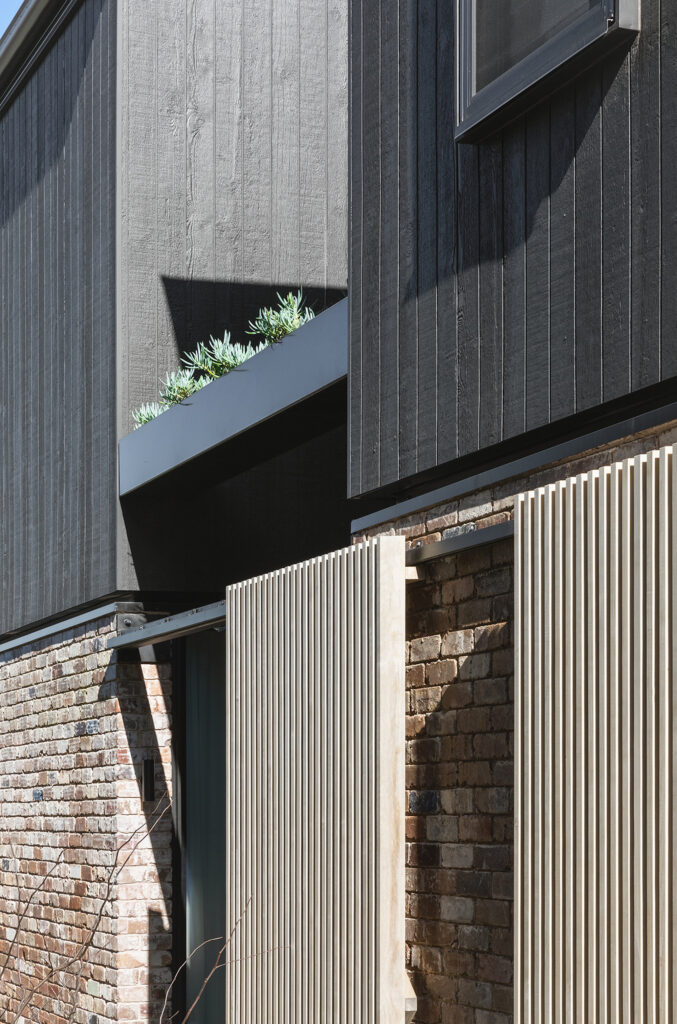
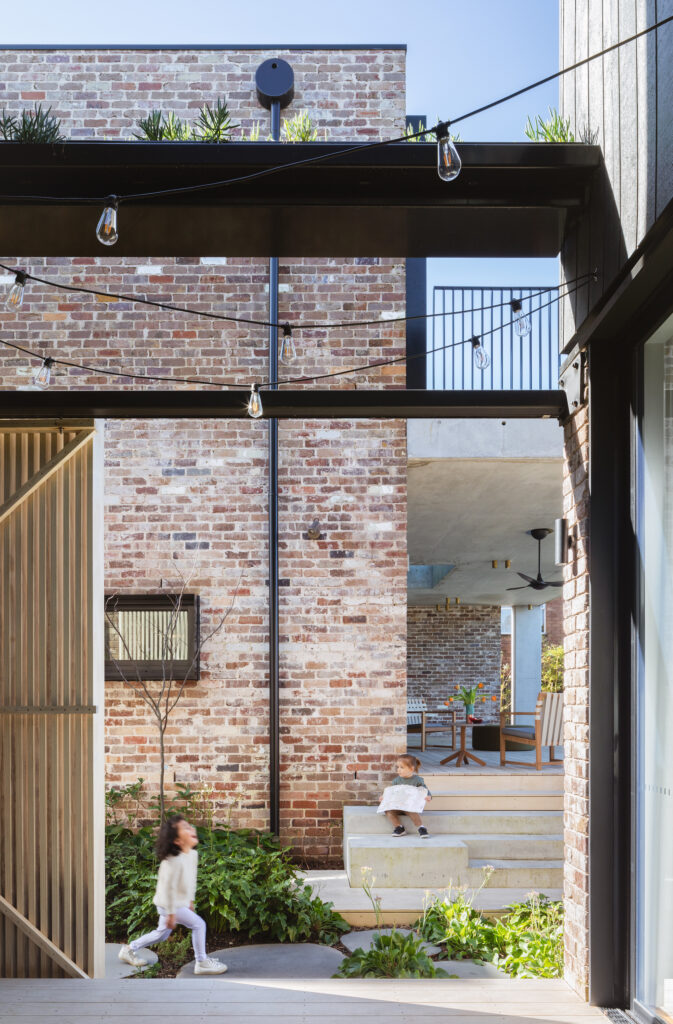
Landscaping softens the edges of the robust architecture and merges it with the surroundings.
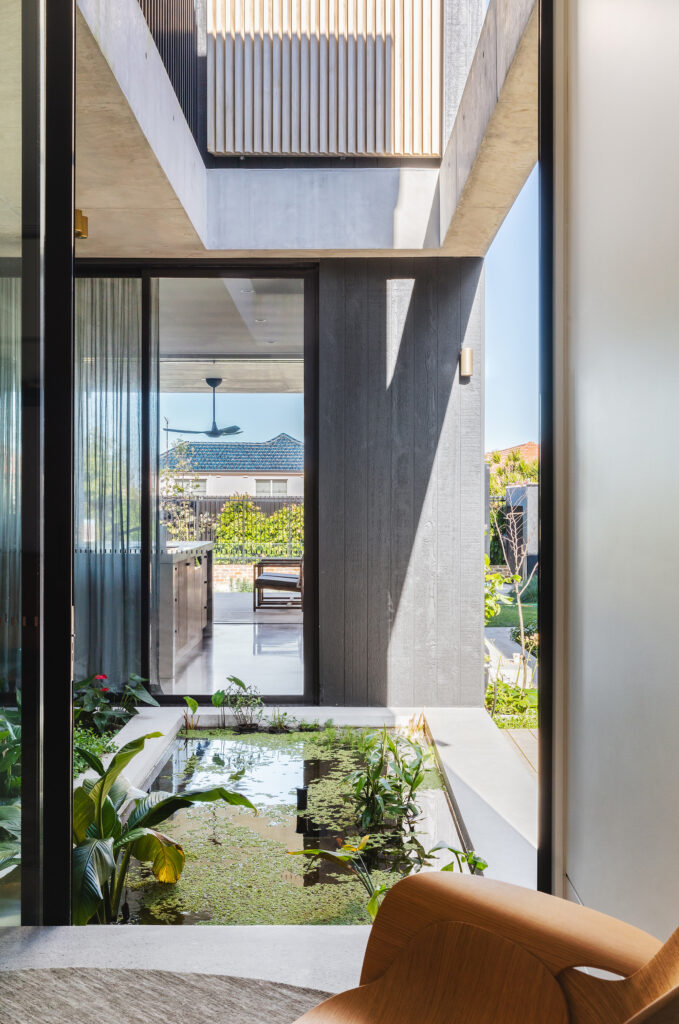
The fishpond is surrounded by glass doors, providing a view through the downstairs living spaces.
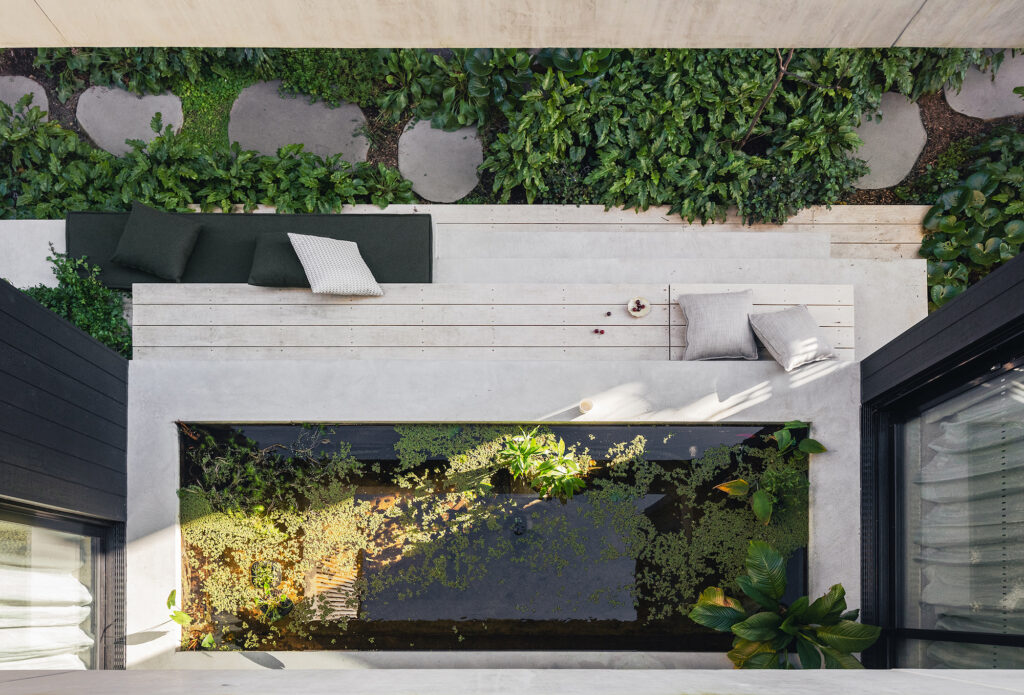
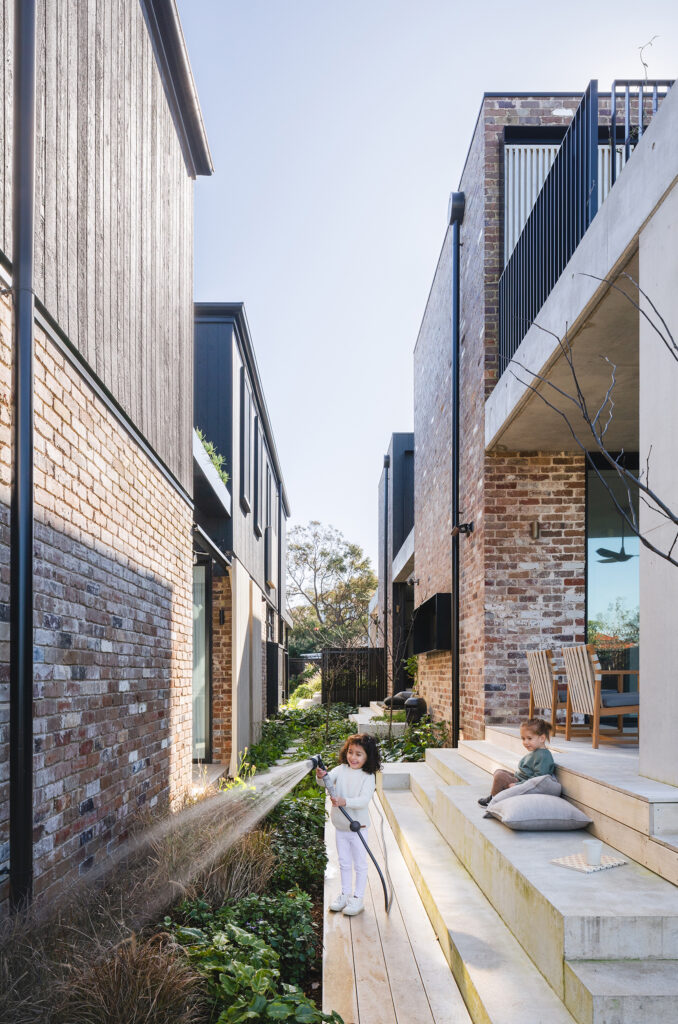
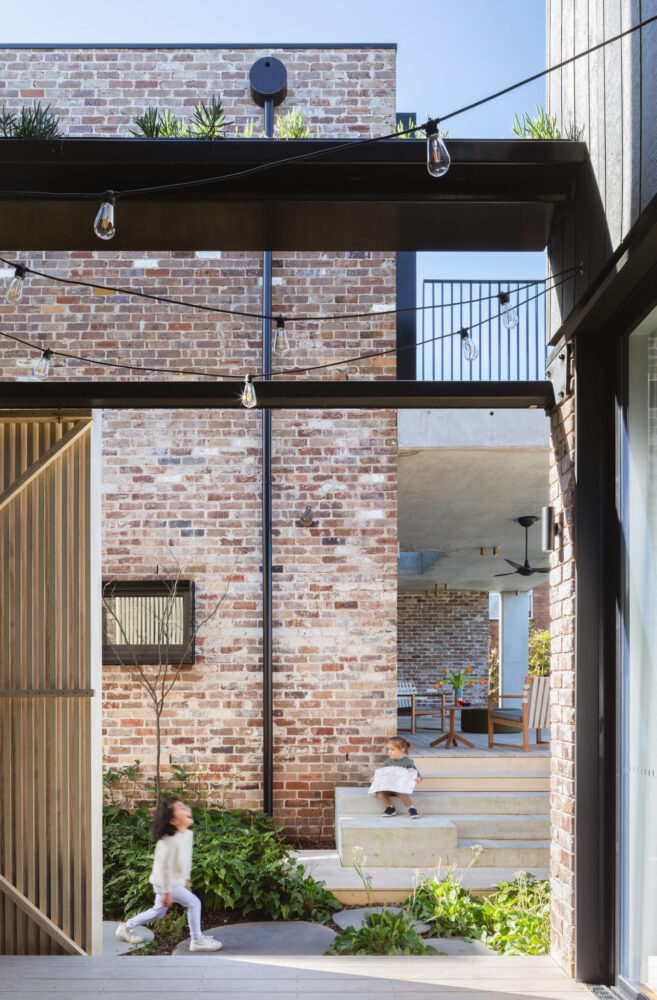
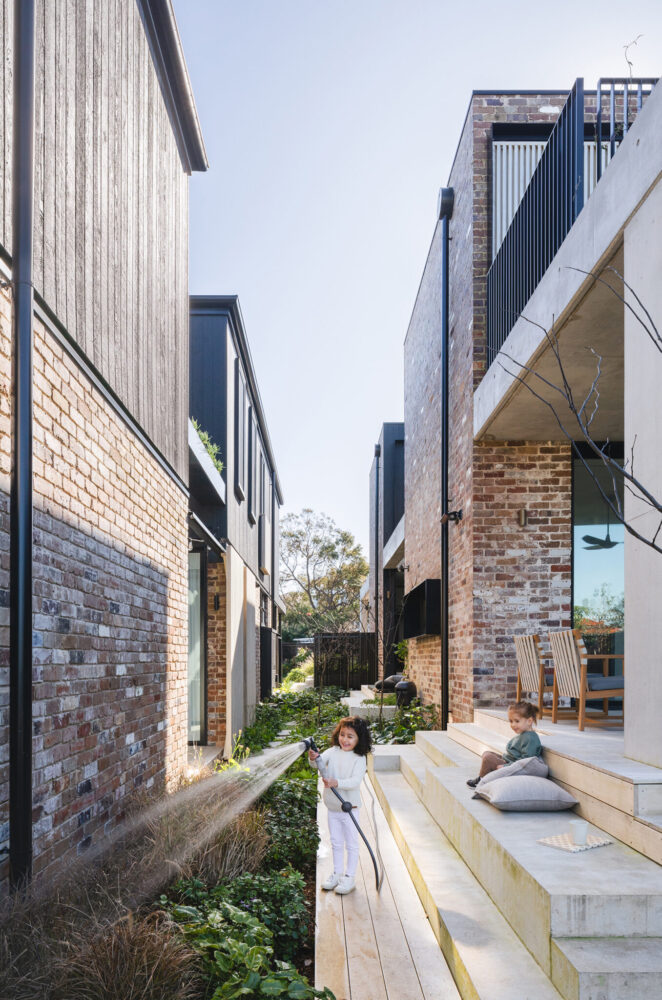
Steps provide easy access between houses, and places for relaxing, socialising and playing.
Nestled between two houses, this garden is shared by family members on both sides and provides versatile green space for passage, gathering and play.
In this small and unusual garden, landscaping and architecture go hand in hand. The two buildings – one a house and one a duplex – belong to members of the same family who did away with the boundary and created a garden that could be shared by all. The long narrow landscape is designed as a versatile space for passage, gathering and play, offering three separate households a range of spots to enjoy the outdoors.
Located in the Sydney suburb of Maroubra, the single house is home to the parents (who are also grandparents), and the duplex is home to their two children and their respective families. The architecture of each is robust with strong geometric forms and earthy, textured materials, including recycled brick, concrete, accoya timber and Weathertex cladding. Sharon Campbell Architects designed the architecture, interiors and landscape, developing them all simultaneously. “I don’t believe in gardens as an afterthought. I develop them at the same time as the architecture,” Sharon says.
Working in collaboration with Pod Landscaping (with StylishStone Landscapes and H built doing the installation and hardscape), Sharon selected materials that would weather well in the coastal environment and developed the landscaping to soften the edges of the buildings. This merging of the built forms with their surroundings is evidenced by views and access to greenery in every direction.
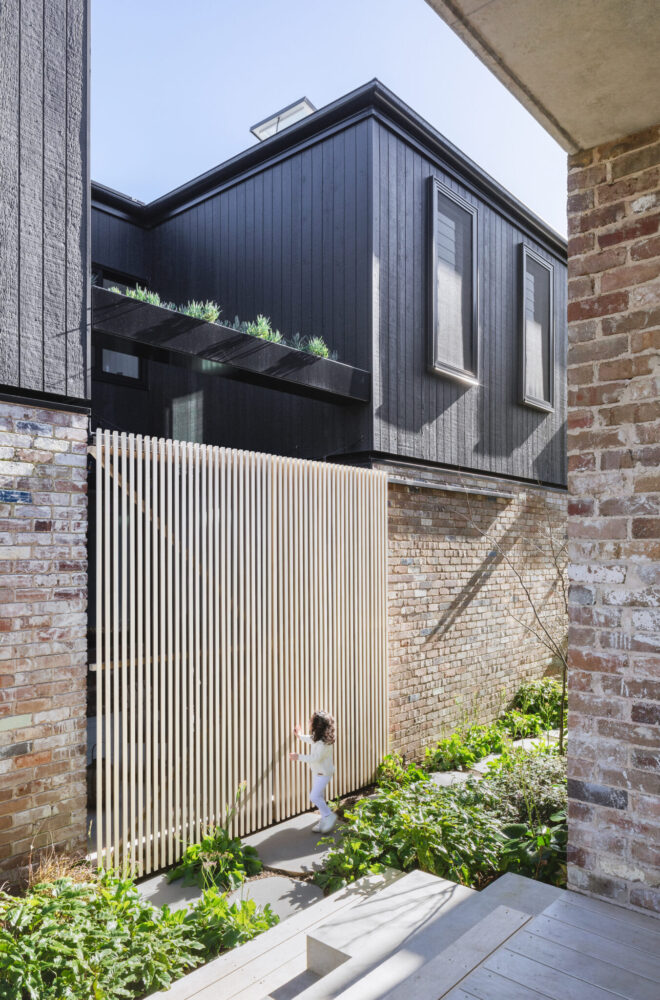
As the summer sun streams in from the north in the middle of the day, external spaces inset within the buildings – a fishpond, courtyard and deck – provide cool respite in the shade. In winter, the concrete and timber steps are bathed in sun and serve as places to relax and gather in the warmth. “The owners can put cushions on the steps and the garden becomes a large outdoor living room that everyone can share,” Sharon says. The steps also provide easy access to and from the adjacent duplex where a sliding timber door opens and closes the internal courtyard to the garden. Bluestone pavers meander through the garden, and both the steps and pavers are places for the grandchildren to run and play.
The clients wanted a bee-friendly, low-water garden with purple-flowering plants and requested some nostalgic touches, such as the fishpond and wisteria, that are reminders of childhood.Various perennials including purple emperor (Sedum telephium), xanadu (Philodendron xanadu), tractor seat (Ligularia reniformis) and Perez’s sea lavender (Limonium perezii) surround the bluestone pavers, while fountain grass (Pennisetum rubrum) adds texture against the brick wall. “We selected plants with deep-green leaves as they do better with low light, so even the shadier areas of the garden flourishes year round, and plants like the grasses will give texture and fuzziness to the garden,” Sharon explains.
Mona lavender (Plectranthus plepalila) adds vibrant violet colour amid the leafy green plants, as do the rose-purple flowers of the forest pansy (Cercis canadensis), both complementing the recycled brick beautifully. In summer, the pansy plant will provide more shade, while losing these leaves in winter opens up the space to more light. Adding yet more colour – and aroma – a passionfruit tree will start flowering mid-spring before bearing fruit in summer.
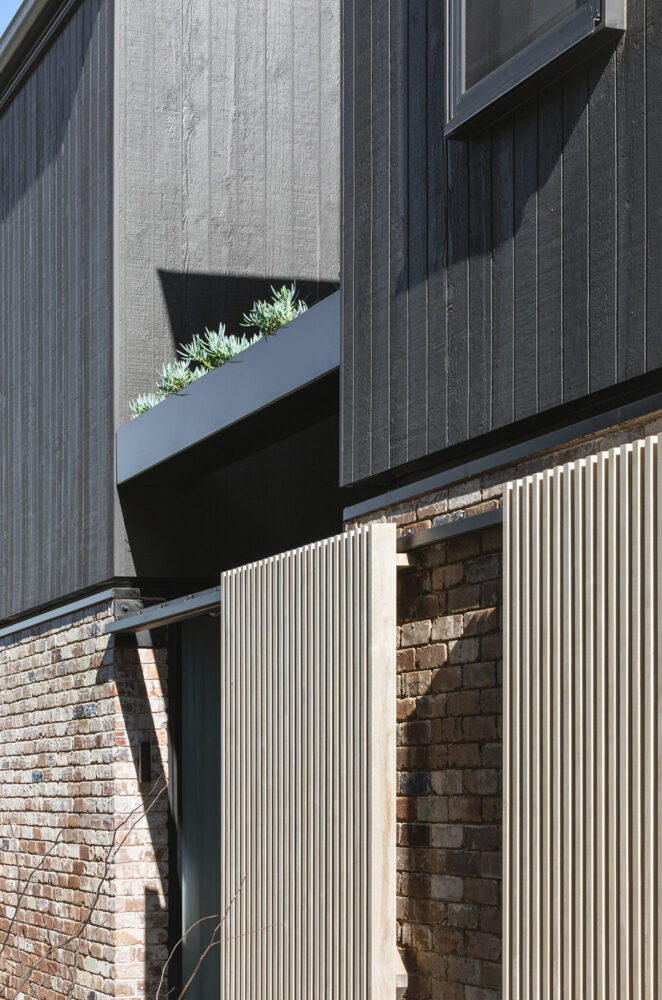
Planting is woven into the architecture wherever possible. Blue chalksticks (Senecio serpens) will trail down from the planter above the sliding timber screens, and in time wisteria will climb up the brick walls. Sharon also developed rooftop gardens at the front and back of both houses to green the edges of the architecture on the upper levels.The physical and visual connection between the two buildings means this garden can be shared by all family members and enjoyed in different ways throughout the year. It’s a space that packs a punch far bigger than its size and is a beautiful celebration of the uniqueness of its adjoining sites.