Weather Withall – Patonga House
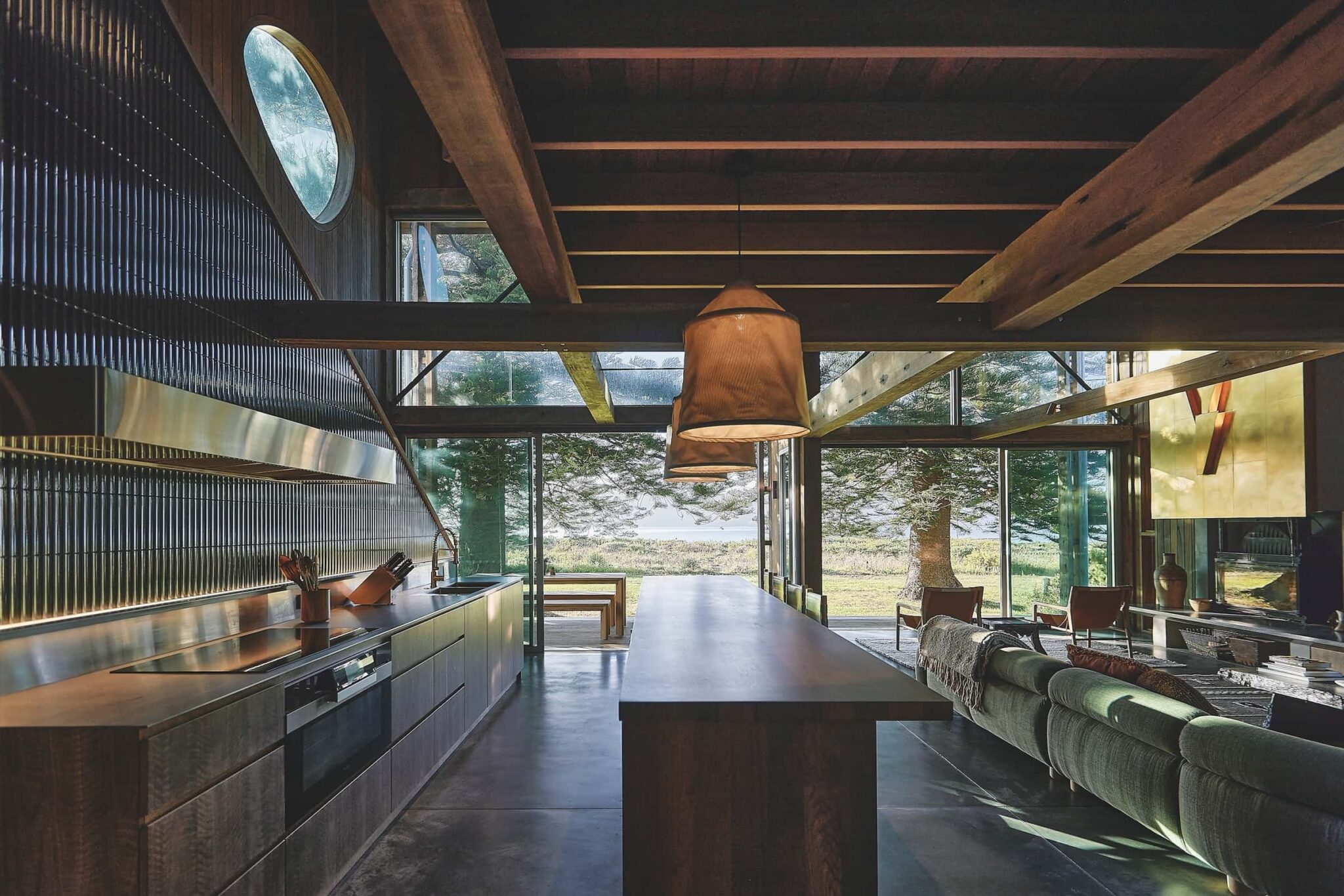
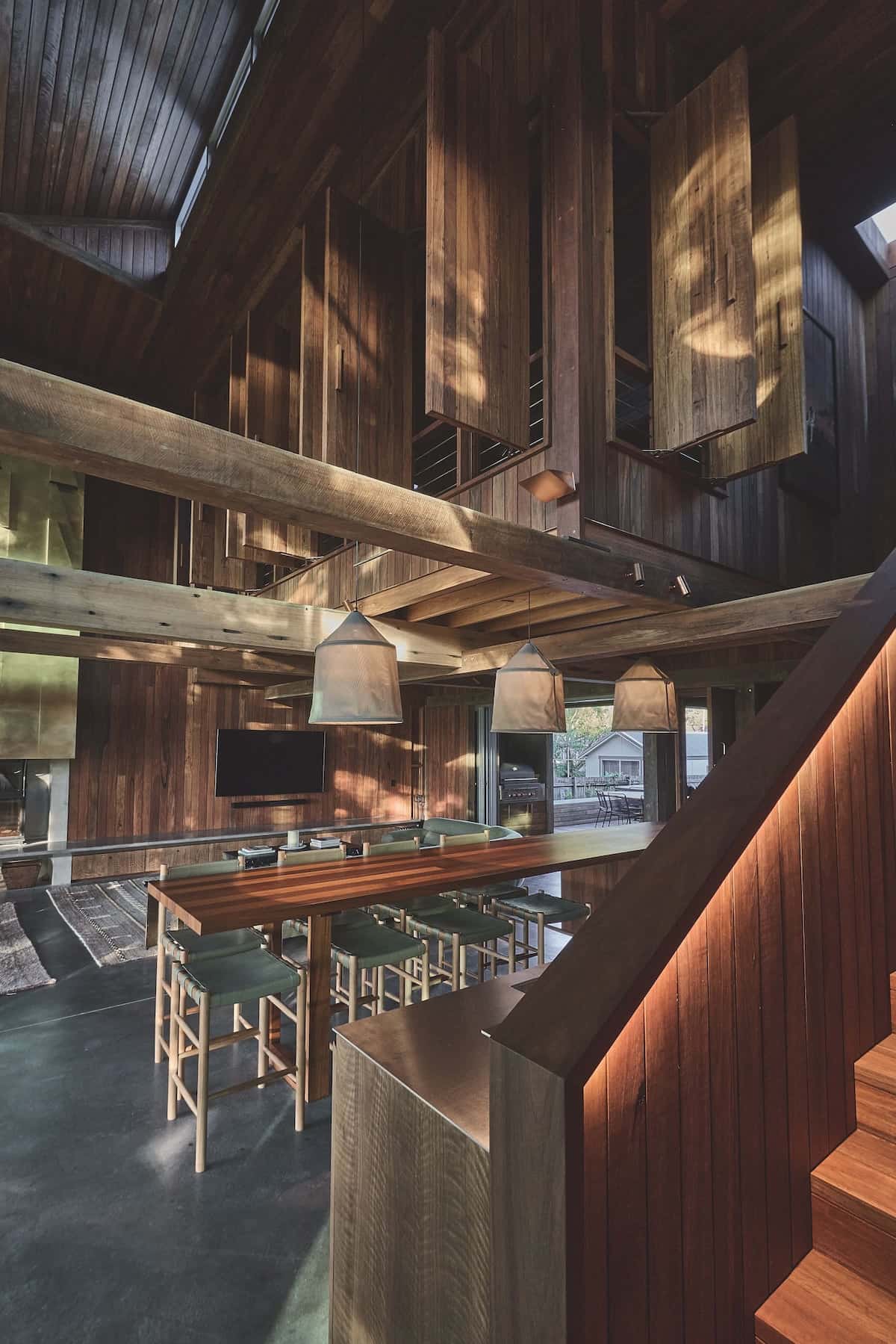
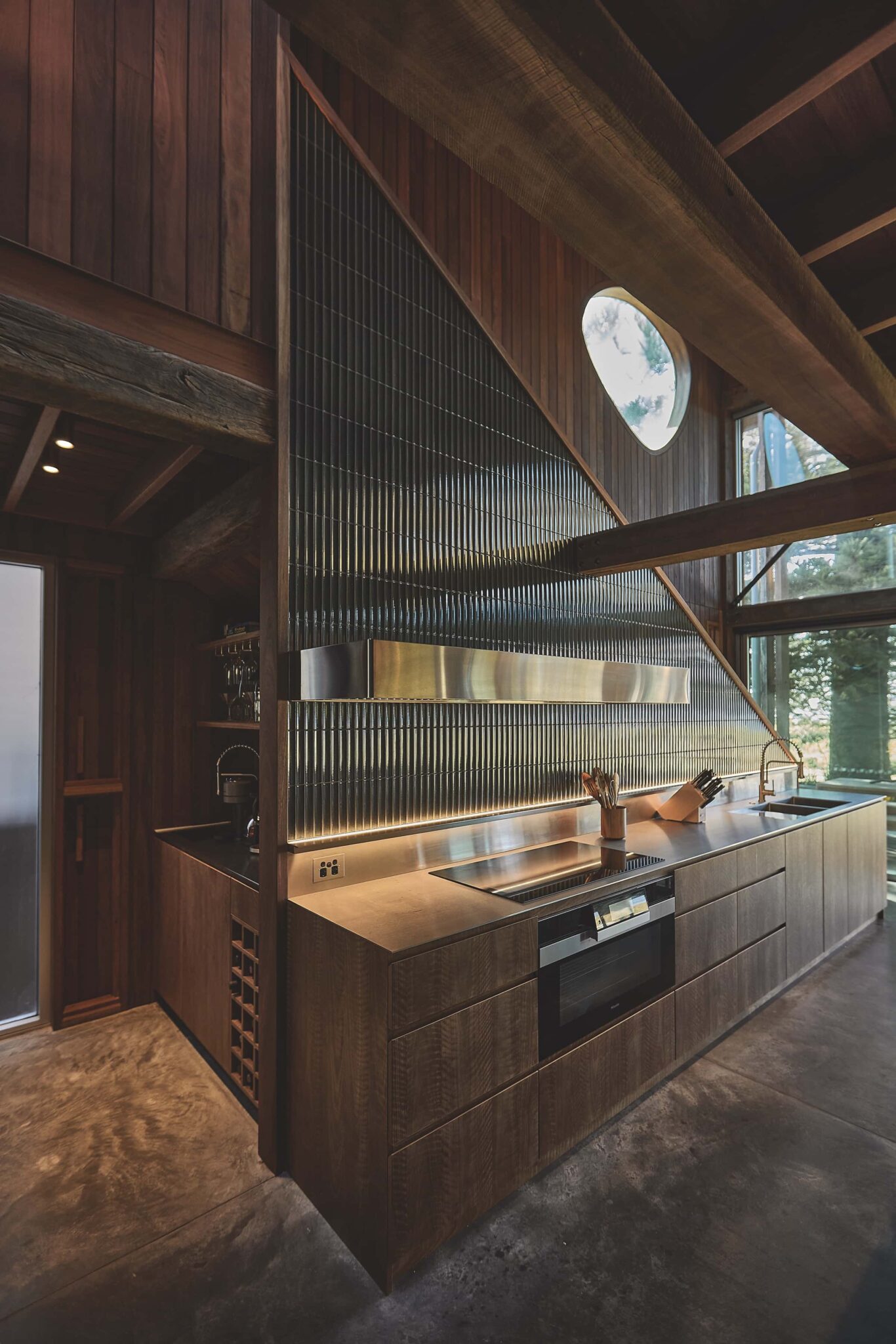
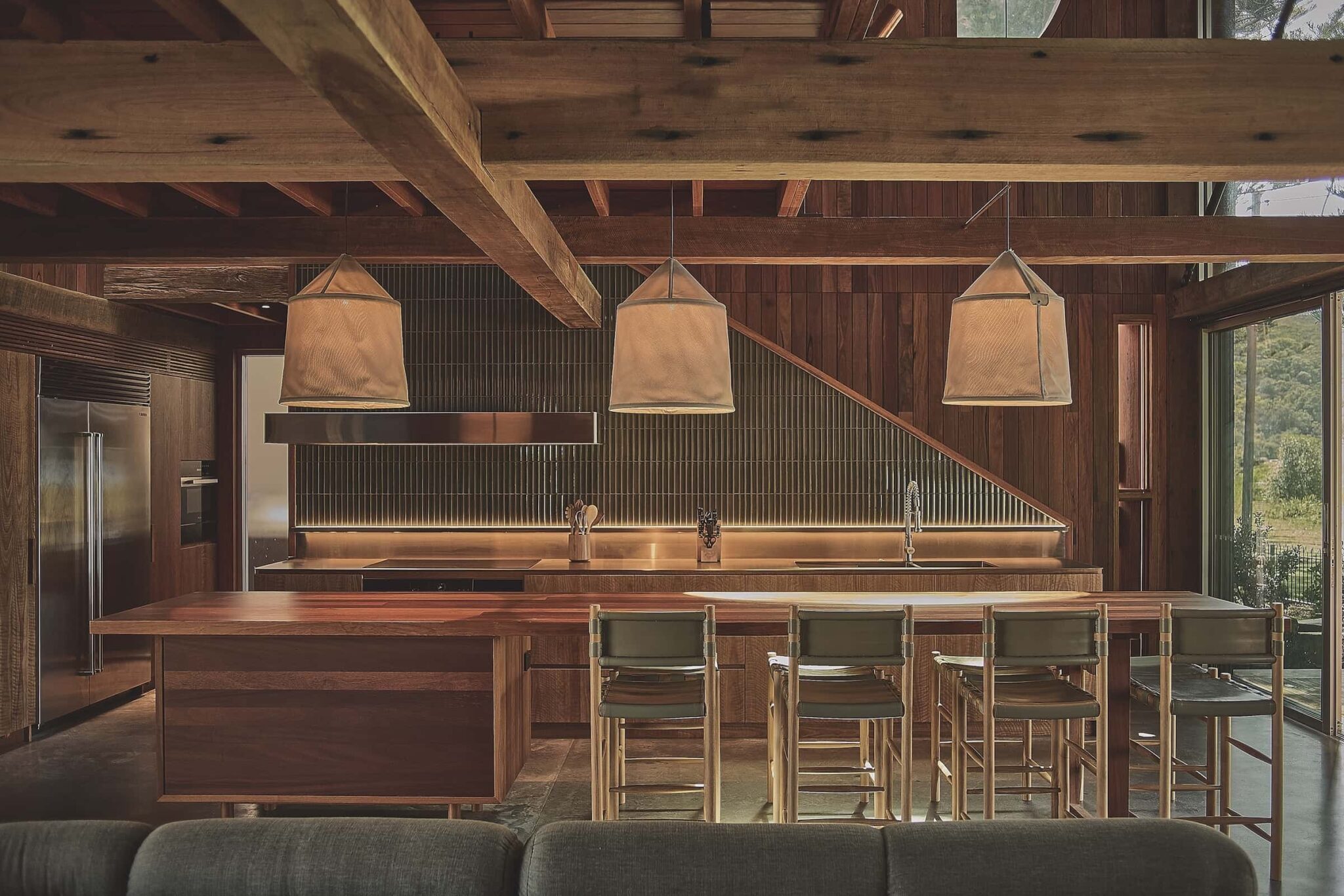
The kitchen is the central zone, with the large island made from reclaimed teak acting as both bench and dining table.
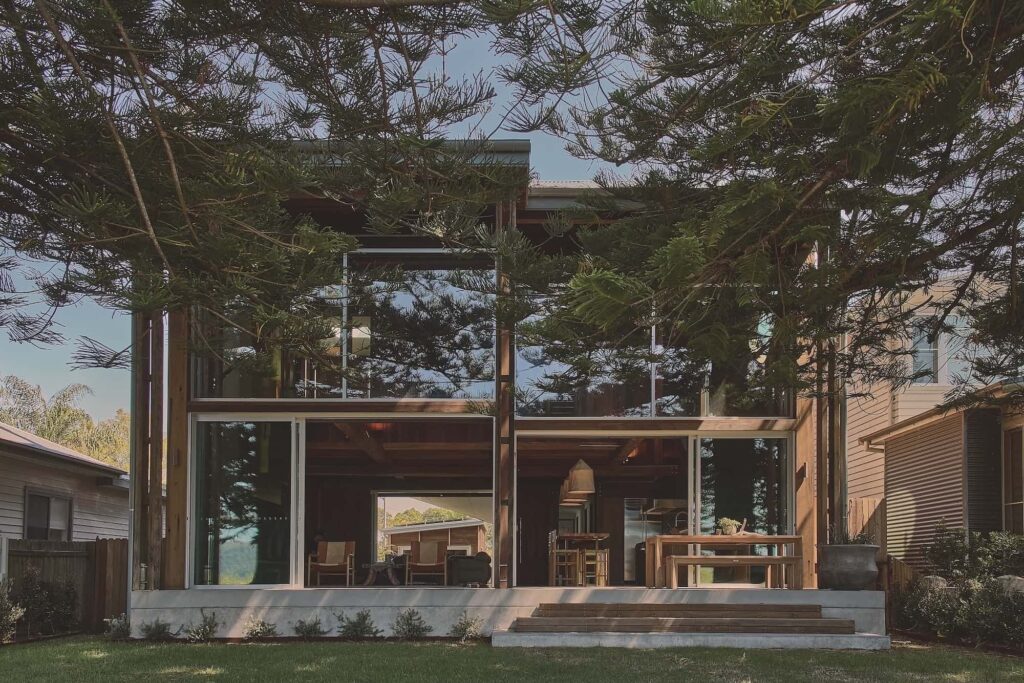
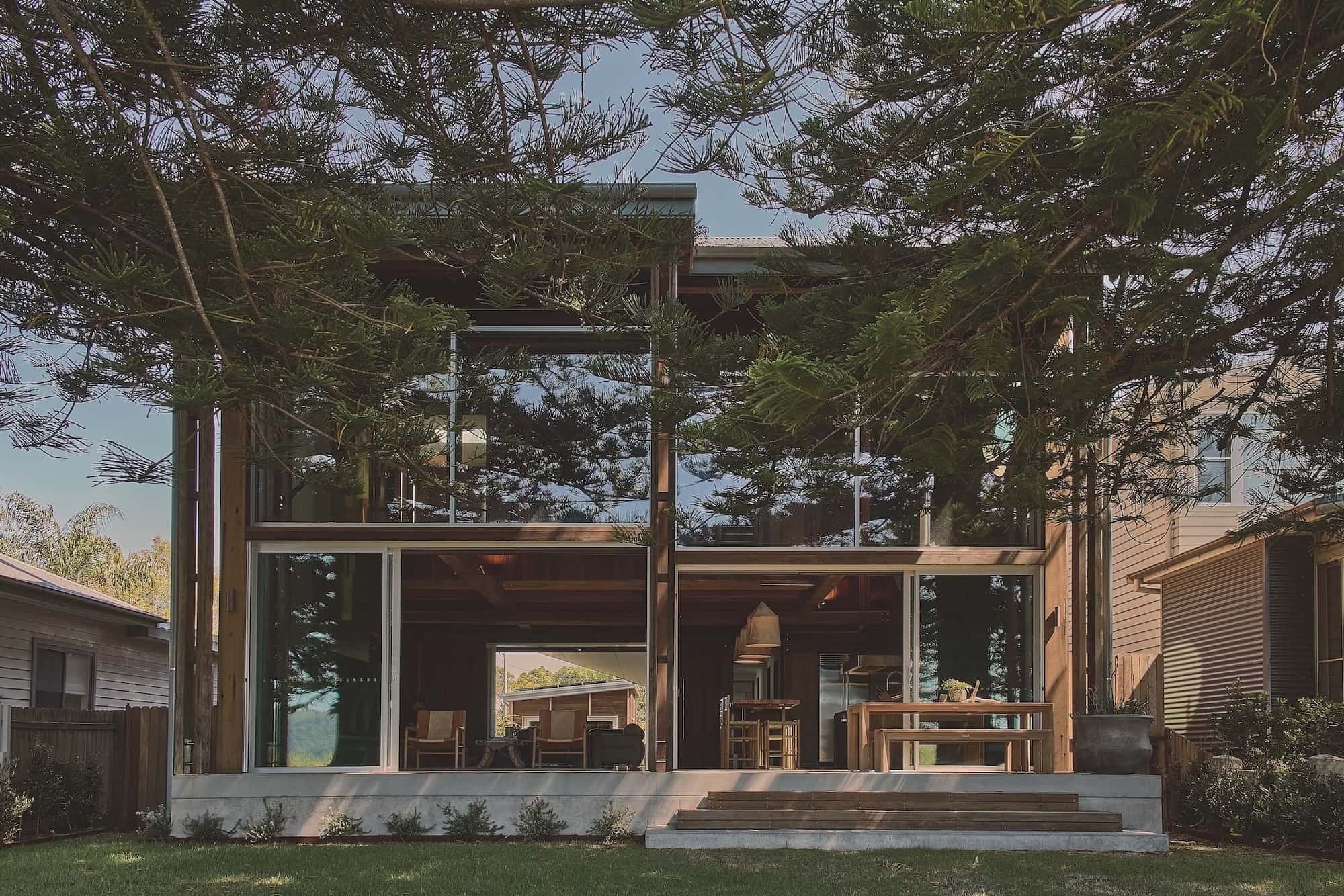
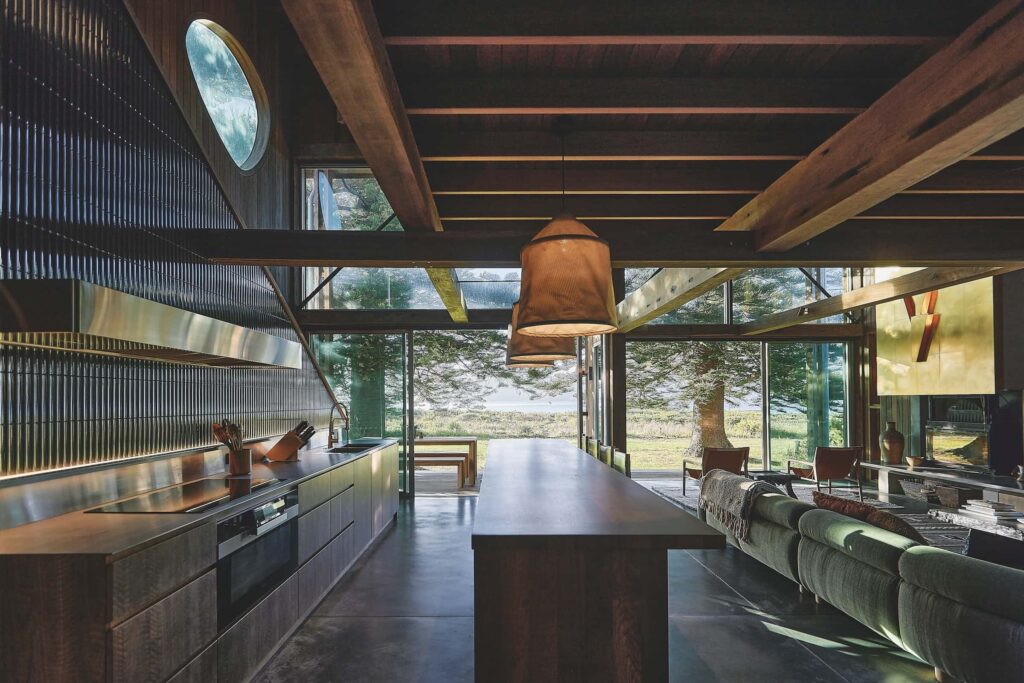
The main pavilion sits atop a concrete plinth, slightly elevating the home to aid with tidal surges.
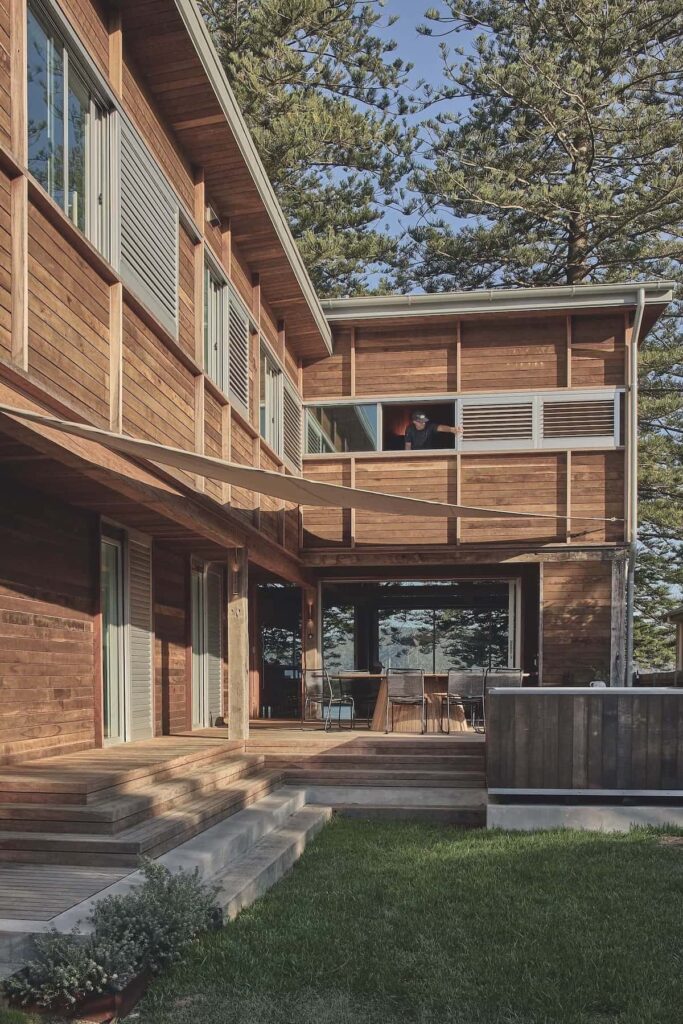
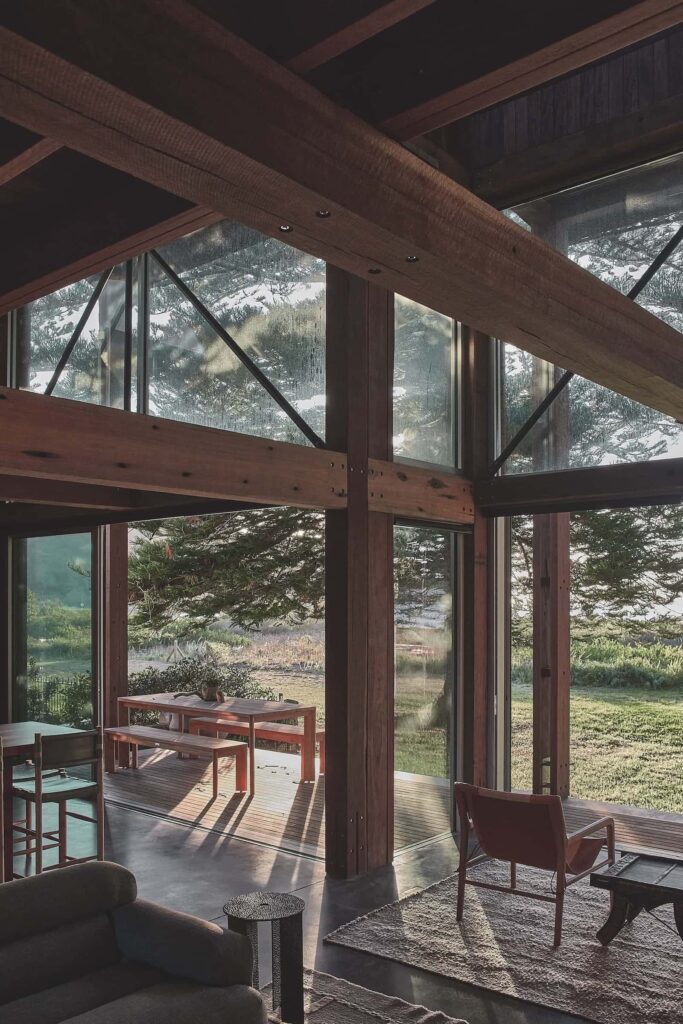
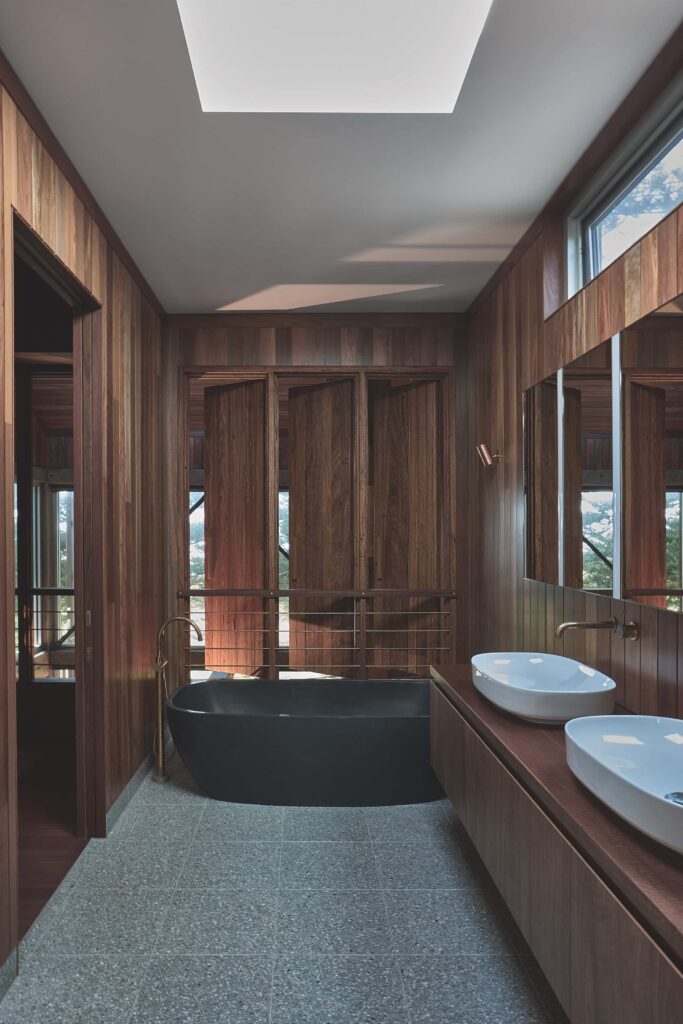
The entire home is, in essence, a timber box, wrapped inside and out in the hardy material.
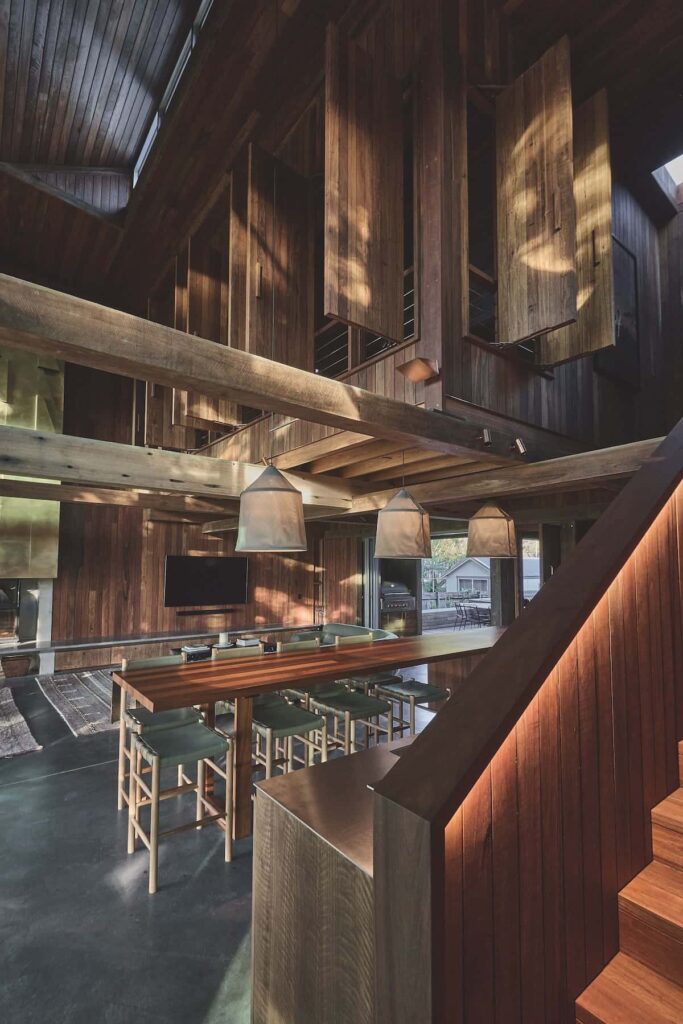
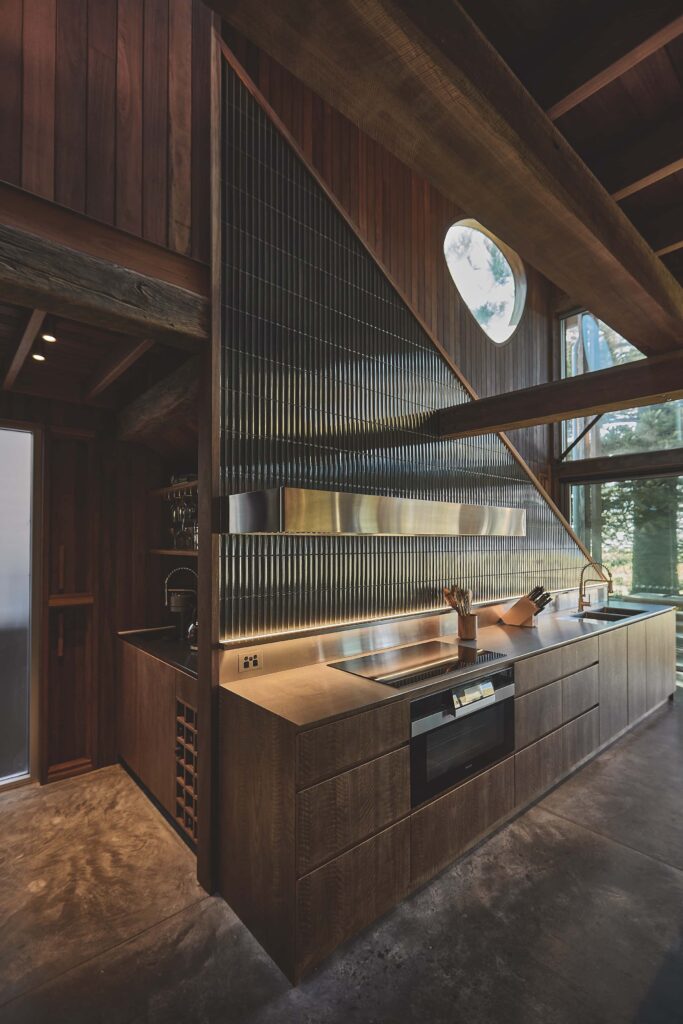
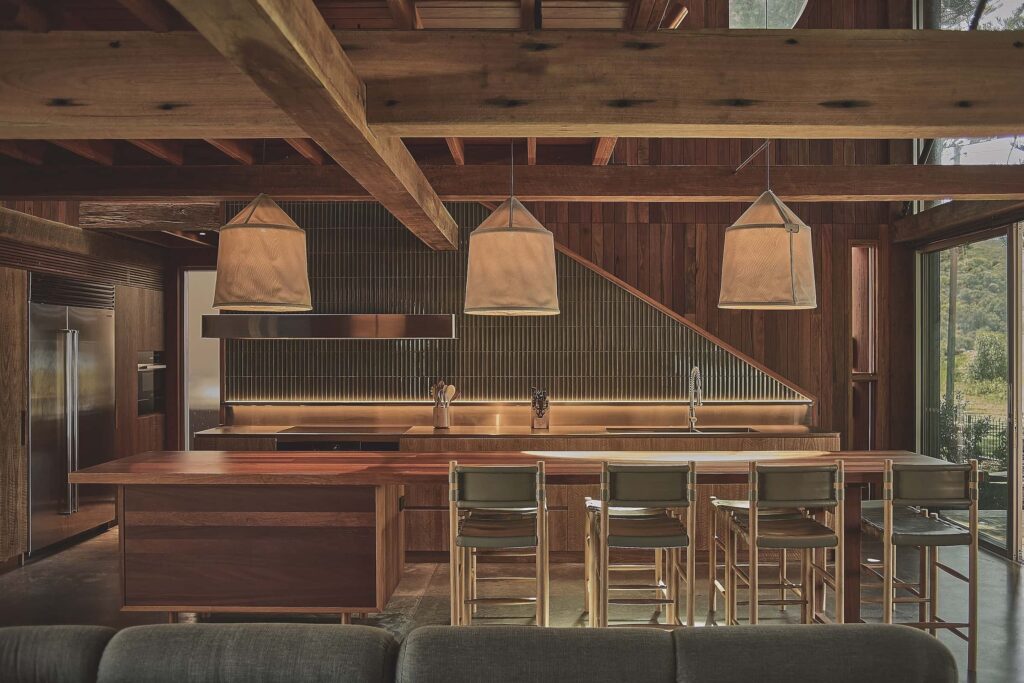
The kitchen is the central zone, with the large island made from reclaimed teak acting as both bench and dining table.
A vessel for childhood memories, seasonal light and sea breezes, Australian coastal architecture has a long history of humbly ageing in place.
Patonga Beach, north of Sydney, is a quiet, coastal community set within a cove where the Hawkesbury River snakes away from the ocean. Tall Norfolk pines act as sentinels along the beachfront, standing guard in front of Patonga House.
The site, inherited by the current owner from his parents, once held a modest two-bedroom asbestos-laden shack. But it was the backdrop to long childhood summers spent fishing and swimming. As a place layered with personal memories, the client still returns, now with his own family in tow. The brief then was to recapture that sense of retreat while bringing in modern amenities and anticipating future needs. “There was a very strong brief around memory, but also a desire to set an example of how you might build by the sea in a more thoughtful way,” Rob Brown, of Casey Brown Architecture notes.
Context is omnipresent and does the heavy lifting in this project. The house sits on an east–west axis, facing the beach and Broken Bay to the south-east, flanked closely by neighbours on either side and fronted by two of those mature Norfolk pines. As Rob describes it, it’s “an aggressive maritime environment”. Southerly winds regularly whip up salt and sand. In winter, though, the afternoon sun drops warmly into the block. These patterns of light, wind, view and exposure were the project’s starting point.
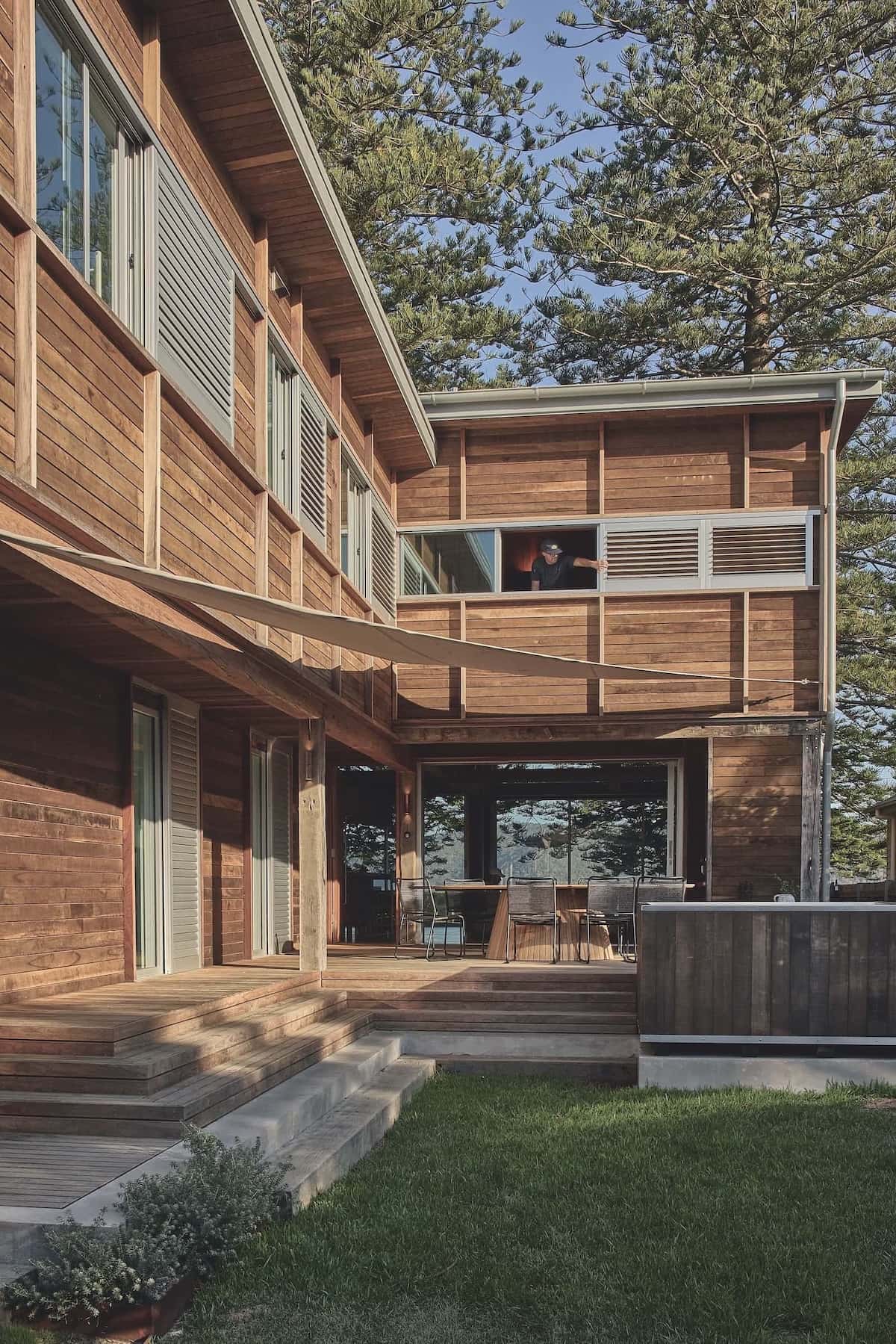
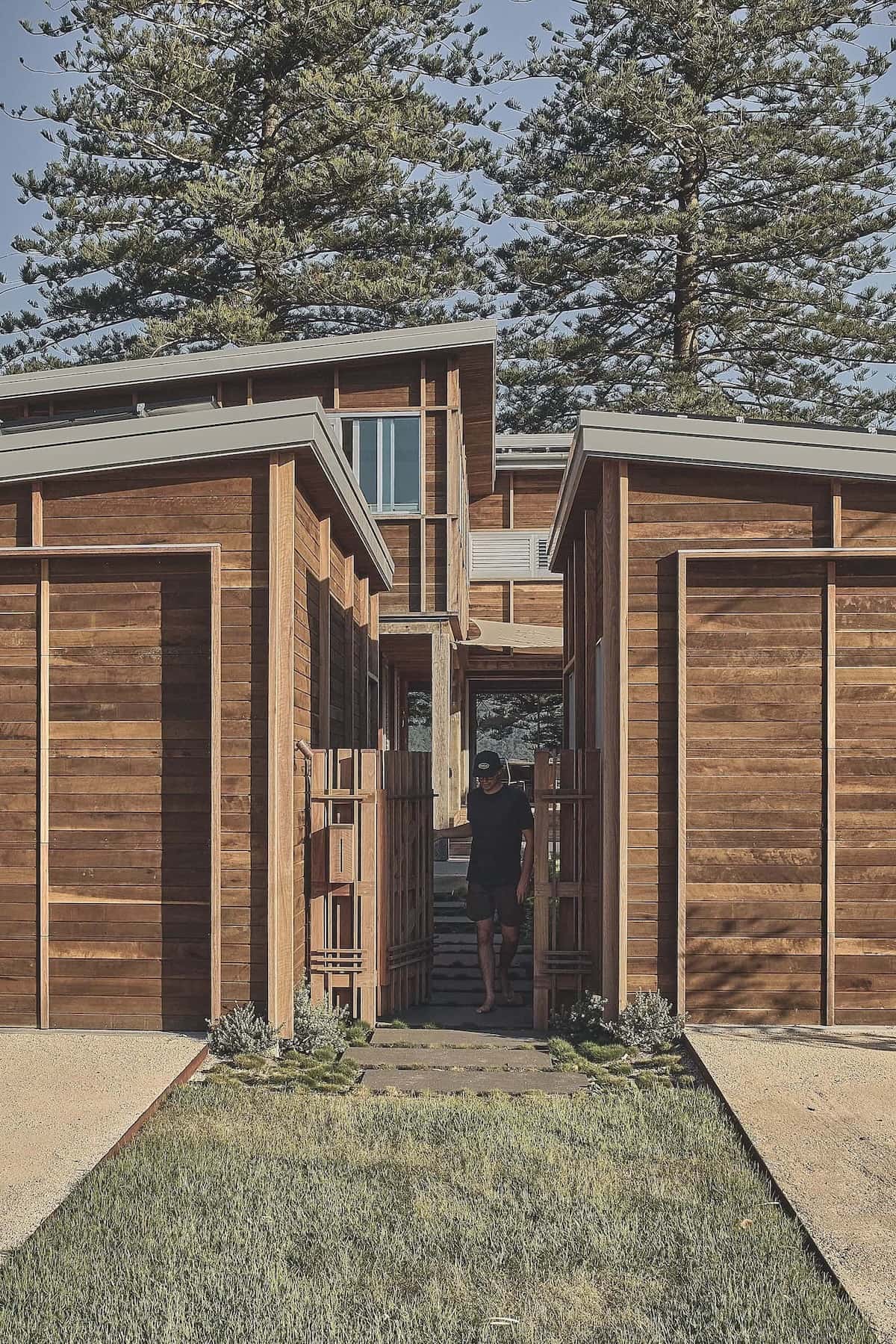
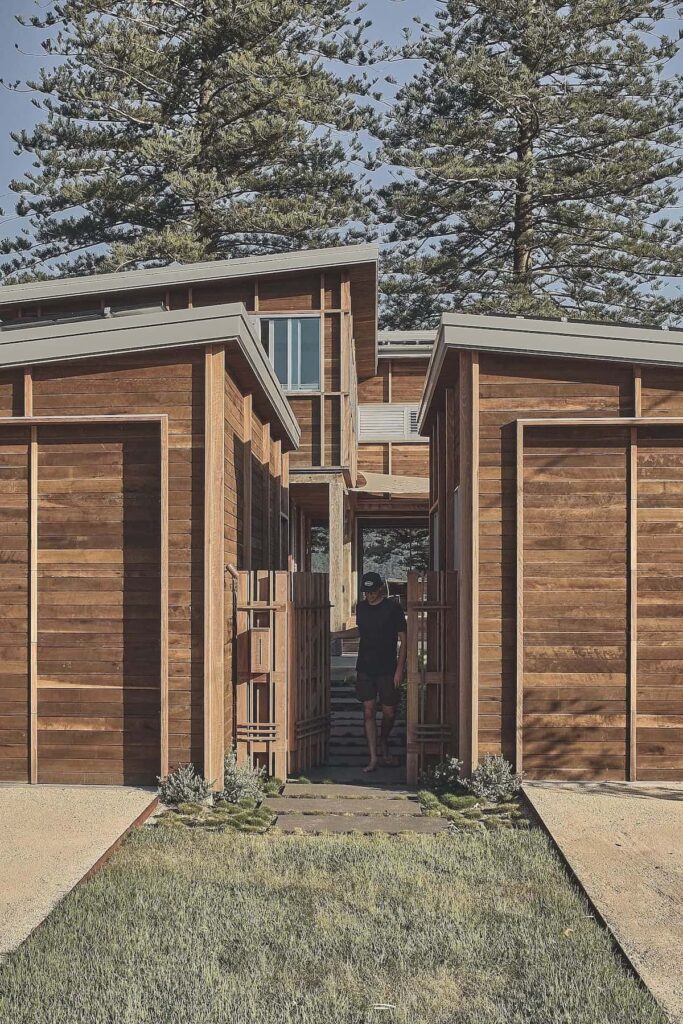
“All good architecture should be contextual,” Rob states. Following this mantra, the form, materials and layout at Patonga House are all a response to building close to the ocean. Rather than one large object on the site, the main house is broken into two timber pavilions elevated on a concrete platform to protect against tidal surge. The placement encloses a sheltered courtyard at its heart. To the street, the scale is deliberately low key: two smaller structures – a garage and a kids’ “muck-around” room – form a threshold, privatising the western edge and marrying up with the street’s pattern of weatherboard cottages.
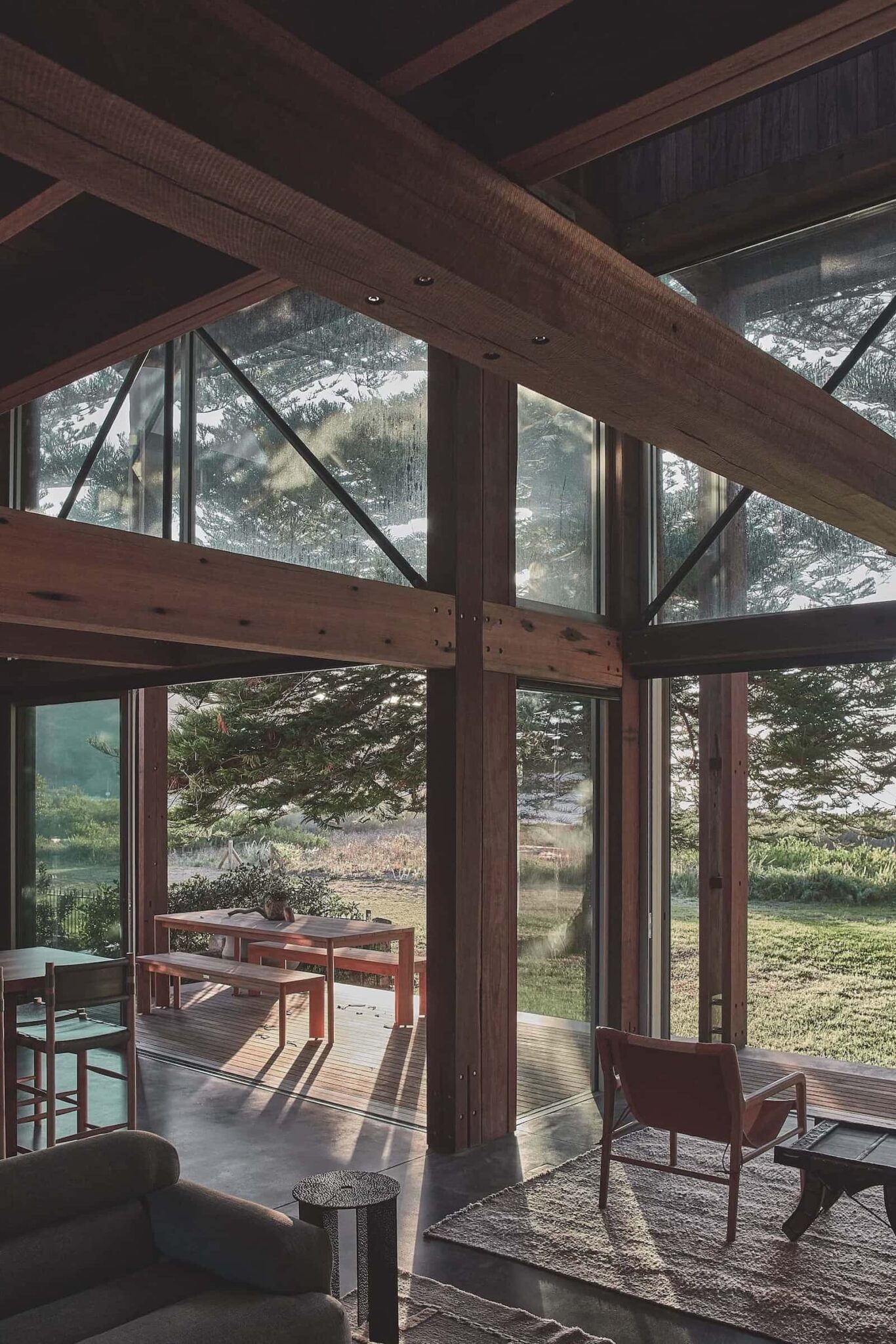
The arrival sequence is calibrated as a kind of compression and release. Visitors step through a narrow opening between the two smaller structures on the street and are drawn through to the planted courtyard. A few steps lead up to a timber colonnade, and into the front door of the main pavilion. Inside, the space expands into a double-height living area that embraces a full view of the water.
Functionally, the house is set up as a flexible holiday retreat that can accommodate up to 12 people. Downstairs, the main pavilion holds the working zones of family life: kitchen, living and dining are combined around a single, long island bench that doubles as dining table. Upstairs, the main bedroom takes in the ocean view, while a series of bedrooms in a rear wing provide enough room for children, extended family and guests.
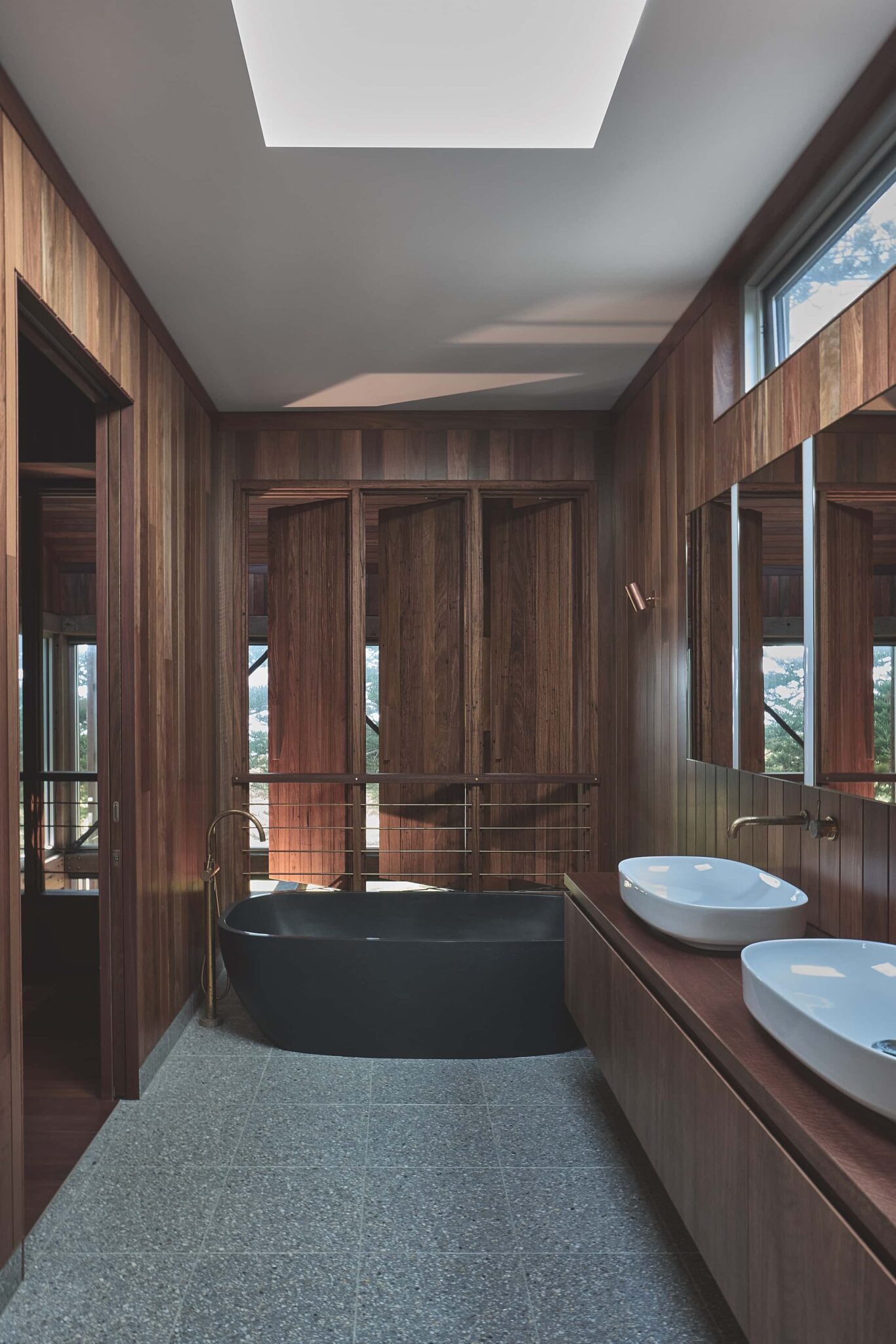
Materially, the house is almost entirely raw timber, inside and out – a direct response to the harsh coastal setting. “In a place like this, any form of paint becomes an endless job of maintenance,” Rob says. Rough sawn spotted gum boards wrap the exterior, which will slowly weather to a driftwood grey; or as Rob describes it “an old log on the beach”. Internally, there is no plasterboard in sight – just timber lining, the expressed structure and joinery. It makes for a warm environment and ensures nothing feels too precious to withstand the whims of nature.
Much of the structure comes with its own history. Large beams were salvaged from a disused bridge over the Clarence River, vastly oversized for their new loads but perfect for a house that will continue to wear in, rather than out. “These timbers last forever if they’re not damaged or termite ravaged,” Rob explains. The kitchen island bench is made from reclaimed Burmese teak, also salvaged, this time from a CSIRO laboratory in Canberra, with help from recycling specialists Thor’s.
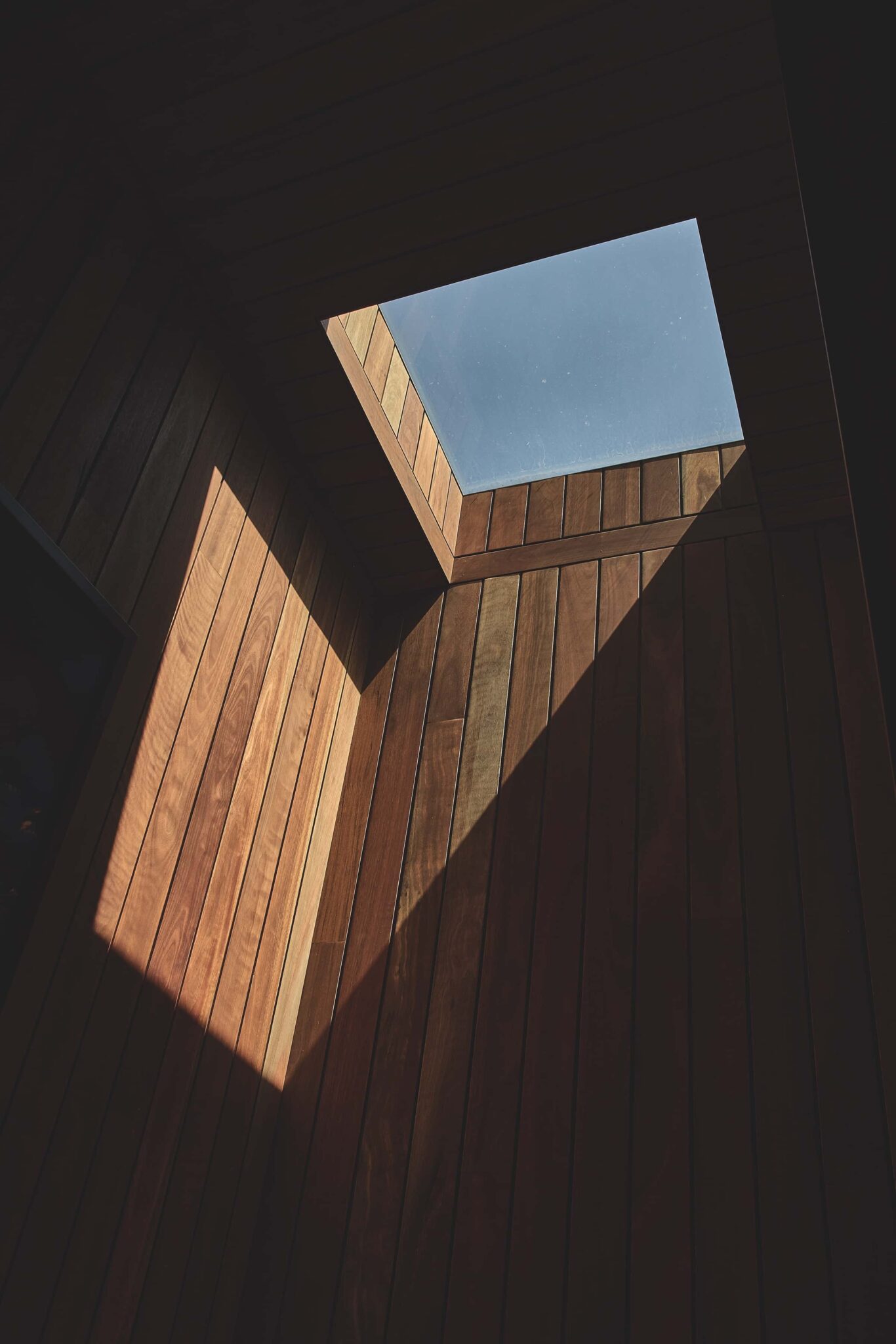
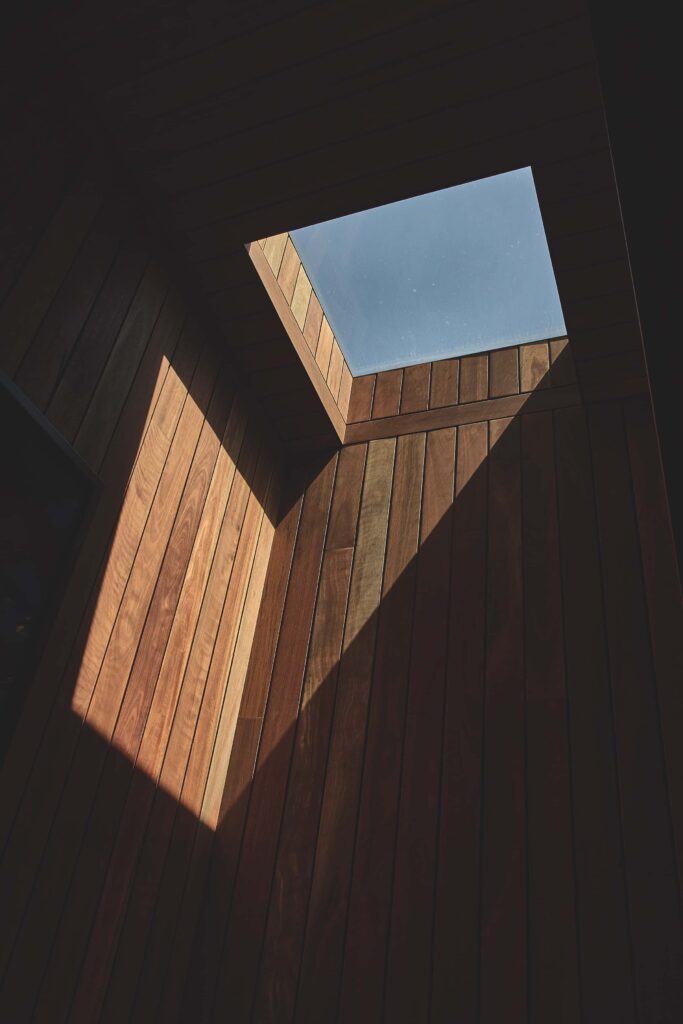
“There is a combination of both passive and active interventions,” says Rob, noting the compact footprint, highly insulated walls and double glazing. The concrete floor slab has electric hydronic heating, drawing from the large rooftop solar array and battery system, hidden from view to preserve the roofline. In summer, a combination of operable windows, ceiling fans and carefully placed openings encourages cross ventilation. The double-height living space works as a thermal chimney, with high windows that scoop light in but allow hot air to escape. To the south, a series of adjustable louvres that function as gills can be opened to admit cooler air.
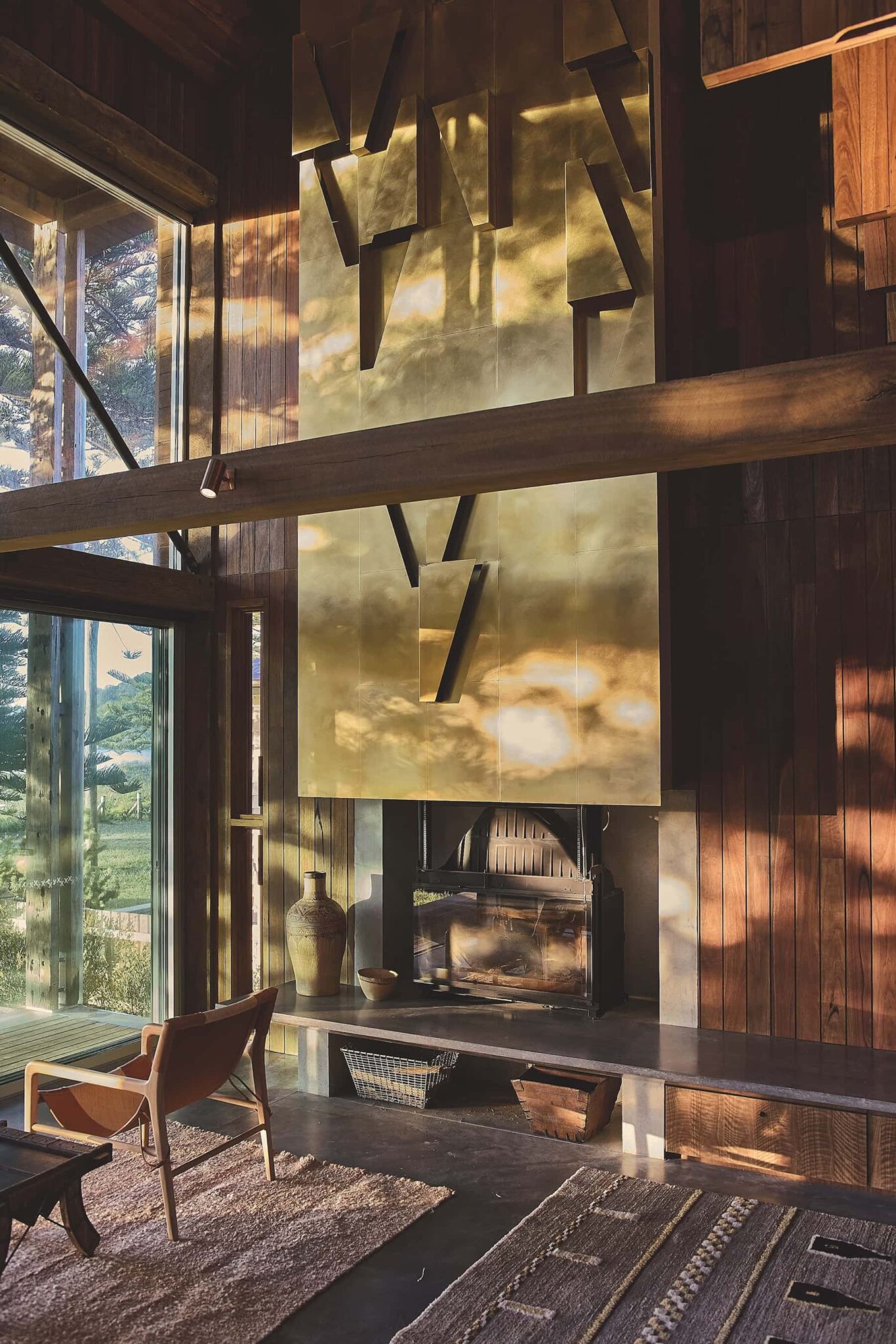
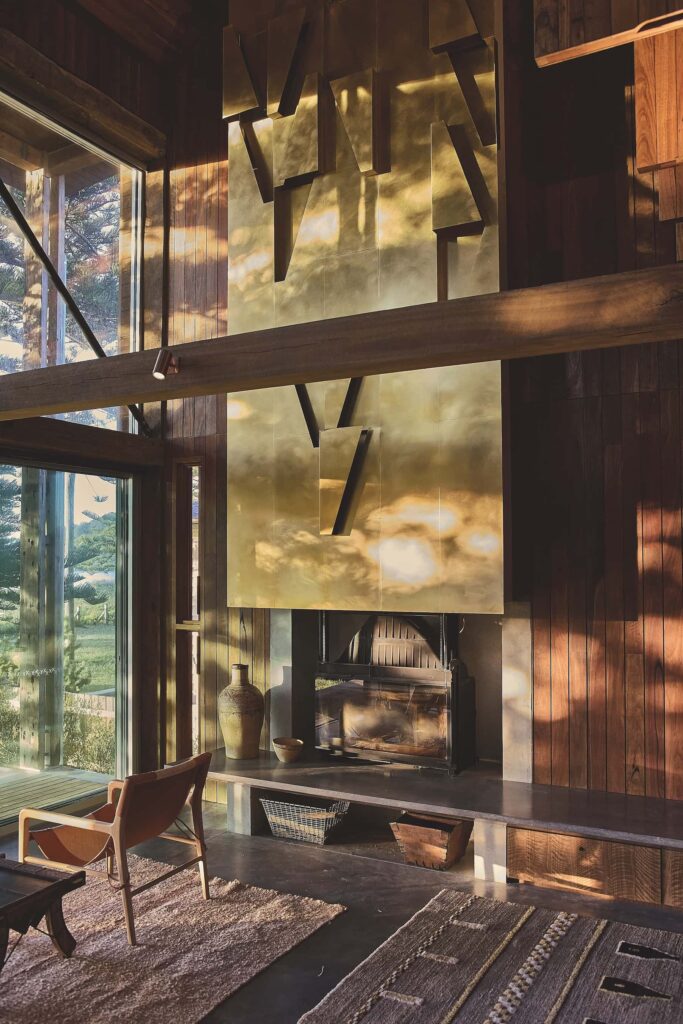
Layered through this pragmatic framework are a series of one-off installations by interior and furniture designer Caroline Casey. On the northeastern corner, where there is no adjoining building, Casey has designed an irregularly shaped oval eye window: a complex element that pulls northern light deep into the house throughout the day. In the double-height living space was another opportunity for something original – a massive brass-wrapped fireplace where protruding, angular forms inspired by the yachts moving across the water express high craftsmanship. Patonga House reads as a contemporary reimagining of the Australian beach house: durable, timber-lined and respectfully anchored in place. It’s a house that will continue to settle into this village and anticipates the trace of many summers to come.
“There was a very strong brief around memory, but also a desire to set an example of how you might build by the sea in a more thoughtful way.”
Specs
ARCHITECT
Casey Brown Architecture
PASSIVE ENERGY DESIGN
The house is orientated on an east-west axis to receive sea breezes and create a sheltered western garden for winter sun. The ground floor is elevated on an electric-heated concrete slab for protection from wave surges and rising sea level. Built entirely of recycled timber with heavily insulated walls and roofs to keep out summer heat and retain winter heat. A large sun scoop directs afternoon light into the eastern portion of the double-height living spaces while acting as a thermal chimney in summer. Eastern and western decks soak up the morning and afternoon sun. Fans and controlled highlight windows draw cool air in via vertical timber vents on the southern side providing natural cooling when needed. Windows and doors are all double glazed with adjustable external shutters to the western elevation keeping the hot summer sun out.
MATERIALS
The ground level has a polished concrete slab for improved thermal mass. The first floor is all spotted gum floorboards. The main volumes are of highly insulated, lightweight, mainly timber-framed construction clad internally and externally in recycled spotted gum boards rough sawn externally and left to weather to a driftwood grey while internally oiled to create a durable patina. The interiors feature expressed recycled timber posts and beams from Thor’s Hammer in Canberra.
GLAZING
Anodised aluminium double-glazed windows with external shutters and internal blinds.
HEATING AND COOLING
Under floor heating in the ground floor, natural cross ventilation and fans for cooling and a large wood-burning fireplace provide winter heat to the living spaces and main bedroom.
HOT WATER SYSTEM
Electric heat pump.
LIGHTING
The house uses low-energy LED lighting from Tovo.
ENERGY
A 12kW grid-connected solar power system populates the unseen roofs and is connected to three Tesla batteries in the garage making the house completely self sufficient in energy.