A Chef’s Paradise – Kitchen Garden on Historical Site
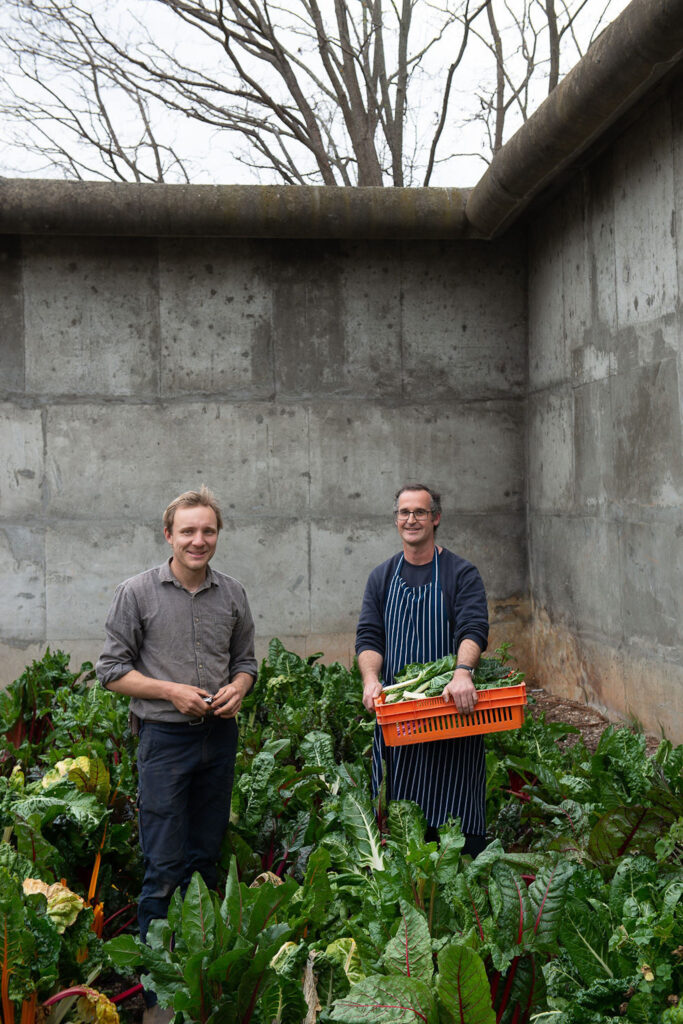
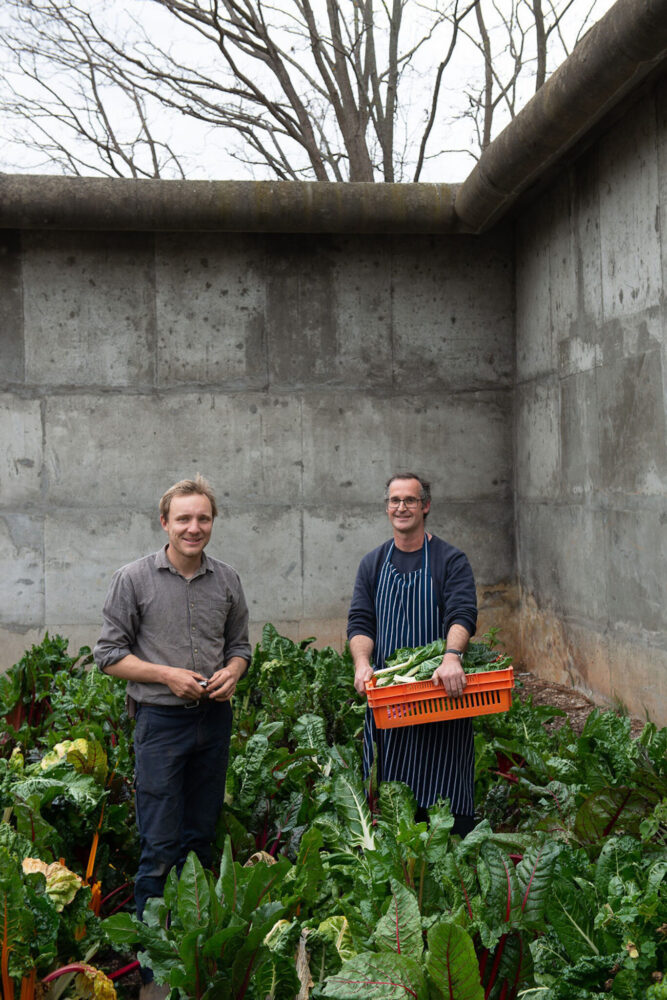
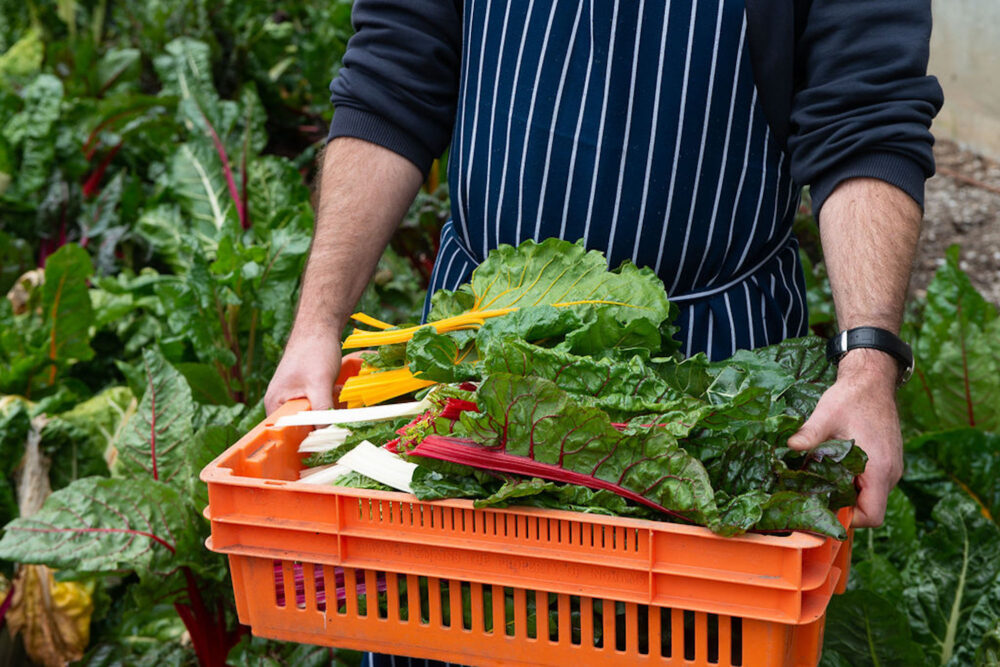
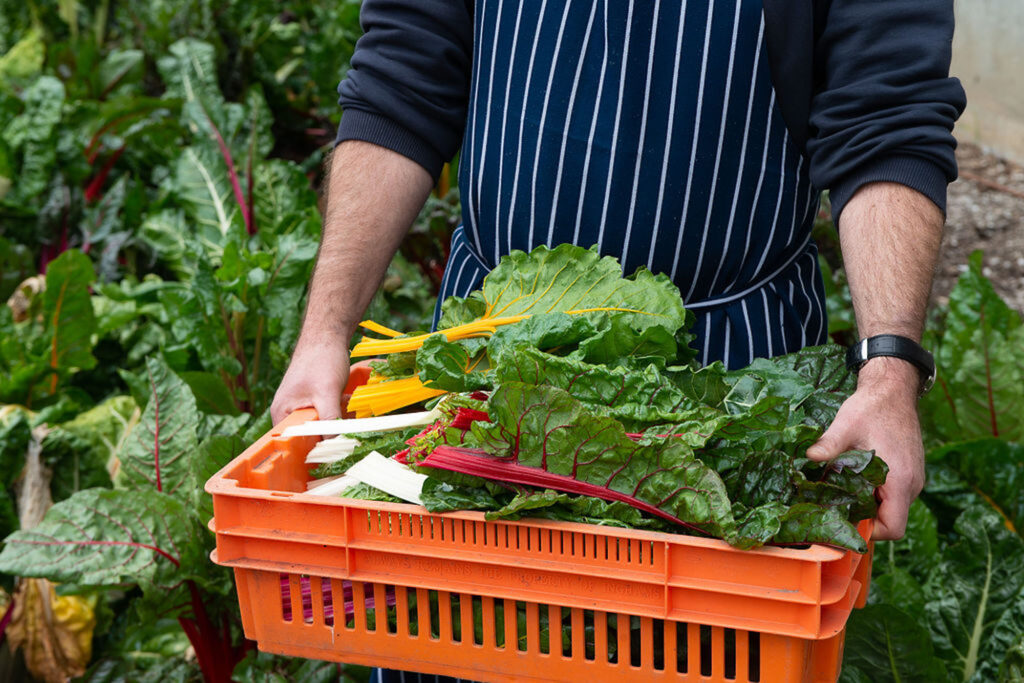
The Agrarian Kitchen’s head gardener Mitch Thiessen on the left and co-founder Rodney Dunn among the chard crop.
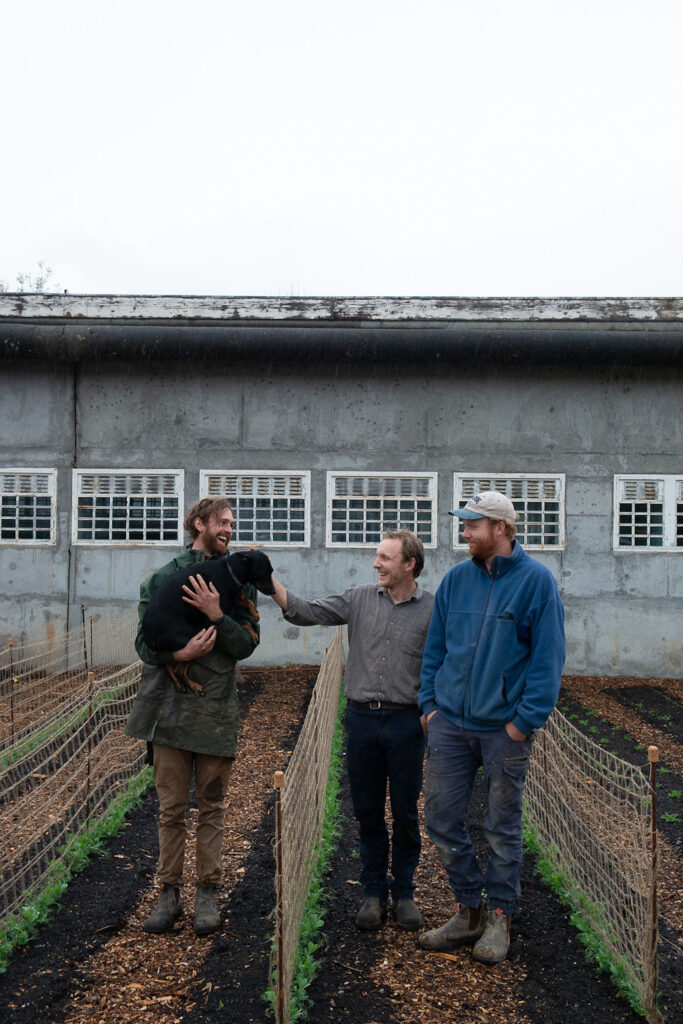
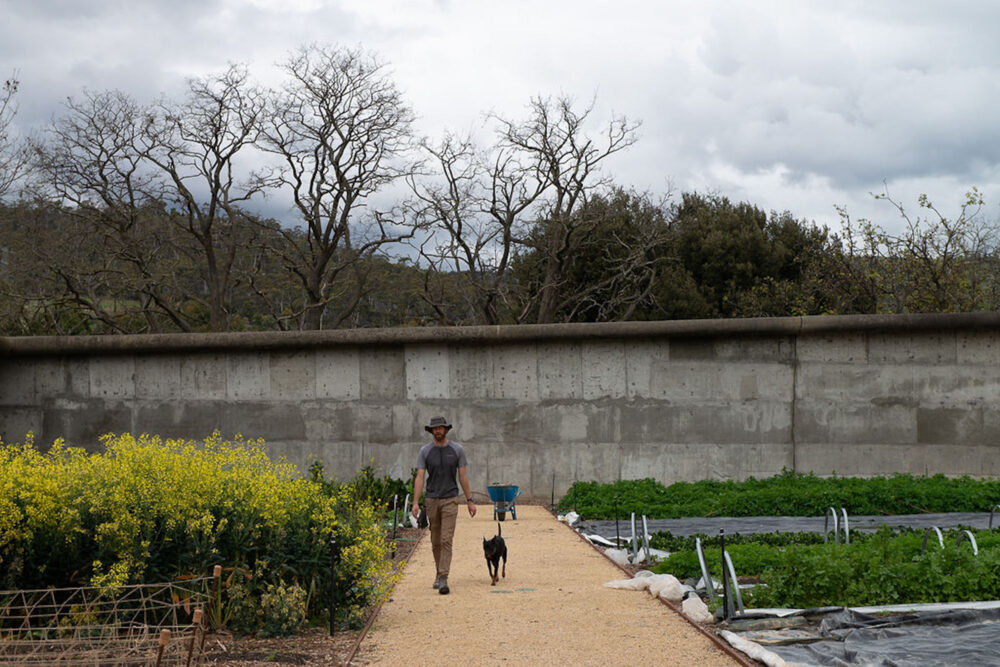
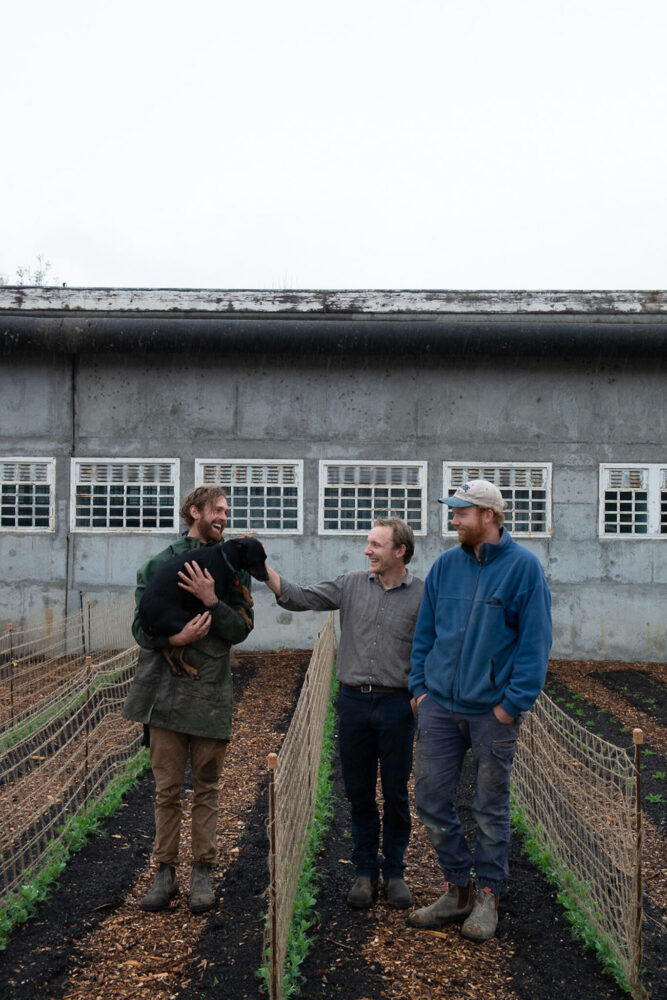
Gardeners Josh Heard, Mitch Thiessen and Otto Vincent with Ringo in amongst the newly trellised pea crop.

Sprigarello is one of the rare varieties the Agrarian Kitchen is cultivating for the restaurant and cooking school.

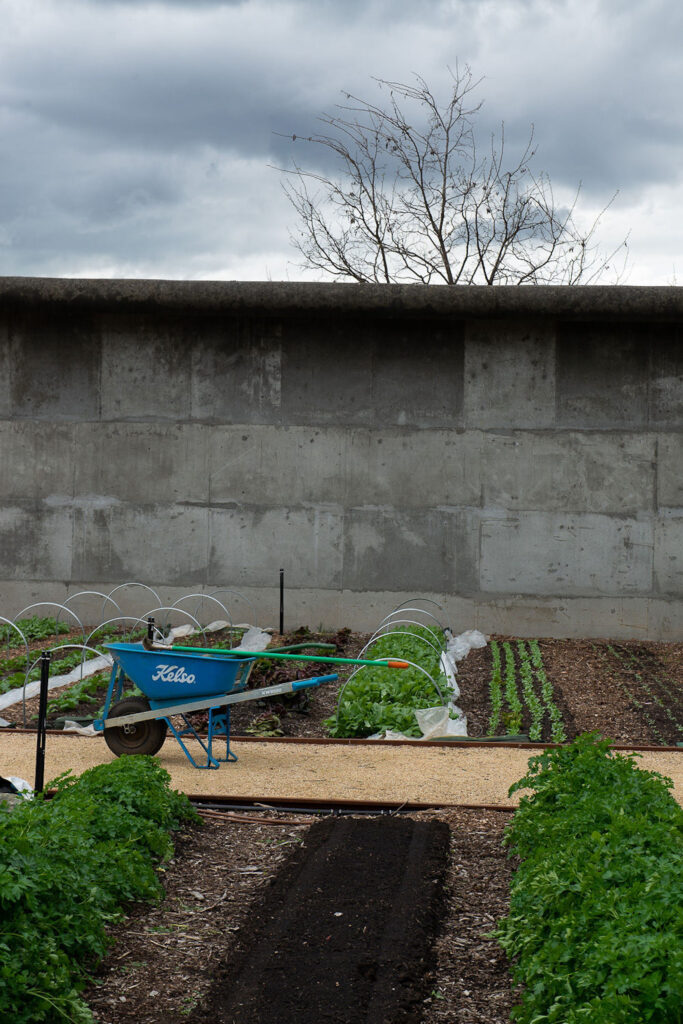
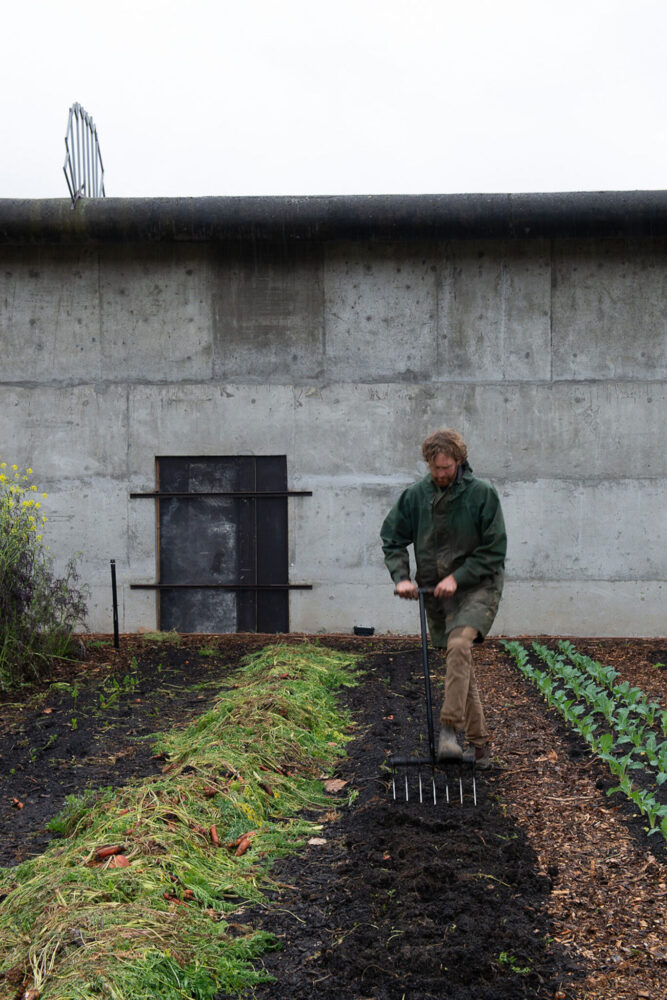
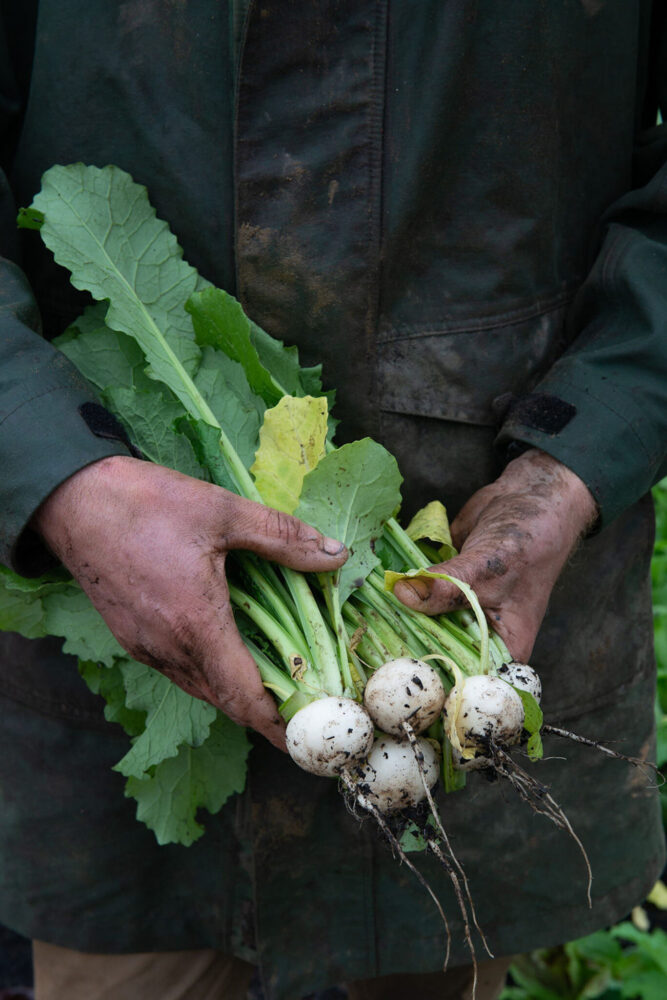
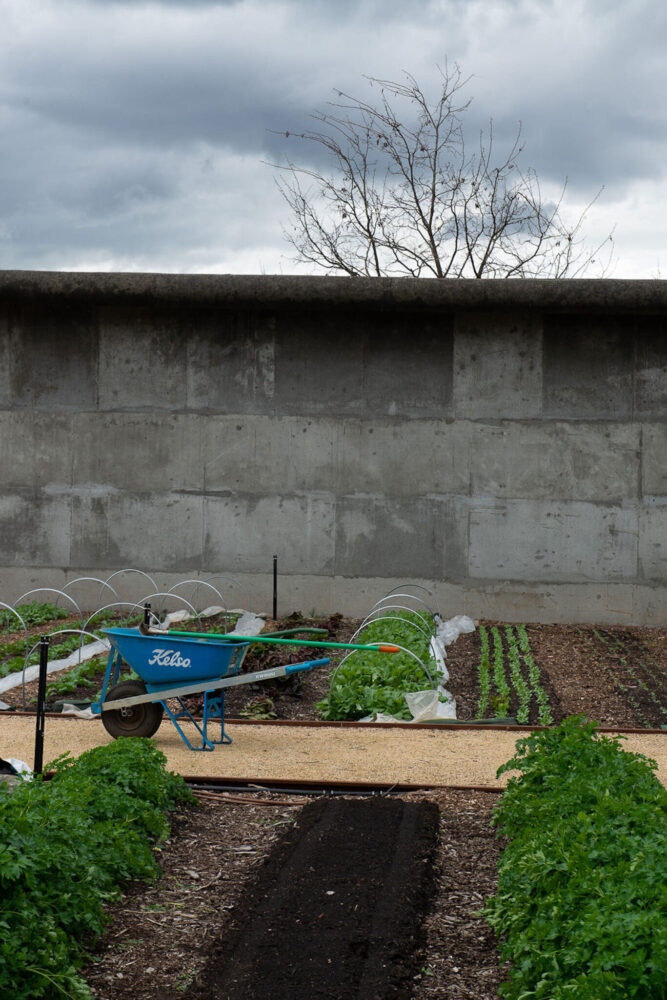
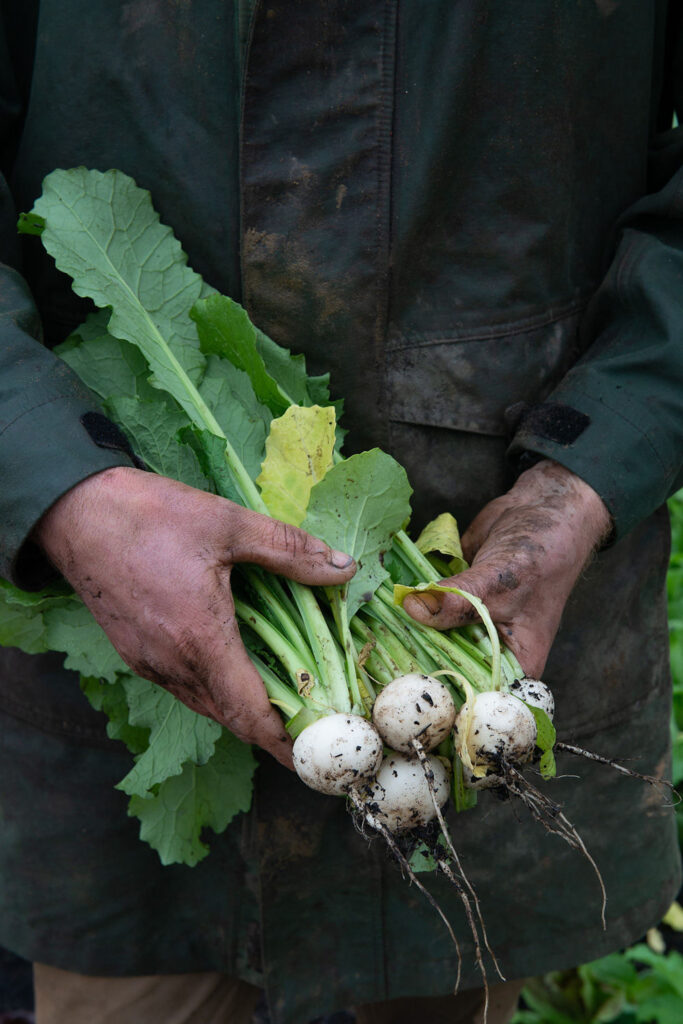
New crops and maintenance are typical of the early spring garden. Here, cime de rapa, radish, turnips and herbs are protected from the weather with hoops and netting. The netting is removed for weeding and maintenance.
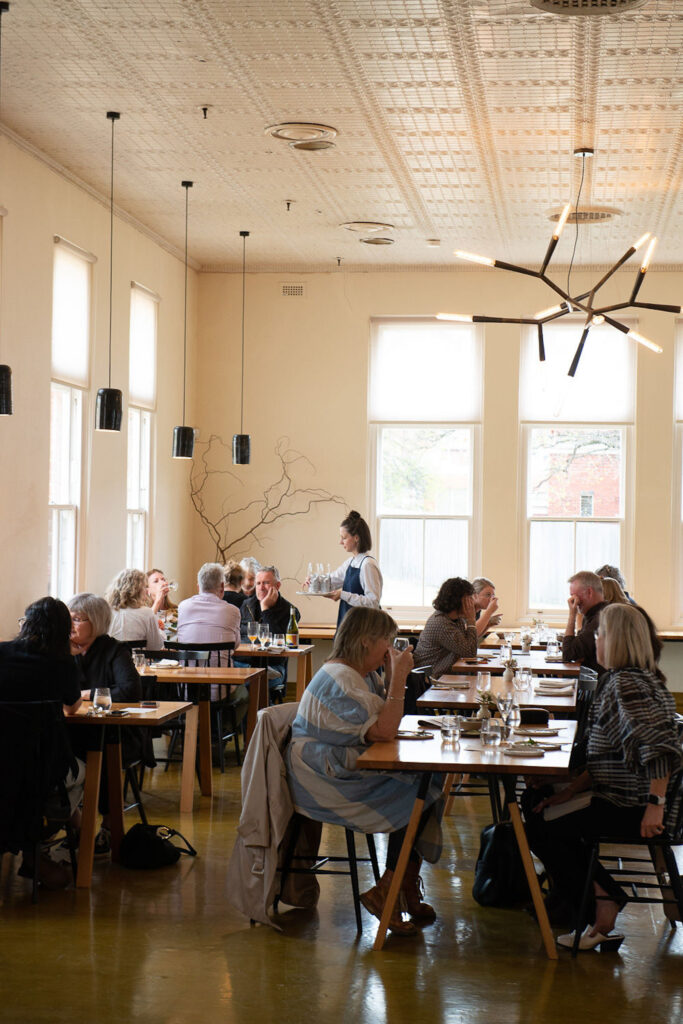
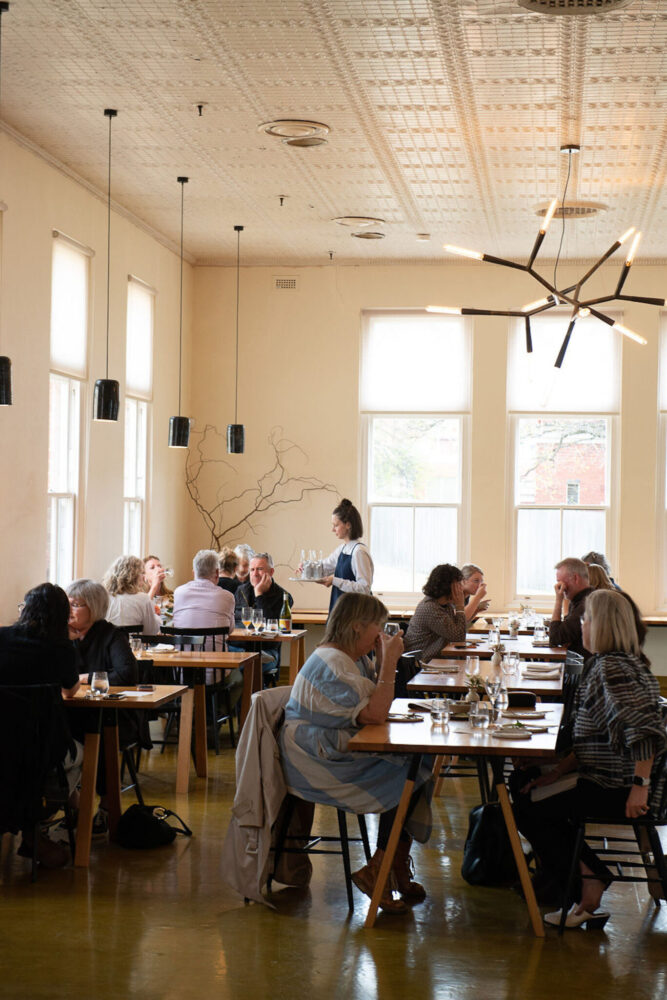
The Agrarian Kitchen restaurant is a beautiful reinvention of the former Bronte Wing of Willow Court.
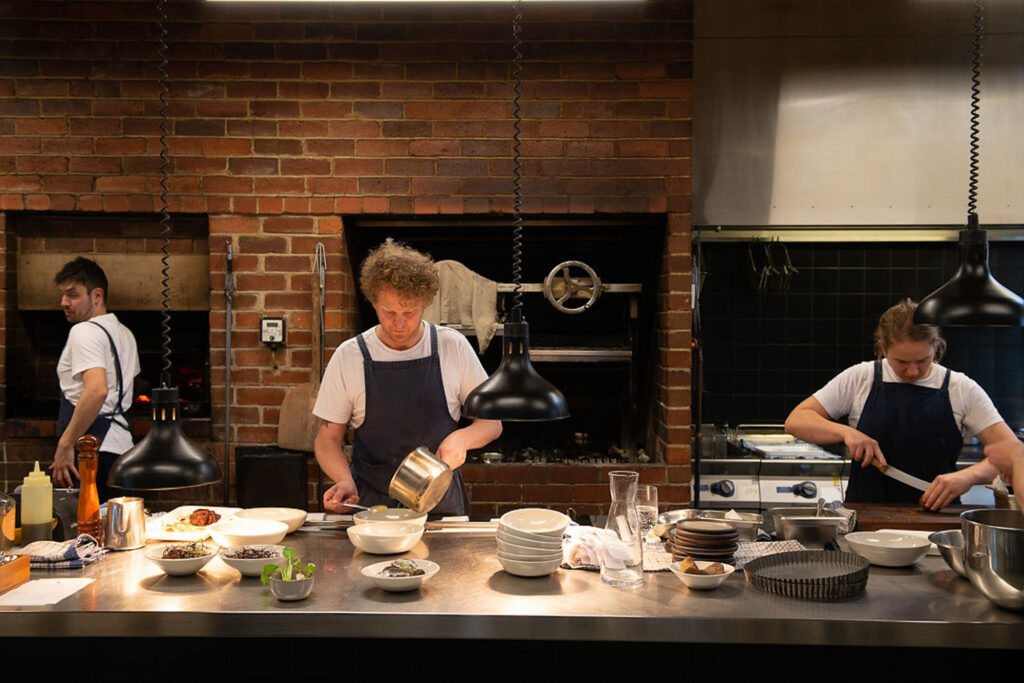
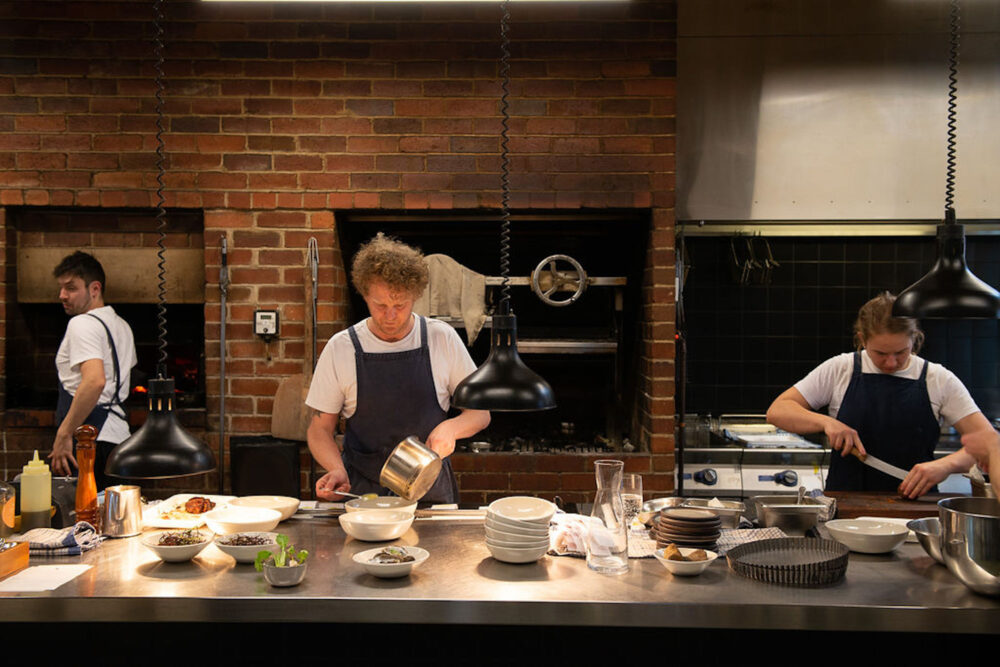
Head chef Stephen Peak during a busy service at the Agrarian Kitchen. Stephen and his colleagues love harvesting from the nearby garden.
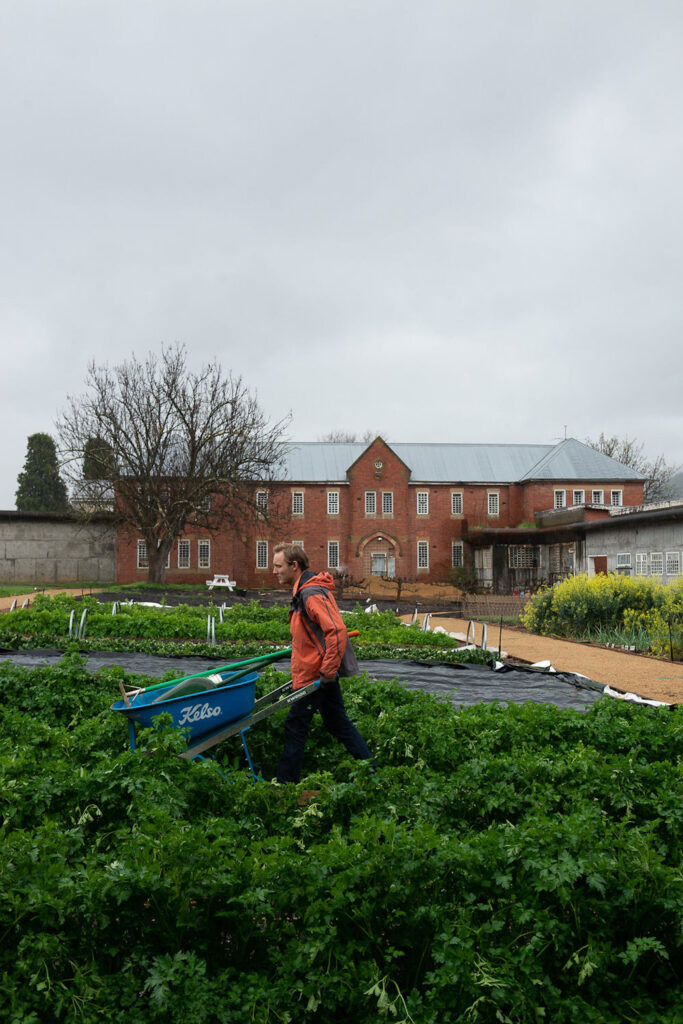
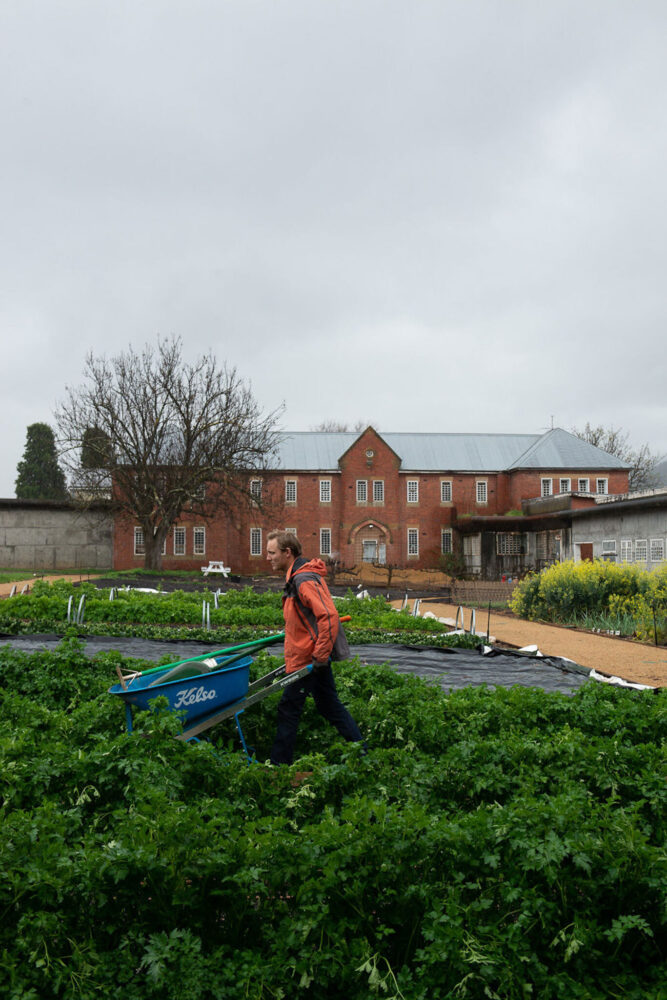
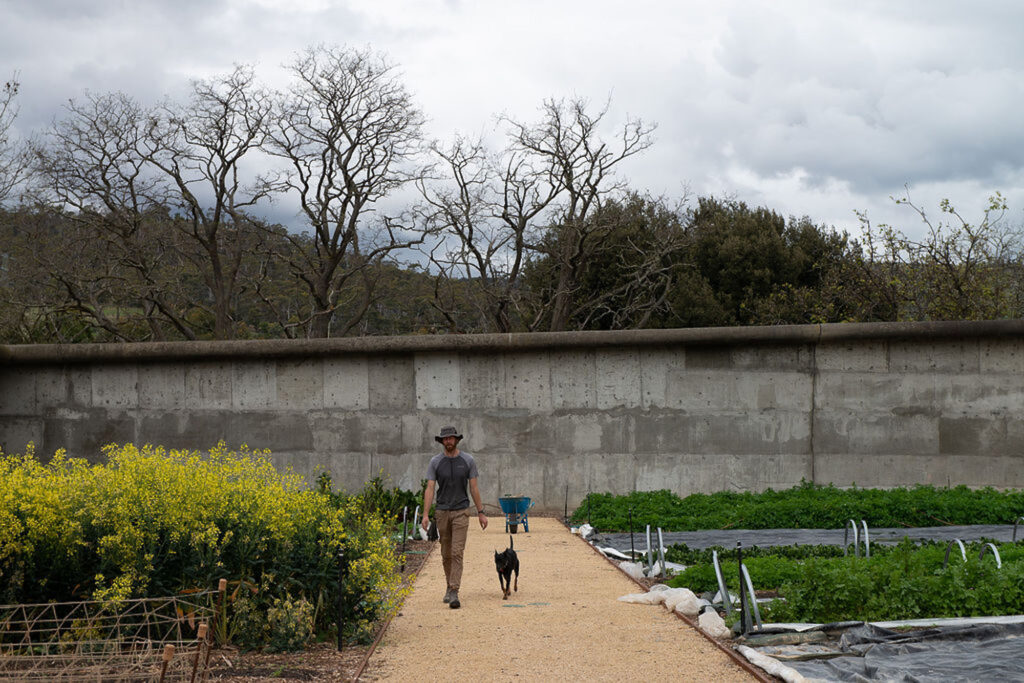
Previously the exercise yard of a historic asylum, this one-acre walled garden was built by the owners of a produce-loving restaurant and cooking school as the ultimate kitchen garden.
If every restaurant had access to a kitchen garden, what might a chef’s dream garden look like? Through a combination of serendipity, evolution and planning, Tasmania’s Agrarian Kitchen may be developing that dream and, in doing so, bringing a sustainable future to a long-forgotten space, releasing it from its troubled past.
What was once the exercise yard for the now decommissioned Willow Court asylum in New Norfolk, is being transformed into a regenerative garden, supplying the neighbouring Agrarian Kitchen restaurant and newly relocated cooking school. Established in 1827 as a home for ‘invalid convicts’, Willow Court was Australia’s longest running asylum until 2001 when Tasmania became the first state to begin the process of deinstitutionalisation. Shame and stigma hung like clouds over the empty Willow Court, with decay and vandalism risking the site’s extraordinary built heritage.
Opening their Agrarian Kitchen restaurant in the former asylum’s Bronte Wing in 2015, Séverine Demanet and Rodney Dunn were among a group of people wanting to create a new future for the site. Having established a solid following through their cooking school and garden at nearby Lachlan, a complementing restaurant was an obvious next step for the pair. But with Lachlan seven kilometres away, just grabbing some carrots required thought and planning. “It might as well have been twenty kilometres away,” says Rodney.
Showing a fellow restaurateur around both locations planted a seed to consolidate all activities at the Willow Court site. The exercise yard was only growing weeds at the time, but with five-metre masonry walls surrounding a flat acre of rich soil, it had enormous potential as a garden. With the local council endorsing their plans, Séverine and Rodney employed gardener and former chef Mitch Thiessen to head up the reinvention of the space. But how do you develop a site that also harbours the remains of early colonial heritage?
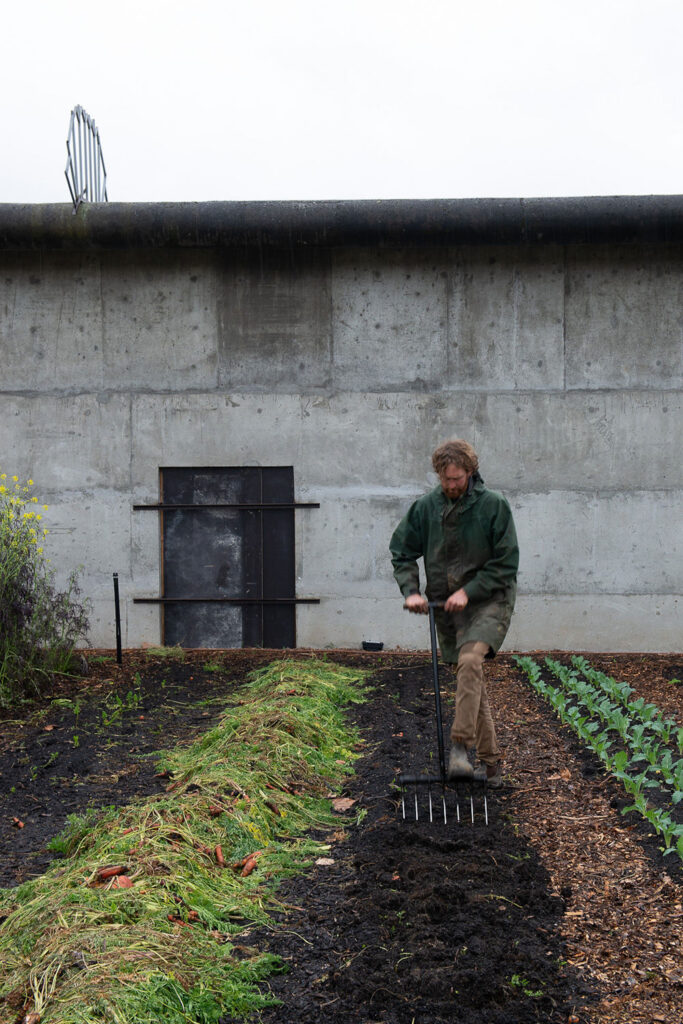
Mitch opted for no-till regenerative processes, where raising garden beds through the addition of organic matter reduced digging. Building soil fertility, encouraging insects and worms, and minimising outside inputs, including synthetic fertilisers, are at the heart of a gardening system focused on growing nutrient-rich delicious fruit and vegetables for the restaurant and cooking school.
Designing a garden within the walled space allowed Mitch to imagine growing what would not normally be possible in the chilly Derwent Valley. The five-metre-high walls provide frost-free areas and shelter from icy winds, allowing a citrus grove, passionfruit, and a berry patch to be cultivated alongside a market garden, orchard, green and shade houses, pond, nursery and composting station.
Mitch says that the proximity of the garden to the restaurant is promoting and enabling an even greater focus on produce-driven cooking. “The cooking begins here,” says Mitch. “If you can grow something that is delicious and nutritious, then you don’t have to do much to it,” he says.
“I’m thinking about the produce in the restaurant kitchen and on a plate, rather than on a market stall,” says Mitch. “It dictates how you might grow things differently, or when you harvest. The greens we pick here in the morning are still literally photosynthesising as we deliver them to the kitchen.” Rodney adds that “the chefs love coming out into the garden and harvesting for their service. It’s another level of job satisfaction.”
And, closing the loop, the restaurant also gives back to the garden. “The focus on waste reduction with the restaurant composting system not only stops tonnes of stuff going into landfill but is a valuable resource for growing our next crops,” Rodney says.
Giving back to community through gardening groups, local schools and TAFE is also emerging as a way to extend the space’s regenerative qualities. “Ultimately we want it to be a community-focused educational space as well as a productive private enterprise space,” Mitch says. “To have a blank canvas like this, you couldn’t dream it up.