Untangled
Opening up pockets from within, this Melbourne house is teased apart to allow a traditional Victorian double-fronter to breathe.
In the backstreets of Brunswick in Melbourne, Mihaly Slocombe Architects has redesigned a double-fronted Victorian so that it can flex with family life across generations. Known affectionately as The Don, the once neglected heritage home is now a container for comings and goings, togetherness and retreat – all while drawing landscape deep into the plan.
The original house was what principal Erica Slocombe describes as a “handsome example of Victorian domestic architecture”, defined by high ceilings, generous proportions and fine details. But when the client – based in Sydney, with adult children living in Melbourne – purchased the property, it was well and truly in a state of disrepair.
A dated lean-to lingered at the rear, and the north-facing backyard offered little more than a patch of grass for a lonely tree. “Our client wanted to create a base in Melbourne,” Slocombe shares of the brief. “Somewhere central, that felt like a proper home, not just somewhere to stay, but also a place the kids could inhabit.”
From the outset, there was an appreciation for longevity. The client wanted to renovate properly, upgrading performance and comfort while valuing the heritage bones. Throughout the whole home, walls have been stripped back, straightened and insulated, and glazing upgraded. Blackbutt flooring replaced the tired carpet, chimneys are now draught-proofed, and the whole envelope has been properly sealed “within an inch of its life”.
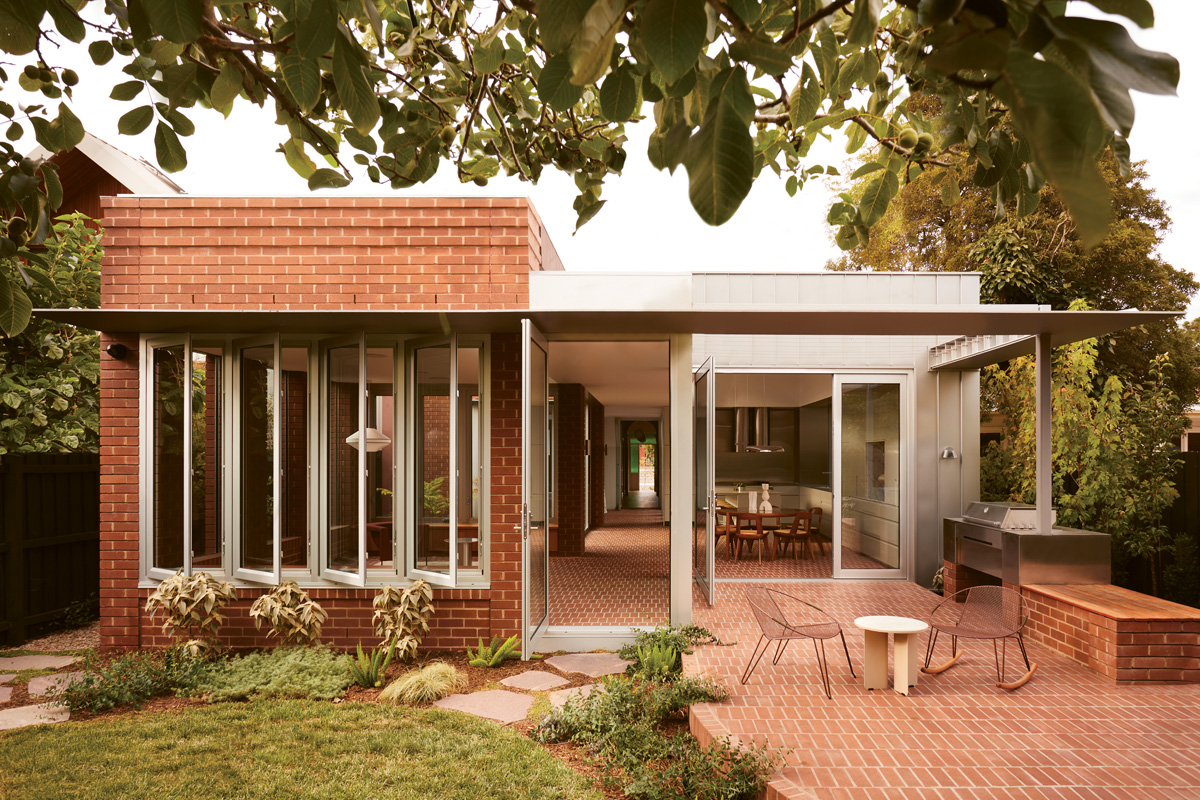
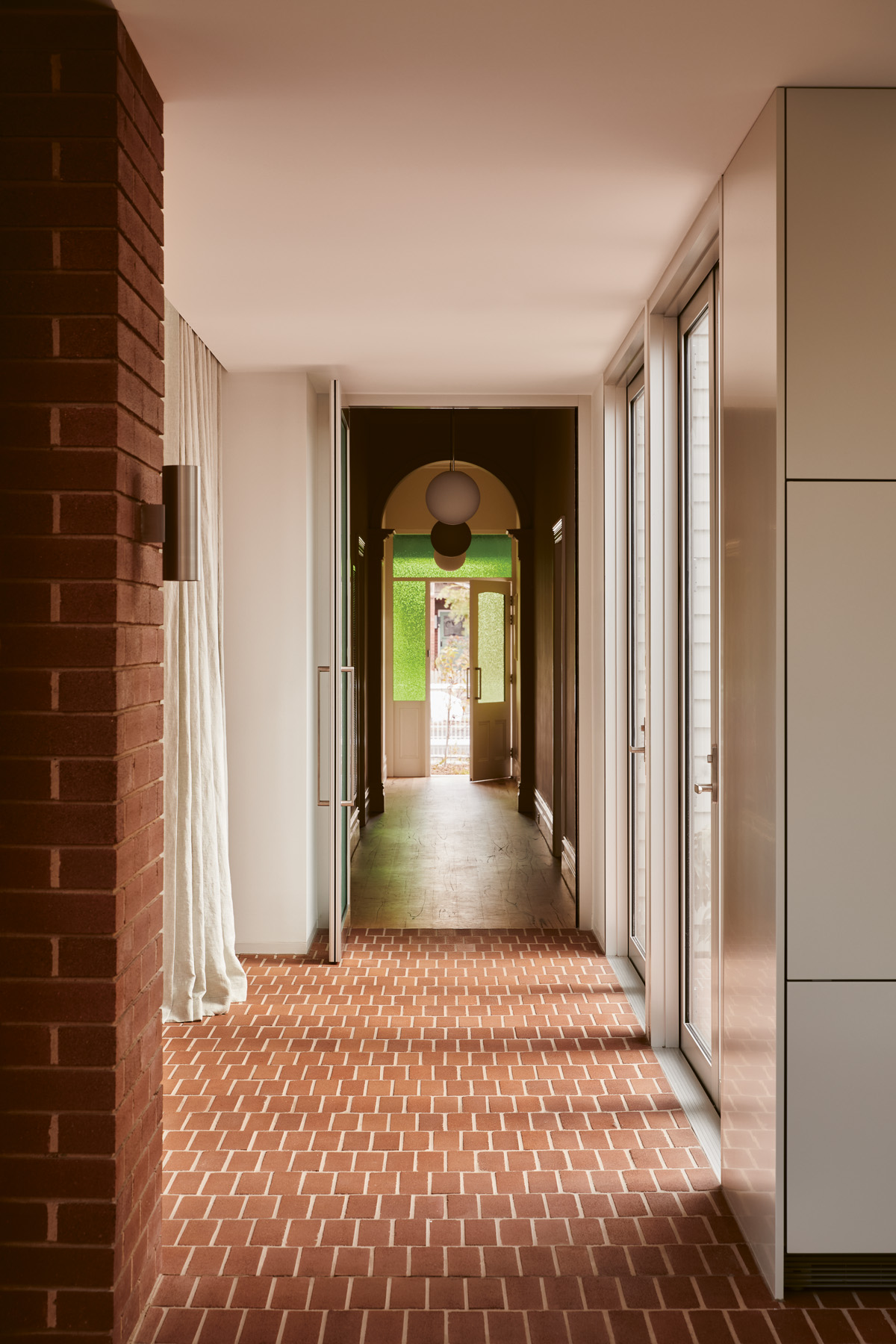
Rather than forcing the entire house into open plan territory, Mihaly Slocombe allowed the original Victorian logic to remain intact at the front. Moving towards the rear, however, the plan begins to loosen with rooms pulled apart and staggered to make space for courtyards and planted pockets. Landscape is then dropped between the built form, breaking down the boundaries between one room and the next.
It’s an approach that does more than soften the plan. It also allows the wide site to work harder, bringing light, air and greenery into the depths of the house instead of confining it to the backyard alone, as is typically seen in long, narrow Victorian terraces.
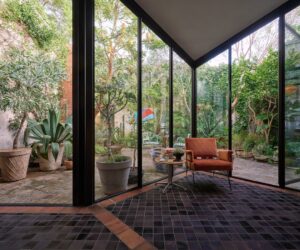
Multiple courtyards create different kinds of outdoor rooms – each with their own character – and allow the house to be occupied in parallels. A quieter den zone sits slightly askew from the central spaces, while the main living area fully opens up to the garden edges. Here, bench seating and glazing wrap around planted zones adding to the sense of airy connectedness.
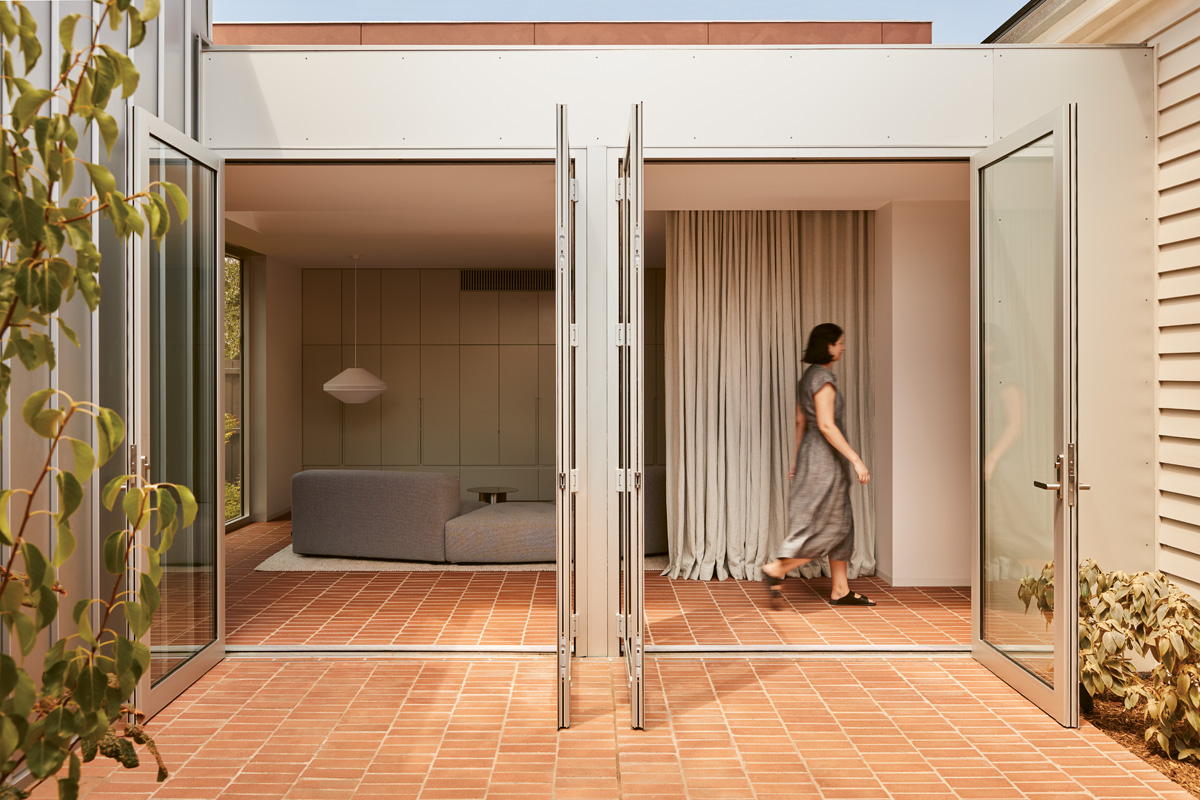
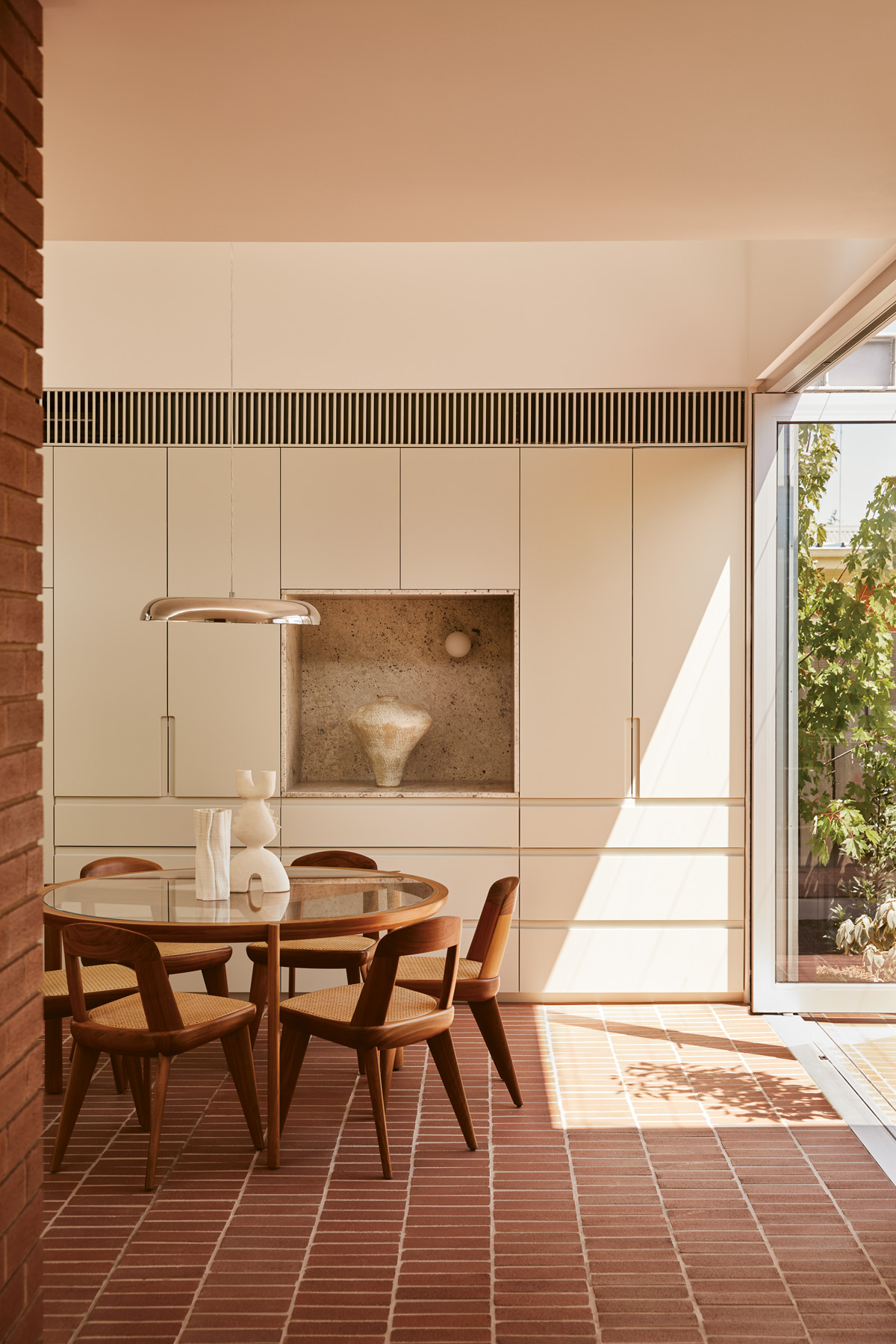
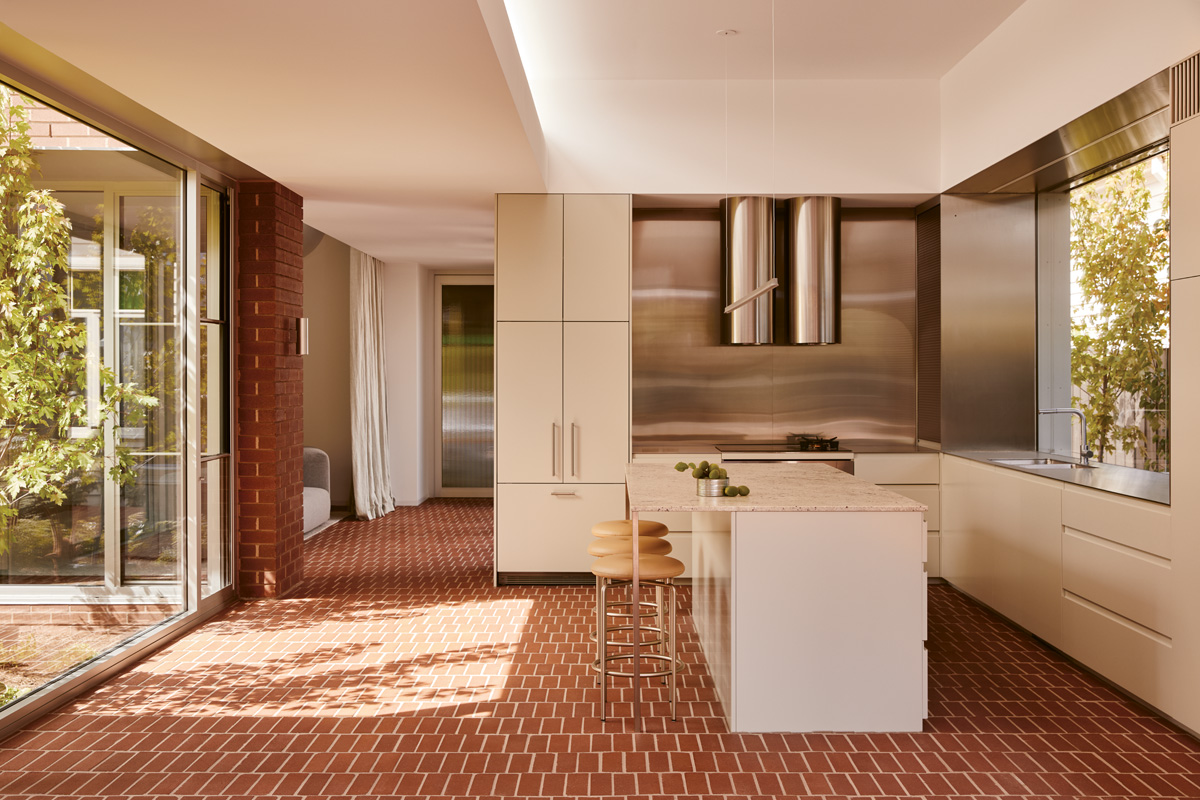
In the centre, the kitchen and dining area act as a hinge, responding to the different cadences of occupation. “It means there’s generosity in how people use the house. Multiple family members can be here at once without feeling on top of each other,” Slocombe says. Underfoot, brick flooring runs continuously through the new extension, extending out into the garden. “Blurring the lines, it allowed us to carry the floor plane inside and out. When the doors are open, you’re not sure where the seam of inside and out finishes.”
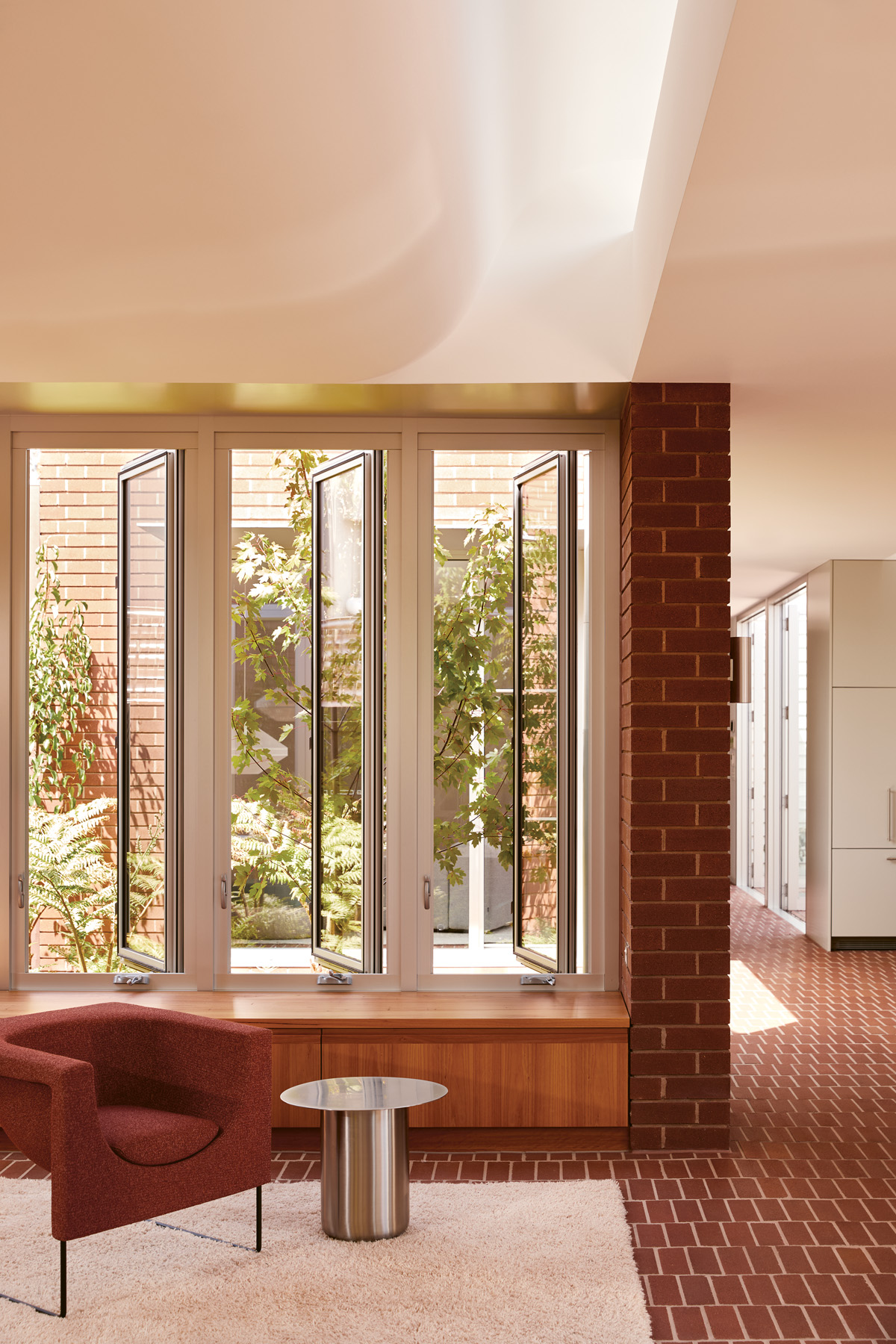
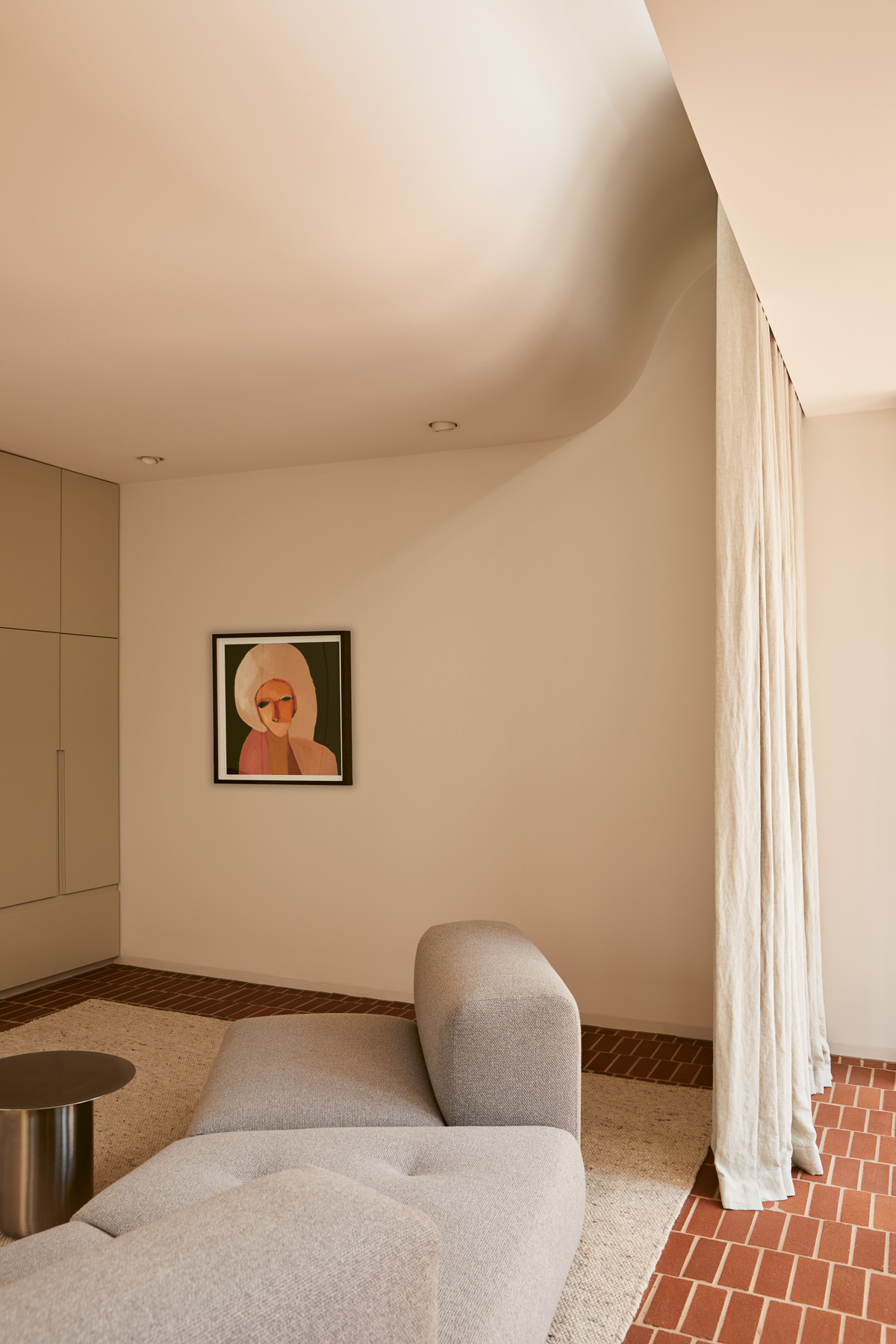
Much of Brunswick was historically built on brickmaking, so it’s also a material choice wrapped in contextual meaning. For The Don, the russet red tone of the local Boral bricks nod to that history while offering robustness, thermal mass and texture. In the main living space, a subtle sculptural ceiling introduces a note of softness. The curved light well references the pressed metal ‘billow’ that crowns the original fa.ade to the street – a distinctive S-shaped detail shared by the neighbouring house. In the new extension, this reduce the reliance on mechanical systems.
The house is supported by a 6.5kW solar array. Heating is provided via in-slab hydronic heating powered by a heat pump, with heat-pump hot water, reverse-cycle systems where needed, and rainwater tanks servicing toilets and garden taps. Materials are locally sourced wherever possible, including Australian marble in the bathrooms, as well as formaldehyde-free joinery and low-VOC paints throughout.
Landscape design by Peachy Green reinforces the low impact approach. Planting is drought-tolerant and easy to maintain. The landscape design reinforces the low impact approach, while still offering a strong sense of enclosure and seasonal change. Beyond energy and materials, the project considers wellbeing more broadly. The courtyard insertions encourage cross ventilation, and the constant presence of greenery supports passive climate control. “Having windows open onto planted spaces means you can control the climate much more naturally,” Slocombe notes.
In reworking a familiar Victorian typology, The Don offers a model for how heritage homes can adapt to contemporary family structures without losing their innate charm and character. Much like the pulled apart planning, it’s a house designed for movement, for overlap, and for lives that don’t follow a single, fixed pattern. language is reinterpreted as a gentle, sensuous form that draws light into the interior.
Environmental performance is embedded throughout the project. By pulling the plan apart, northern light is shared across multiple rooms rather than limited to a single elevation. High-performance glazing, comprehensive insulation, and correct orientation reduce the reliance on mechanical systems.
The house is supported by a 6.5kW solar array. Heating is provided via in-slab hydronic heating powered by a heat pump, with heat-pump hot water, reverse-cycle systems where needed, and rainwater tanks servicing toilets and garden taps. Materials are locally sourced wherever possible, including Australian marble in the bathrooms, as well as formaldehyde-free joinery and low-VOC paints throughout.
Landscape design by Peachy Green reinforces the low impact approach. Planting is drought-tolerant and eas to maintain. The landscape design reinforces the low impact approach, while still offering a strong sense of enclosure and seasonal change. Beyond energy and materials, the project considers wellbeing more broadly. The courtyard insertions encourage cross ventilation, and the constant presence of greenery supports passive climate control. “Having windows open onto planted spaces means you can control the climate much more naturally,” Slocombe notes.
In reworking a familiar Victorian typology, The Don offers a model for how heritage homes can adapt to contemporary family structures without losing their innate charm and character. Much like the pulled apart planning, it’s a house designed for movement, for overlap, and for lives that don’t follow a single, fixed pattern.
Specs
ARCHITECT
Mihaly Slocombe
LOCATION
WURUNDJERI WOI-WURRUNG COUNTRY / BRUNSWICK / VIC
PASSIVE ENERGY DESIGN
The house is oriented due north to the back garden and a series of central courtyards. Glazing to these garden spaces provides access to northern light deep into the floor plan. Walls and roofs have high levels of thermal insulation, the concrete slab and brick floor provide thermal mass, glazing is double glazed, window frames are thermally broken, windows are shaded with a fixed awning and vine-covered arbourfacing onto the back garden.
MATERIALS
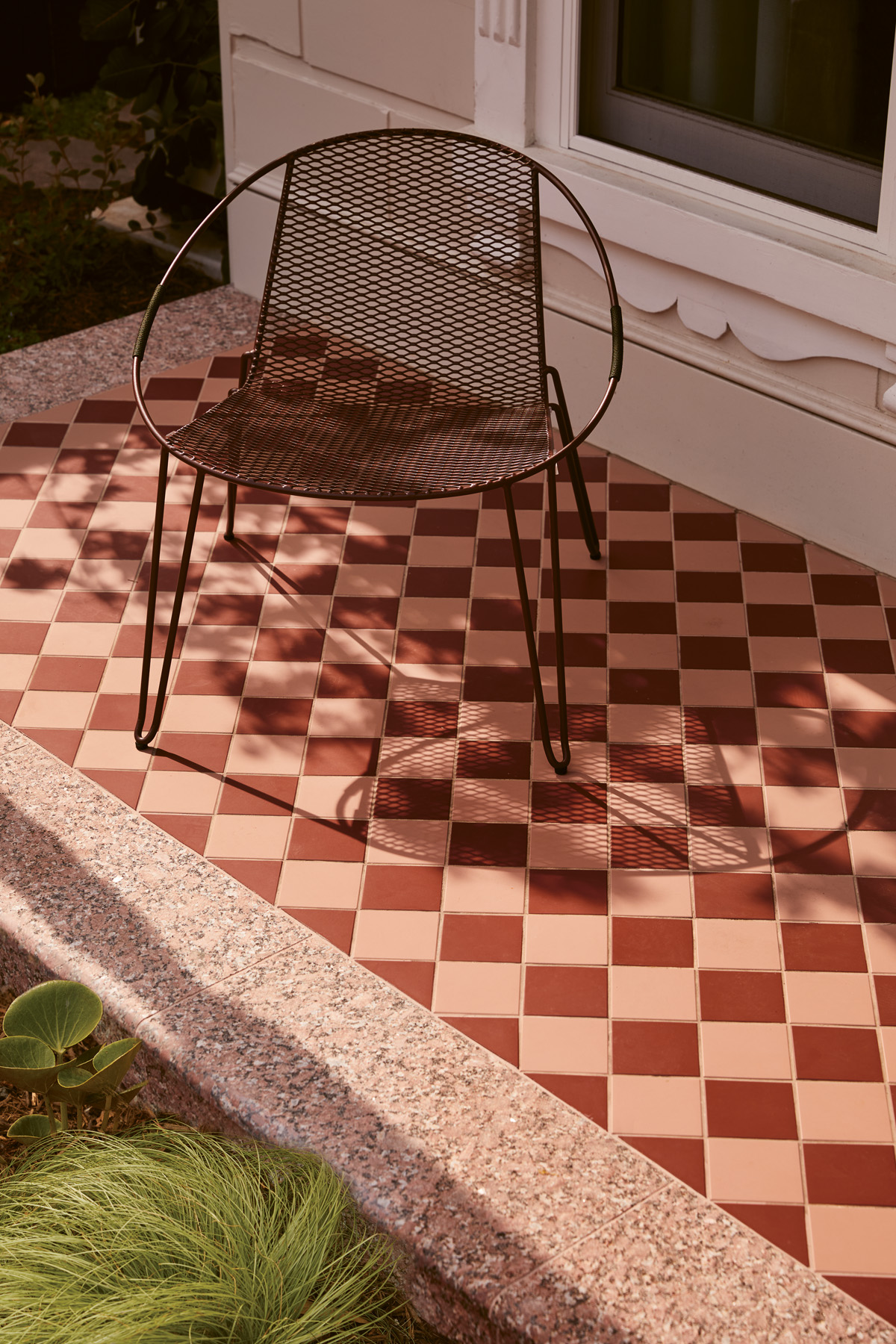
Walls and flooring are Bowral 76 dry pressed brick from Austral.Colori Full Body porcelain tiles from Tiento and Terrazzo floor tiles from Artedomus. Klip-Lok 700 Colorbond roofing and tapware by Astra Walker.
FLOORING
The extension is built on a concrete slab and finished in dry pressed brick.
GLAZING
Windows are a combination of fixed, sliding and casement sashes and use anodised aluminium AWS ThermalHEART thermally broken frames, with Australian Glass Group Insulglass low-E double glazing. Windows are a combination of fixed, sliding and casement sashes.
HEATING AND COOLING
Glazing is oriented north towards the back garden and a series of central courtyards. Shading to the back garden is provided via a fixed aluminium awning along with a stainless steel arbour which will support a deciduous vine over coming years. The central courtyards provide excellent natural ventilation. There is ducted reverse-cycle air conditioning and hydronic heating, both electrically powered. The brick floor and concrete slab underneath provides thermal mass for temperature regulation all year around.
HOT WATER SYSTEM
Hot water is provided by a Sanden Eco Plus electric heat pump.
WATER TANKS
Rainwater is collected from all roof areas into two 1500-litre slimline steel rainwater tanks. These are connected to garden taps and toilets.