Out Look – 120-Year-Old Terraced House
For over a century this house has looked inwards, isolated from its stunning surroundings and community.
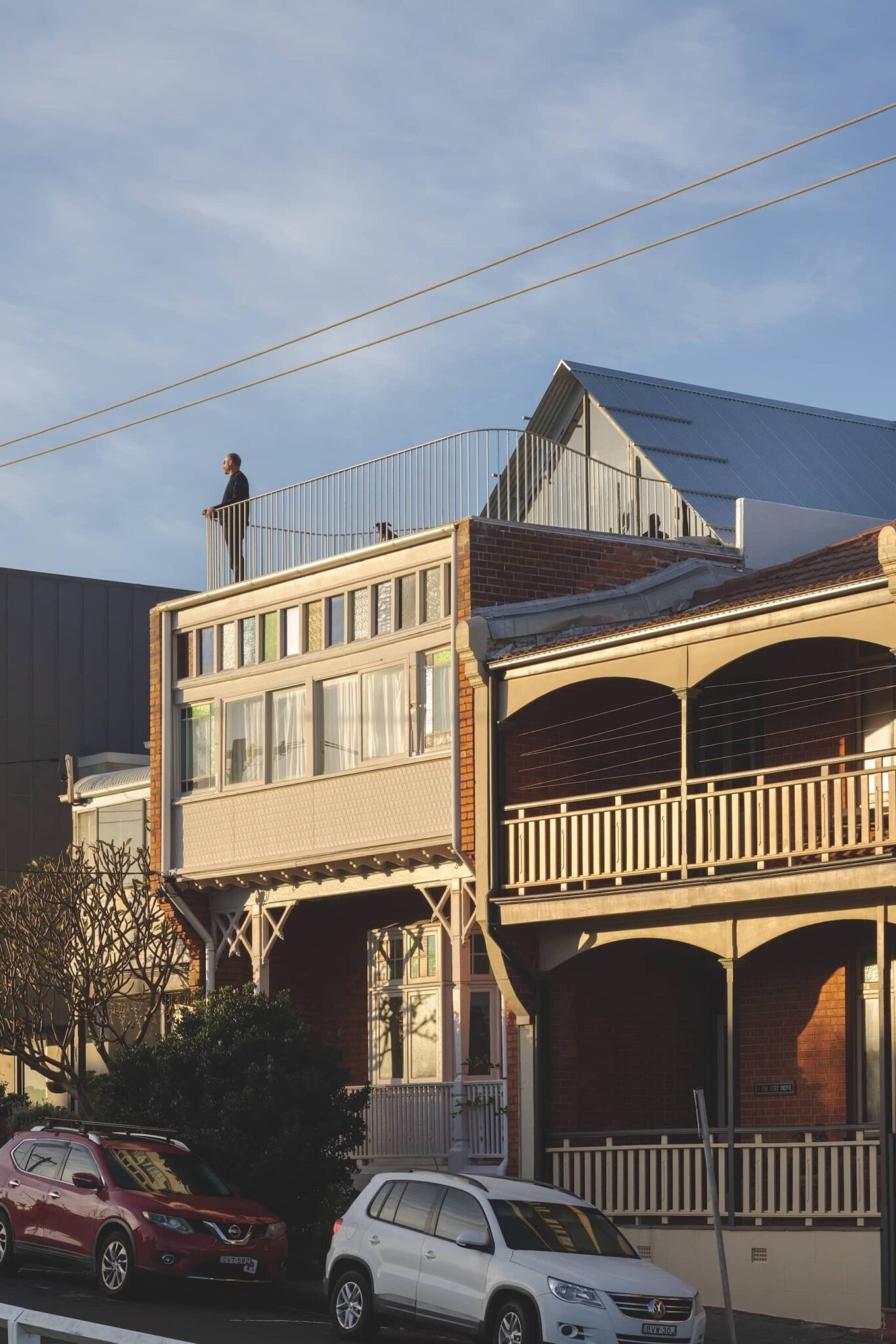
A lord, a well-known sea captain and now an artist and her family – these are just some of the people who have occupied a roughly 120-year-old terraced house on Awabakal land in East Newcastle. Titled Fort House, it is a building that is steeped in history, its character shaped not only by those who have lived there but also by the stories of its surroundings. Most significantly, it looks over sand hills that were formed when colonial settlers cleared all vegetation from the area to deter convicts from escaping from the prison. More than a century on, this clearing continues to create harsh conditions for those living nearby. It also means the house overlooks the harbour, ocean and city, which it sits at the intersection of.
When Curious Practice, a local architecture studio run by Warren Haasnoot and Greg Lee, were asked to renovate this house, they felt it was a shame that it was isolated from its unique location and history. “We identified that the existing terrace was intensely internally focused. It had no connection to its context,” says Lee.
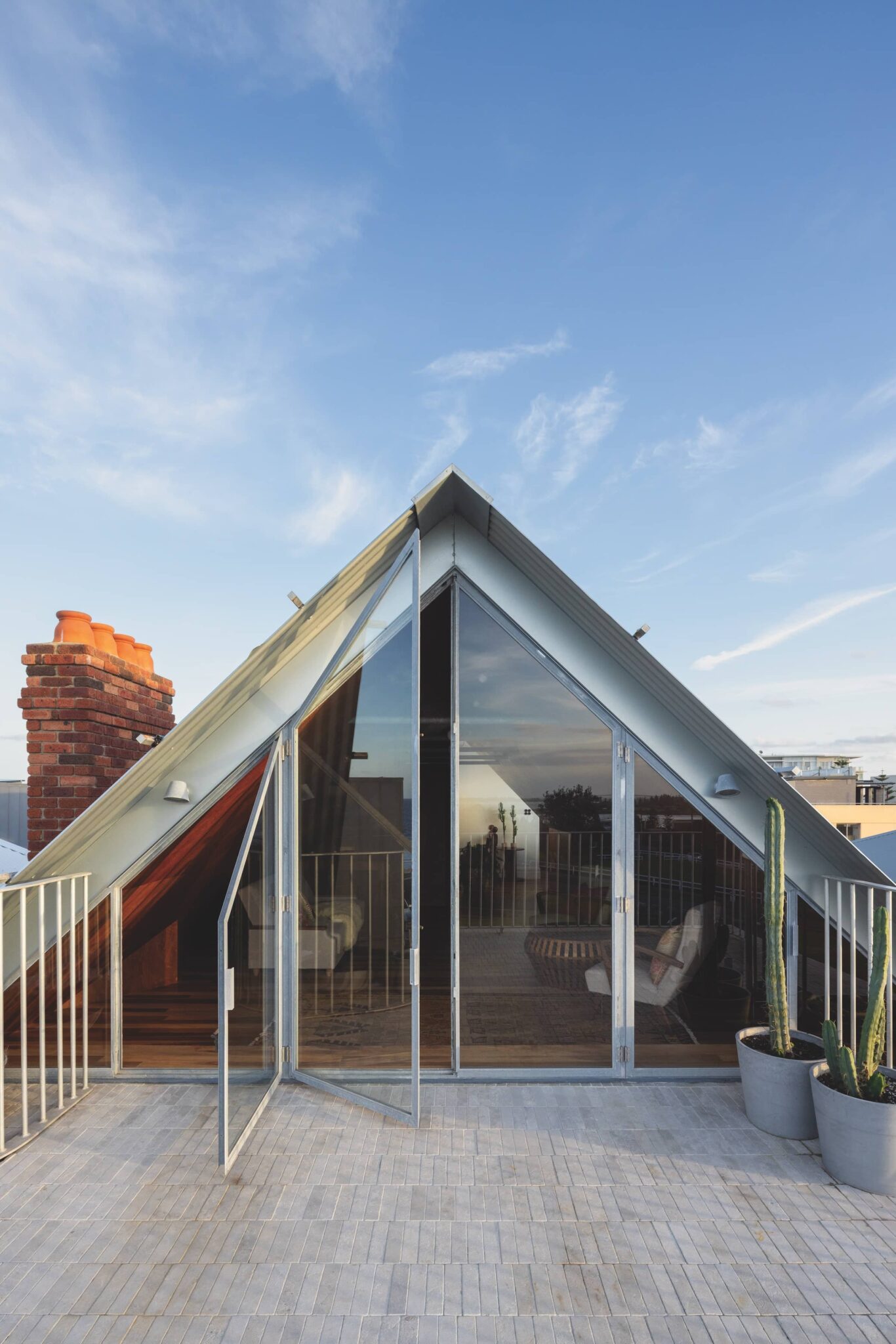
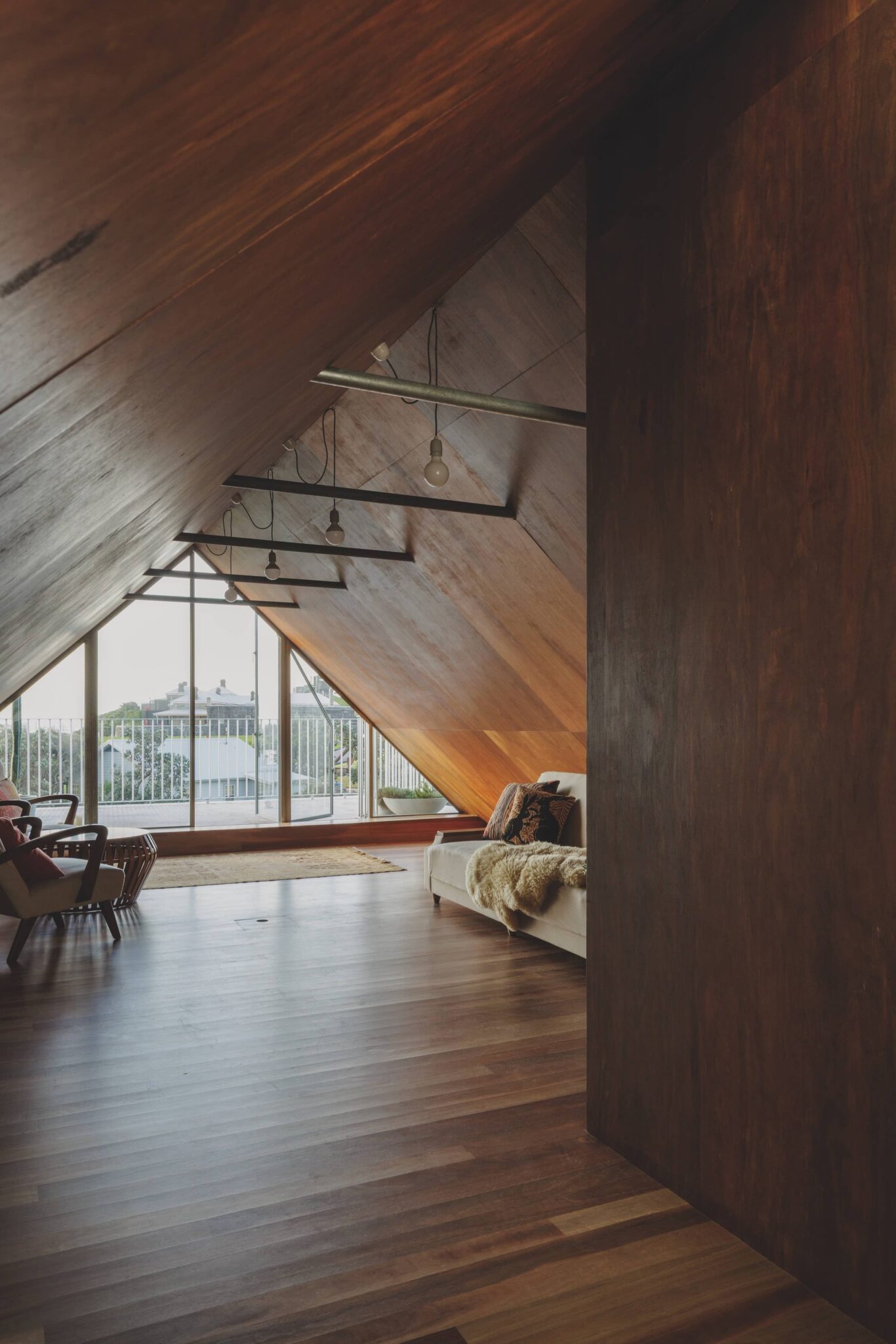
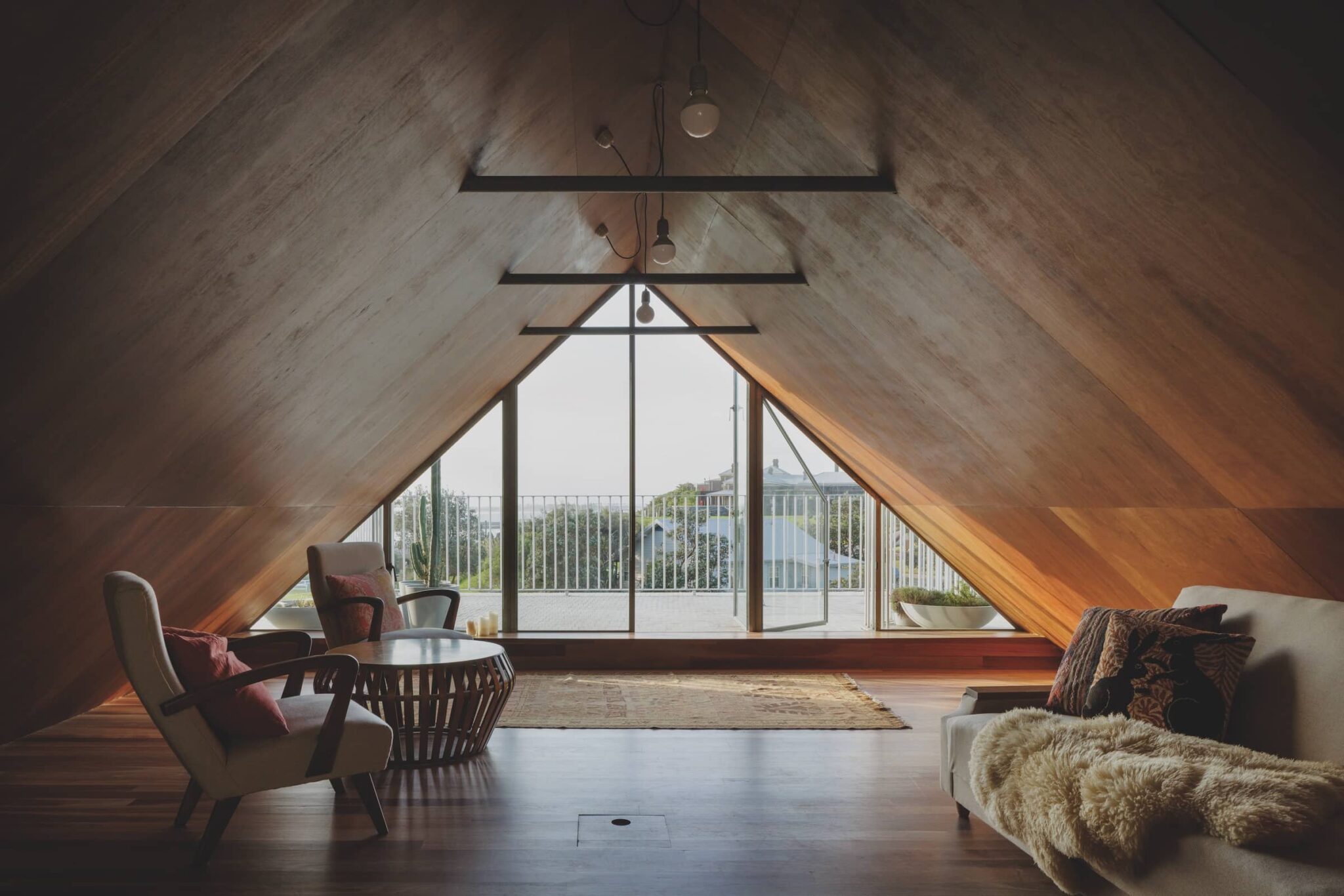
Their design centred on opening the house back up to the outside world, creating moments where the residents could engage with the weather, the views and the area’s past and present. This manifested in two additions that plug into the house’s roof and rear and are both full of carefully positioned and thoughtfully executed details. A large triangular skylight which cuts off the corner of an upstairs square room, for example, provides glimpse of the sky to those inside. An outdoor terrace was also added on the front of the house, creating a space for enjoying the landscape and typical Newcastle sunshine. “We really like that now, all of a sudden, the occupants are very aware of where they are and where they sit in terms of the context, but also in terms of the environment,” Lee says.
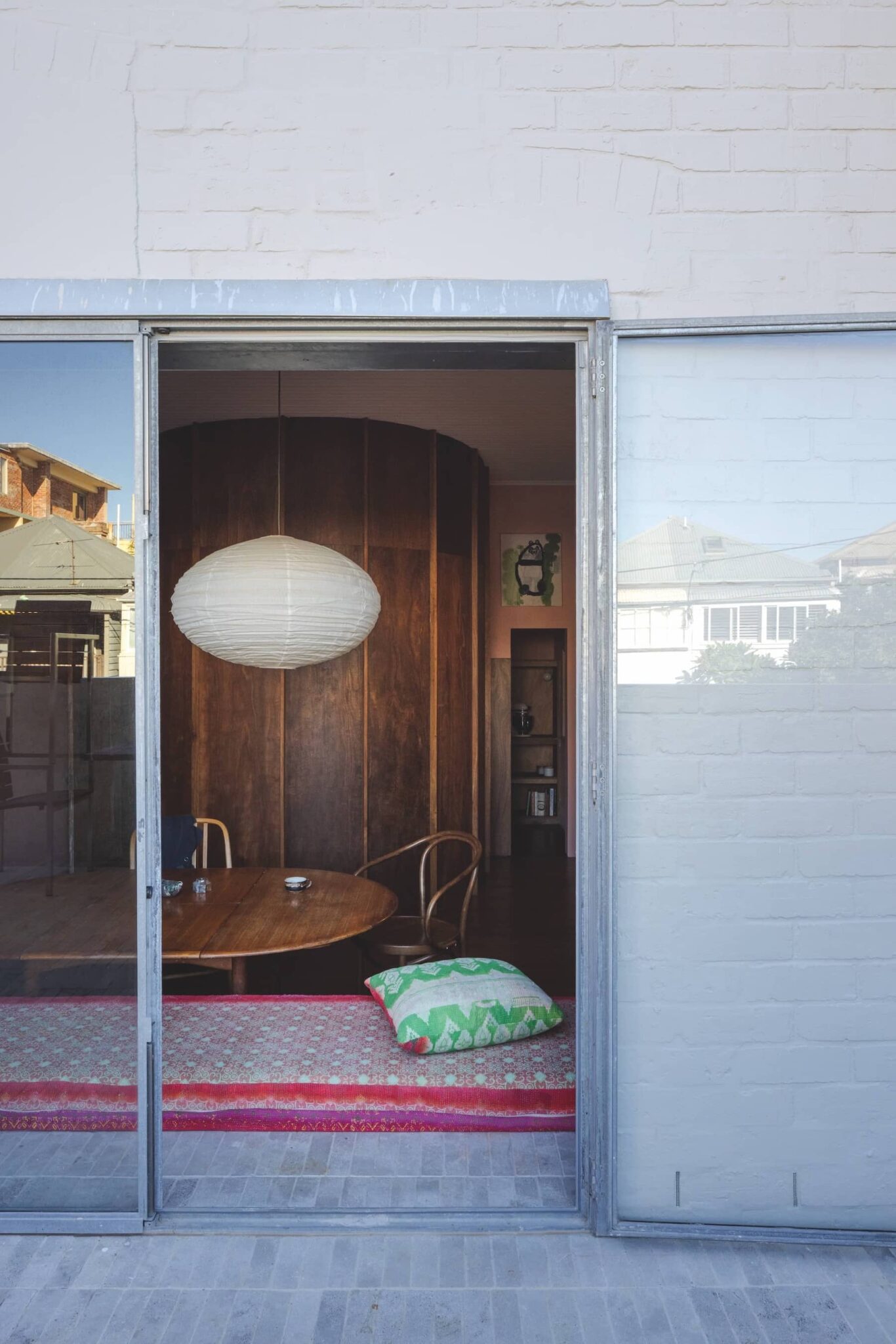
While these additions might sound significant, Curious Practice highlights that less than eight square metres was added to the footprint. “The clients recognised that they didn’t need more space, they just needed better space,” Lee explains, adding, “Working with a 120-plus-year-old house we were conscious of not trying to touch too much and respecting the character of the house.” This meant retaining things like existing openings and brickwork and, when they were adding in elements or areas, their design was guided by the question: “What can we do with a minimal approach?”
This light touch was particularly important to creating a sense of cohesion with the surrounding streetscapes. Curious Practice wanted the extensions to almost camouflage into the existing surroundings, having seen many poorly renovated heritage buildings in Newcastle being knocked down or becoming infamous eyesores. “Heritage contexts require an almost stealth-like approach,” Lee reflects.
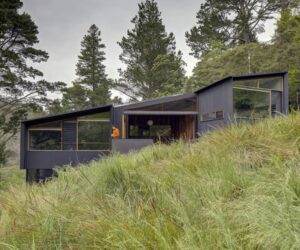
The new corrugated tin roof was key to this sensitive design. Rather than being a continuous shape, the roof folds and morphs – almost like a piece of paper folded origami style – to suit the unique personalities of two streets that the house straddles. If viewed from the Fort Drive side, the house looks fairly traditional – the new terrace sits in front of a triangular, gable roof and is accompanied by the original brick work, stained glass windows and a chimney.
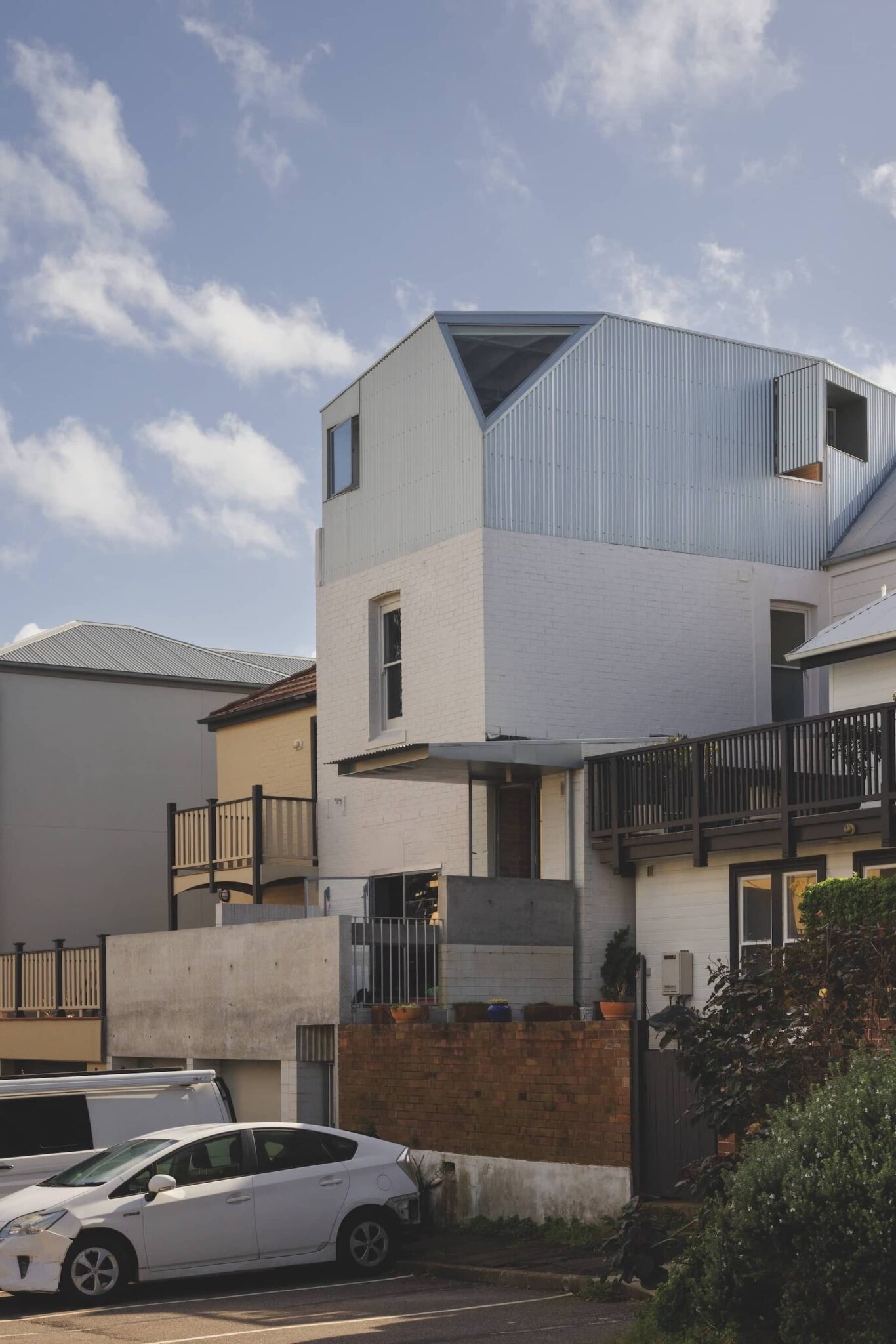
When you look at the home from Beach Street, however, it is as if you are looking at a completely different building. The roof has transitioned into a boxy structure resembling a smart tin shed that has been placed onto the existing building. The tin structure is sprinkled with unusually positioned windows of different shapes and sizes, carefully located to catch the north-easterly breeze and sunlight at different times of the year.
This side of the house is “a lot more joyful and less formal,” Lee says. He explains that this architectural language grew from referencing the ubiquity of tin lean-tos and tin renovations in city in the last century. The square, triangular and rectangular windows celebrate the mixed geometry of Beach Street.
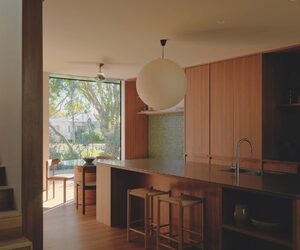
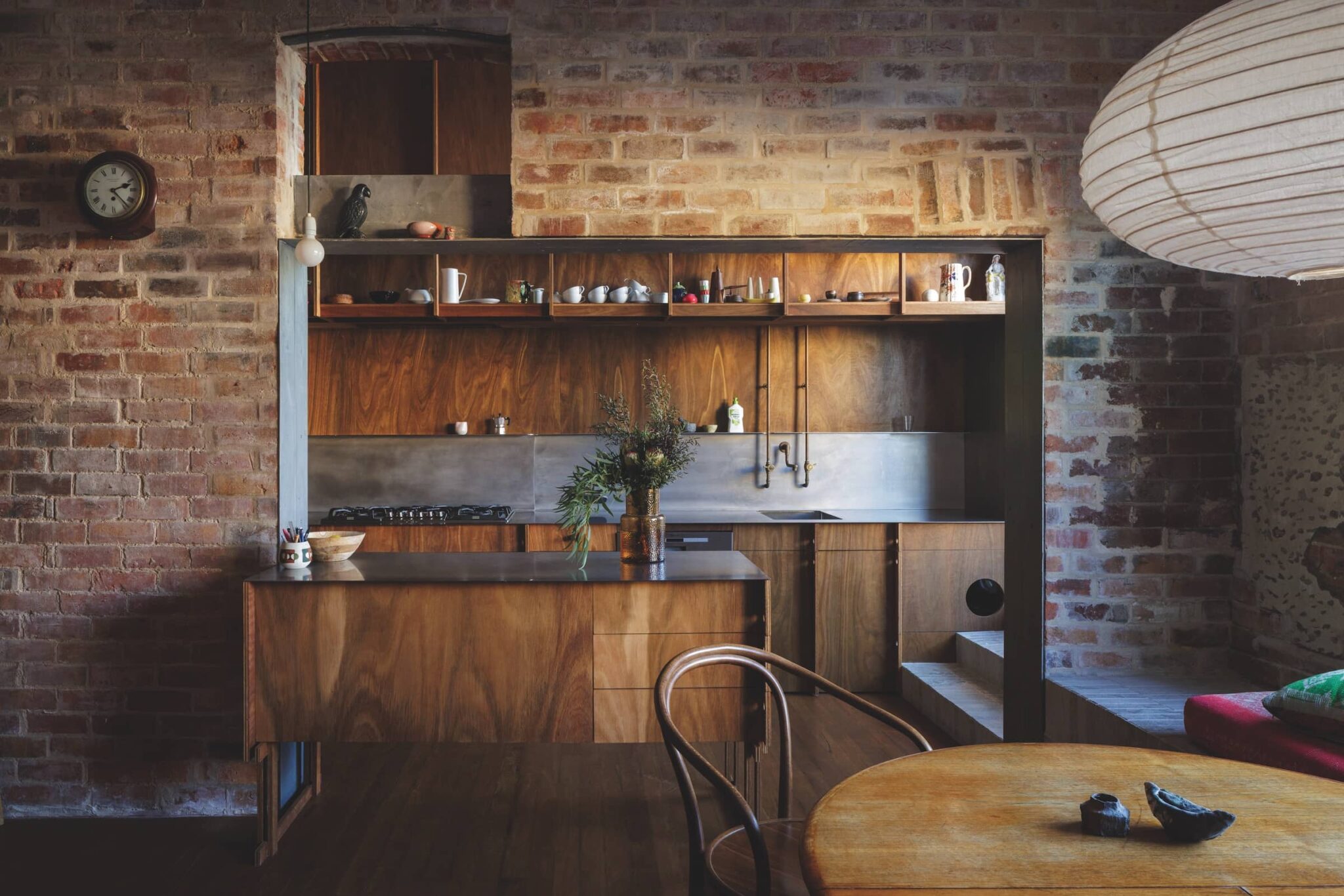
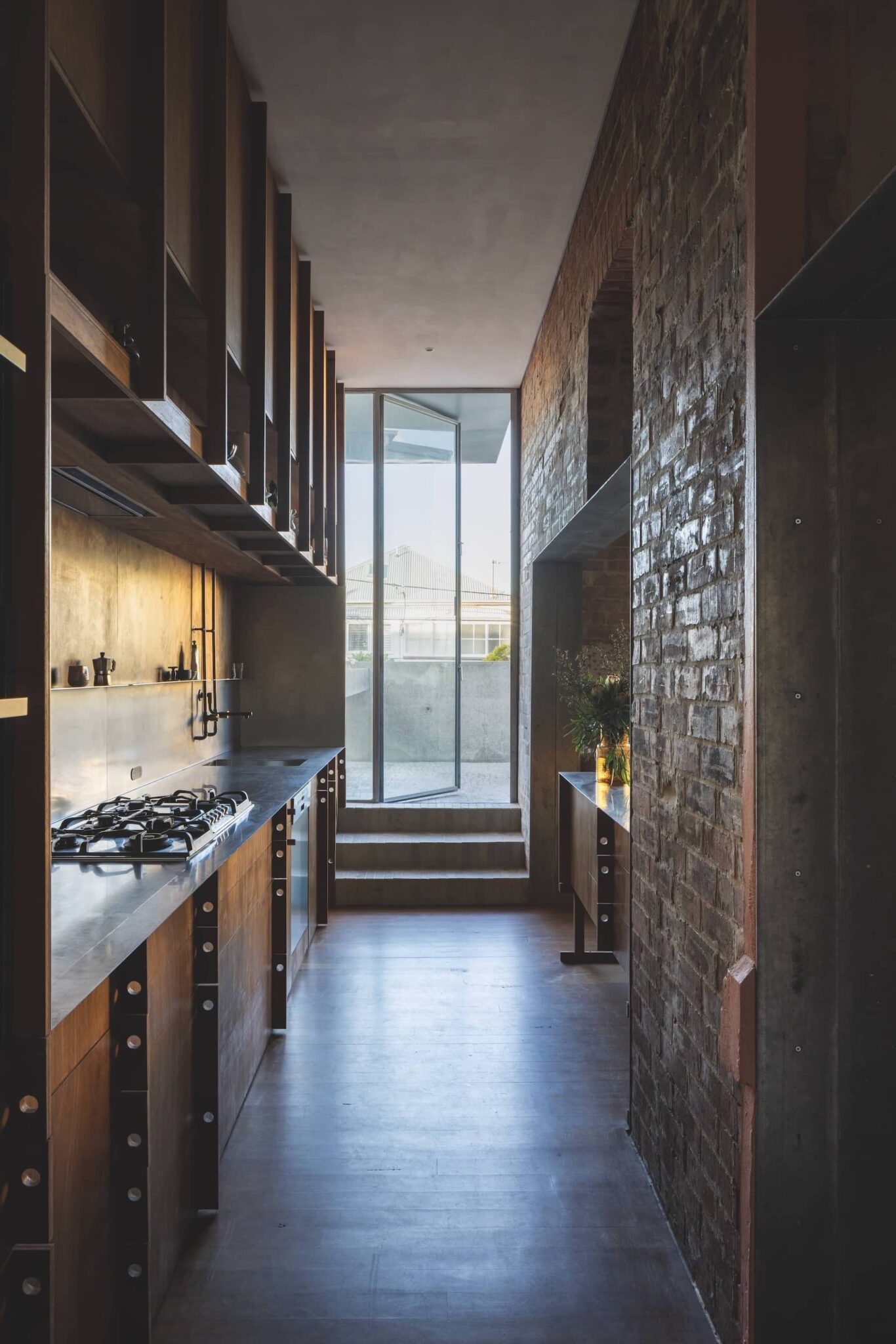
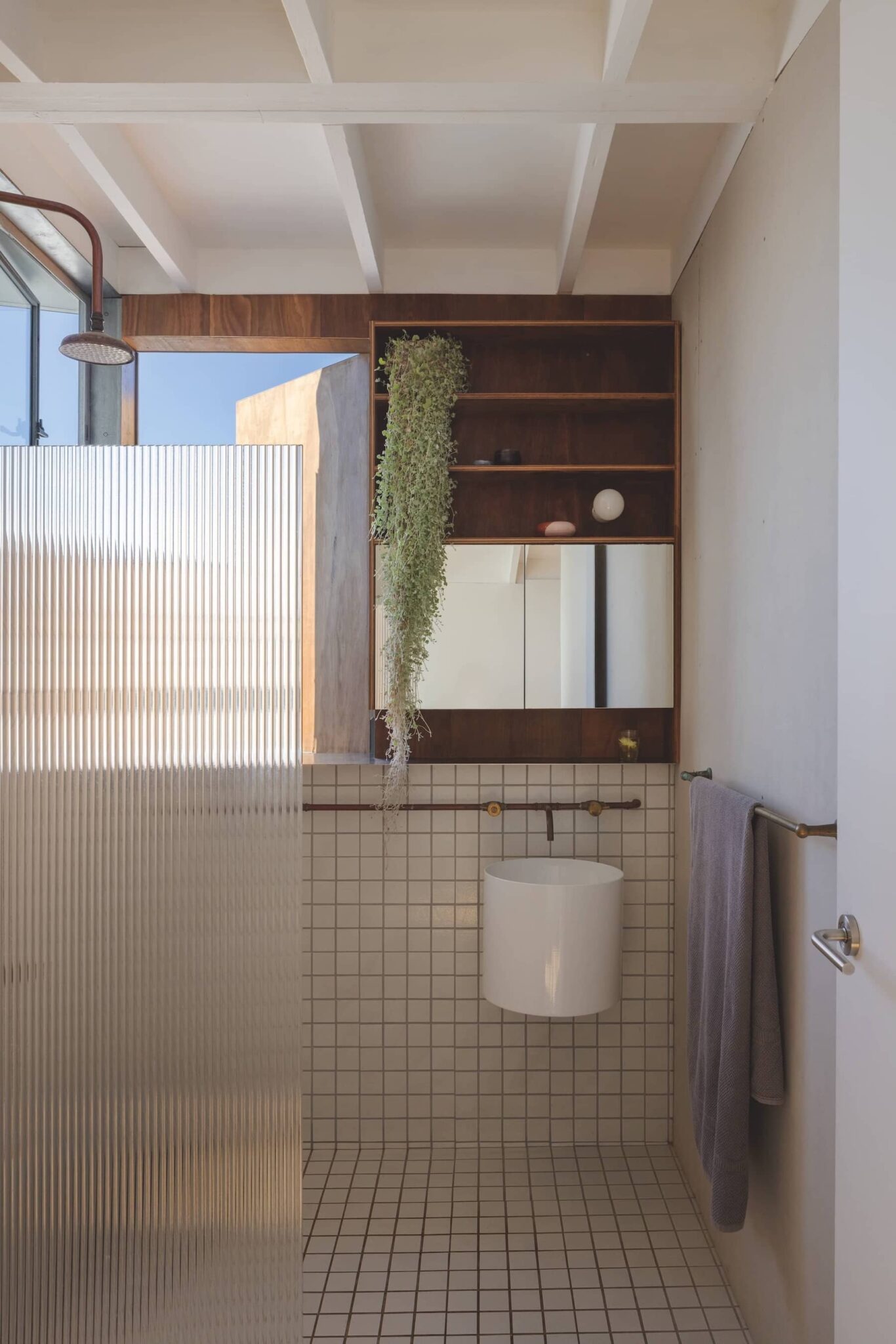
Internally, Curious Practice focused on opening up the separate, small rooms of the house. There was a need to “cross pollinate some of the living zones so the family could spend more time together as a unit,” Lee explains. This was achieved through the addition of an open-plan kitchen that connects formerly disparate living zones. A new kidney-shaped bathroom on the lower floor was also introduced, providing necessary amenities while extending the sense of openness with its curved wall creating flow between spaces.
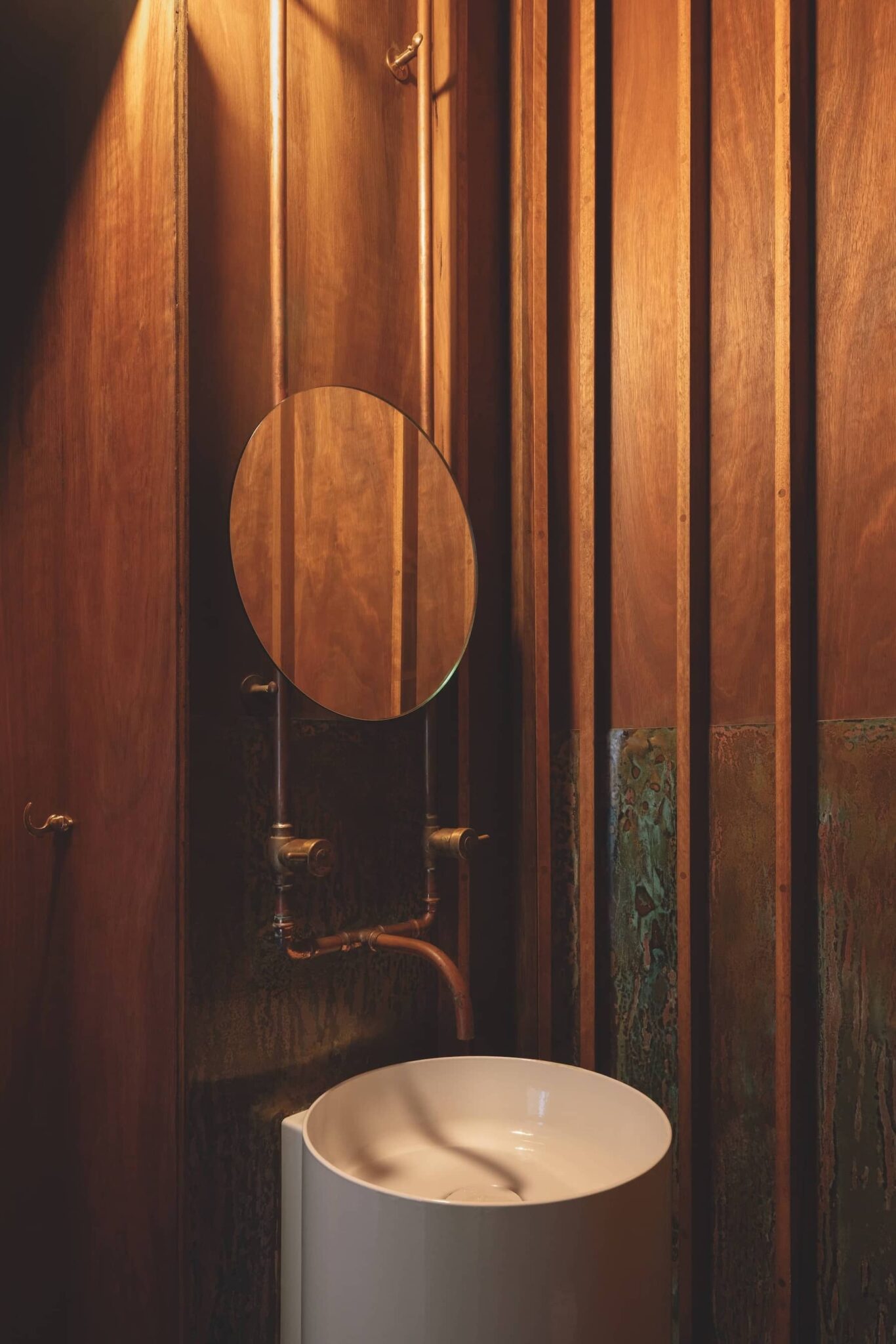
Throughout the house, bespoke fittings and details reference the house’s history and occupants, adding new layers of narrative and character to this home. A specially designed basin unit made from leftover spotted gum plywood from the kitchen, for example, was directly inspired by the client’s sculptures and art practice.
Curious Practice believes Fort House demonstrates that “small adjustments can make such a great contribution to existing spaces,” says Lee. “We don’t need to knock down beautiful old buildings. Instead, we can limit our carbon footprint by maintaining a lot of material, using small changes to make buildings that last for, hopefully, another 100-plus years.”
Rather than being a continuous shape, the roof folds and morphs – almost like a piece of paper folded origami style.
Specs
ARCHITECT
Curious Practice
LOCATION
Awabakal land / East Newcastle / NSW
PASSIVE ENERGY DESIGN
Fort House is devised as a series of carefully coordinated plug-in sensory appendages that allow the building to become more responsive to the area’s seasonal living patterns. Spaces within the building are designed to be used seasonally with occupants having opportunities to occupy different areas of the house throughout the day and year in preference to the use of any mechanical heating or cooling.
MATERIALS
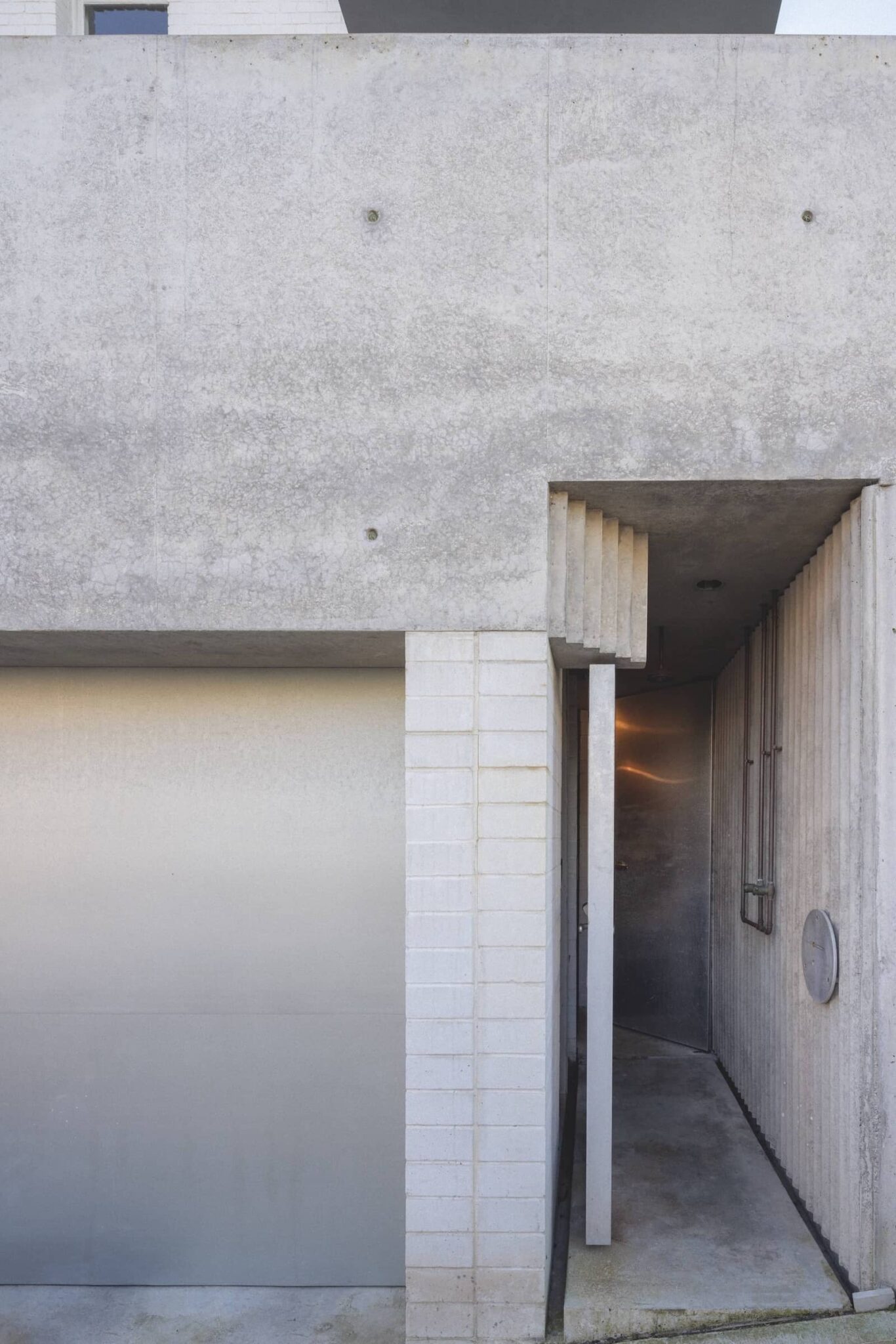
The original 120-plus year-old terrace has been reworked rather than removed, prioritising the preservation of the existing building’s inherent value and character. By minimising new additions, adding only 8m2 of building area, and preserving the existing structures and their embodied energy, the project reduces waste and costs of new material compared to new construction. Materials are reduced and prioritised to be a durable, pre-finished palette to suit the coastal conditions and ease of maintenance. The retention of the existing brickwork was prioritised and sits on a new in-situ concrete, pre finished block and stone base. The lightweight Zincalume roof over is sympathetic to the earlier East Newcastle lightweight additions of the neighbourhood. The robust exteriors are softened with warm spotted gum interiors, creating a tactile dialogue between interior and exterior.
FLOORING
The existing 120-year-old tallowwood flooring has been refinished and in bedrooms overlayed with 100 per cent wool carpet. New timber flooring is FSC-certified hardwood in spotted gum. Natural limestone Filetti pavers to external areas are by Eco Outdoor.
GLAZING
New single clear hinged doors and windows in galvanised steel.
HEATING AND COOLING
The upper level and roof folds and opens to passively control heating and cooling. Glazing is oriented to capture northern sun with deep reveals that protect glazing to the east and west. Varied and multiple openings promote good cross-ventilation that removes the need for artificial cooling aside from ceiling fans in the bedrooms. The central stair acts as a thermal chimney pulling rising air through the building from the lower levels where openings are limited. There is an existing small slow combustion wood fireplace in the living room with an internal duct for extra heat, which connects through the upper floor bedrooms and out through the roof.
LIGHTING
The house uses low energy LED lighting from Edison and feature lights sourced by the client.