Low-Impact Timber, Lasting Design: Austral Araucaria Plywood at K’gari’s Kingfisher Bay
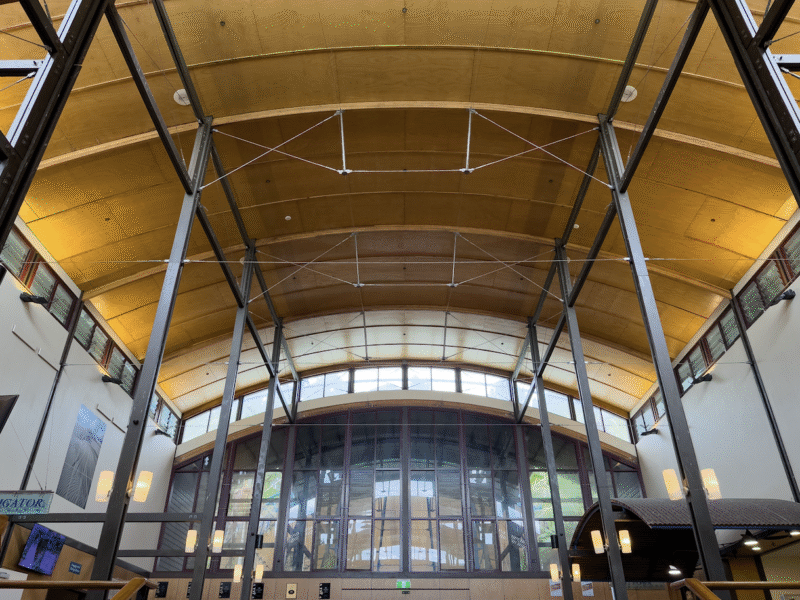
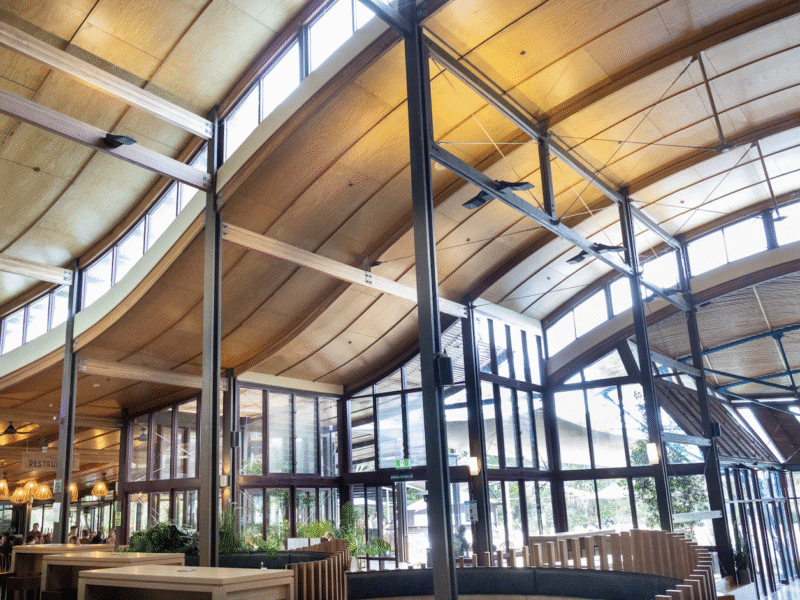
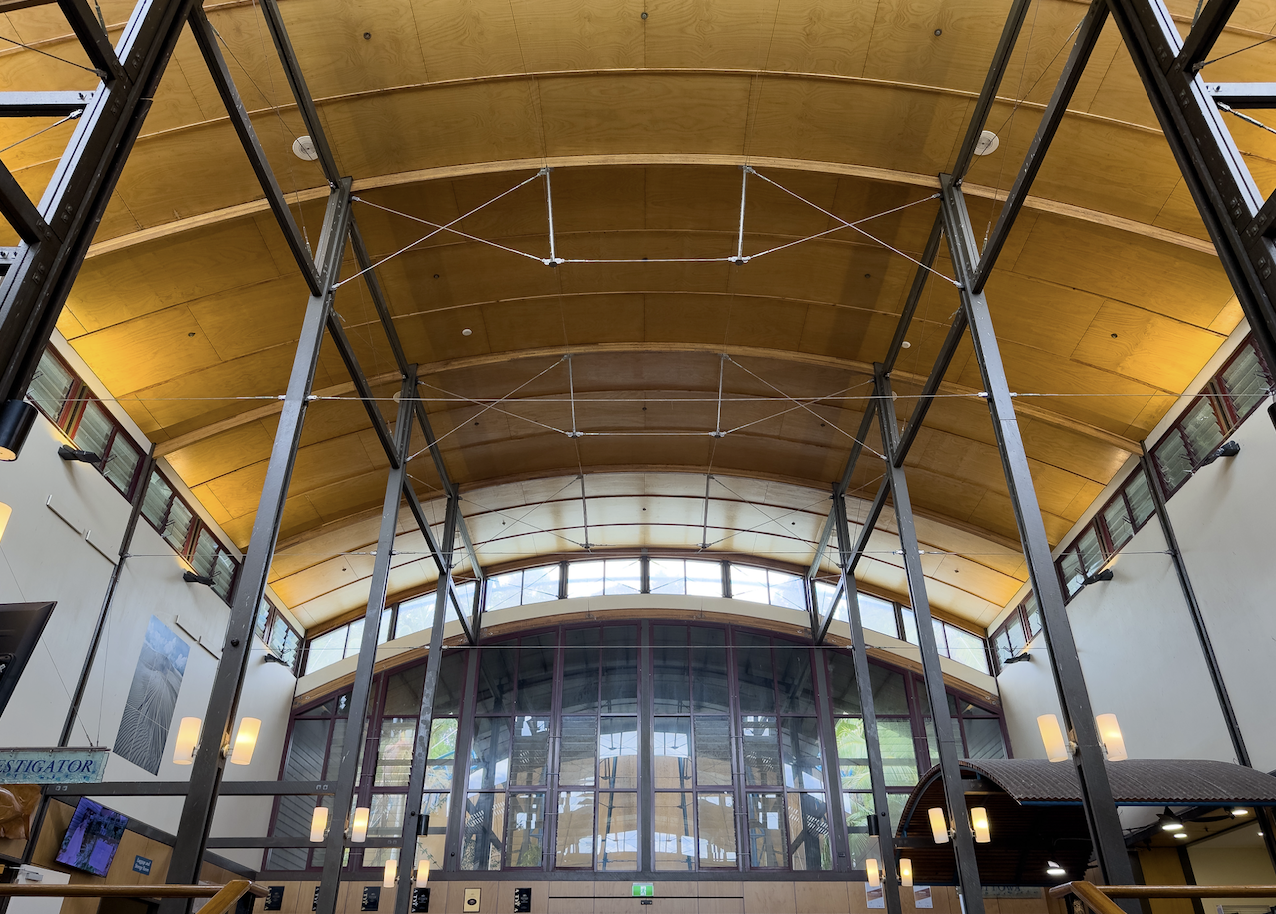
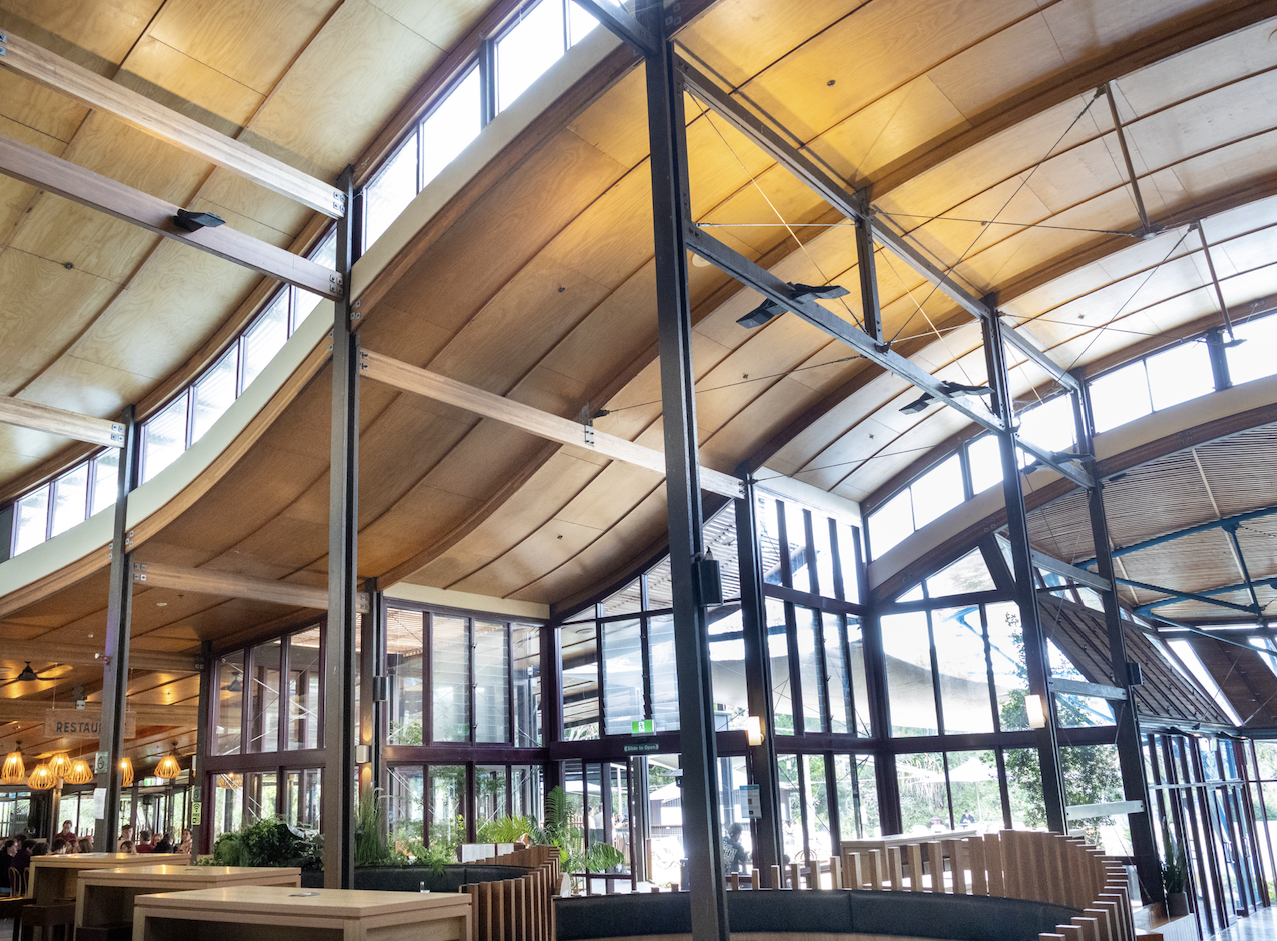
When Kingfisher Bay Resort on K’gari (Fraser Island) was completed in 1992, its designers made a deliberate choice: a sweeping curved ceiling finished in Austral Araucaria (hoop pine) plywood. Thirty-three years later, it still looks striking—and it still performs flawlessly.
But the real story is what this ceiling didn’t cost the environment.
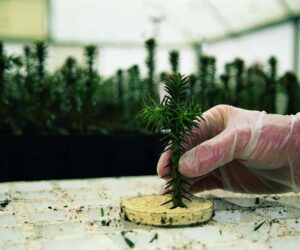
The Araucaria hoop pine was sourced from sustainably managed plantations in the Mary Valley, barely 100 km from site. That short supply chain means significantly fewer transport emissions compared with imported alternatives. The timber itself is plantation-grown and renewable—no old-growth forests, no long-haul freight, no heavy carbon footprint.
Hoop pine’s fine, consistent grain and natural dimensional stability make it ideal for demanding interior applications like large curved surfaces in coastal environments. Three decades of salt air, humidity, and constant visitor traffic have proven the point: when you specify well, you don’t need to replace, repair, or refinish.
And that durability is itself an environmental benefit. A material that lasts 33 years and counting is a material that stays out of landfill.
For architects and specifiers working toward lower-impact projects, Kingfisher Bay is a compelling precedent: locally grown, plantation-sourced Austral Araucaria plywood, detailed properly, delivers on aesthetics, performance, and environmental responsibility—not just on day one, but for decades.