A Coastal Compact – 1970s Brunswick Heads Beach Cottage
As our ideas of coastal aesthetics evolve, cosy nooks and rich, warm material palettes inside are finally having their moment.
In the serene coastal setting of Brunswick Heads, an inventive collaboration led by Fraser Mudge Architects with We Are Triibe on the interior design, has transformed a modest 1970s beach cottage into a warm, contemporary family retreat. With its bold yet inviting aesthetic, Brunswick Heads House redefines the essence of Australian beachside living through a distinctive combination of unconventional design and tactile materials.
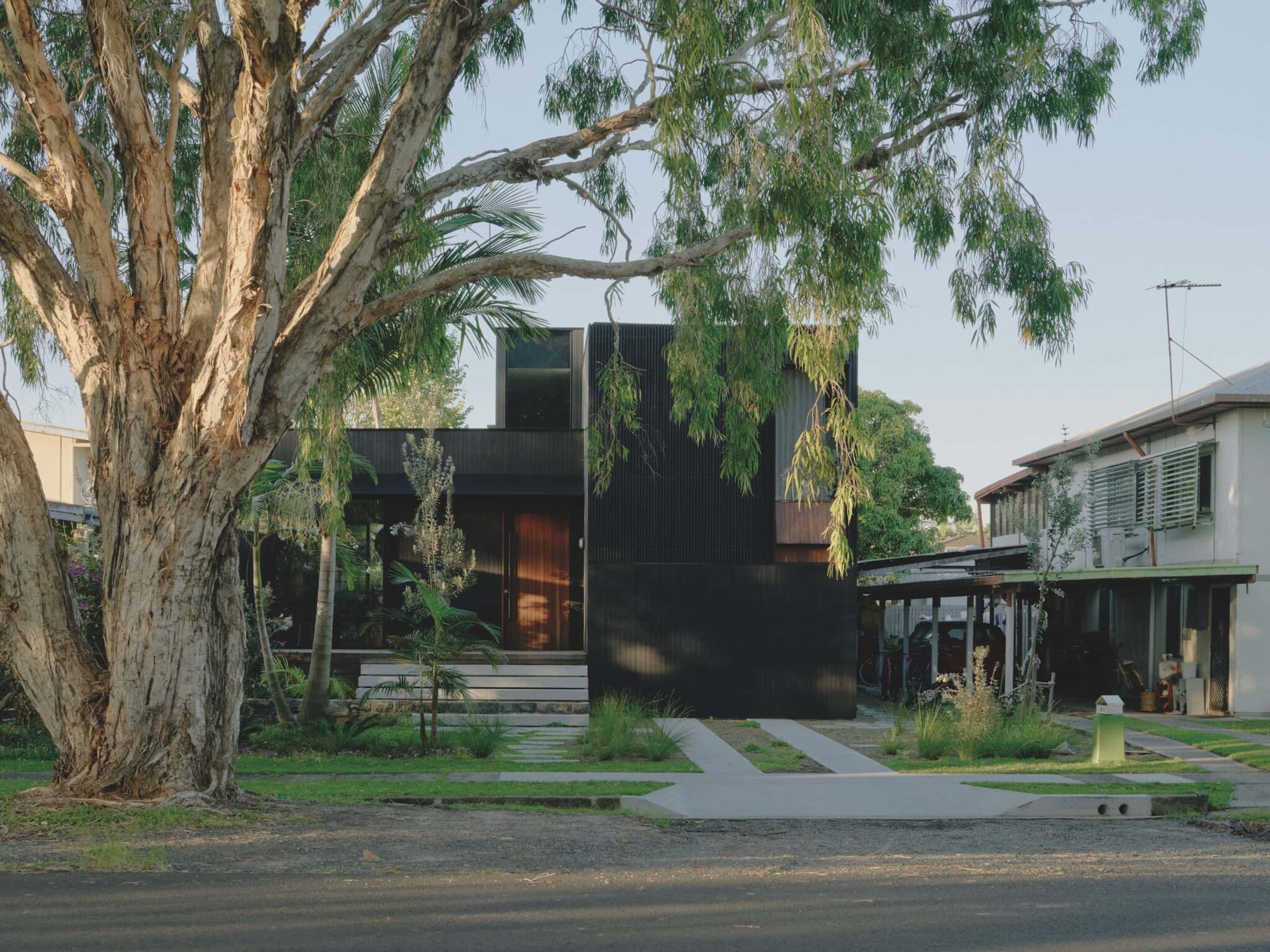
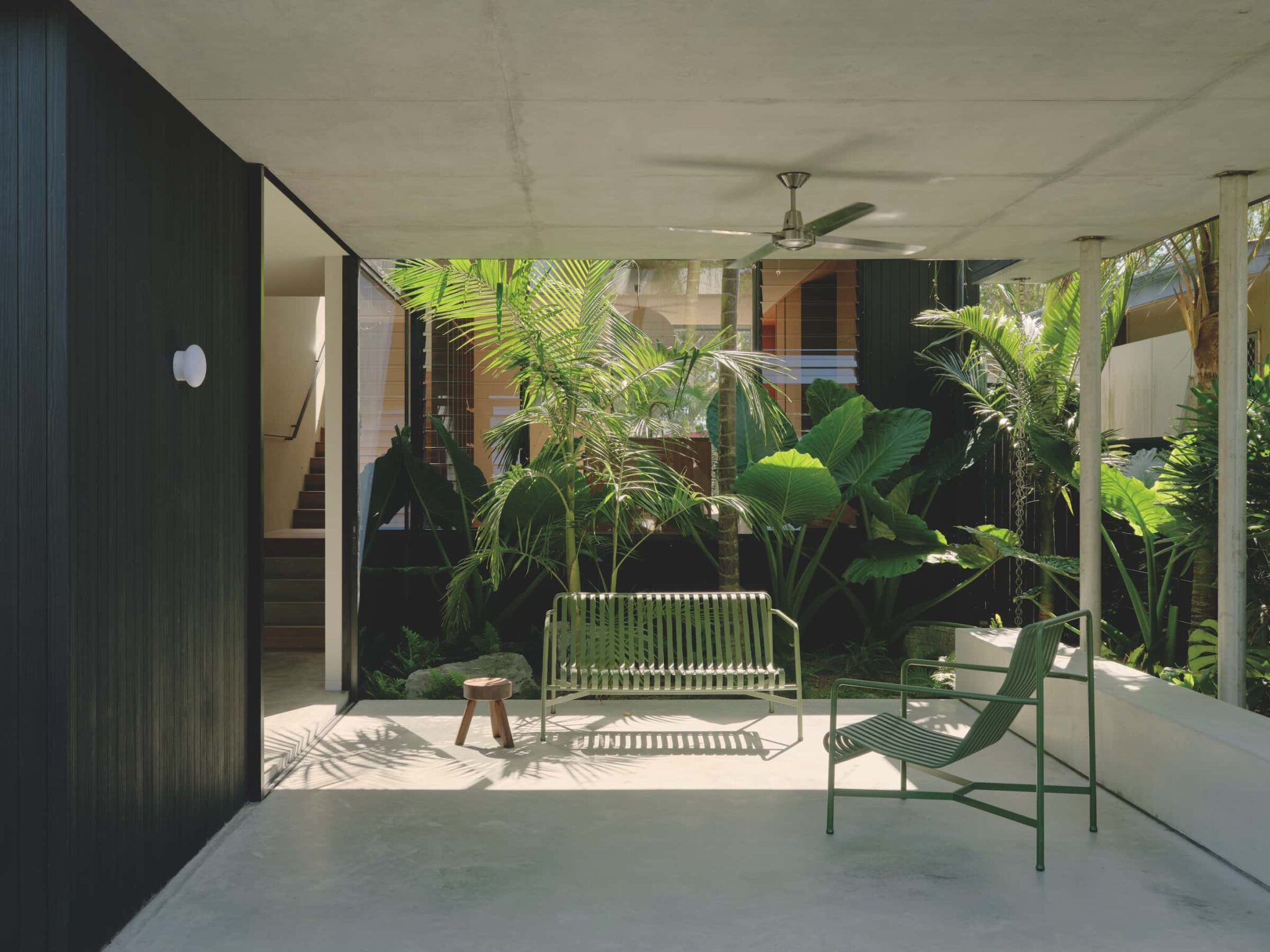
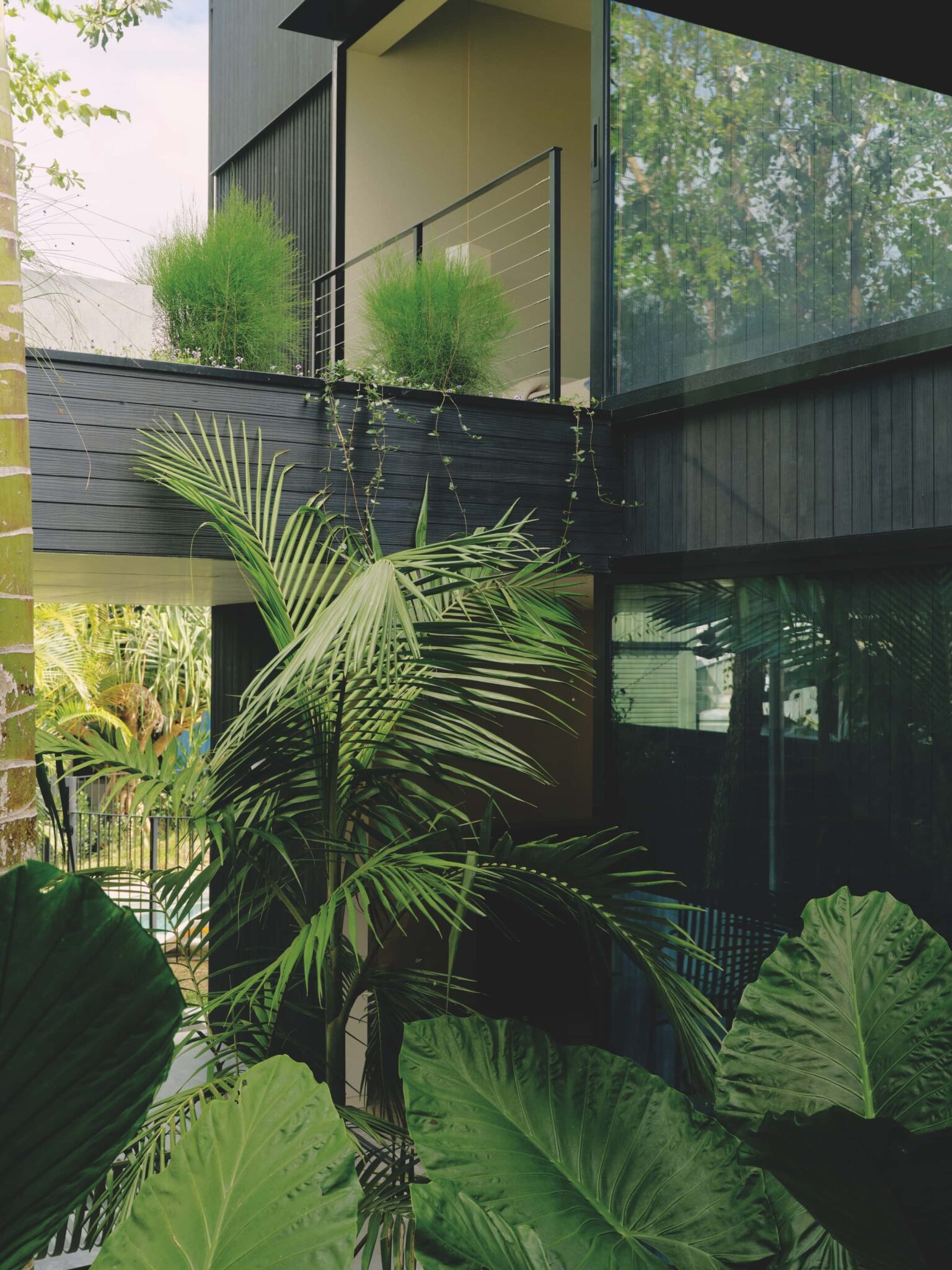
From the street, Brunswick Heads House subtly nestles itself in a thriving garden, set back from the road, gracefully distinguishing itself from its neighbours. Its black timber façade forms a counterpoint to the surrounding palette of pale weatherboards, creating a quietly sculptural exterior as a prelude to the layered spaces within. The most striking aspect of the renovation is its unconventional yet compact footprint, where every space feels open, functional and effortlessly beautiful.
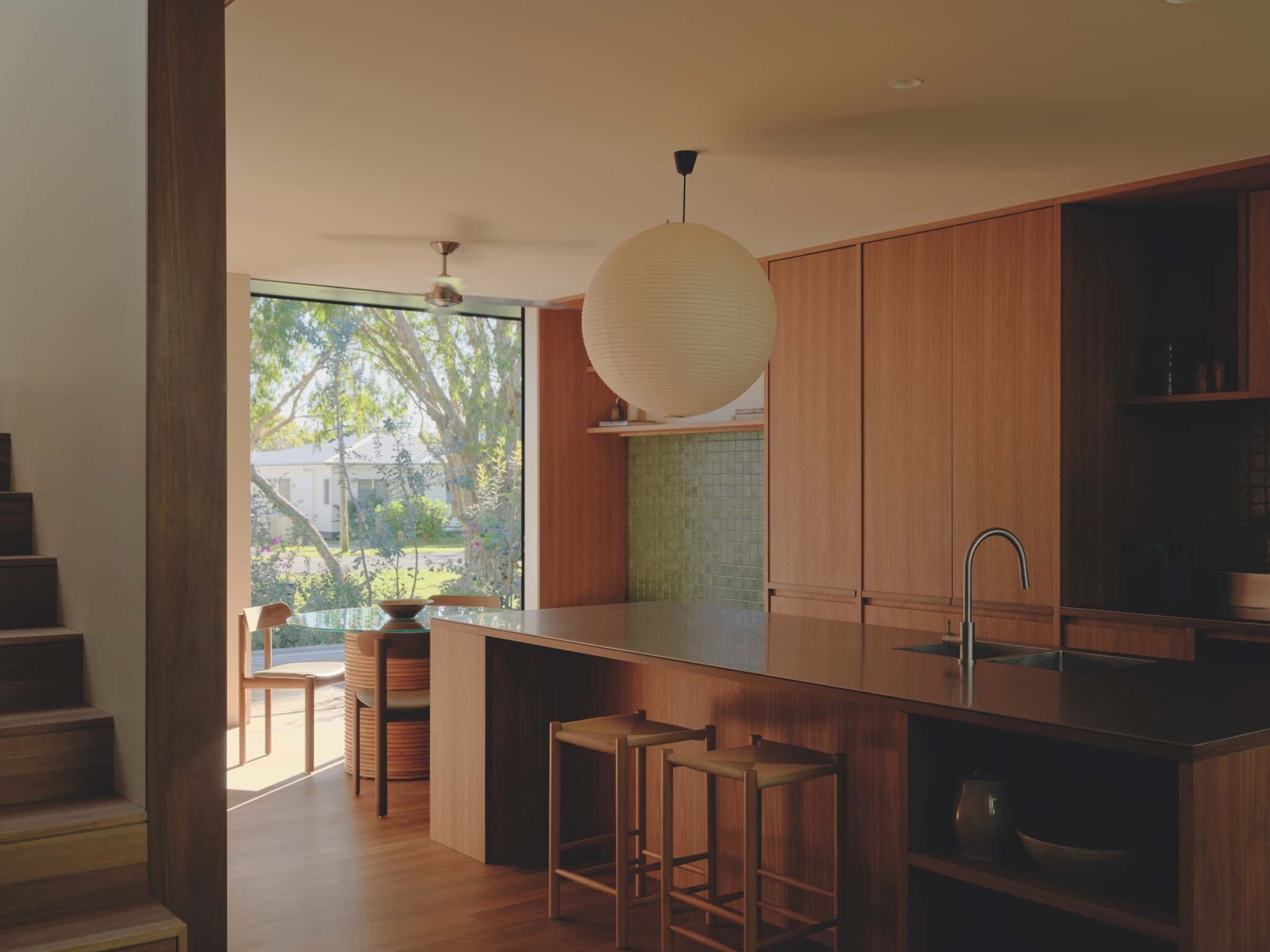
Originally a humble split level beach house, the dwelling was carefully reimagined rather than replaced. Fraser, owner of Fraser Mudge Architects, approached the design with a clear respect for the surrounding vernacular, opting for measured, thoughtful additions rather than a full rebuild. It became clear through the design process; the underlying principles were to create a compact home that felt both intimate yet functional for a family of four. “I noticed how the family could be in different areas — the dining, kitchen and living half a level down — yet still remain visually connected. That half-level offset layout creates a sense of togetherness, making the space feel particularly warm and inviting,” explains Fraser.
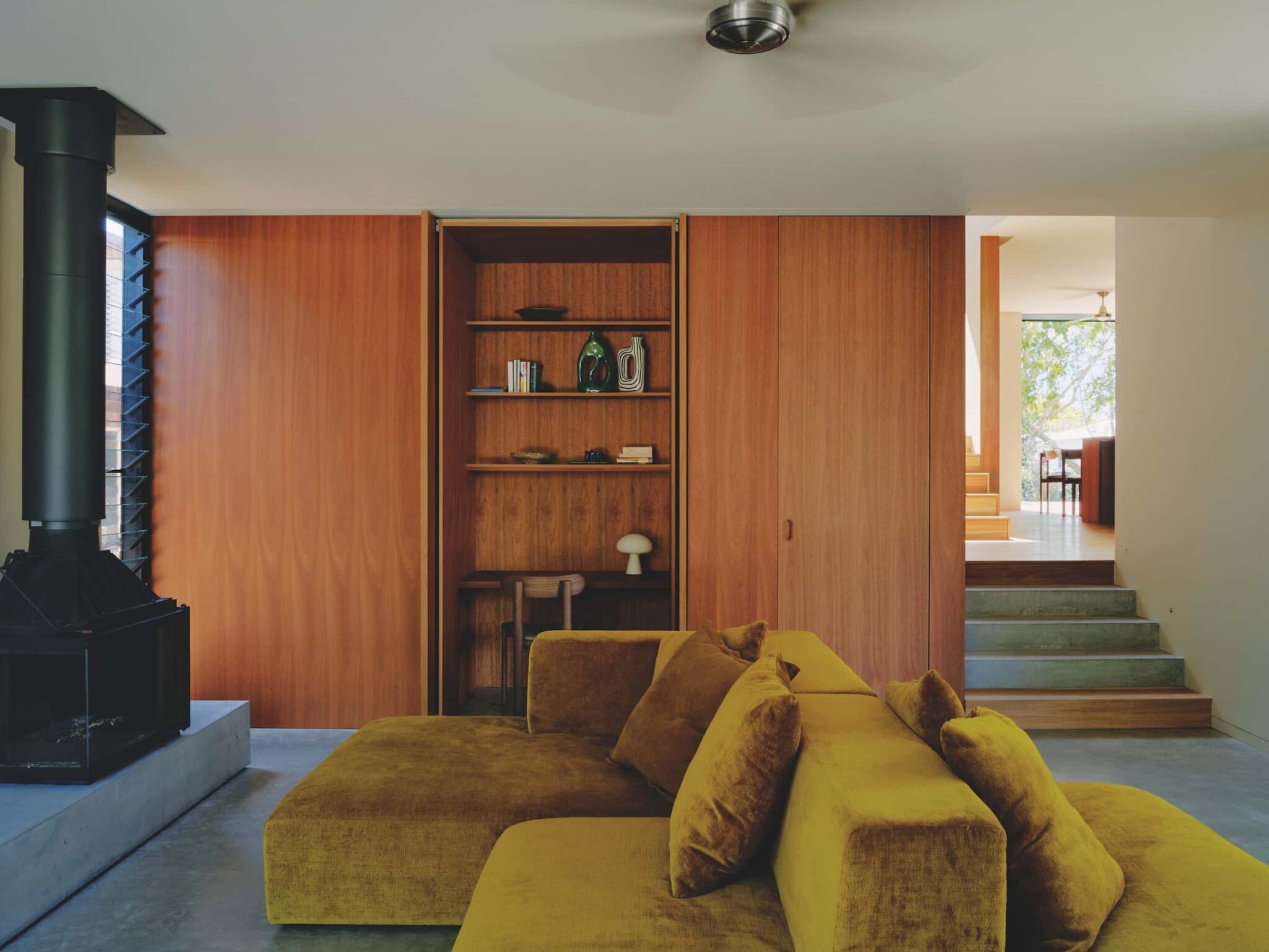
The solution lies in this inventive reconfiguration of levels. The original split-level plan evolved into four half levels connected by a central staircase, giving the home a sculptural vertical rhythm that draws the eye to the neighbouring spaces. Each level enjoys a distinct relationship with surrounding roof gardens and a central garden void, fostering unique atmospheres throughout the home as well as to the street.
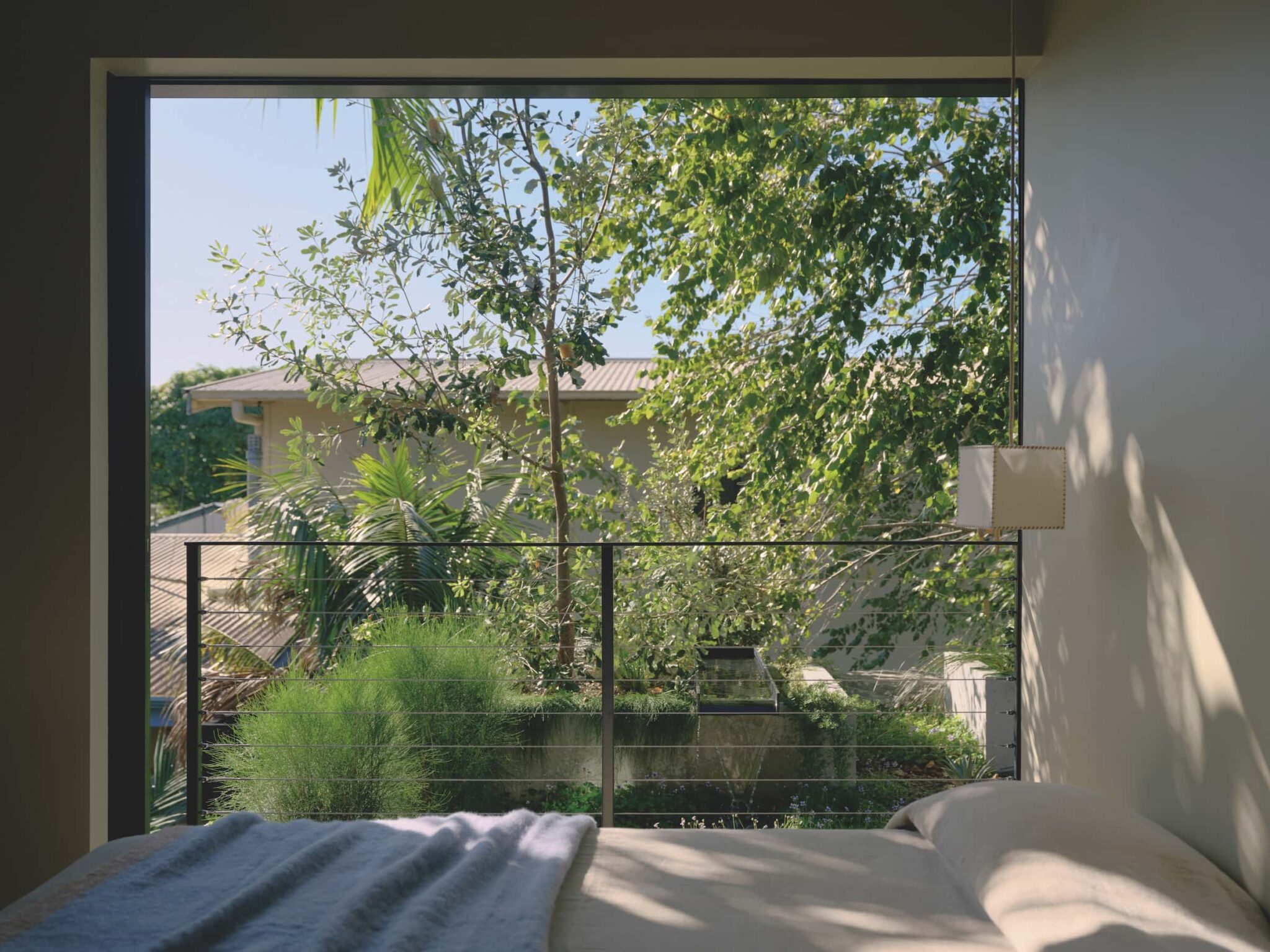
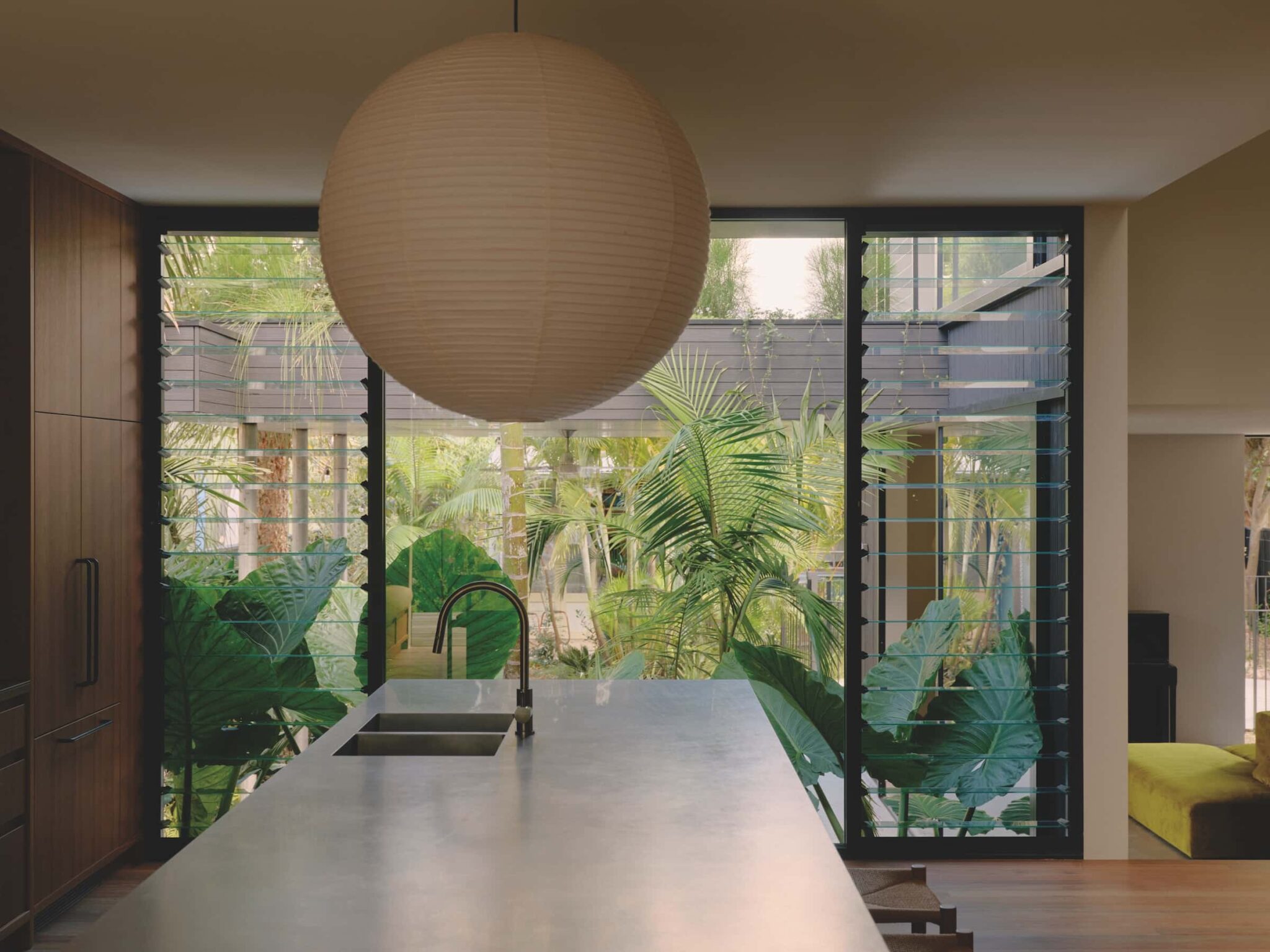
Garden courtyards, roof terraces and green voids are scattered through the home, ensuring that every space connects to nature in some form. Sunlight filters through louvres, breezes pass softly between rooms and glimpses of foliage punctuate moments of daily life. This is best illustrated by the garden void and roof garden, which allow winter sunlight to stream into the single storey kitchen, bathing the interior in natural light.
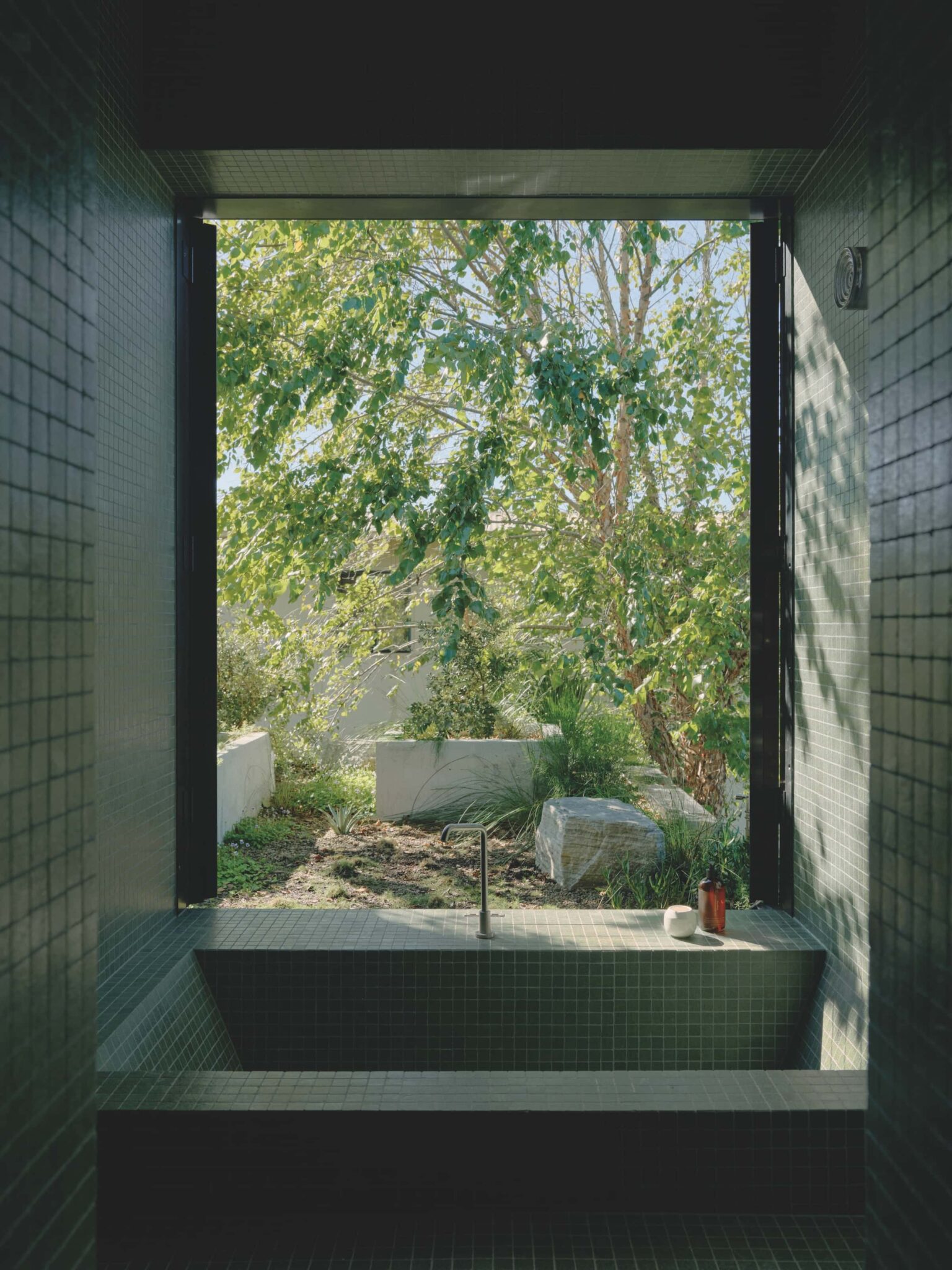
The master ensuite was a central element of the design, envisioned as an outdoor space that seamlessly connects to the roof garden. Entering the bathroom feels like stepping outside, as it occupies an unconditioned area directly open to the rooftop garden. Adjustable timber screens provide control over light and privacy. A sunken bath sits within an intimate nook, positioned to enhance the connection between the interior and the surrounding greenery. Clad entirely in rich green tiles across the walls and floor, the space echoes the natural tones of the garden, creating a tranquil, immersive retreat that blurs the line between indoors and out.
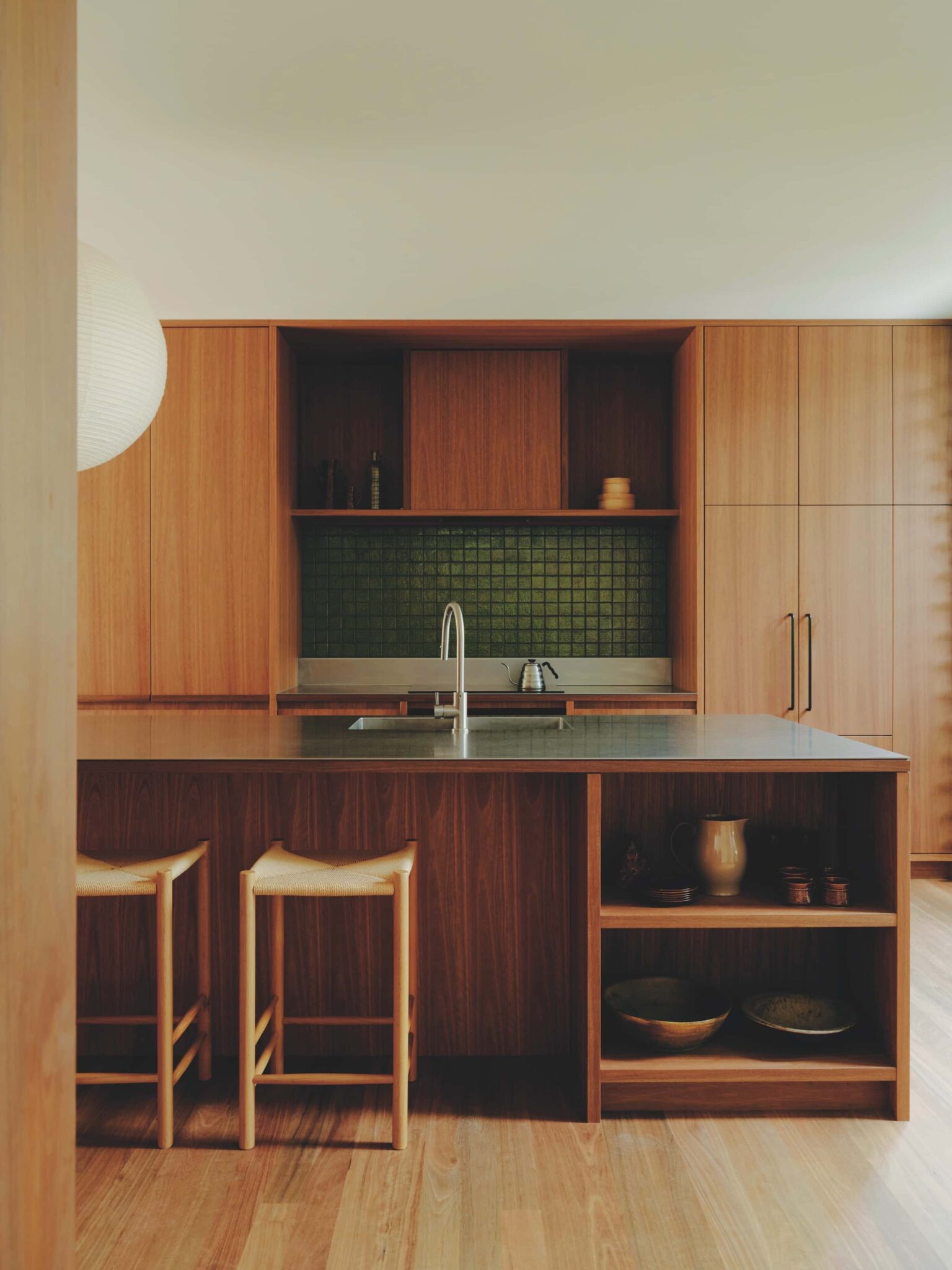
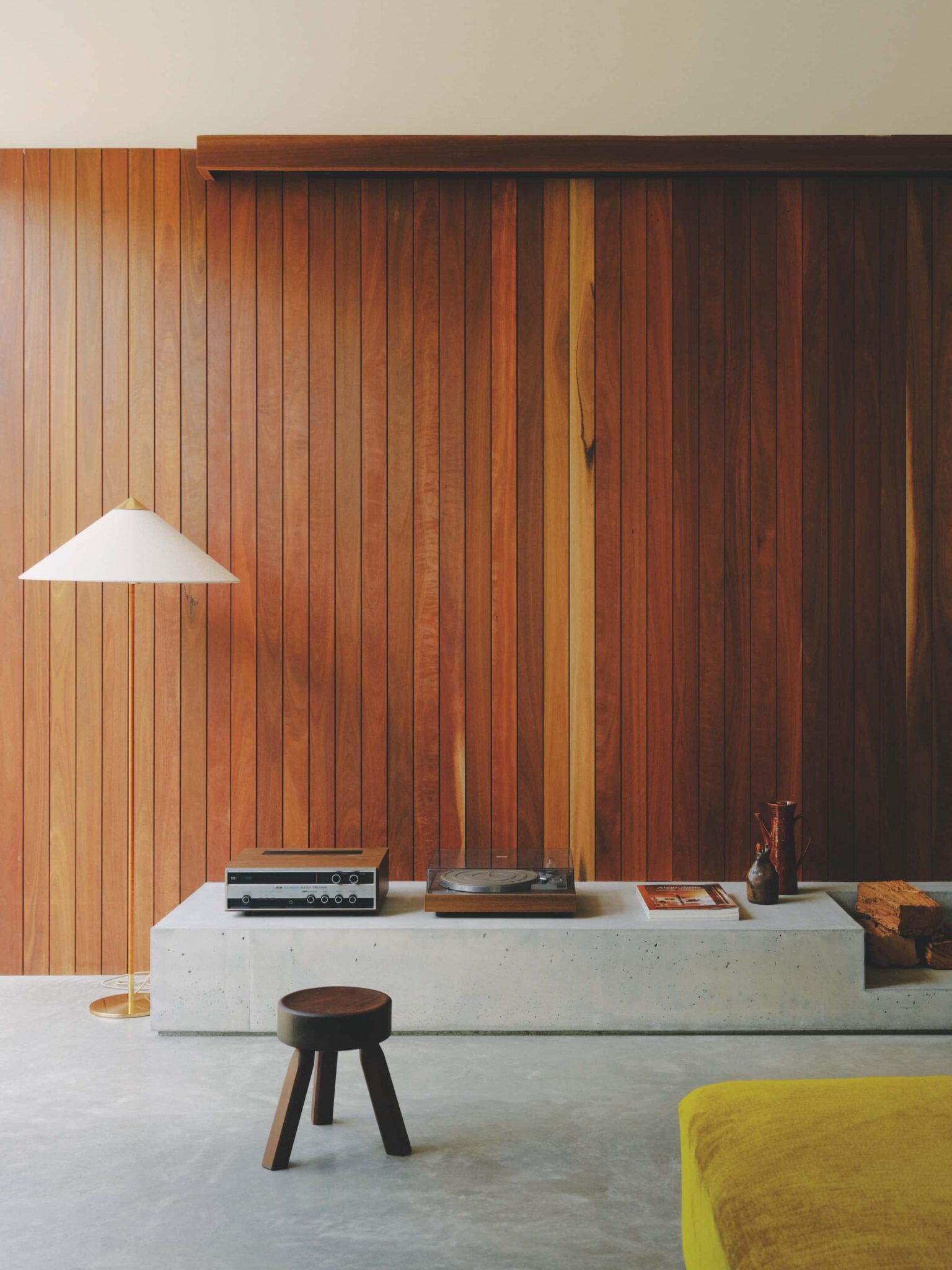
As you move through the home, each space is defined by a quiet balance of warmth and considered restraint. A minimal, earthy palette grounds the interior, with variations of timber from the façade extending inward. The dark tones of the exterior timber contrast with the lighter spotted gum enveloping the interior staircase, walls and joinery. Polished concrete floors and boldly coloured bathroom tiles add a contemporary layer, blending coastal nostalgia with modern refinement.
The home’s materiality strengthens the connection between indoors and out. Timber screens – a recurring motif – serve both aesthetic and functional roles by filtering light, providing privacy and linking the spaces to their coastal surroundings. These adjustable elements allow the residents to tune light and airflow through the day, creating a serene, moody atmosphere that shifts with the landscape.
One of the home’s most distinctive qualities is its thoughtful approach to lighting. At the client’s request, ceiling lights were mostly avoided, prompting a creative solution that relies on carefully positioned wall sconces and a few understated pendants. This approach cultivates a moody, intimate atmosphere throughout, with a feature pendant above the kitchen island providing a striking focal point.
Brunswick Heads House plays with ideas of coastal living through its compact, layered design that balances intimacy and openness, nature and architecture to create a serene, connected family home of quiet beauty.
“That half-level offset layout creates a sense of togetherness, making the space feel particularly warm and inviting.”
Specs
ARCHITECT
Fraser Mudge Architects
INTERIORS
Fraser Mudge Architects in collaboration with We Are Triibe
LANDSCAPE ARCHITECT
Cooke Landscape Architecture
BUILDER
Morada
@moradabuild
LOCATION
Bundjalung Country / Brunswick Heads / NSW
PASSIVE ENERGY DESIGN
The house is mostly oriented to the north and east with the south-facing covered outdoor area pushed away from the house to allow winter sun to come in over the single-storey kitchen wing. Both living spaces are designed to allow for good cross ventilation. The main ensuite is designed to be an external space, providing good light and ventilation throughout the year.
MATERIALS
Timber-framed house on a combination of timber frame and slab on ground and suspended concrete slab. Vulcan cladding in “Nero” by Abodo. Steel Lysaght Custom Orb and Spandek roofing. Spotted gum veneer joinery.
FLOORING
Spotted gum and polished concrete floor finishes.
GLAZING
Windows are powder-coated aluminium with a combination of single-panel external sliders and Breezway louvre inserts.
HEATING AND COOLING
In summer the house relies on louvres with cross ventilation to cool, along with the natural cooling provided by the external garden void. As a passive-heating measure, the house has been designed to allow the winter sun to penetrate deep into the north-facing windows while protecting the glass in the summer months.
HOT WATER SYSTEM
Hot water is provided by an electric storage unit offset by a 6kW solar system with battery storage.
WATER TANKS
Rainwater from all roof areas is directed to a 6000-litre Kingspan rainwater tank.
LIGHTING
The house uses minimal low energy LED lighting along with a key number of feature lights.
ENERGY
6kW solar power system with battery by Sungrow.