Yard Work – Garden First, House Second
Usually, the design process for architects goes house first, garden second. But delightful things occur when that script is flipped.
On Gundungurra and Tharawal land in the Southern Highlands of New South Wales, a small, damp and strangely orientated house once sat. Across the courtyard was a crumbling artist’s studio.
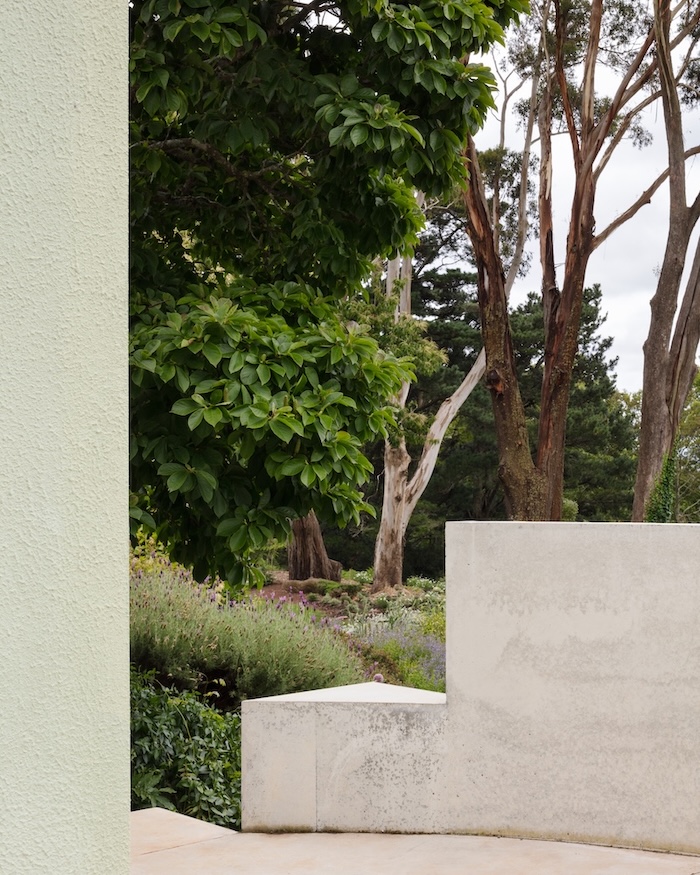
These worse-for-wear buildings, however, were redeemed by the stunning, established and much-loved garden that surrounded them. It was the type of garden, architect David Neustein says, “that you couldn’t help falling in love with.”
When Other Architects – a Sydney-based architecture studio run by Grace Mortlock and David Neustein – were approached to replace the run-down house in 2018, they immediately recognised the unusual opportunity they had been given. “It wasn’t about, here’s an empty site and we need a design for a house, studio and landscape,” explains Neustein. “Because the site had such a beautiful garden to begin with, and the clients had already employed a garden designer, the project was really about garden first, building second,” explains Mortlock.
This garden first approach subverts the usual status quo of architectural projects, where gardens are often limited by a lack of early integration in the design process and/or stretched budgets. “We’ve always found gardens to be a bizarre blind spot in our industry,” says Neustein. “Architects are so confident about what they’re adding that they don’t notice what already exists that is good.”
Other Architects have been thinking about this oversight for some time. Their 2017 project Garden Wall for the NGV Architectural Commission, for instance, aimed to make visitors appreciate “what was already lovely about the gallery’s garden as it was,” explains Neustein. Designed in collaboration with Retallack Thompson, the installation comprised a series of white mesh screens dividing the garden into a maze of outdoor rooms and corridors. “What had previously been overlooked – sculptures, furniture, trees, ground, grass – were framed as curious and cinematic moments, inviting fresh interest, engagement and appraisal,” reads Other Architects’ website.
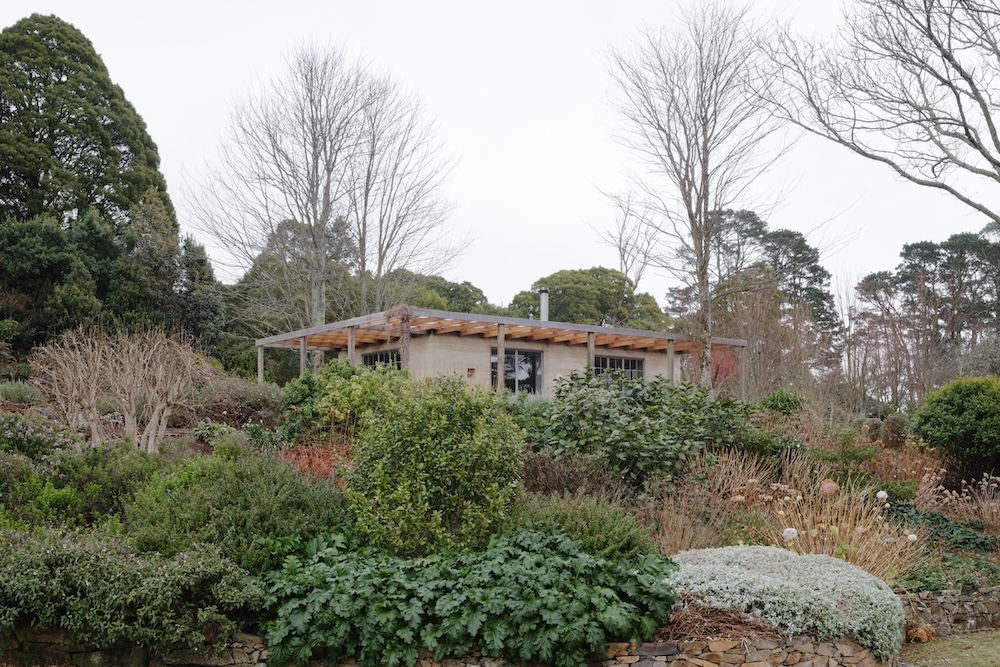
About a year later, they applied a similar set of thinking to Highlands House, taking direction from how beautifully the old, vine-covered cottage integrated into the landscape. “It felt sad to replace this structure with something really shiny and new,” says Neustein. Instead, they opted for a design with as light a touch as possible.
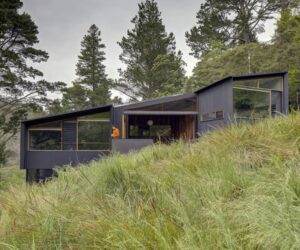
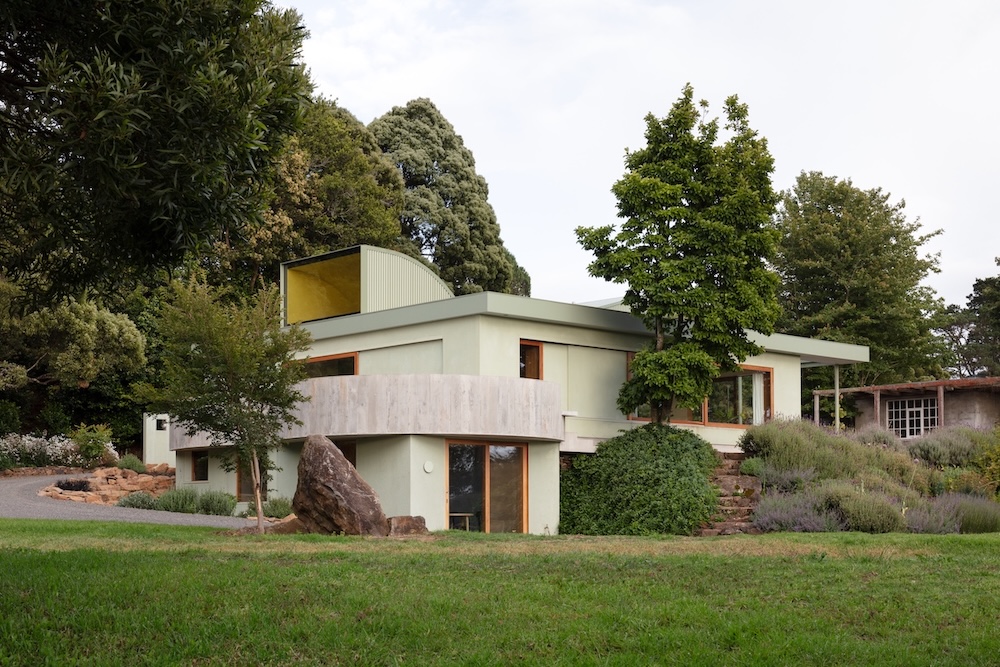
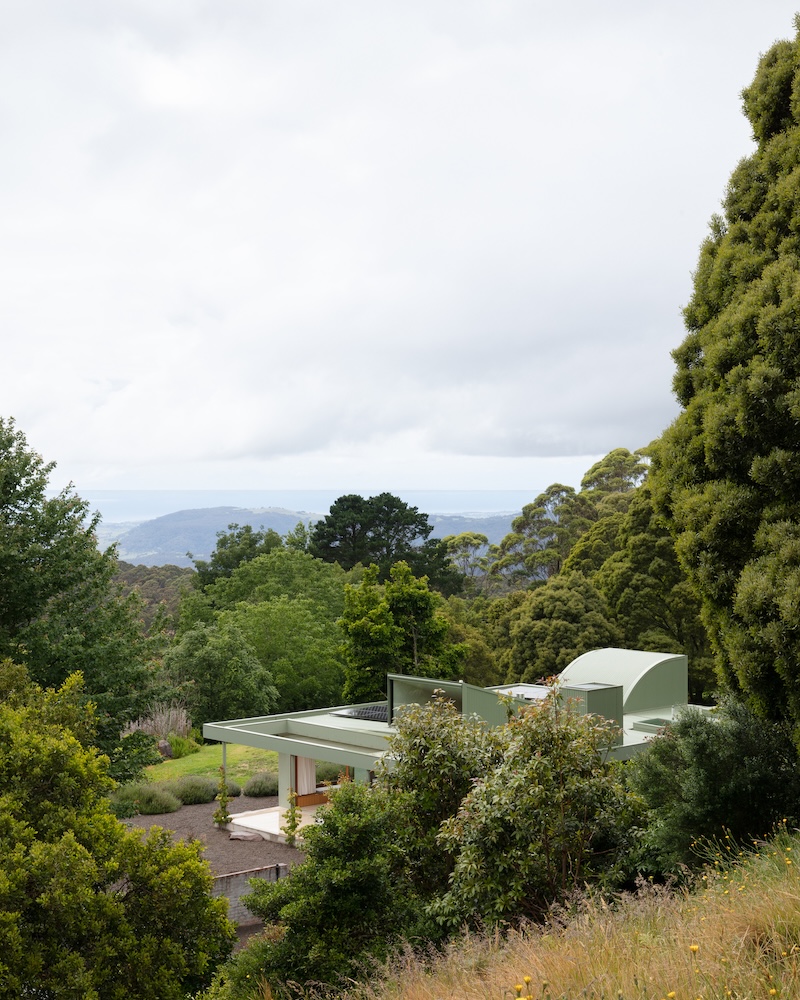
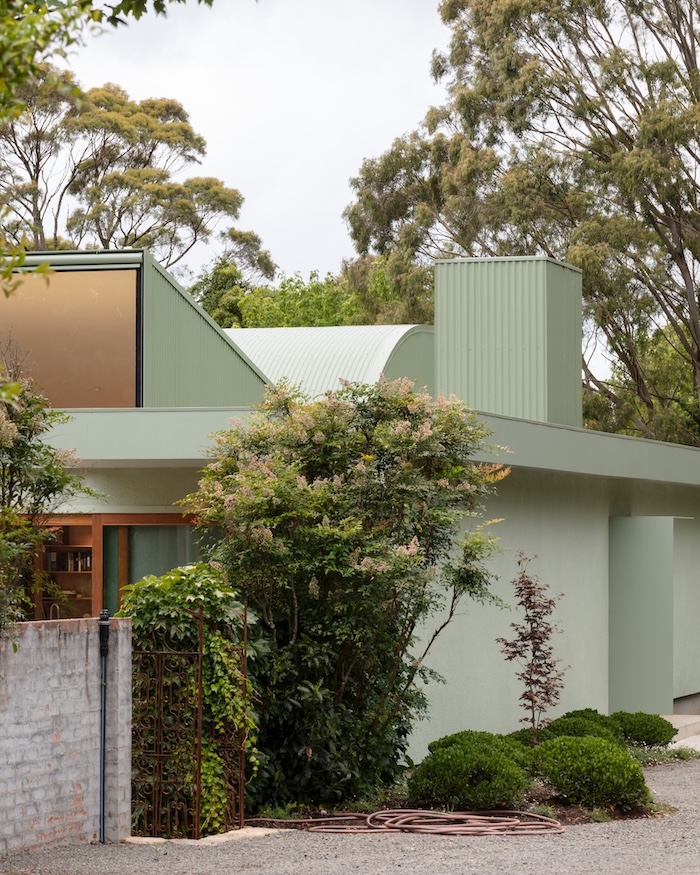
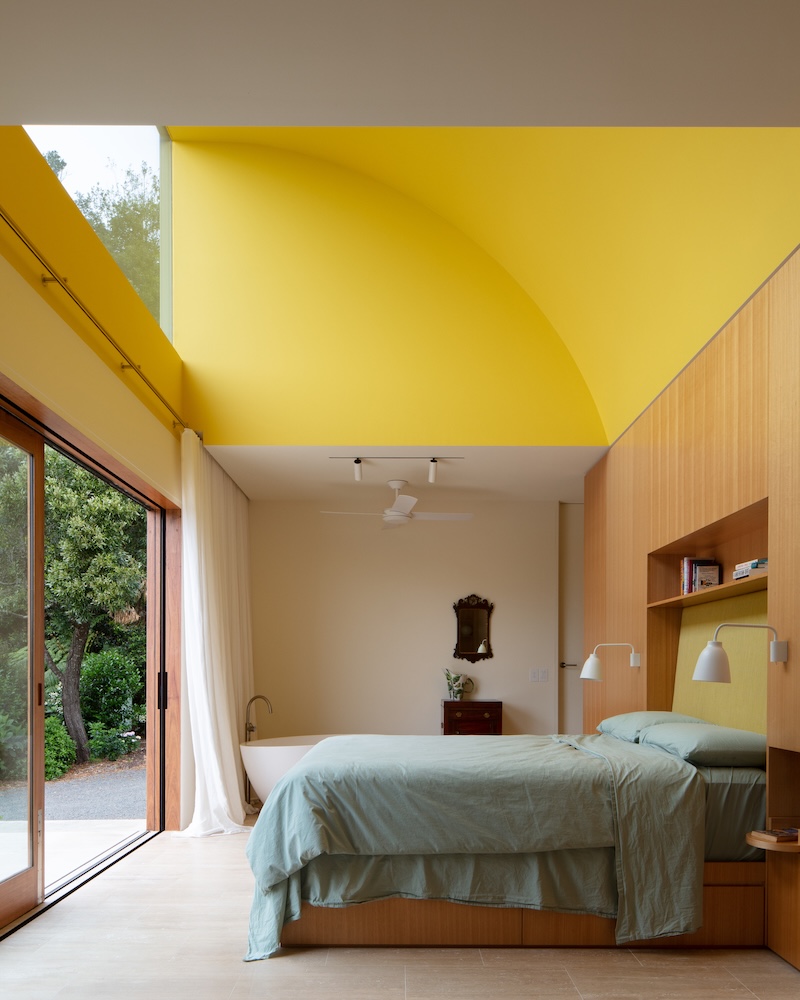
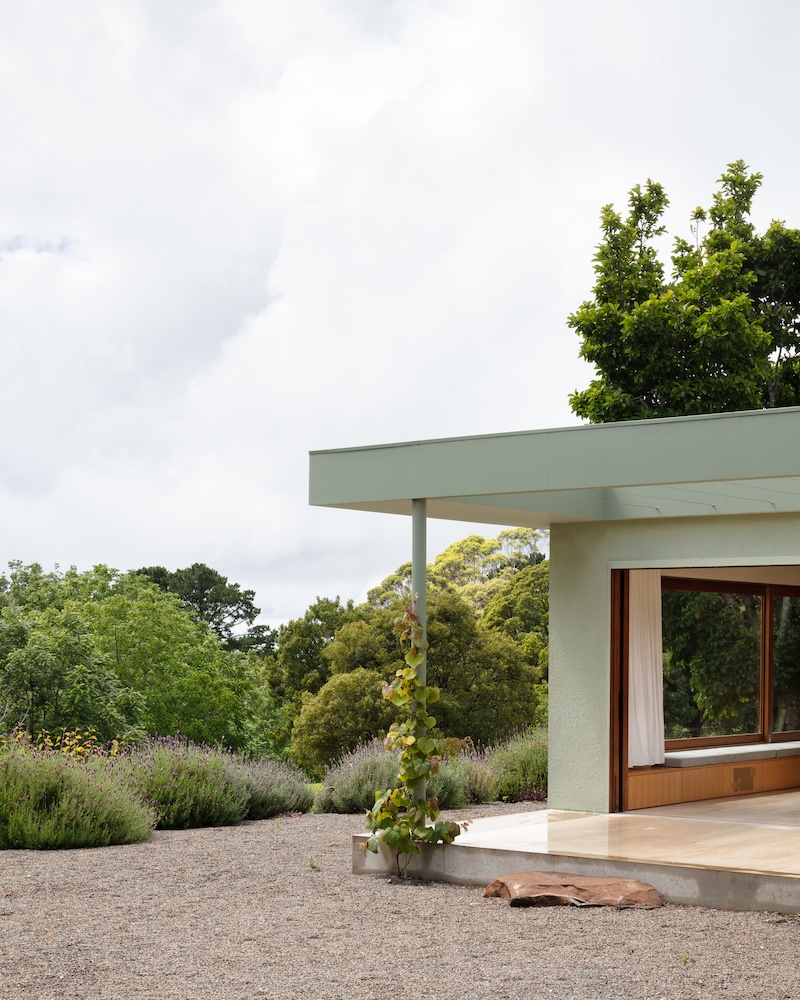
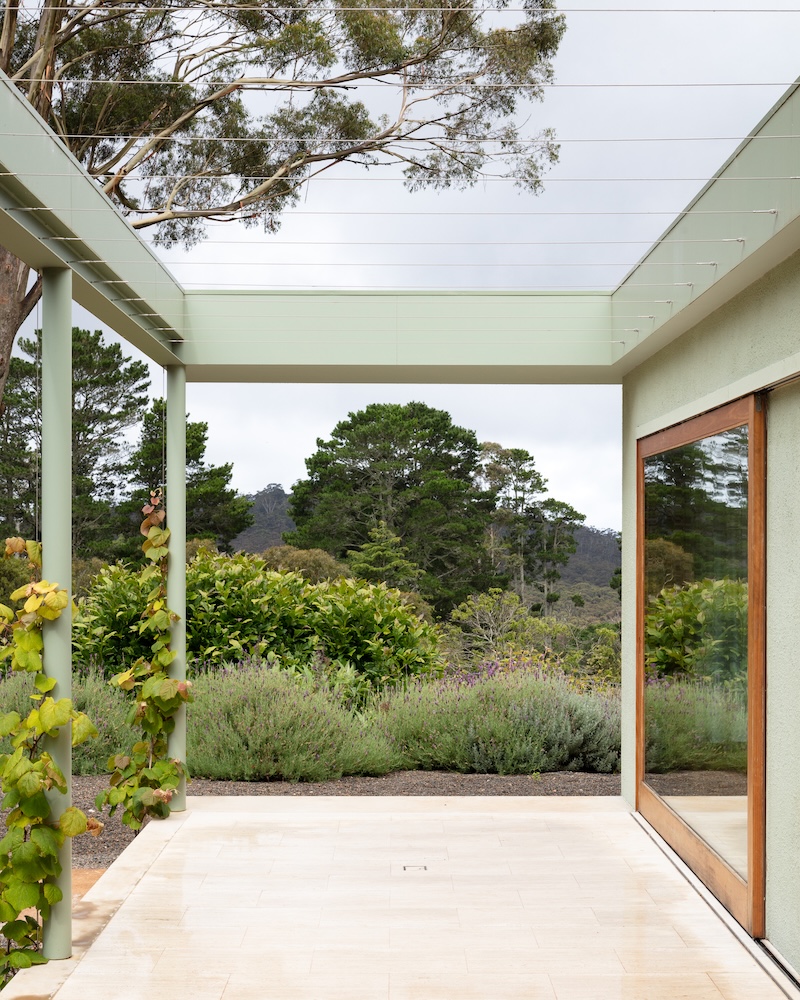
The new single-room house retains its original footprint and preserves the courtyard, garden wall, topography and trees. Completed in 2020, it now sits quietly within its landscape – its mint green cladding complementing the garden’s greenery, its soft geometry lacking a sense of imposition, and its passive features minimally impacting the land.
“As a studio, we’ve been feeling more and more that we want our residential work to be invisible. We don’t want it to be spectacular and arresting and strong,” they tell me. “We think houses are great when they just disappear into the rhythm of everyday life.”
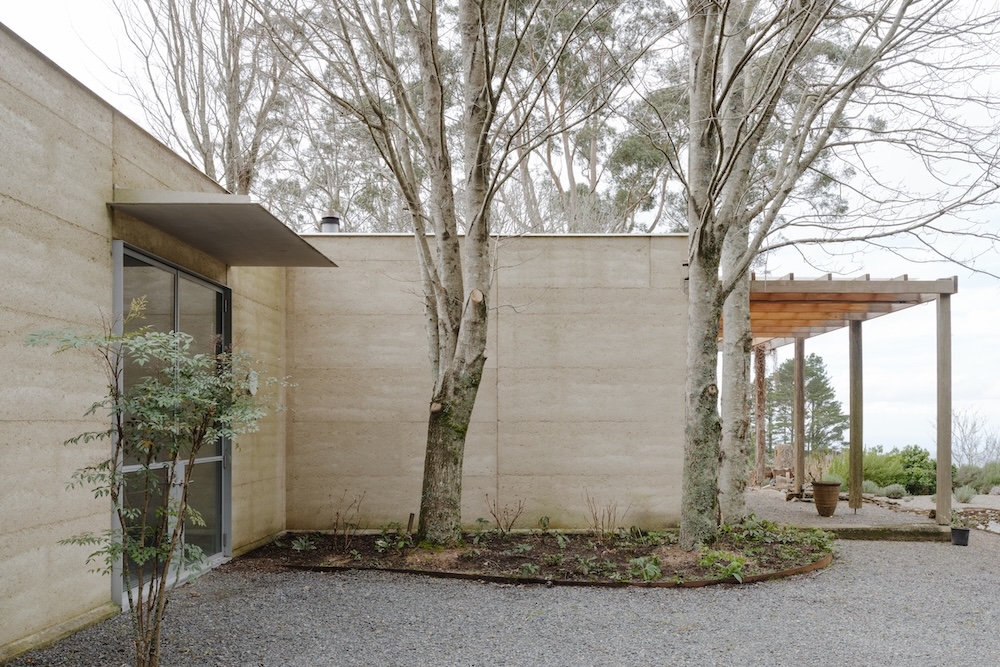
Recently, Other Architects undertook further work on Highlands House to replace the weather-beaten, tumbling mud-brick artist’s studio. The clients wanted it rebuilt like the original. “It’s been a really interesting exercise for us in low-design or non-design,” comments Neustein. While its proportions, form and, crucially, its charm remain almost identical, some features were improved. For example, thermally insulating windows and solar panels were added and it was constructed from rammed earth to increase durability against the region’s heavy rains. Despite these upgrades, the new studio “feels like it could have always been there.”
Highlands House has proven the success of a garden-first approach, but what happens on projects where no garden exists in the first place? Other Architects had the opportunity to test this question when they won an international competition to develop a low- and mid-rise housing design for the New South Wales Government’s Pattern Book.
Released in July 2025, the Pattern Book is a series of architectural plans by leading firms that are available for the public to purchase and will be fast-tracked for approval. The scheme aims to address Australia’s housing crisis by encouraging more people to build well-designed, higher density homes. Despite this context of scarcity, Other Architects focused on “ensuring that the garden, landscape and open space is prioritised above the building in our design,” says Neustein.
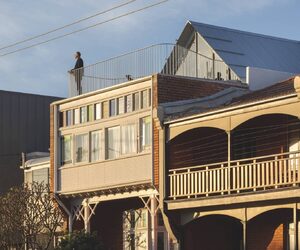
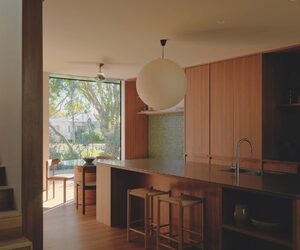
Working with NMBW studio, Other Architects has created a pattern for three to seven terraced homes that sit on blocks 535 square metres or larger. The houses are split across three parallel buildings – garage and flexible rooms sit on the outside, the main living space in the centre, and dual courtyards positioned in between them, like the filling layers of a club sandwich. Similar to the extra layers of a delicious sandwich, these gardens do a lot of work, making what could be cramped, dark terraces into light-filled homes that invite outdoor living. These generous green spaces make denser living seem not just bearable, but desirable.
In consistently putting gardens before houses across a range of projects, Other Architects demonstrate just how impactful architecture can be when it sheds its ego. Their work shows the potential for a new kind of architectural practice – one that is not about making loud statements but rather, gentle, quiet improvements.
otherarchitects.com
nmbw.com.au
Location: Gundungurra and Tharawal Country / Southern Highlands / NSW
Specs