Snuck In – Creative Fremantle Subdivision
Creative subdivisions are famous in Fremantle and this lovely little house squeezed into a block that was once a backyard is a perfect celebration of making use of space.
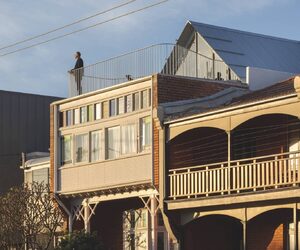
Seems like everyone wants to live in Freo and this simple design by Philip Stejskal Architecture has made room for one more family. Fremantle holds the charm of gold and wool rush boom times combined with a healthy fishing industry and, in recent years, Notre Dame University has injected new life downtown. Along with many old buildings being developed for multi-residential use, the town has become a champion of making use of spaces. Local limestone can be seen in most of the old buildings and walls along with the gorgeous influence of Italian migrant architecture with its superb brickwork, ornate columns (and stone lions).
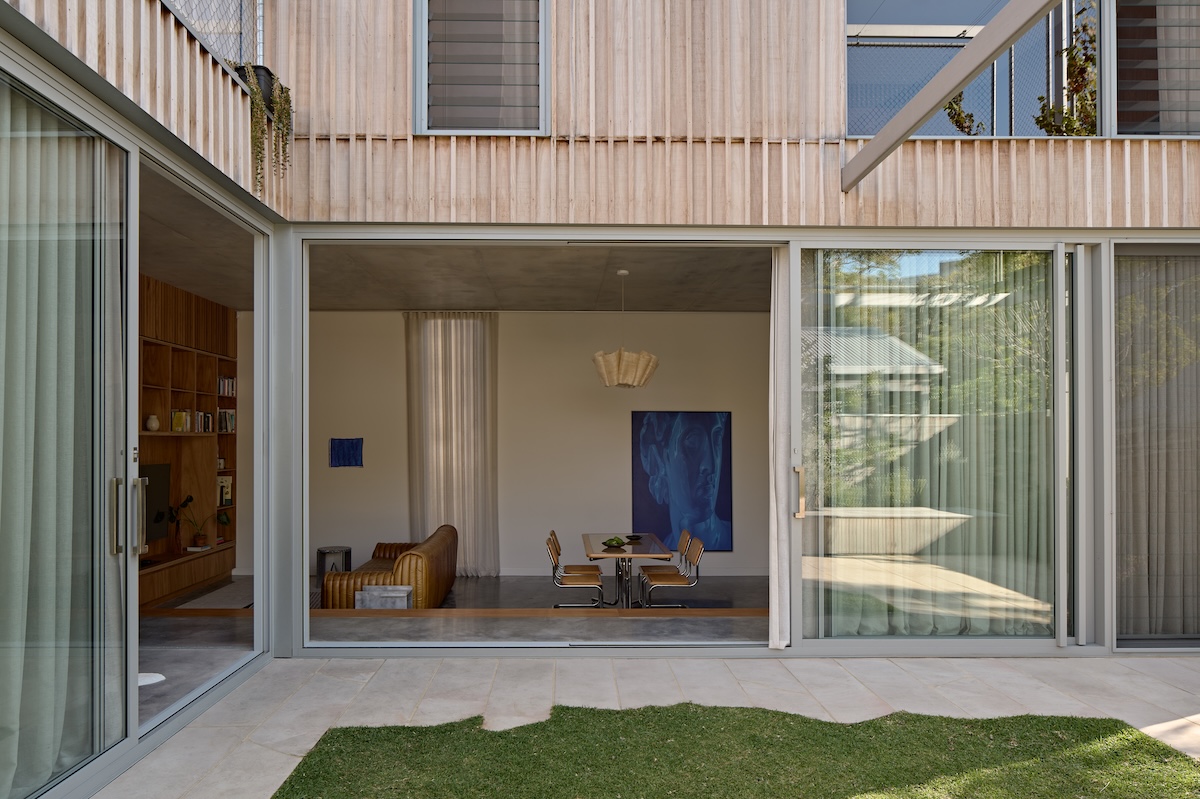
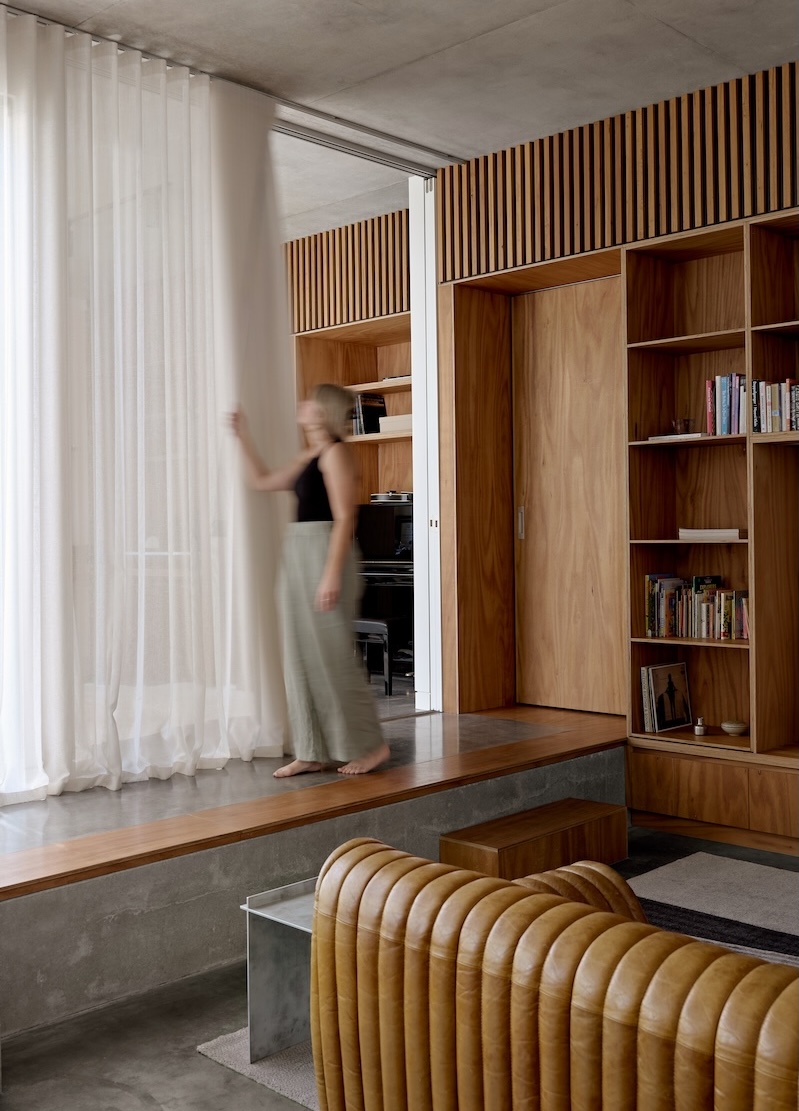
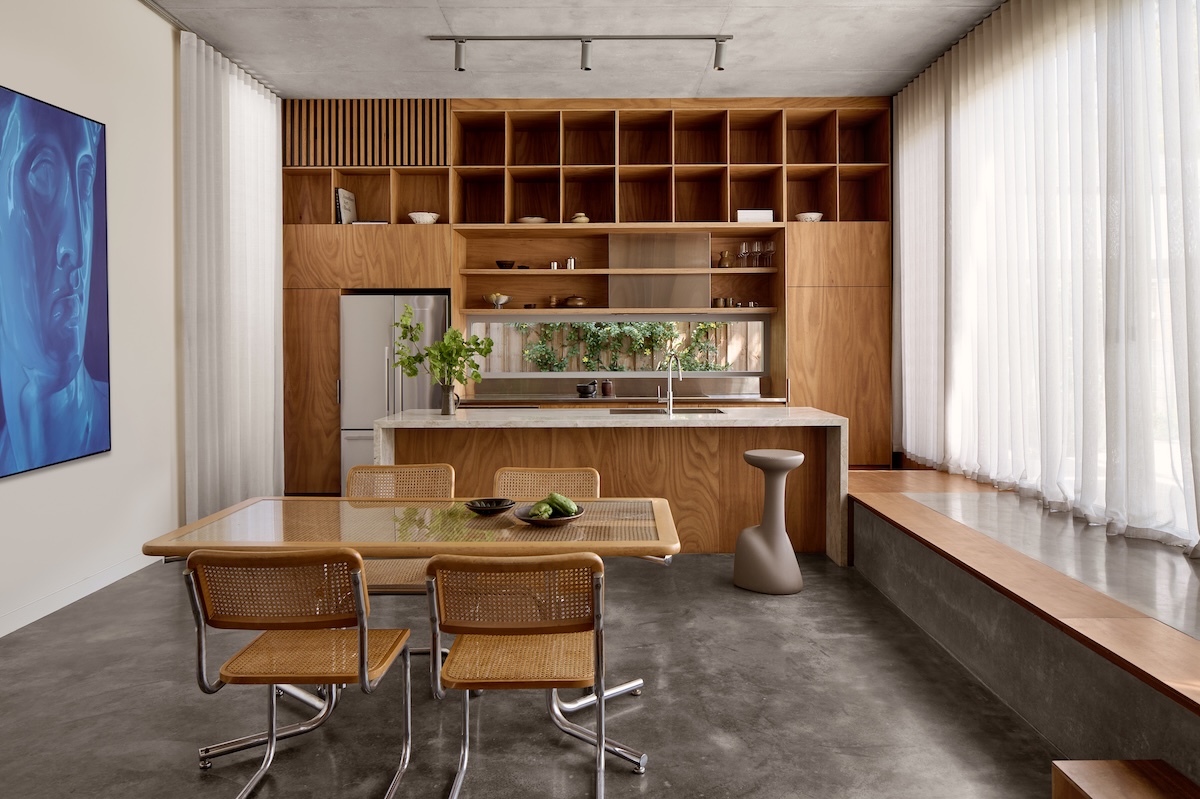
The site for this project was once the backyard of one of these Italian villas. When Philip first met his clients, they met on site at the vacant block and, along with orientation, one of the first things they talked about was the level change. It had a gradual slope. “It’s not massive,” says Philip. “It’s about 800 millimetres from one edge to the other, but we made a decision that day to step the site, and to locate that step within the main living space so you could sit on the edge. That move was agreed before I was even engaged! Possibly one of the reasons they ended up going with us was because we sort of locked that part of the design in and everything else developed around that.”
Part of the brief from the clients was their desire for high ceilings in the living spaces and this step solution meant that Philip could achieve a height in these main areas of almost four metres. To create this volume, they went down instead of up, carving the space for the rooms into the site. The living room sits at the lowest part of the site, and the outdoor living space sits on the higher side with a step for seating where they meet. A very tricky solution.
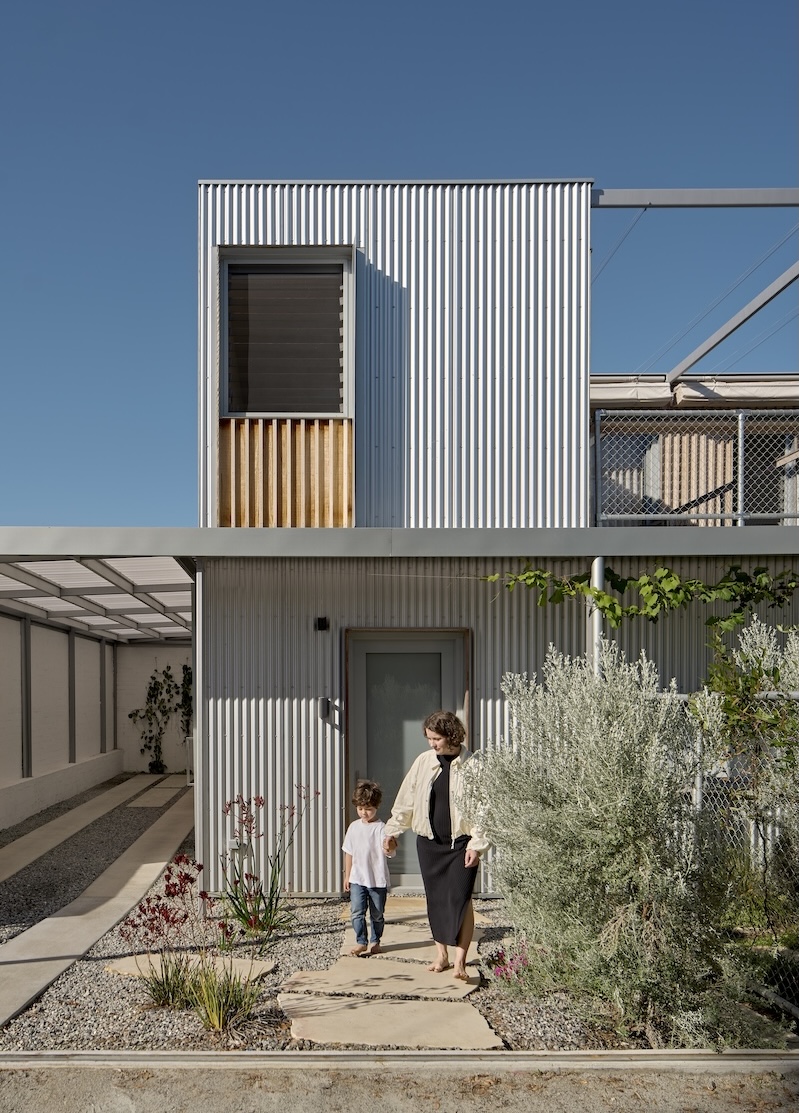
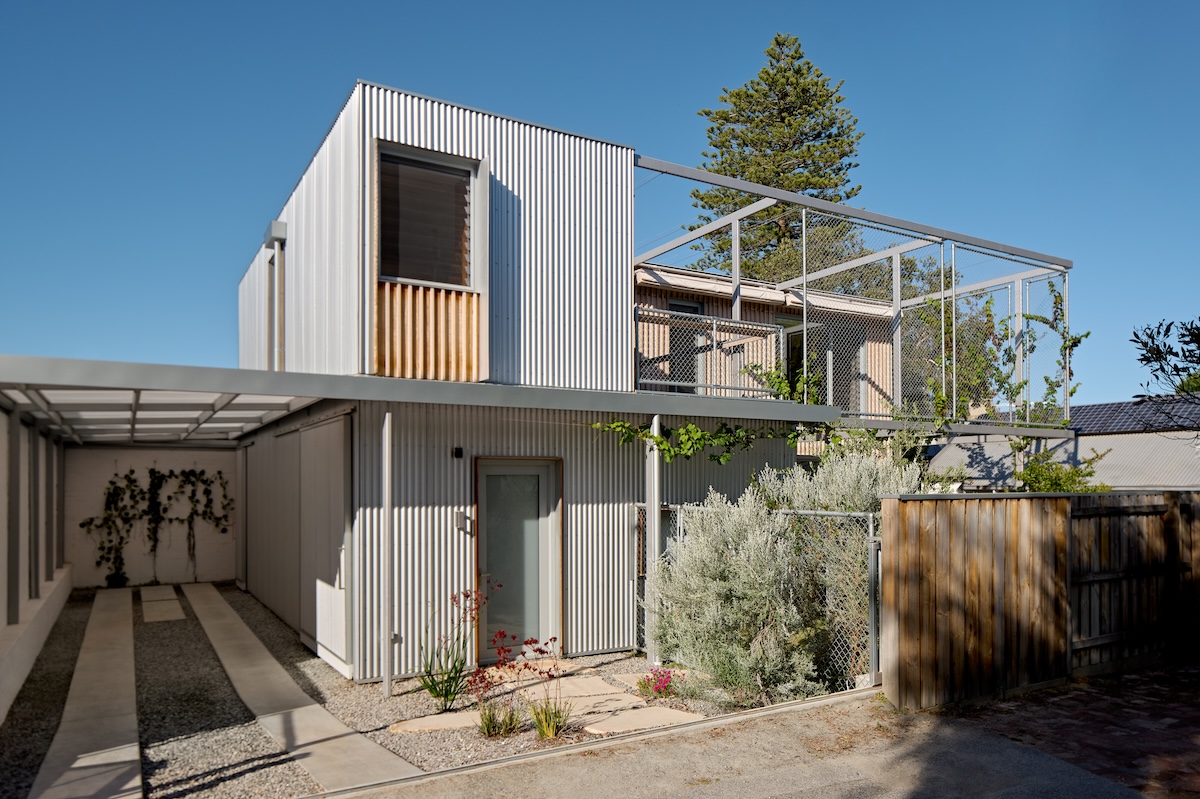
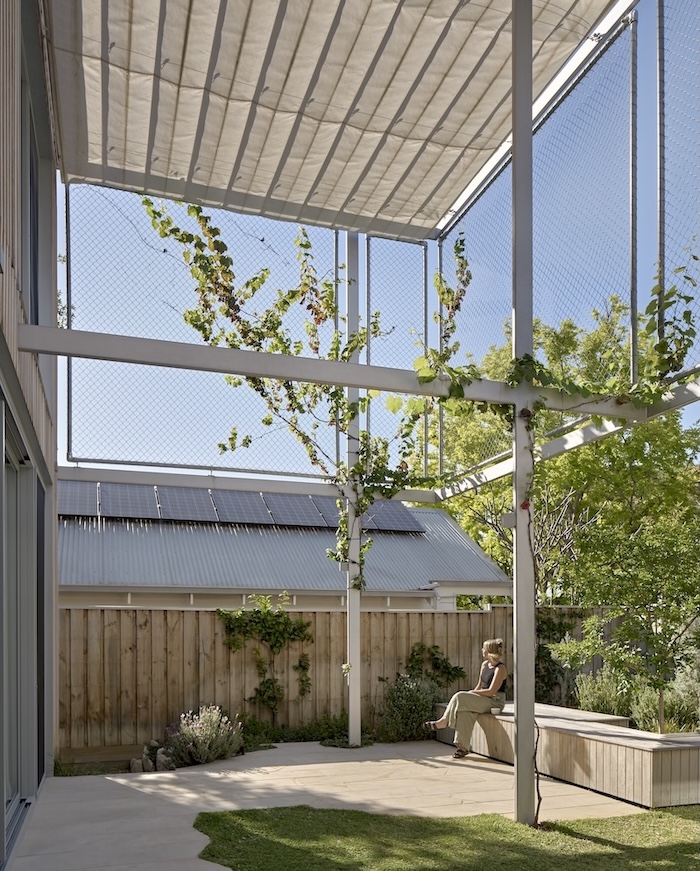
The house is two storeys, a rectangular prism with the outdoor space chopped out, forming an L shape. With a nod to the “workaday nature” of Fremantle and its port, the materials used are friendly and familiar. The exterior is clad with Zincalume on the street and neighbour-facing outside walls and rough-sawn timber cladding is on the interior.
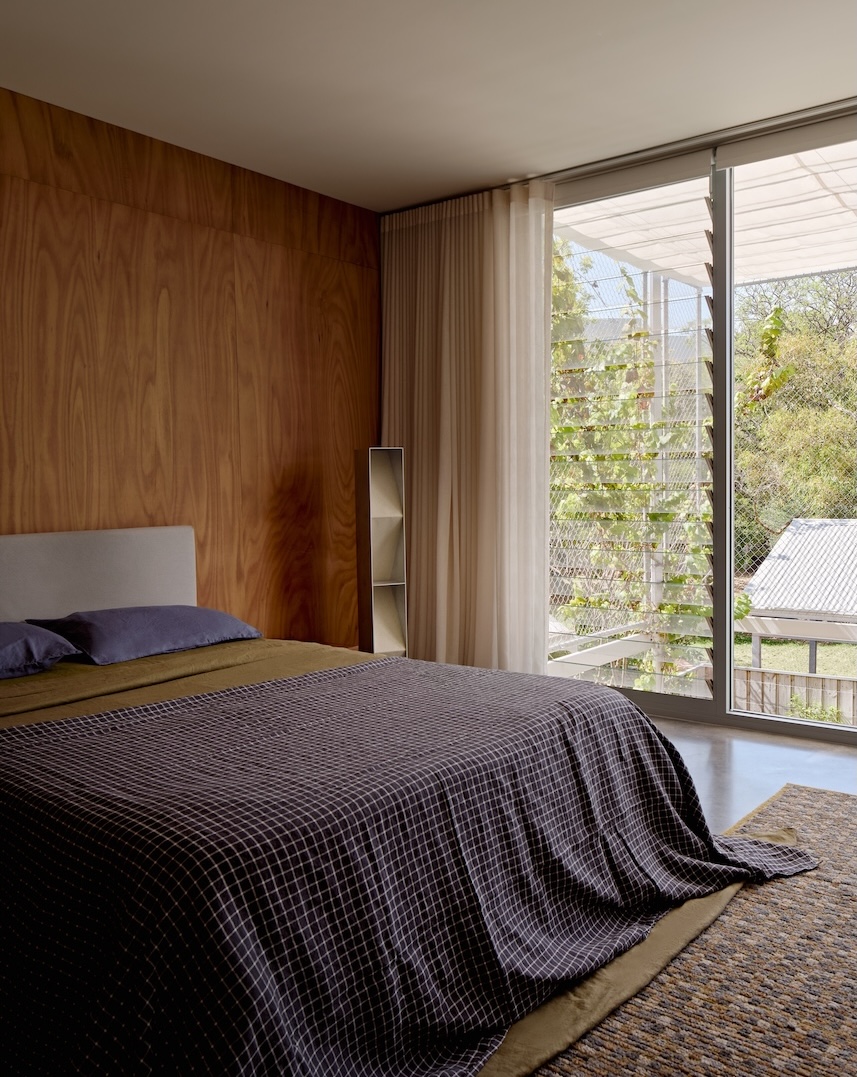
Wire mesh fencing is used for balustrades on the balcony in the internal space and enclosing the alfresco living area, where vines will create living walls. Retractable fabric shades have been installed across the roof of this area, protecting the inhabitants from the intense Western Australian sun. “The plan isn’t to grow them over the top, the idea is to only grow a wall of vegetation, and the top will remain operable with the fabric shades,” says Philip. “We wanted to create an outdoor room, without a roof. At night you can pull those shades back and see the stars.”
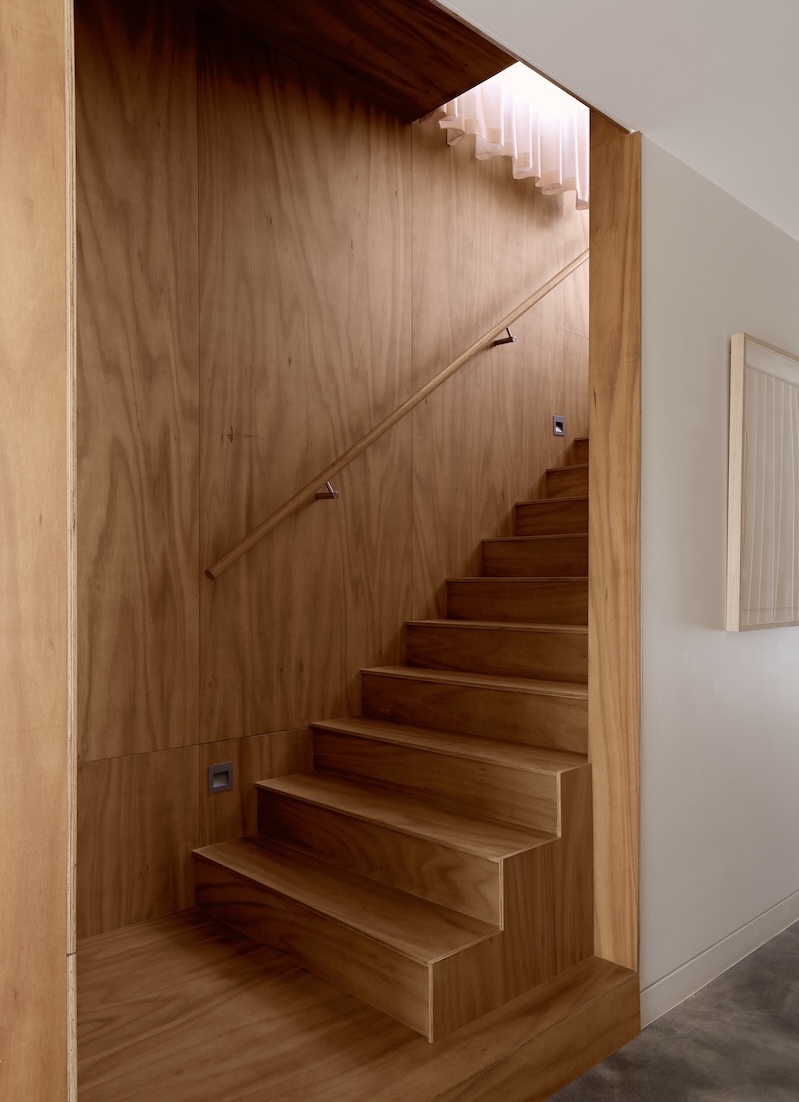
The beauty of the design of this house is the simple solutions for the perennial dilemma of where to put the boring stuff. Philip’s design contains all the functional rooms off the entrance corridor on the ground floor: there is storage for bikes, the laundry, the stairs and a toilet, and upstairs there are two bathrooms next to each other, one for parents and one for kids. This clumping together contains the plumbing and makes for more space for living.
There is a balcony upstairs adjacent to the kids’ bedrooms which makes the most of the borrowed views over the neighbours’ backyards. All the views have been considered for privacy and aspect, including a window in the bathroom which perfectly frames a favourite Norfolk pine when you’re in the bath.
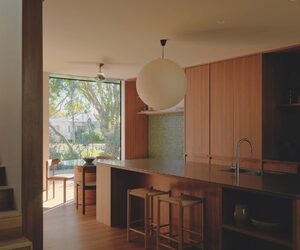
The interiors are lovely. Philip has used blackbutt inside and out. The interior cabinetry is rotary-cut ply – “the best cut” says Philip – and oiled to bring out the grain. Philip tried to fabricate as much of the internal cabinetry off site as he could to minimise waste and the carpenters have done a great job – it looks sleek and well finished. The seat/step along the inside edge of the living space has a warm timber edge to save visitors from “a cold bum”. Apparently, it’s the spot most visitors gravitate toward.
With their love for the port, the clients’ initial wish was to build a container home on site. Philip managed to talk them out of that – but it was a clear brief. Although it’s not a container, the lines of the house definitely evoke the feel of one. The floor is burnished concrete that has been darkened a little, adding to the restful feel of the house. Both the colour and the material absorb winter sun and keep the place warm. Bathrooms are fully terrazzo – the clients love it and Philip does too. A perfect homage to the original owners of the block. And very Freo.
“Although it’s not a container, the lines of the house definitely evoke the feel of one.”
Specs
ARCHITECT
Philip Stejskal Architecture, Philip Stejskal and Yang Yang Lee
LOCATION
Whadjuk Country / Fremantle / WA
PASSIVE ENERGY DESIGN
The two-storey family home embraces its patchwork context of varied housing and materials while maximising light, privacy and borrowed northern views. The design employs passive solar principles including orientation to the north-facing garden, generous shading, thermal mass and natural cross-ventilation. A central courtyard and sliding doors funnel the Fremantle Doctor sea breeze, ensuring year-round comfort with minimal energy use.
MATERIALS
The home’s robust and low-maintenance palette draws from Fremantle’s portside character. Corrugated metal cladding is durable and maintenance-free. Framing and cladding is blackbutt which is sustainable and ages naturally. The galvanised steel and mesh are industrial strength and low maintenance. Concrete floors create thermal mass and a durable final finish. The timber joinery is coated with Osmo oil for a natural finish and good indoor air quality.
FLOORING
Exposed concrete slab floors provide high thermal mass, helping to moderate indoor temperatures while serving as the final, durable finish.
GLAZING
Glazing is carefully positioned to capture northern light and borrowed views while preserving privacy. Large sliding doors open to the roof terrace and courtyard, allowing flexible connections between spaces. Double-height glazing in the courtyard directs breezes through the interiors, enhancing natural cross-ventilation.
HEATING AND COOLING
Passive solar design strategies – including deep eaves, shading devices and the central courtyard – ensure year-round comfort. The house draws on Fremantle’s prevailing sea breeze for natural cooling, while thermal mass from concrete floors stabilises indoor temperatures. Mechanical conditioning is limited to a reverse-cycle air-conditioning system, rarely required thanks to the home’s passive performance.
HOT WATER SYSTEM
Domestic hot water is supplied via an efficient electric heat pump, reducing operational energy demand and eliminating reliance on gas.
WATER TANKS
Onsite rainwater tanks capture roof runoff to reduce mains water usage and support garden irrigation, complementing the home’s sustainable services strategy.
LIGHTING
Energy-efficient LED lighting is used throughout, as well as abundant natural daylight. Carefully placed glazing, courtyards and open stairwells allow daylight to penetrate deep into the interior, minimising the need for artificial light during the day.
ENERGY
The house is entirely electric and powered by a 6.6kW solar PV system paired with a Tesla Powerwall battery. Together, they provided 89 per cent of the household’s electricity demand with only 11 per cent drawn from the grid. Modelled energy demand was 15.83 kWh/m²/year, but actual consumption has proven to be exceptionally low at 0.64 kWh/m²/year, demonstrating the effectiveness of the design and systems.