Soft Touch – Architecture-Softening Garden
The sympathetic richness of this new garden creates a series of carefully sequenced moments that soften the raw and heavy architecture of the house.
Architecture is often viewed as a means of detaching from our environment. Recently, however, architects have begun to challenge this thinking in favour of a built environment that not only brings us closer to the outdoors, but actively blurs the line between architecture and the landscape. For owners Marlo, Michael, daughter Mia (and labrador Toby), the notion of a family home with a deep connection to the outdoors was central to their brief. Under the guidance of architect Shaun Lockyer, the family of three discovered an unlikely opportunity in Teneriffe’s Chambers House. Heritage-listed for its brutalism, the house was originally designed in the 1970s by Brisbane architect Rodney Chambers. The raw, heavy and stridently modernist form required thoughtful restoration to function as a contemporary family home. Up for the challenge, Shaun Lockyer began work to responsibly restore the iconic building, recognising that honouring the original design would require an unconventional contribution from the landscape.
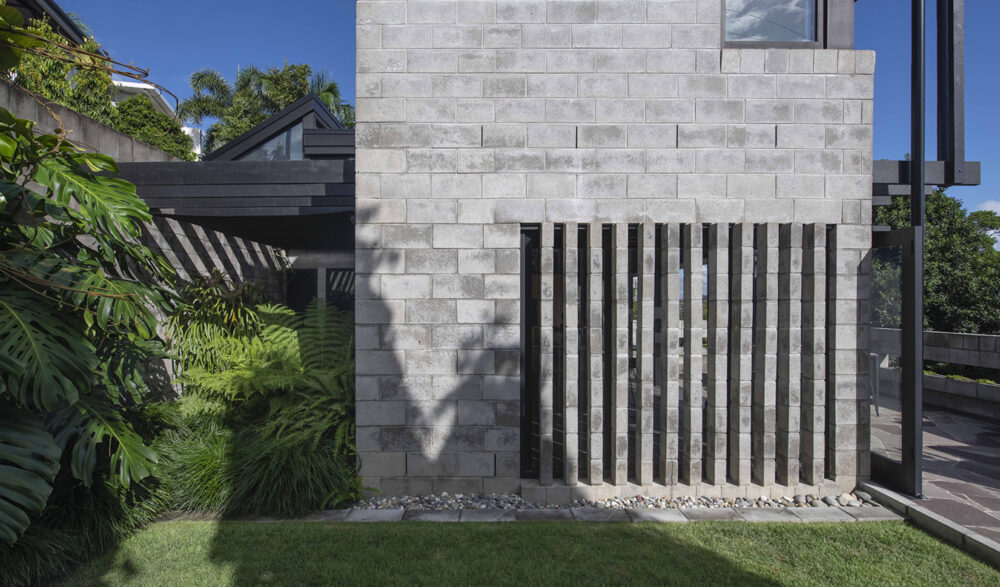
The original design for Chambers House embodied traditional modernist values – unforgiving and minimalist, with undefined spaces delineated via mezzanines, thresholds and screens.Initially described as a ‘zero-bedroom house’ due to the open plan, Shaun reflects that one of his first tasks was redefining spaces to achieve a four bedroom configuration. However, much of the architectural intervention was focused on rebuilding or restoring. The original windows were painstakingly replaced like-for-like, rotting timber beams were upgraded, bathrooms were renovated, and a new floor structure cleverly concealed services in a conscious effort to preserve. Following the restoration was the extension phase, tastefully and creatively limited to an additional bedroom, an outdoor room, open terrace, pool and courtyard. Whereas the original gardens represented disconnected leftover space, the new outdoor spaces signified deliberate offerings of physical connection to “rebalance the centre of gravity” between house and garden. “It’s a very hard building, heritage-listed for its brutalism and use of concrete block,” says Shaun. “So landscaping was the antidote.
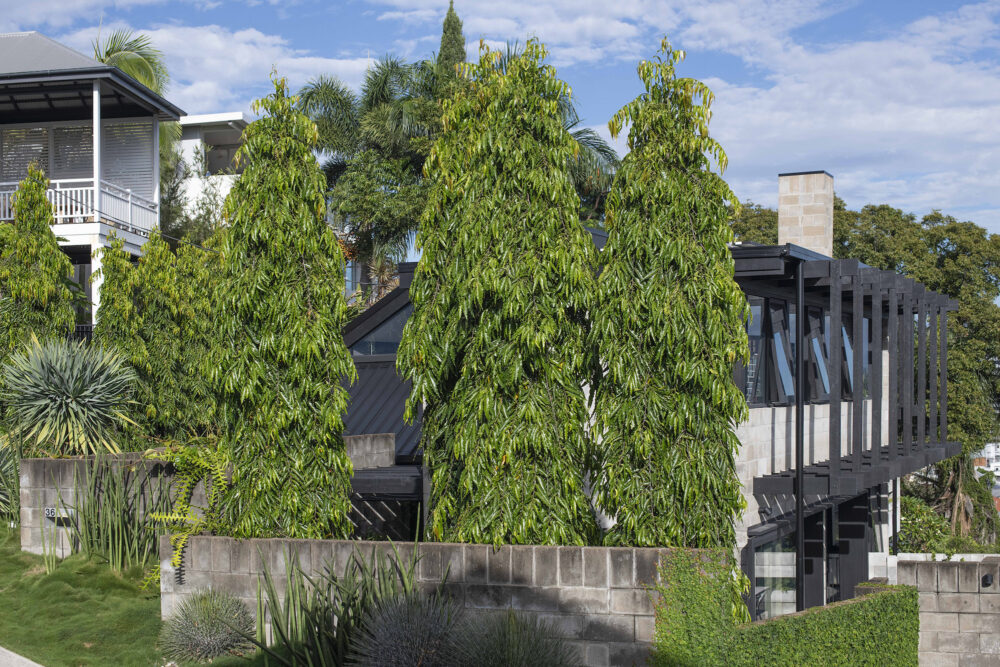
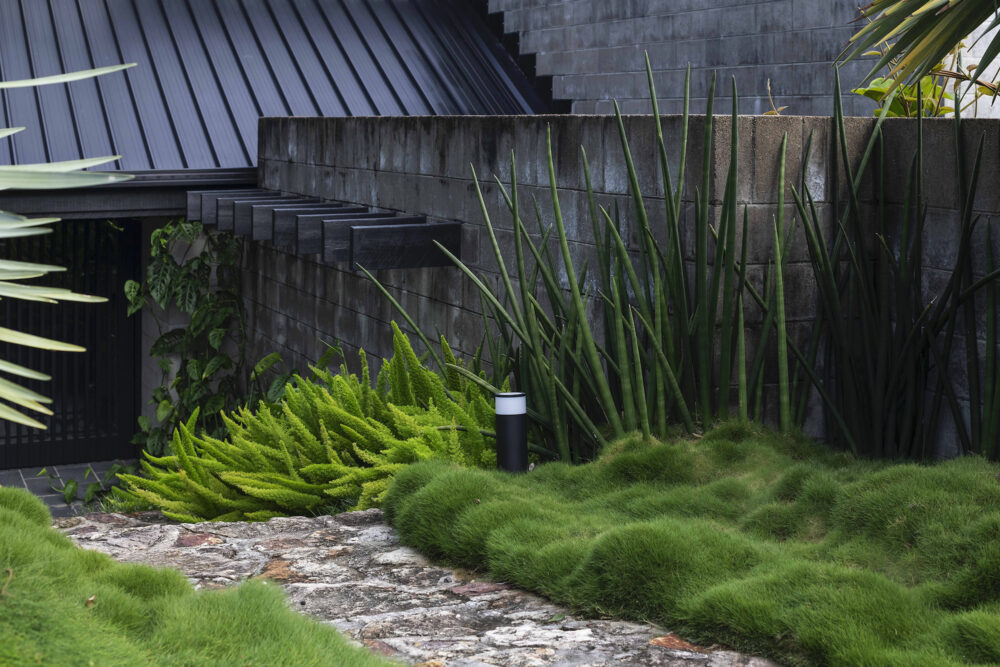
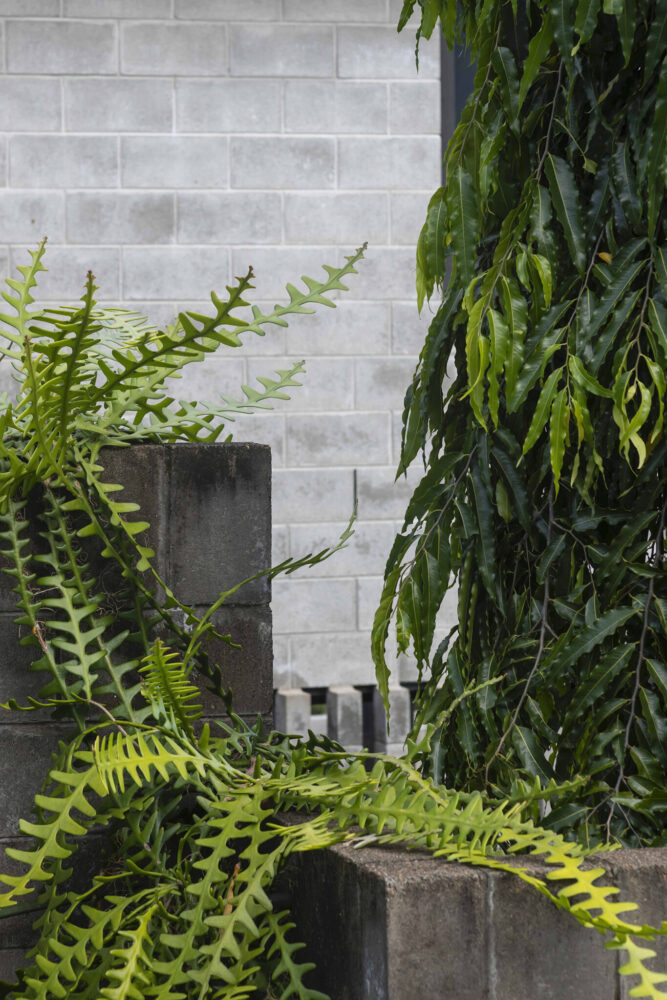
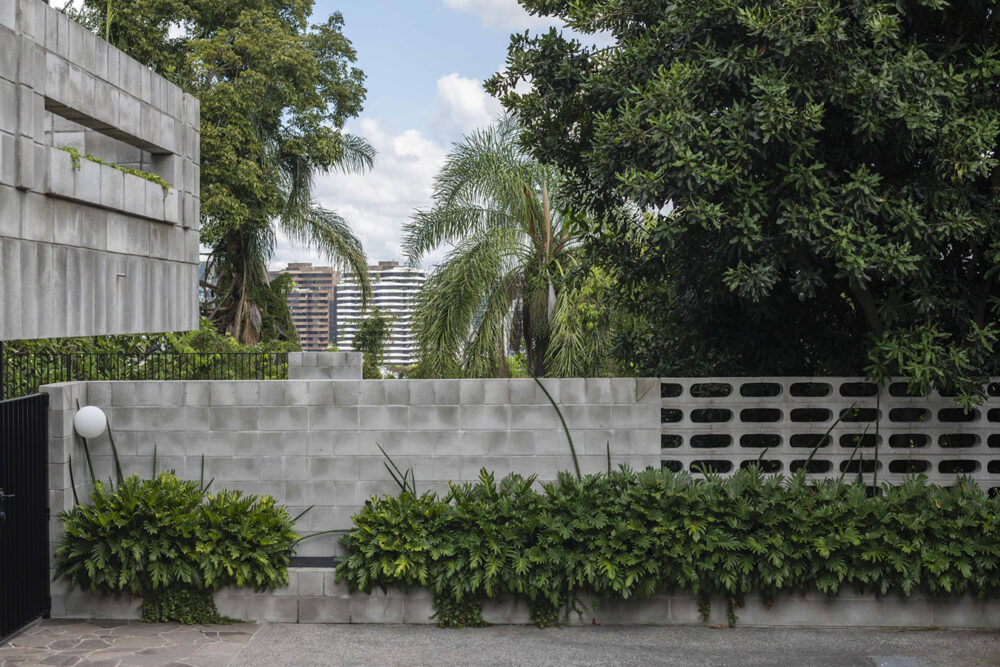
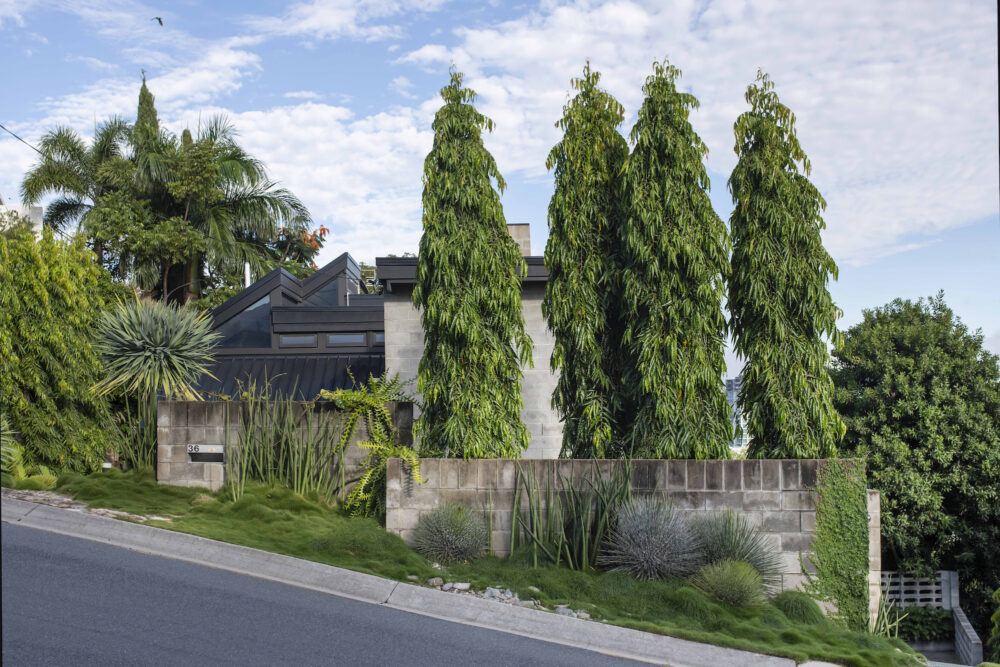
Chambers House represents a unique dialogue between harsh and forgiving, heavy and light. The strong, grounded form sinks deep into the sloping site, allowing the sympathetic richness of the landscape to embrace and overcome the brutalist architectural form. When landscape architect Steven Clegg joined the project, he recognised this language of contrasts and the unrealised potential of the landscape. “It’s about softening and honouring the architecture,” explains Steven. Working to mirror the built form into the landscape, Steven carefully selected plant species reminiscent of 1970s gardens. “It’s all about texture and being bold. The lovely rawness of the concrete walls, blackened timbers, the formed concrete – it’s the perfect backdrop.” Due to the significant slope of the site, the soil quality and depth was limited, hence tolerant species such as succulents, bromeliads, grasses, and tree ferns were thoughtfully specified. These also creatively aligned with the 1970s-themed palette. However, more than the considered and durable planting selection, it is the curation of an experience that sees the garden fulfil its purpose.
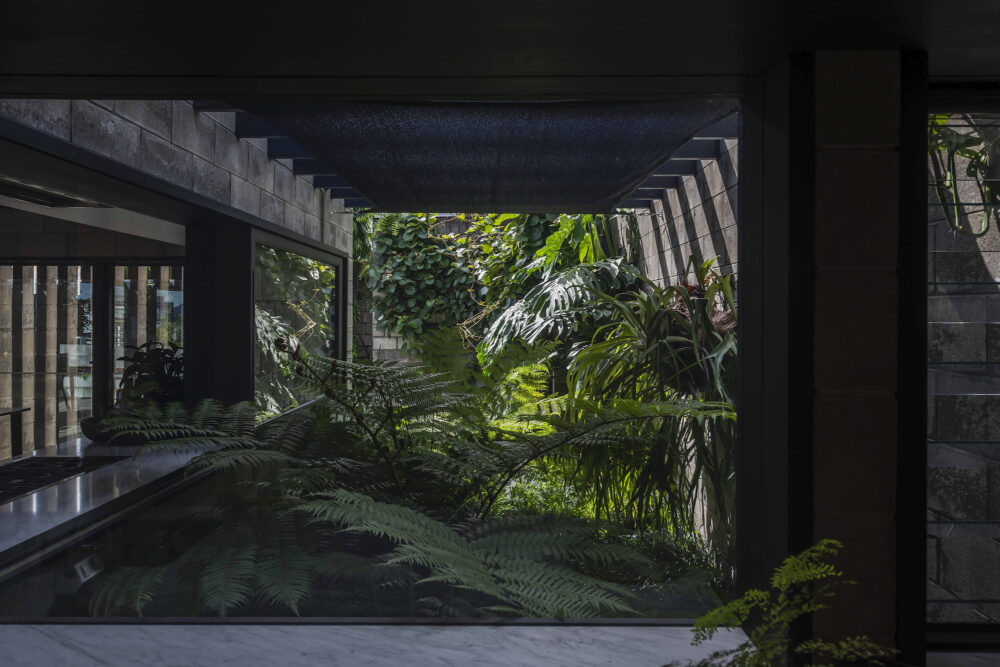
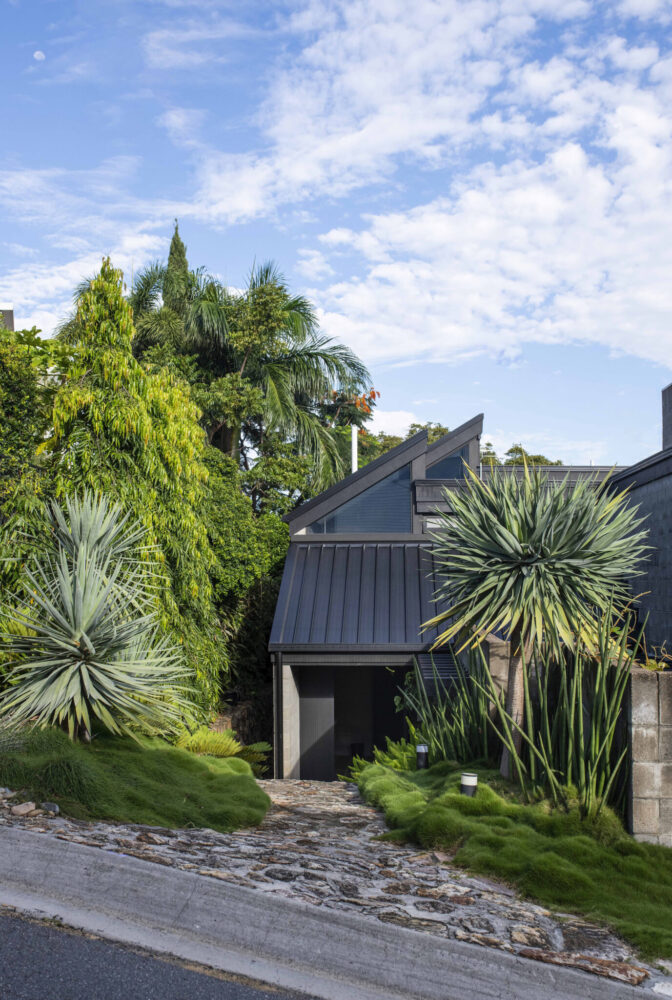
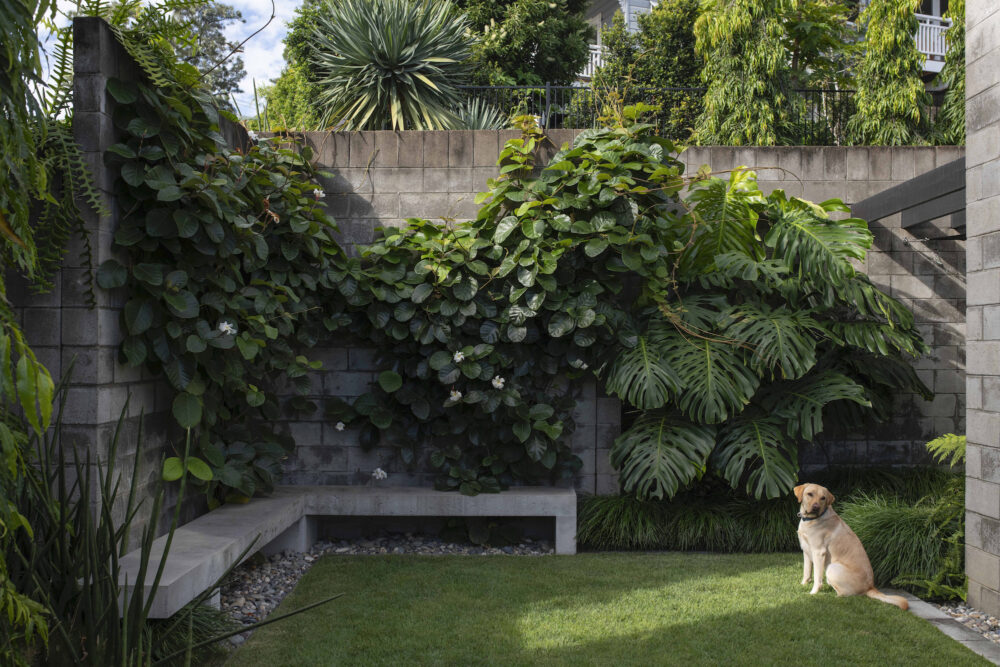
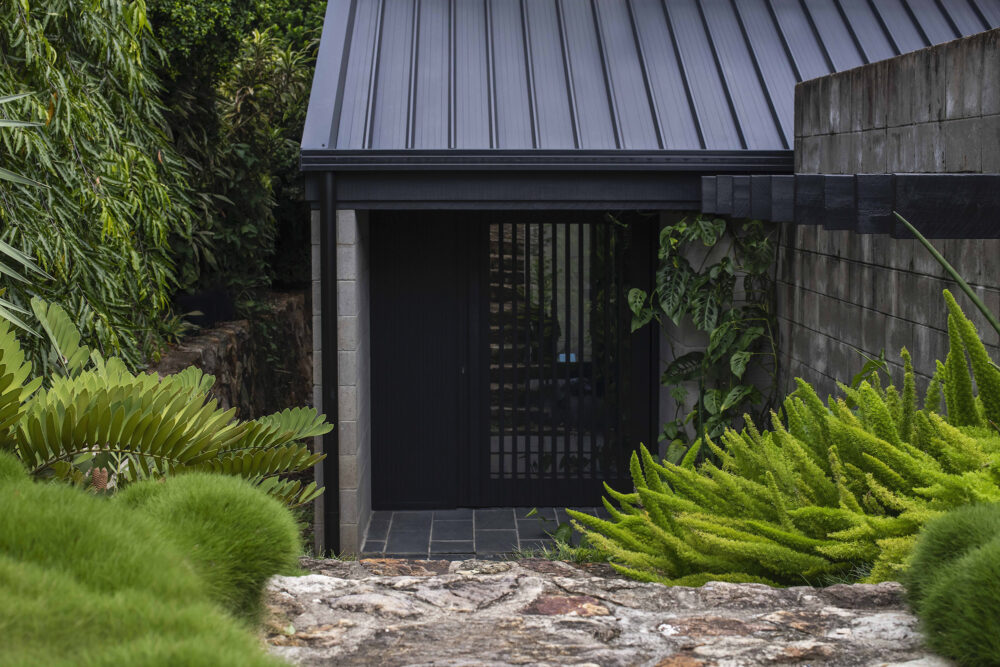
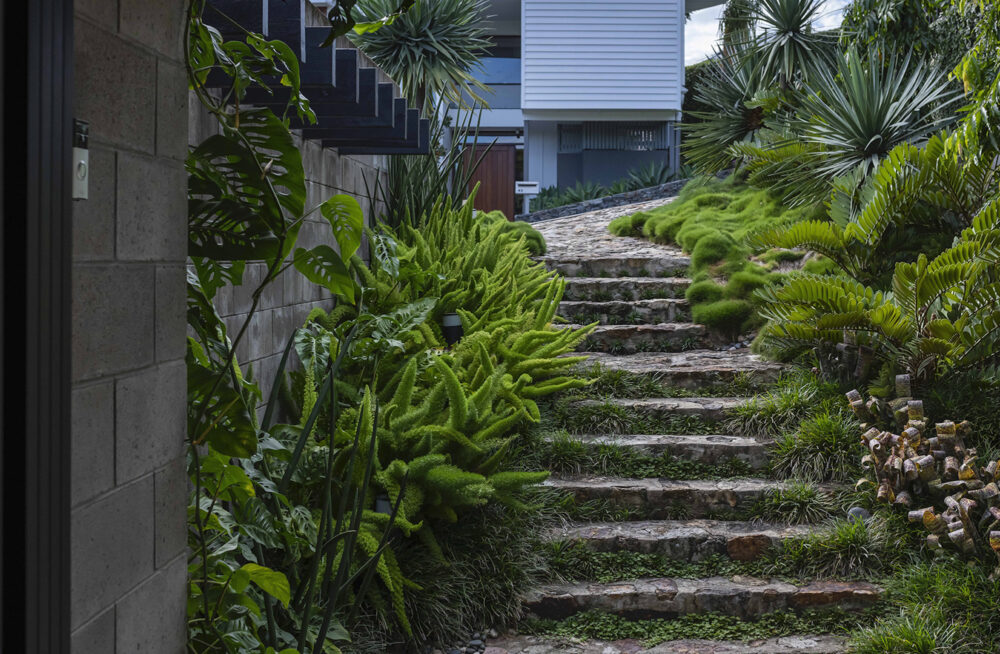
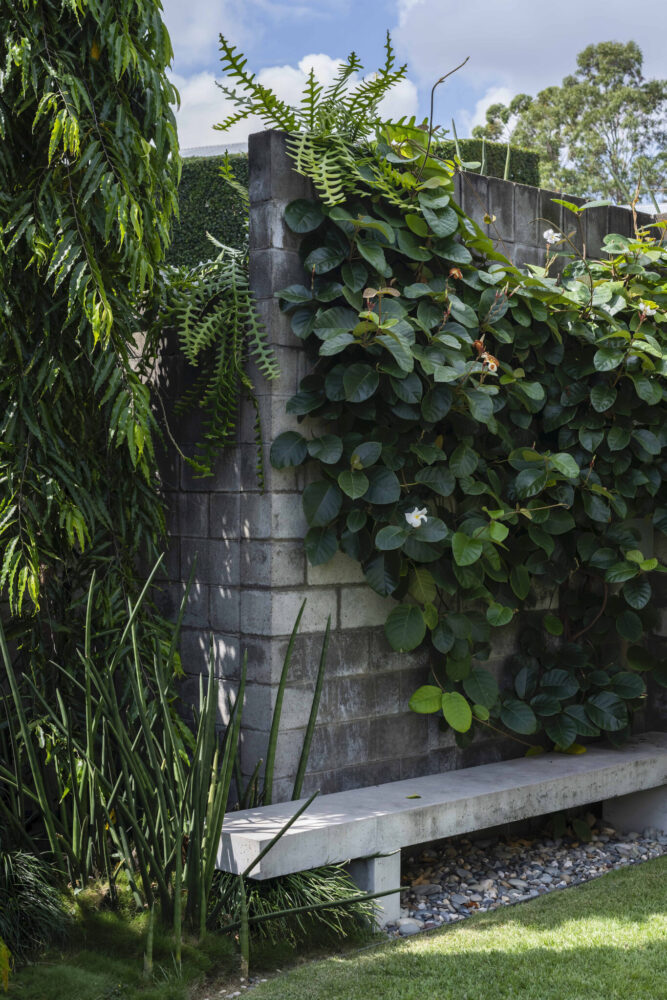
The Chambers House garden represents a series of conscious interventions that offset the built backdrop through carefully sequenced moments. “Being inside the house and looking out, you feel part of the landscape,” says Steven. The journey to the front door is framed by a lush, meandering pathway, creating an intimate sense of arrival. Constructed of Brisbane tuff, the pinks, purples, and greens of the original stone paving are reflected in the adjacent landscape. The next discovery can be found at the new outdoor living space on the entry level, opening to expansive views of the garden and surrounding neighbourhood. To the north is the outdoor terrace and below is the calmness of the swimming pool courtyard. “It directs you in and then opens to a surprise. You don’t really discover the courtyard until you move through the house,”Steven explains. The collection of transitional spaces, openings and dramatic sight lines foster a constant connection with the outdoors. To create further moments of pause and encourage participation in the landscape, Steven crafted a soft and inviting lawn with a formed concrete seat. “You’re nestled there, hidden from the world. You’ve got a lot of hard surfaces, so it’s a nice sensory experience to be on the grass,” he says.
The resulting garden is both complex and intimate. Mirroring yet softening the architecture, Chambers House Garden supports quiet moments of pause and choreographed sequences of connection. “We recognised the landscaping was going to be a really important aspect of balancing the rawness and brutalist nature of the house,” owners Michael and Marlo reflect. “Rather than as an afterthought, [Steven Clegg] was involved up front.He was integral to bringing it all together.” So, Chambers House and garden represent a dichotomous relationship, one affording a strong, unforgiving setting for the other to soften and enrich.Unexpectedly, the architecture forms an enchanting backdrop forthe garden, honouring the original design which remains grounded in an ode to the landscape.
Specs