
Living on Groundwater Wins Kingspan-Funded MICROHOME Competition
IMG LINK

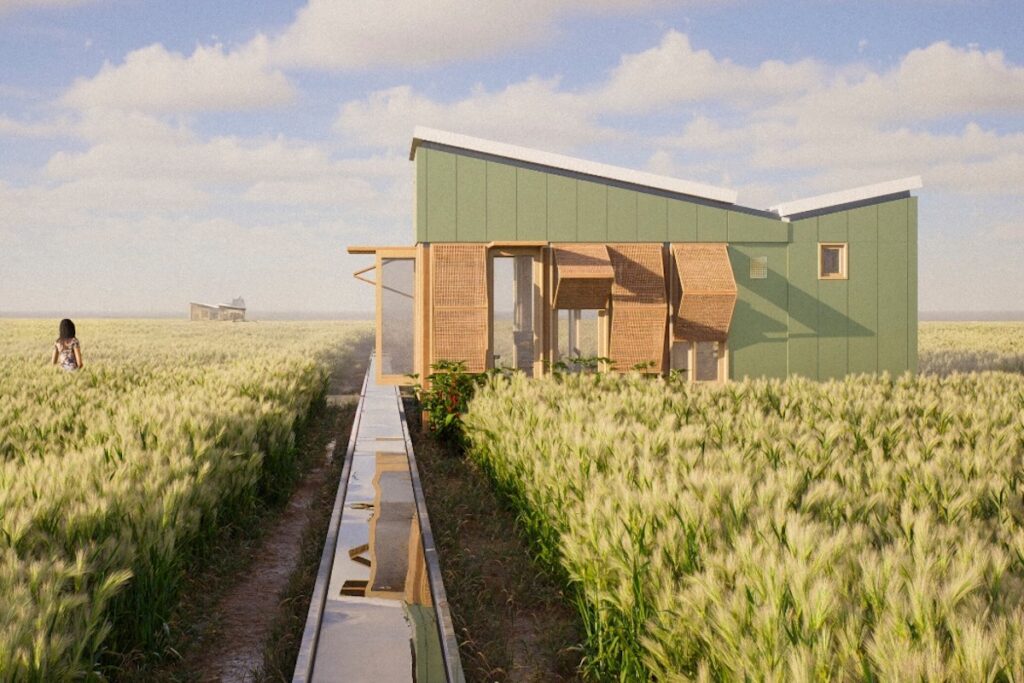
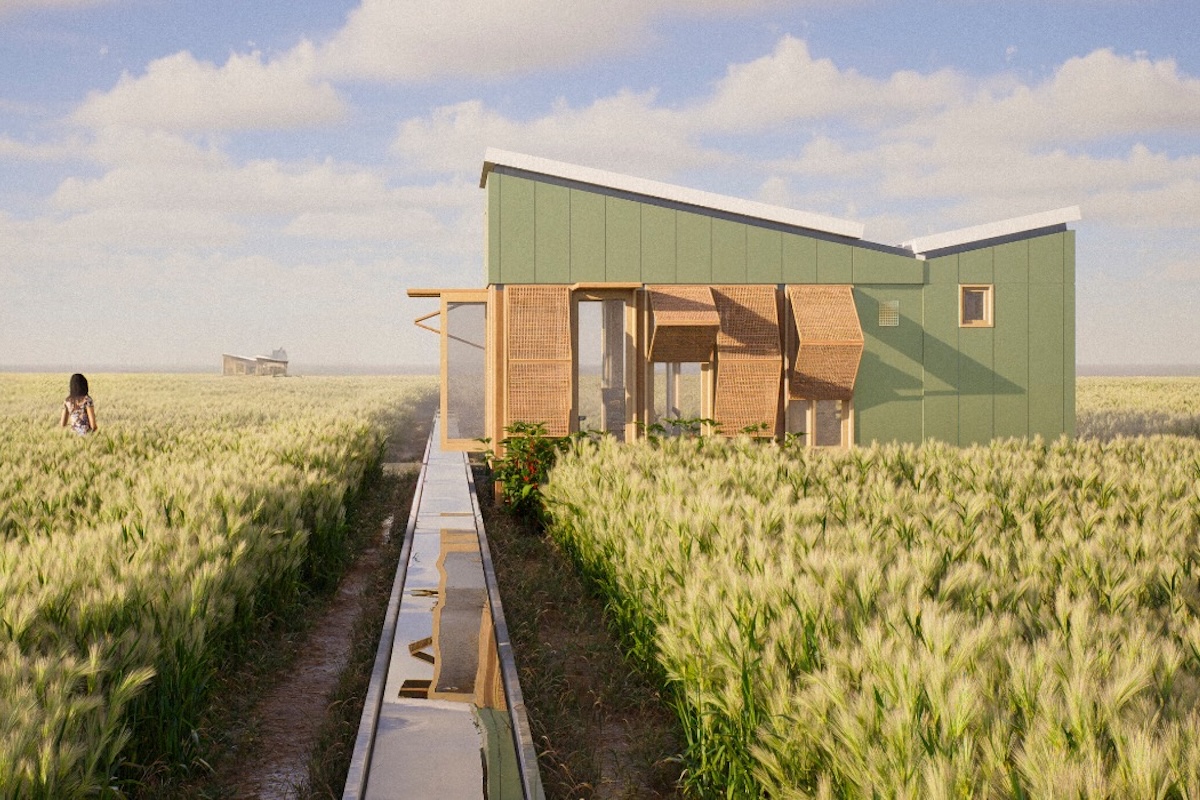
Living on Groundwater positions housing as part of a wider hydrological system, responding to groundwater depletion in Punjab, India.
IMG LINK
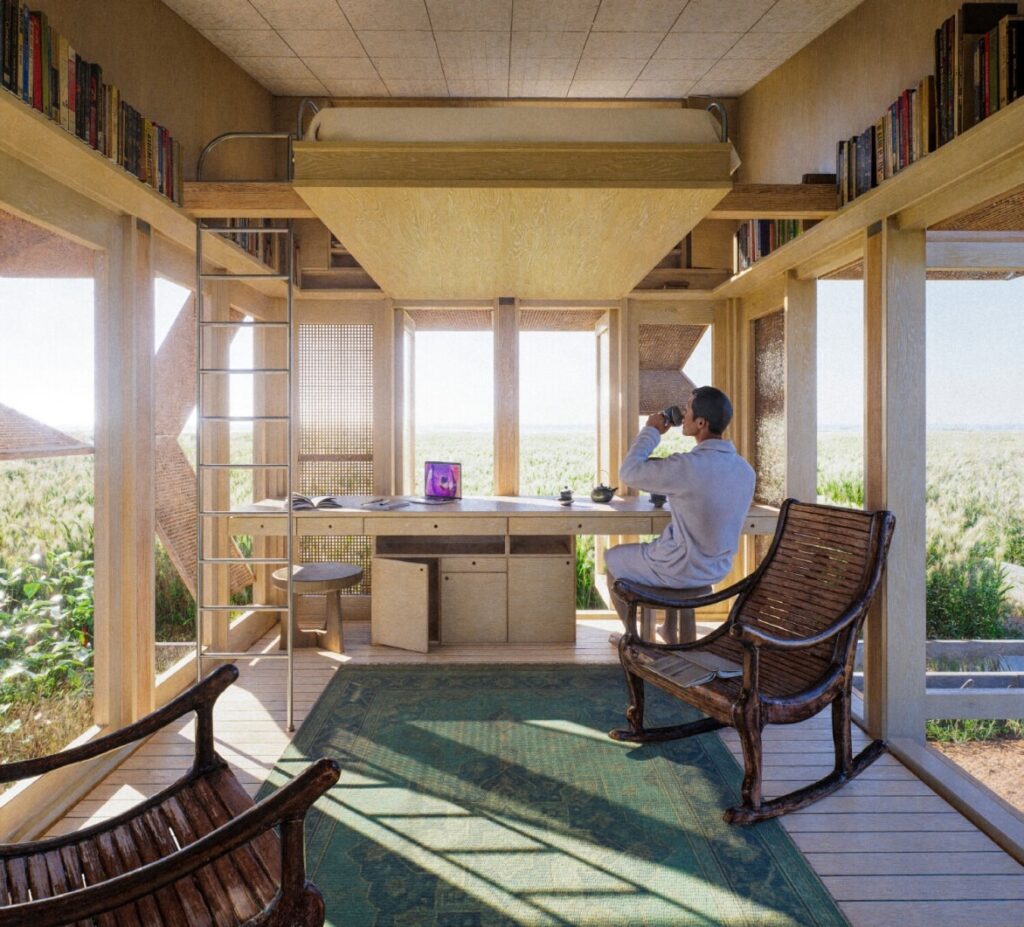
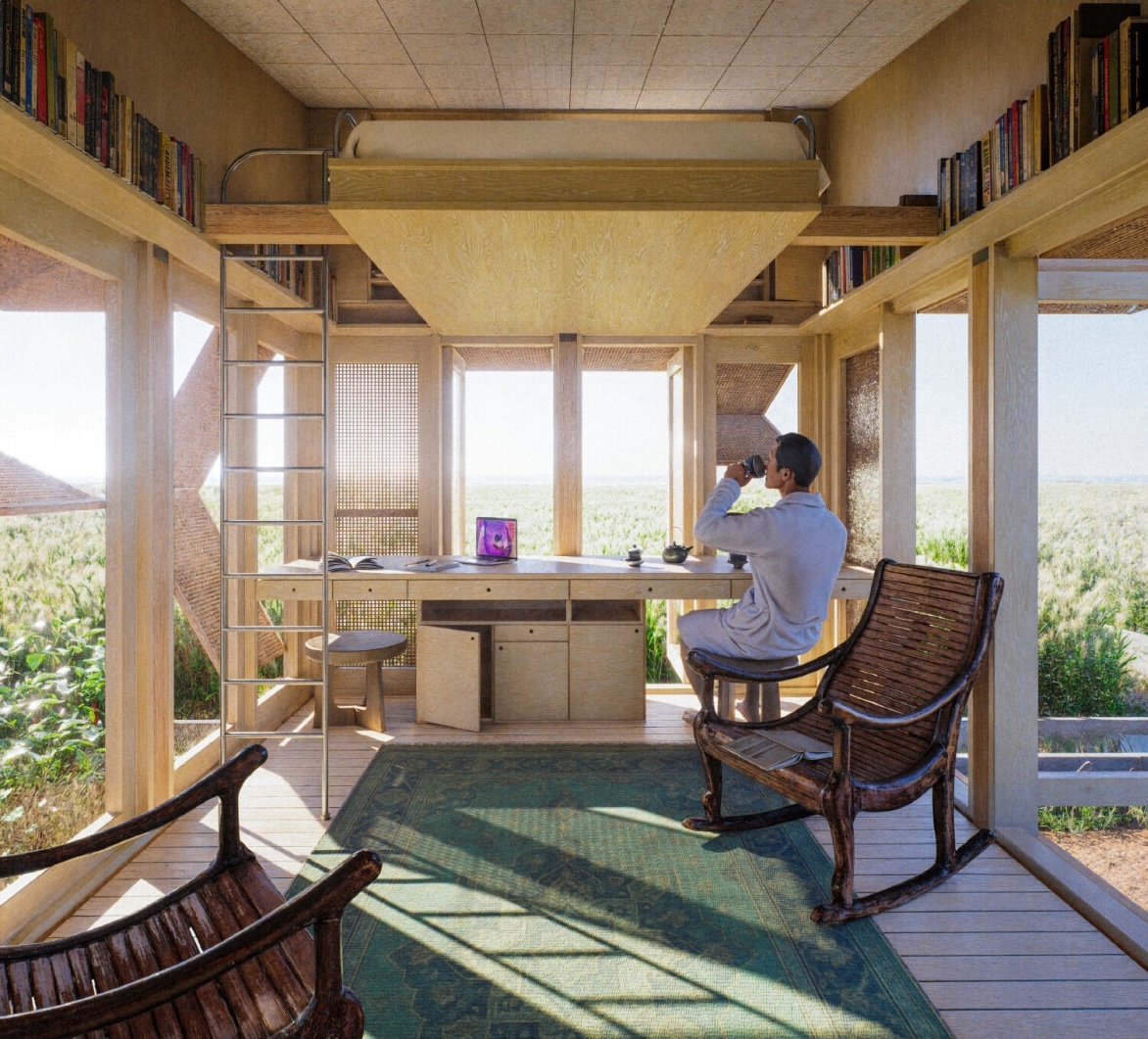
The 25 m² dwelling integrates compact living, prefabrication and environmental systems within a single adaptable interior.
IMG LINK
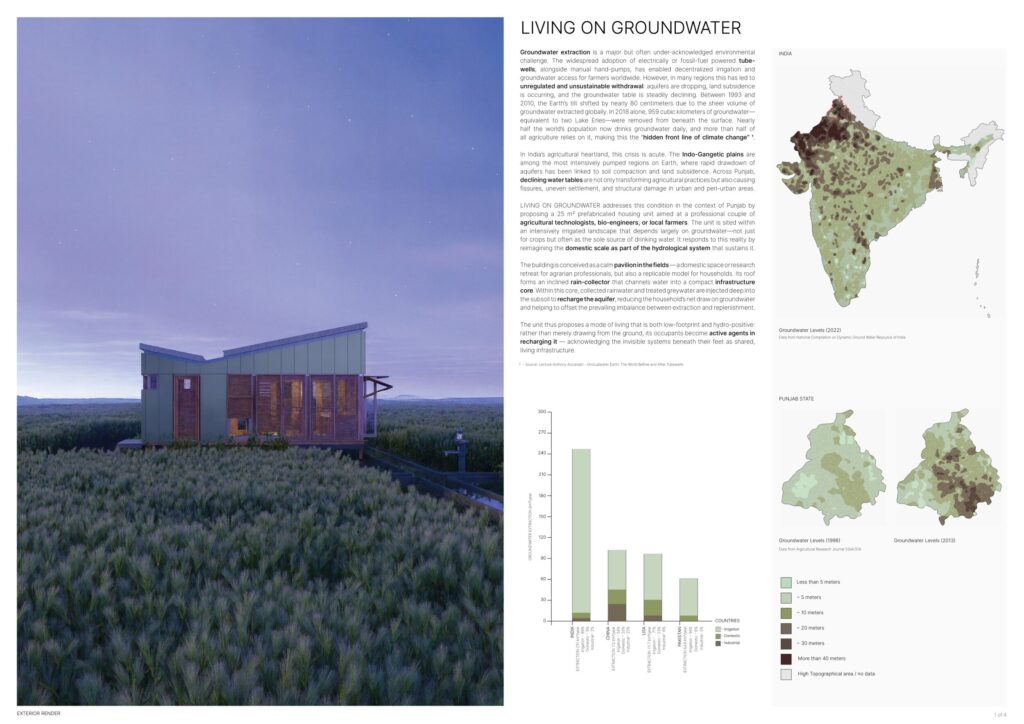
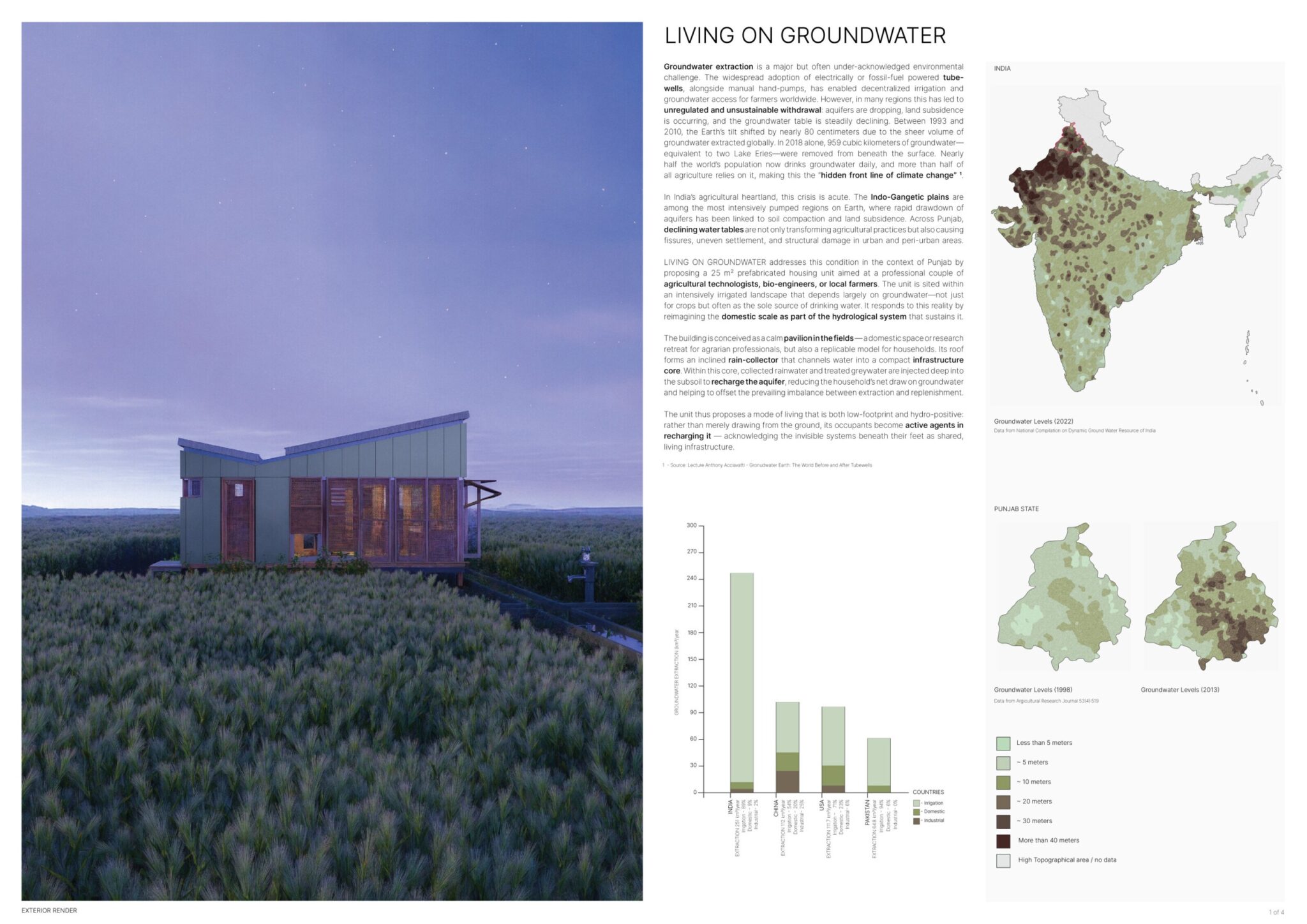
Project drawings and research diagrams outline how the microhome combines housing design with groundwater recharge and long-term water resilience.
New York–based architects Aleksa Milojevic and Matthew W Wilde have been awarded first prize in the Kingspan-funded MICROHOME #10 competition for Living on Groundwater, a prefabricated housing proposal addressing global housing and ecological challenges through a compact, water-resilient design.
The MICROHOME #10 competition, organised by Buildner in partnership with Kingspan, called for an off-grid modular dwelling of no more than 25 m² in response to intensifying global housing pressures driven by climate instability, rising construction costs and growing demographic needs. The milestone tenth edition attracted proposals from architects and designers worldwide, reaffirming the competition’s role as a platform for rethinking small-scale living through innovation, sustainability and material intelligence.
Milojevic and Wilde’s winning project, Living on Groundwater, was developed through shared research on Indian agricultural history undertaken during a Yale University seminar and field study in Punjab, India. The proposal directly engages with the region’s severe groundwater depletion, positioning the microhome as part of a broader hydrological system rather than an isolated dwelling.
Set within the agricultural fields of Punjab, the 25 m² home proposes a low-footprint, hydro-positive housing model in which residents become active agents in groundwater recharge. The compact structure integrates rainwater harvesting, greywater recycling and an on-site injection well that returns treated water to the aquifer, linking domestic space with long-term water management.
Spatially, the home is organised around a raised timber frame and a permeable façade system that mediates between interior domestic functions and the surrounding landscape. A lofted sleeping platform maximises usable floor area, while modular cabinetry and convertible work surfaces reinforce efficiency within the constrained footprint. Prefabricated wall and roof assemblies streamline construction and enable replication across rural contexts.
The MICROHOME #10 brief encouraged participants to treat the microhome as a prototype — compact yet dignified, efficient yet expressive, technologically advanced yet economically viable — with no geographic constraints imposed. Across submissions, strong themes emerged around climate adaptation, modular construction, cultural grounding, material precision and spatial ingenuity, with many projects embedding themselves deeply within specific environmental and social contexts.
Living on Groundwater was recognised by the jury for reframing the microhome as environmental infrastructure designed to repair the ecological conditions that support it. Jury commentary highlighted the project’s technically sophisticated integration of building systems, local ecology and water resilience, as well as the clarity of its drawings and diagrams in communicating hydrological performance and construction logic.
Aleksa Milojevic is a New York–based architectural designer, researcher and filmmaker whose work examines contemporary urban conditions, symbolism in space and socio-cultural participation. Matthew W Wilde is an architectural designer based in Brooklyn, working across built projects, speculative research and exhibition-making, with a focus on social and ecological commons. Together, their work moves fluidly between architecture, research and experimentation, engaging questions of housing, sustainability and collective futures.
The MICROHOME #10 competition awarded a total prize fund of €100,000, with Living on Groundwater receiving 20,000 € for first prize. The project contributes to ongoing global discourse on compact, climate-conscious housing and demonstrates how small-scale architecture can respond meaningfully to environmental challenges in specific regional contexts.
More information: architecturecompetitions.com/microhome10
More green updates