New Sydney Children’s Hospital Welcomes First Patients, With Australia’s First Children’s Comprehensive Cancer Centre
The new Sydney Children’s Hospital, Randwick building, designed by global paediatric design experts Billard Leece Partnership (BLP) and incorporating Australia’s first Children’s Comprehensive Cancer Centre, has welcomed its first patients, marking a transformative step forward in children’s healthcare.
The state-of-the-art facility, developed in partnership with Sydney Children’s Hospitals Network, Children’s Cancer Institute, John Holland, Health Infrastructure and BLP, represents more than just a new hospital building – it is a fundamental reimagining of how healing spaces and care journeys can transform children’s health outcomes. Innovative human-centred design, clinical excellence and cutting-edge research integration are no longer seen as competing priorities, they are complementary.
Tara Veldman, Managing Director at BLP, says their goal has been to “use our expertise and latest research in paediatric design to build a once-in-a-generation precinct that supports patients, their families, and the support networks around them,” adding that “we know children heal in hospitals that have been purpose-designed for them, especially when their full spectrum of needs, including clinical, emotional and social, are met.”
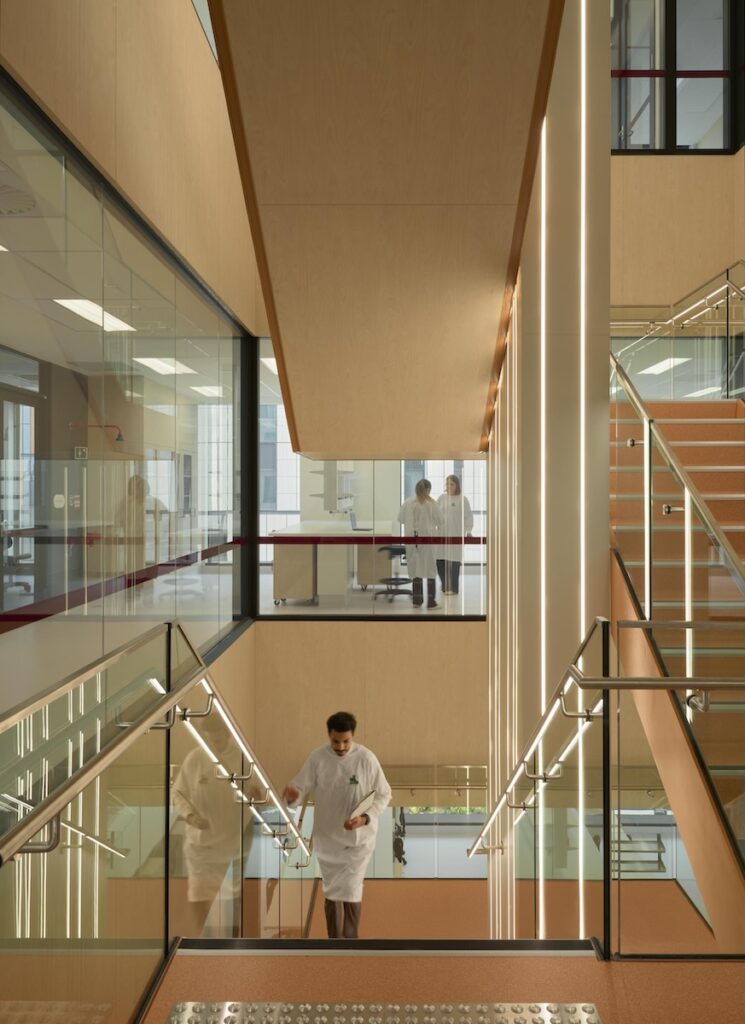
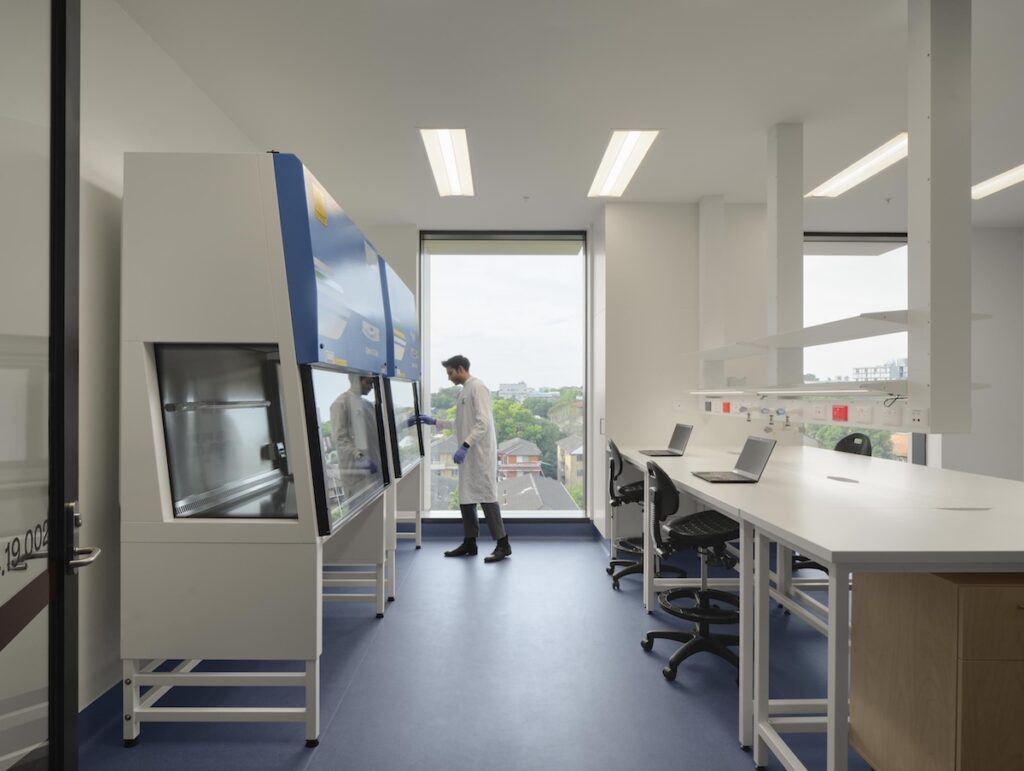
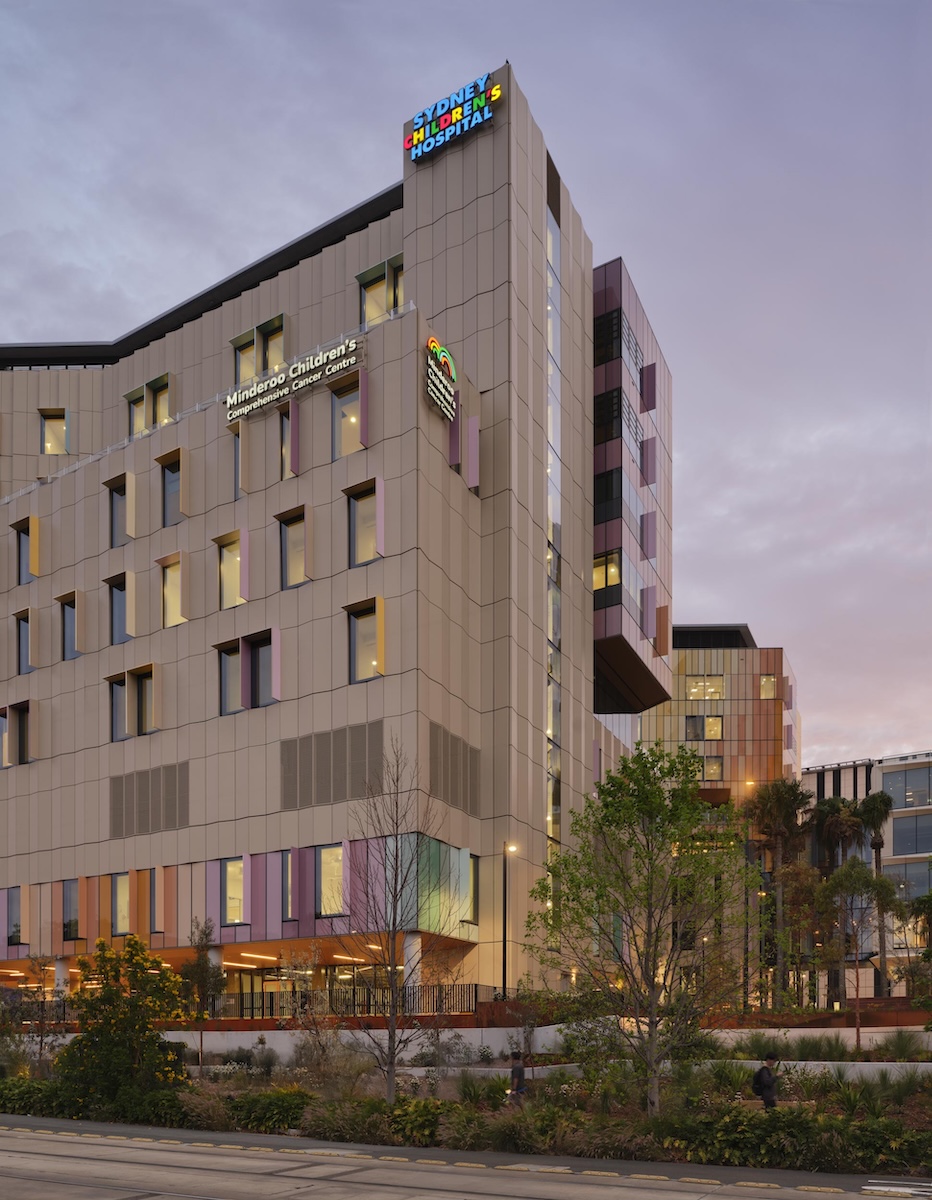
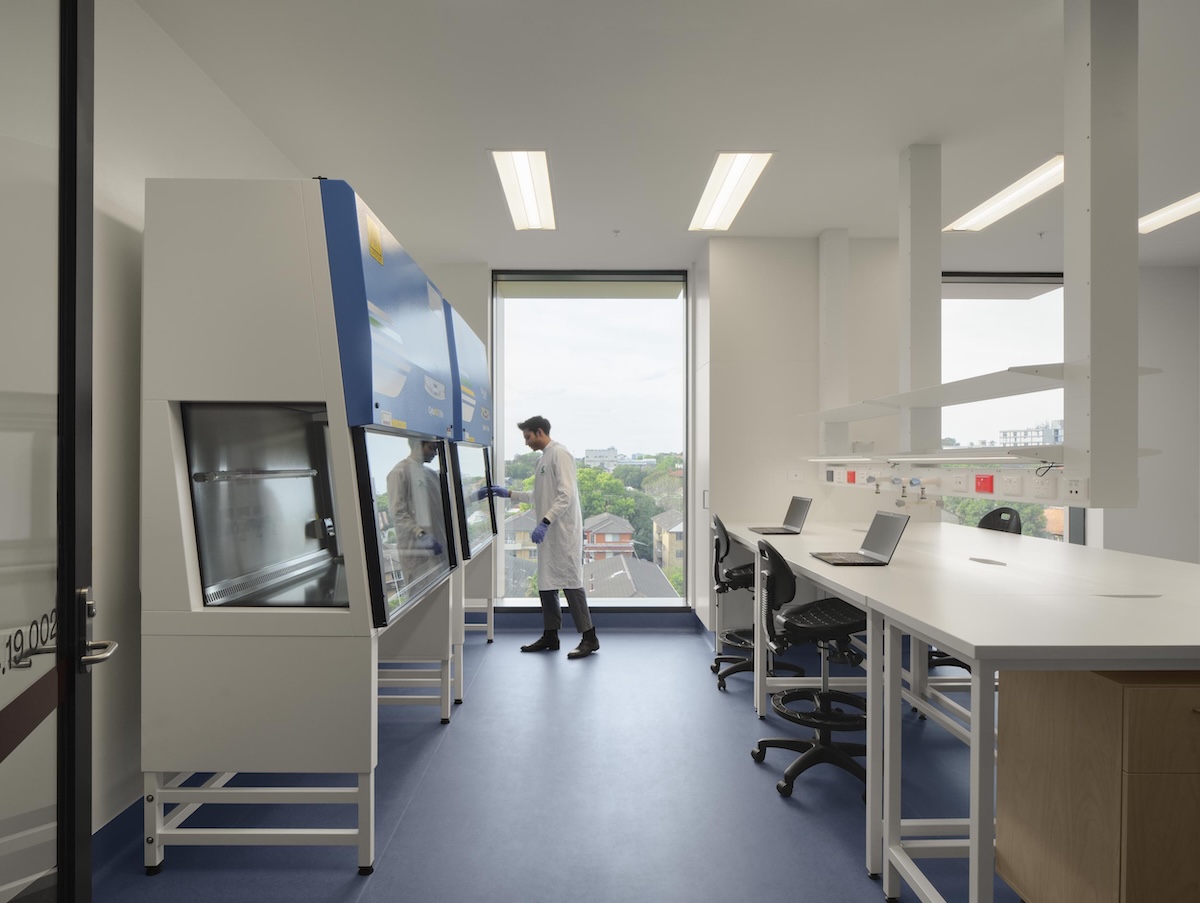
The new building at Sydney Children’s Hospital, Randwick, is also home to the new Minderoo Children’s Comprehensive Cancer Centre, offering fully integrated clinical care and translational research laboratories positioned adjacent to each other – a first for Australia. This revolutionary ‘bench-to-bedside’ design enables seamless coordination between research and treatment, directly supporting the Zero Childhood Cancer program, which has already achieved a 70 per cent success rate for children with the highest-risk cancers.
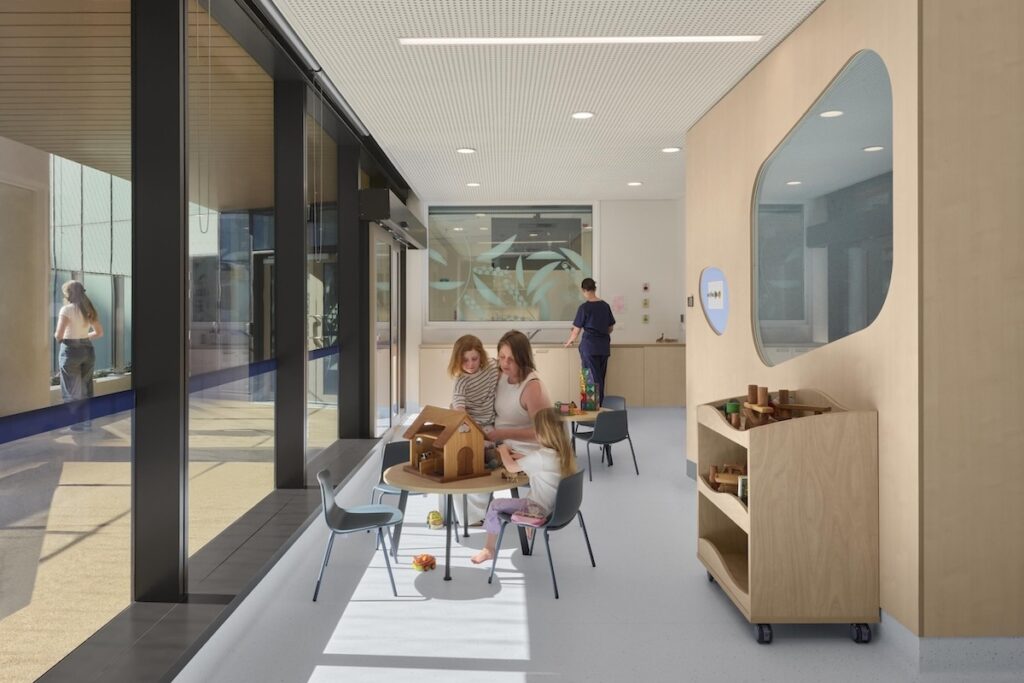
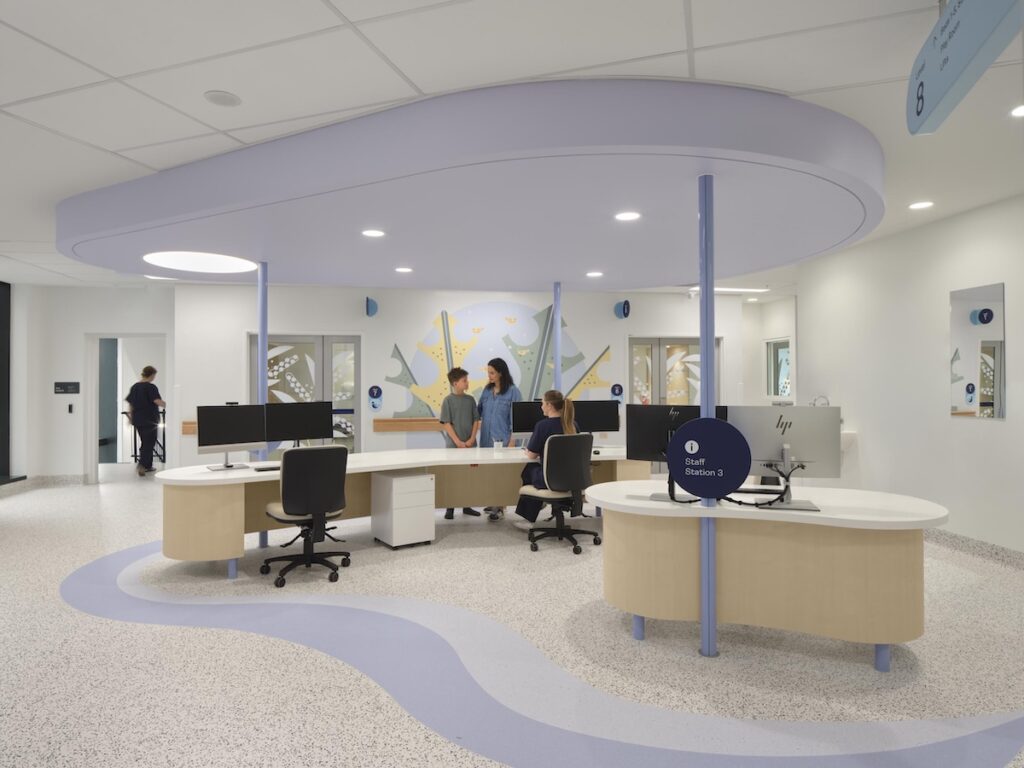
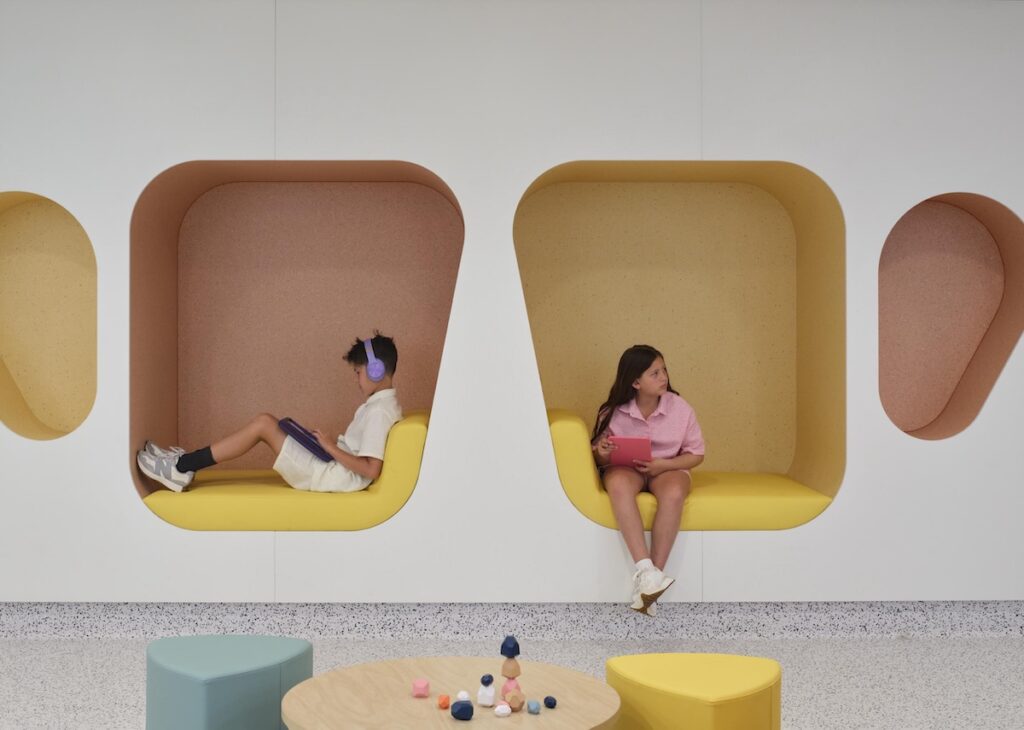
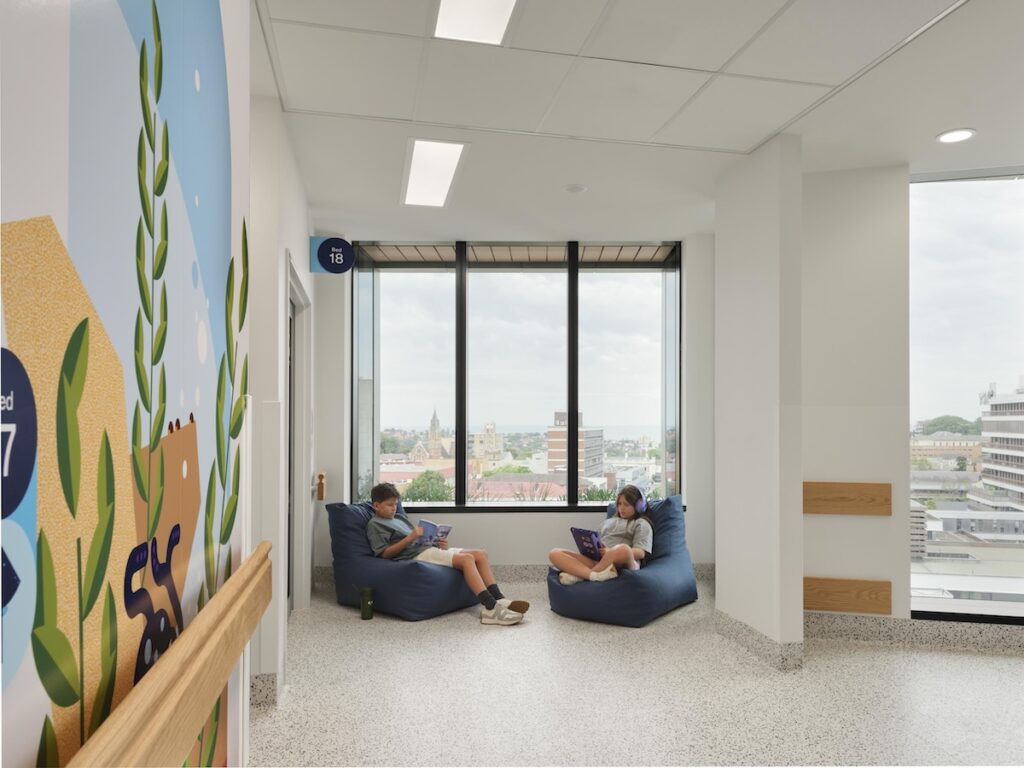
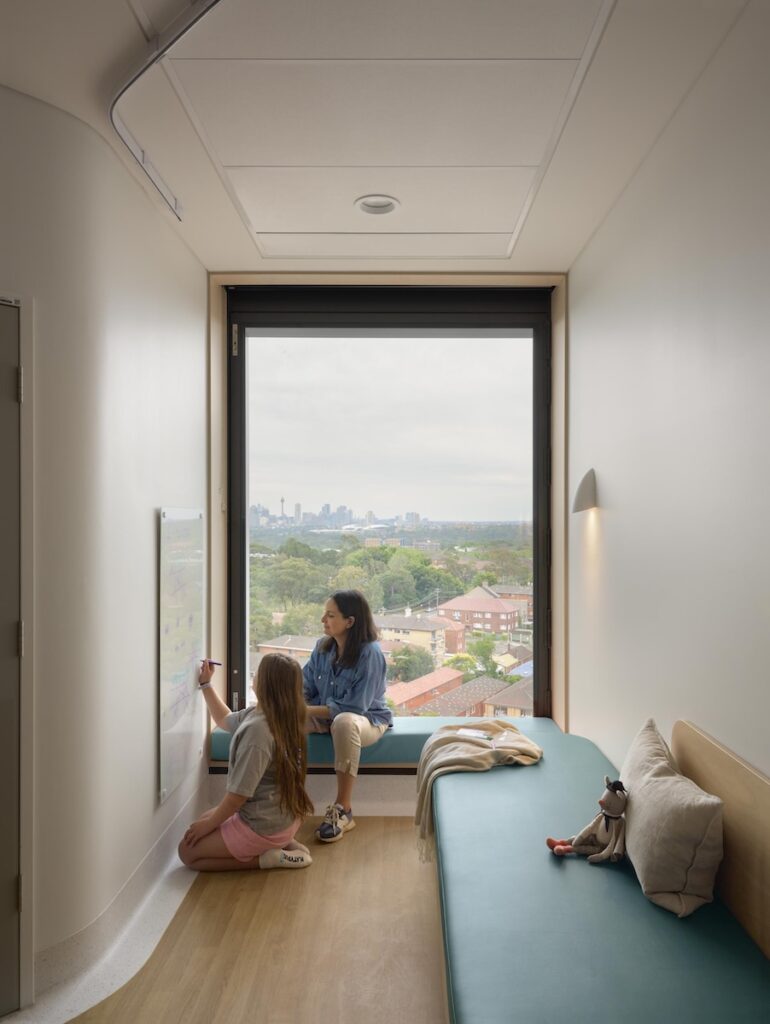
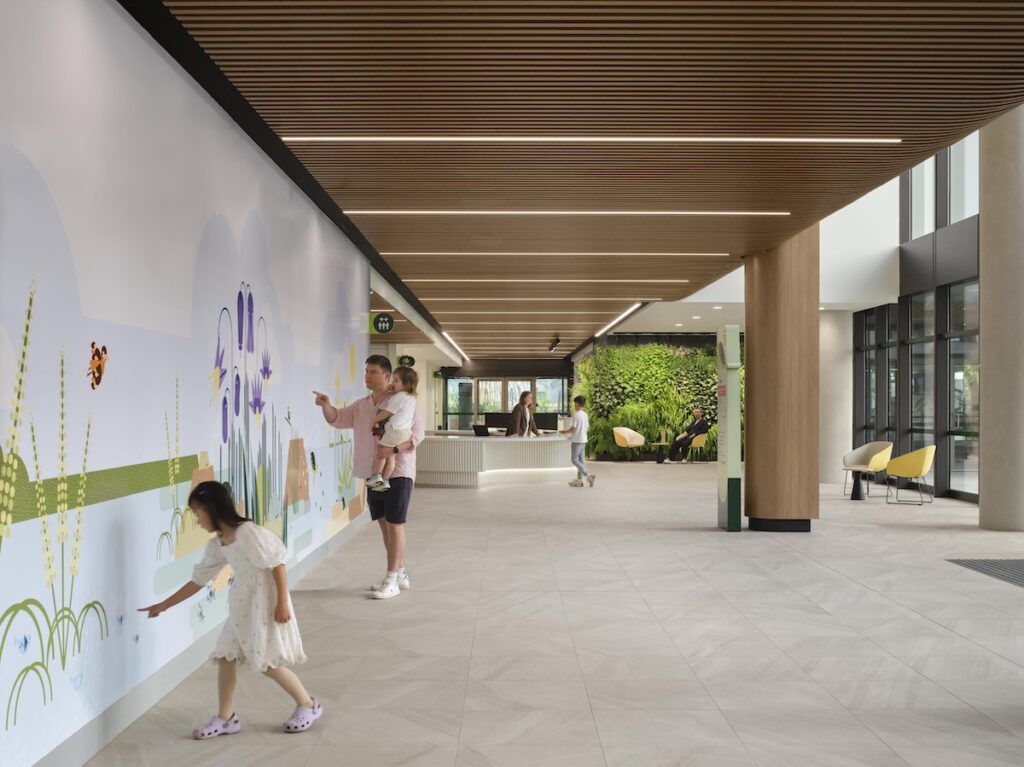
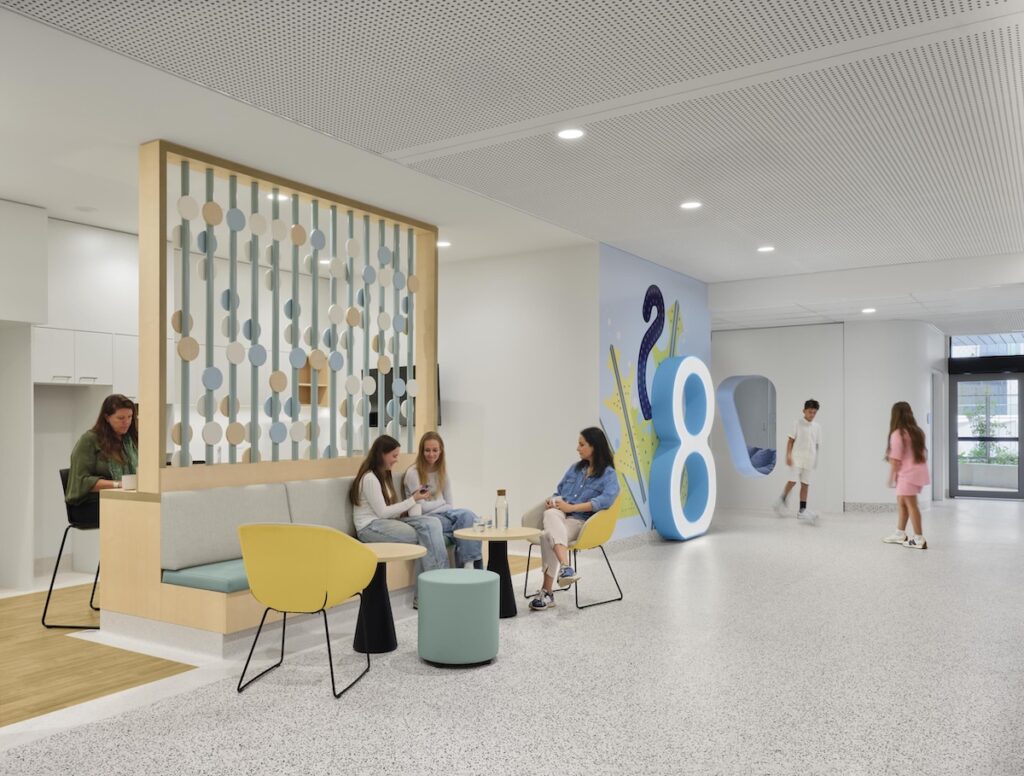
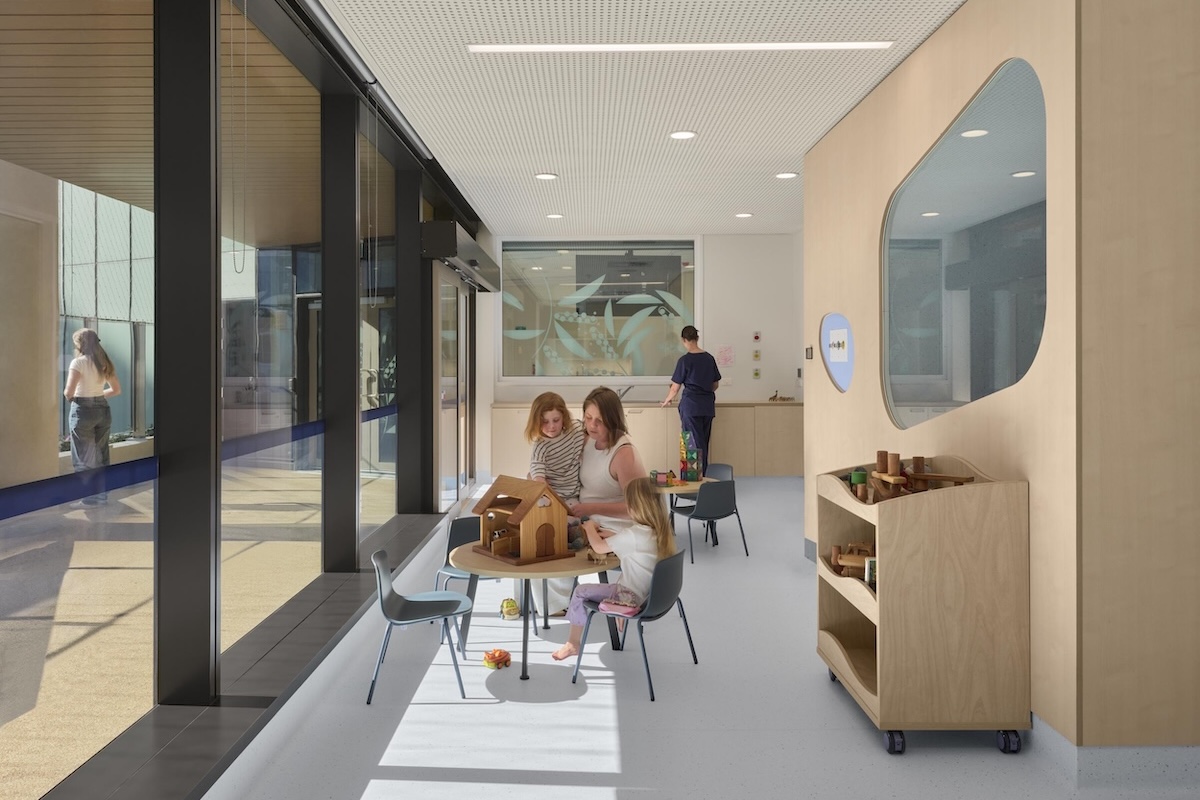
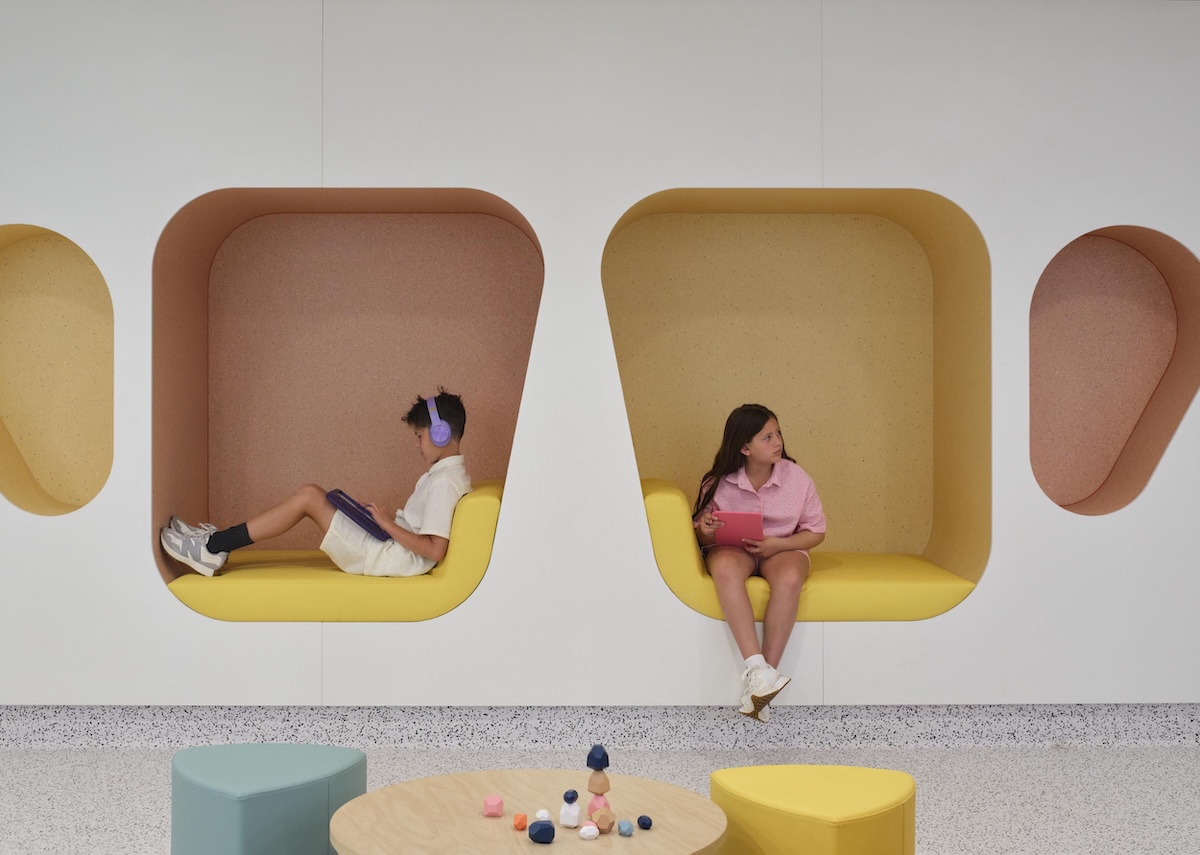
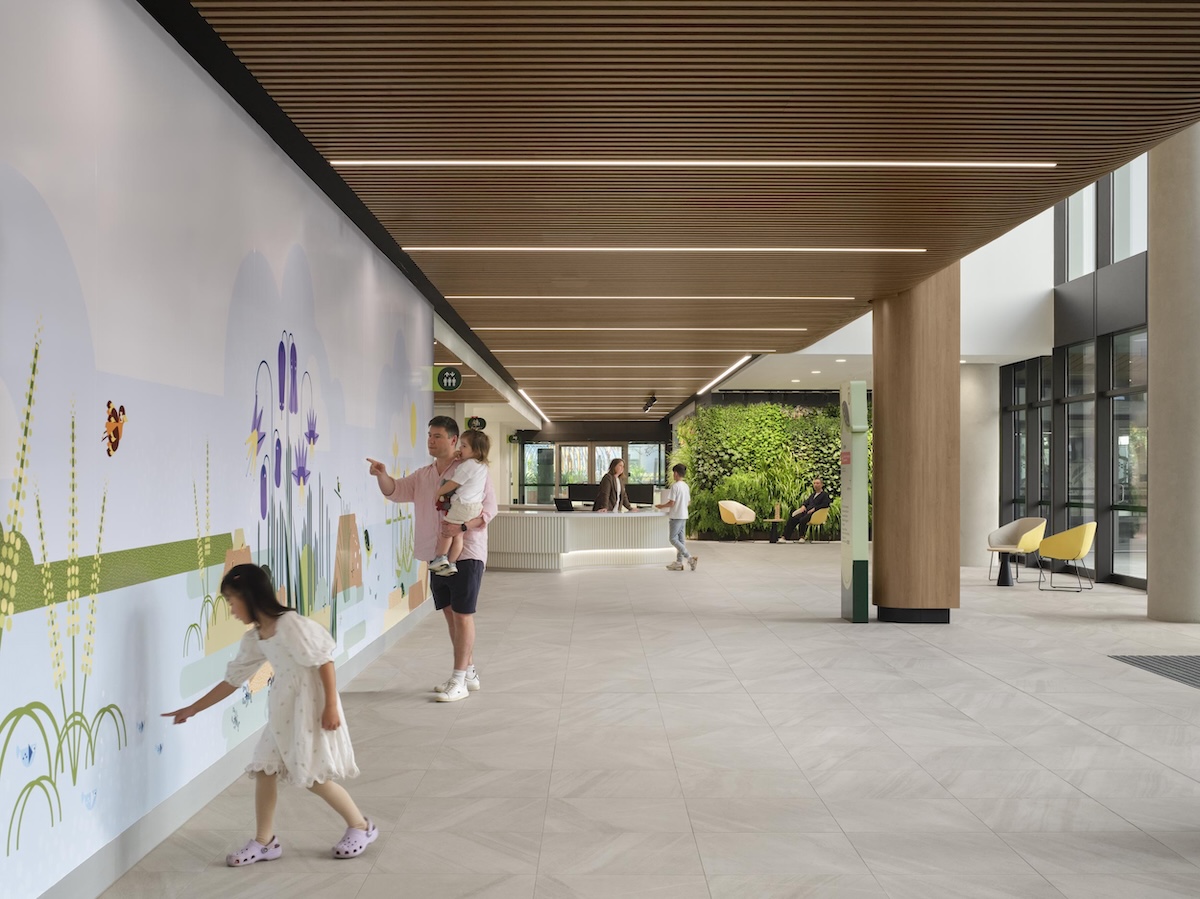
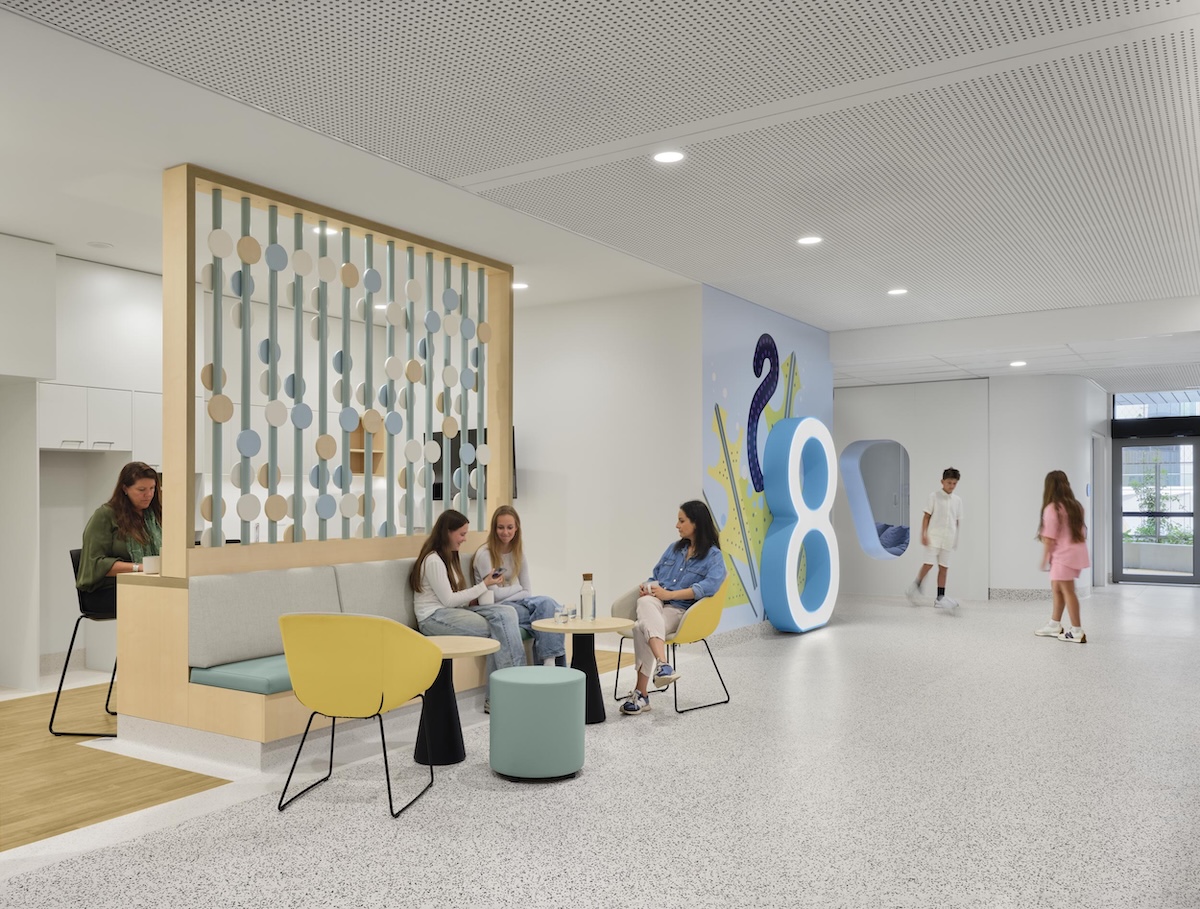
BLP’s design philosophy centres on creating familiar, nurturing environments that actively contribute to healing for children. Drawing inspiration from the concepts of the home and the backyard supports the need and desire for normality during hospital stays. The new hospital features nature-filled social spaces where families gather to eat together, play together, visit with pets, and enjoy cafés – providing joyful distractions in a less clinical setting. Spaces within the hospital have also been designed to allow parents to work.
From evidence-based research, the design team knows the recovery process is intrinsically linked to minimising a child’s stress and anxiety, and that by providing a ‘home away from home’ they can create a necessary sense of normality in their lives. It is vital to support children emotionally by creating spaces that provide retreat, sanctuary and trust, not only for the child but also their parents and siblings.
Designed with children and families at the heart of every decision, the hospital was shaped through extensive consultation with more than 2,000 stakeholders, including patients, carers, clinicians and First Nations representatives.
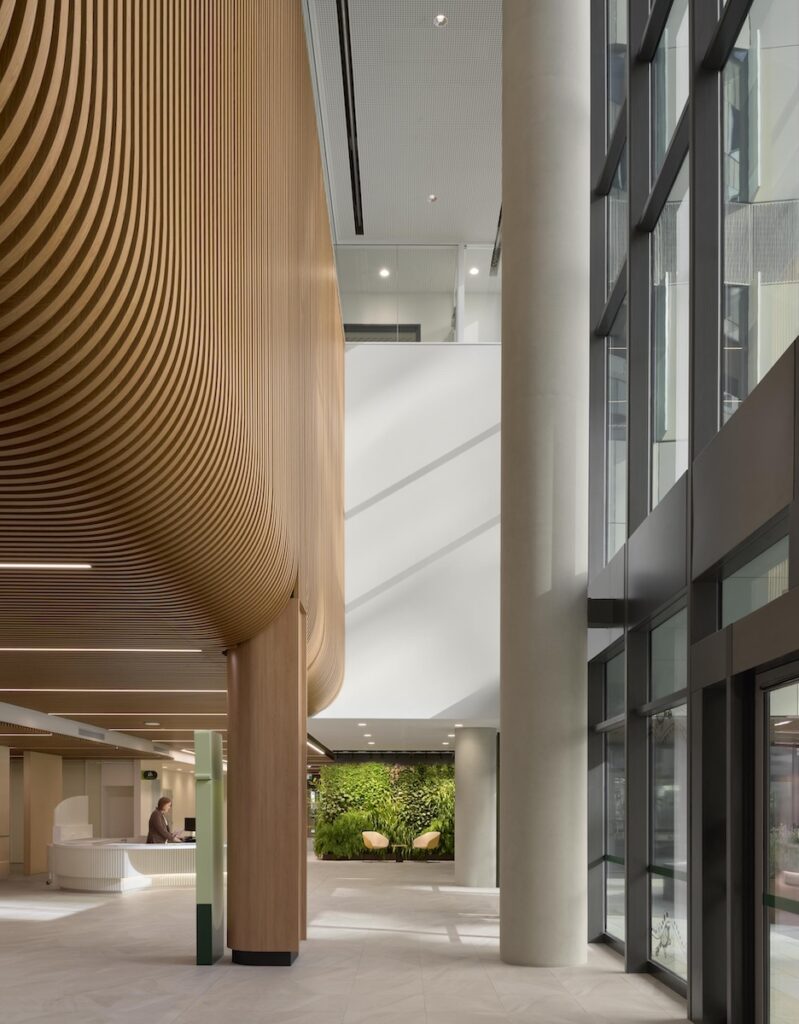
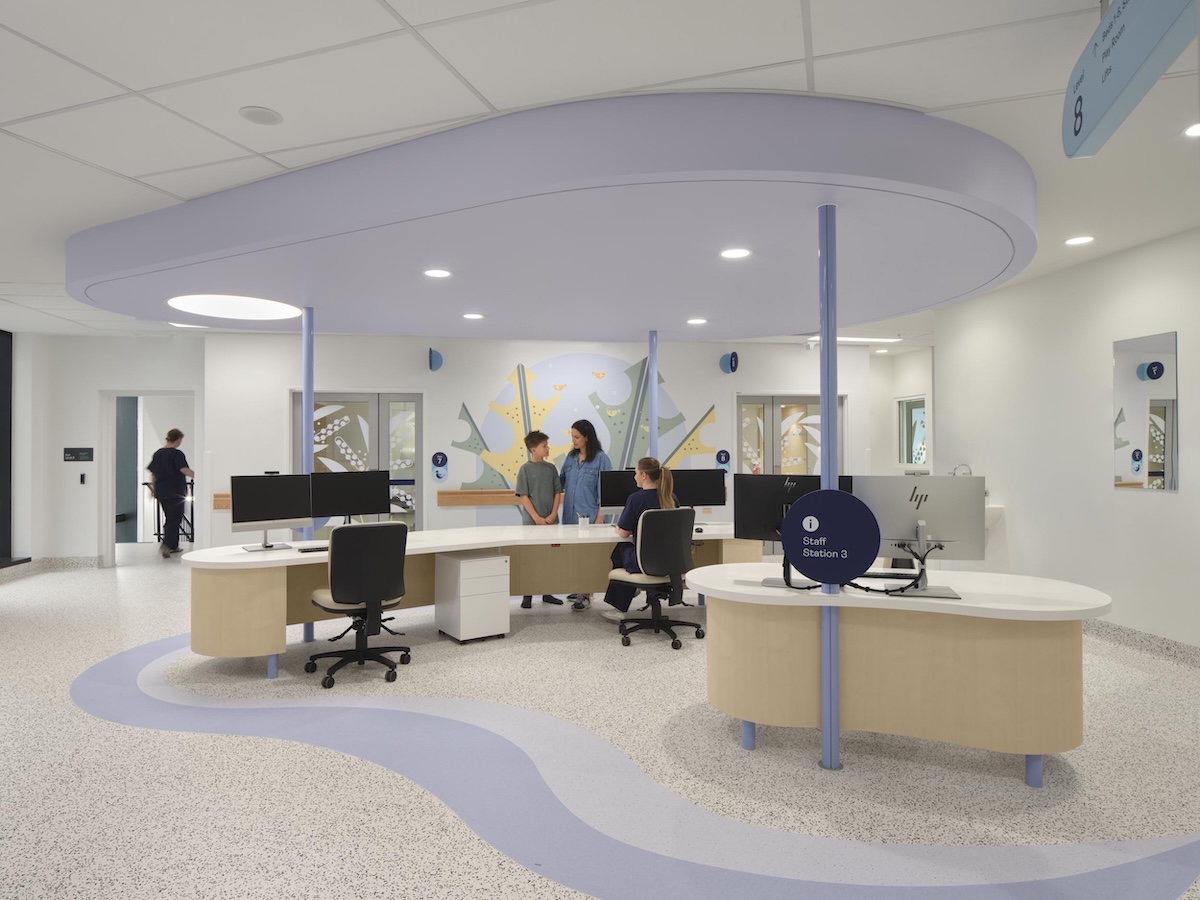
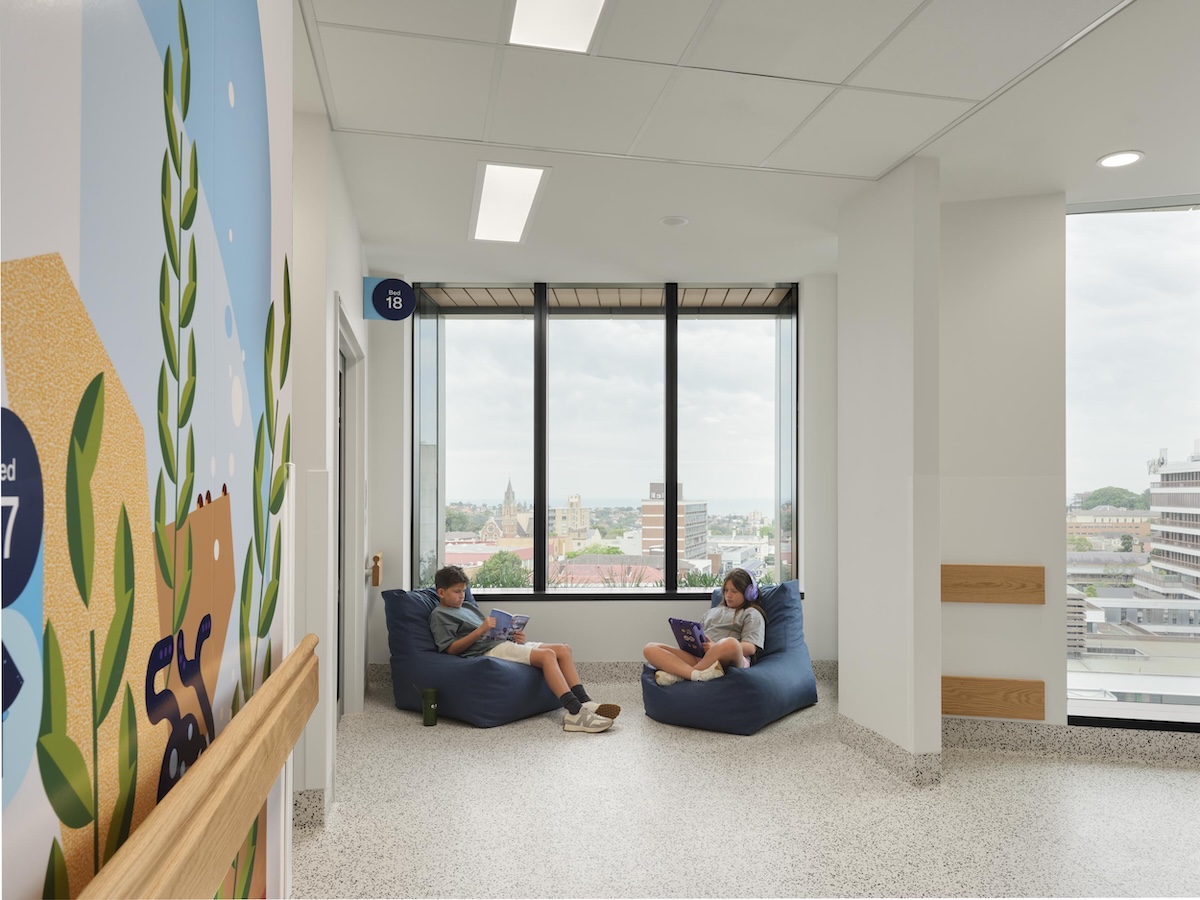
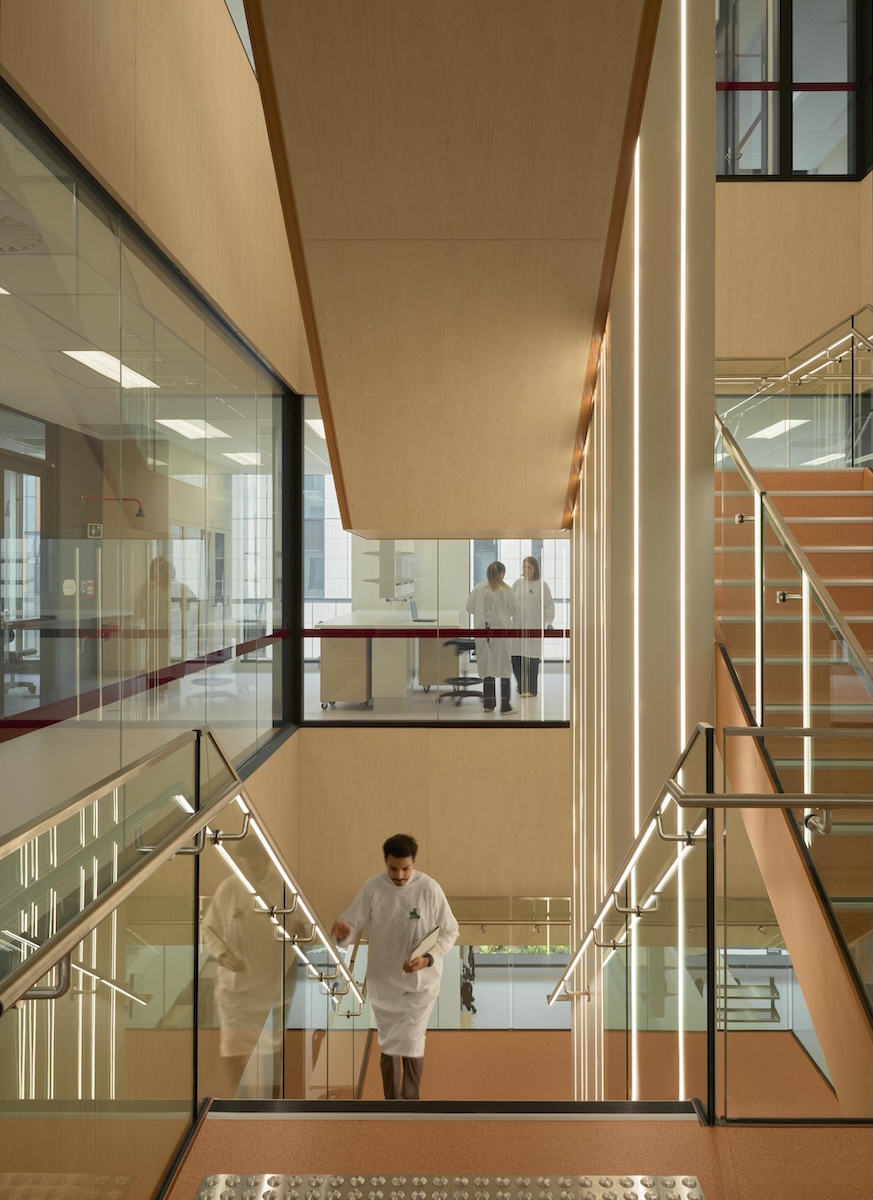
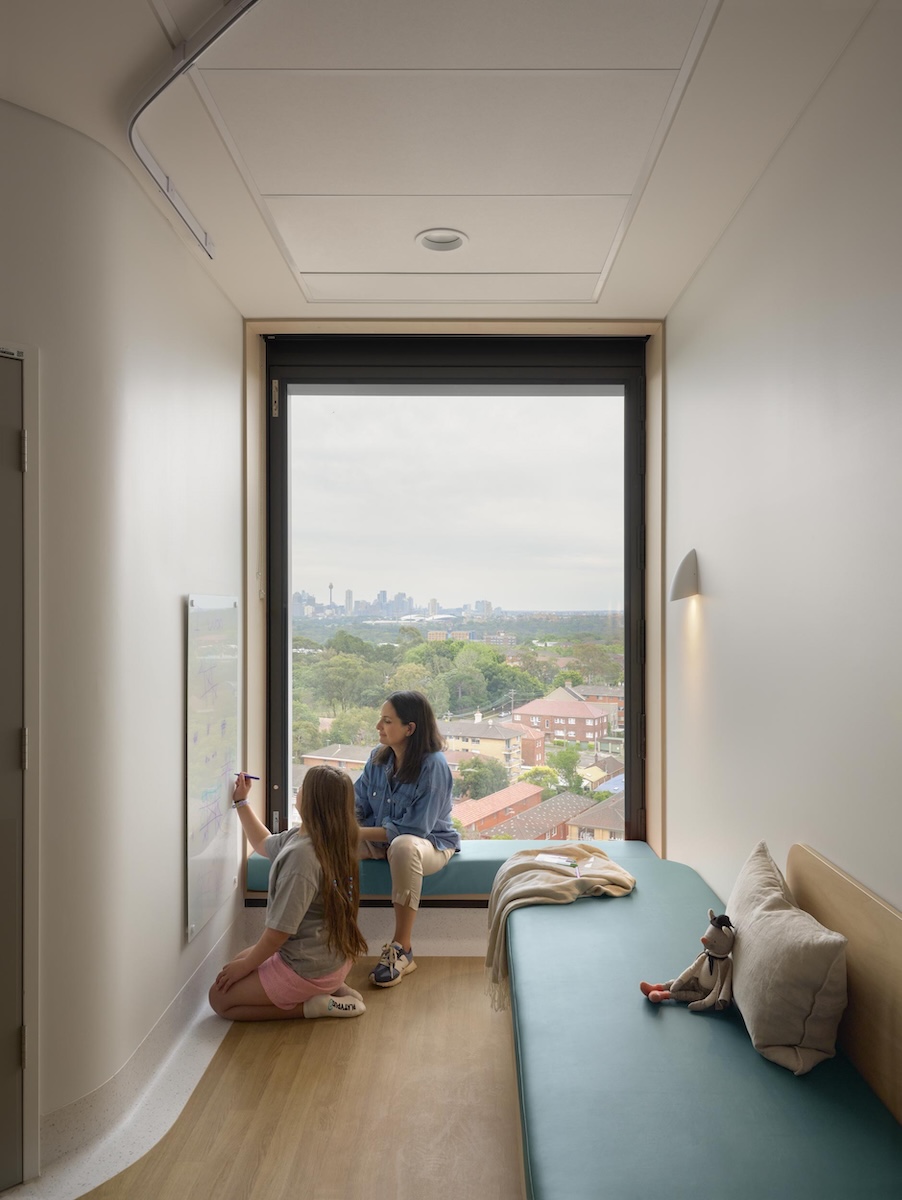
Key design innovations include single-occupancy patient rooms designed as ‘bedrooms not wards’ with desks and lounges in each room; multi-purpose family spaces with extended 24/7 access and a dedicated food delivery service window; interactive play areas and discovery zones that stimulate a child’s or young person’s imagination; biophilic design elements incorporating natural light and green spaces accessible from every ward and laboratory; and exposed research laboratories with glazed walls that demystify medical research for children and parents.
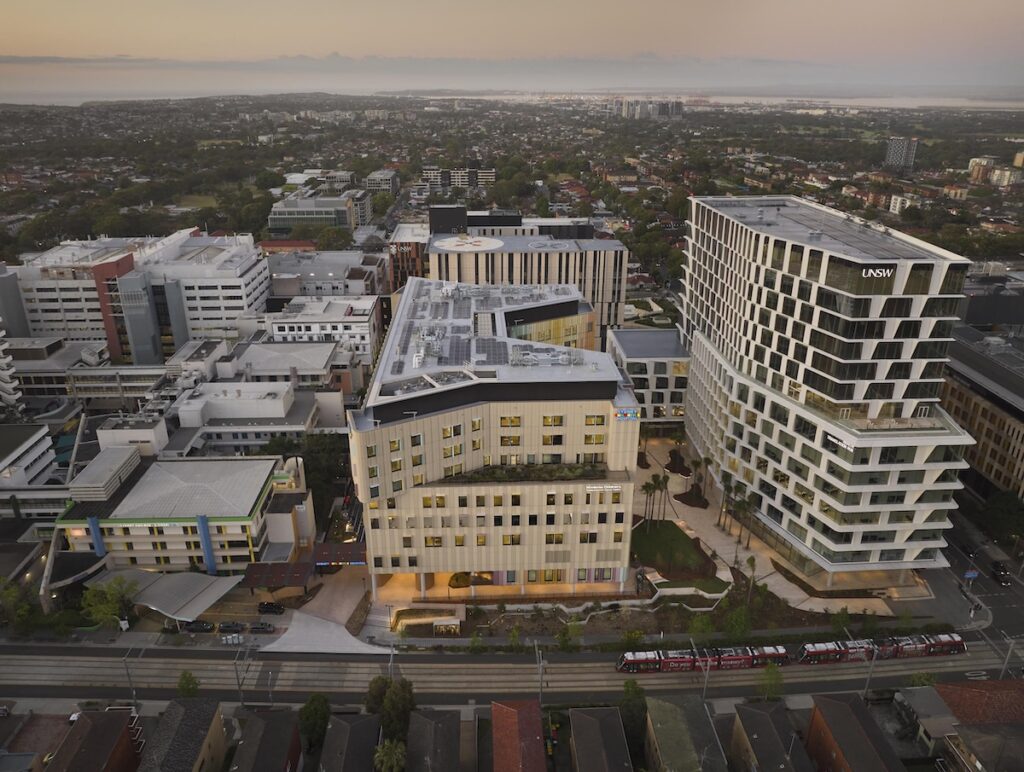
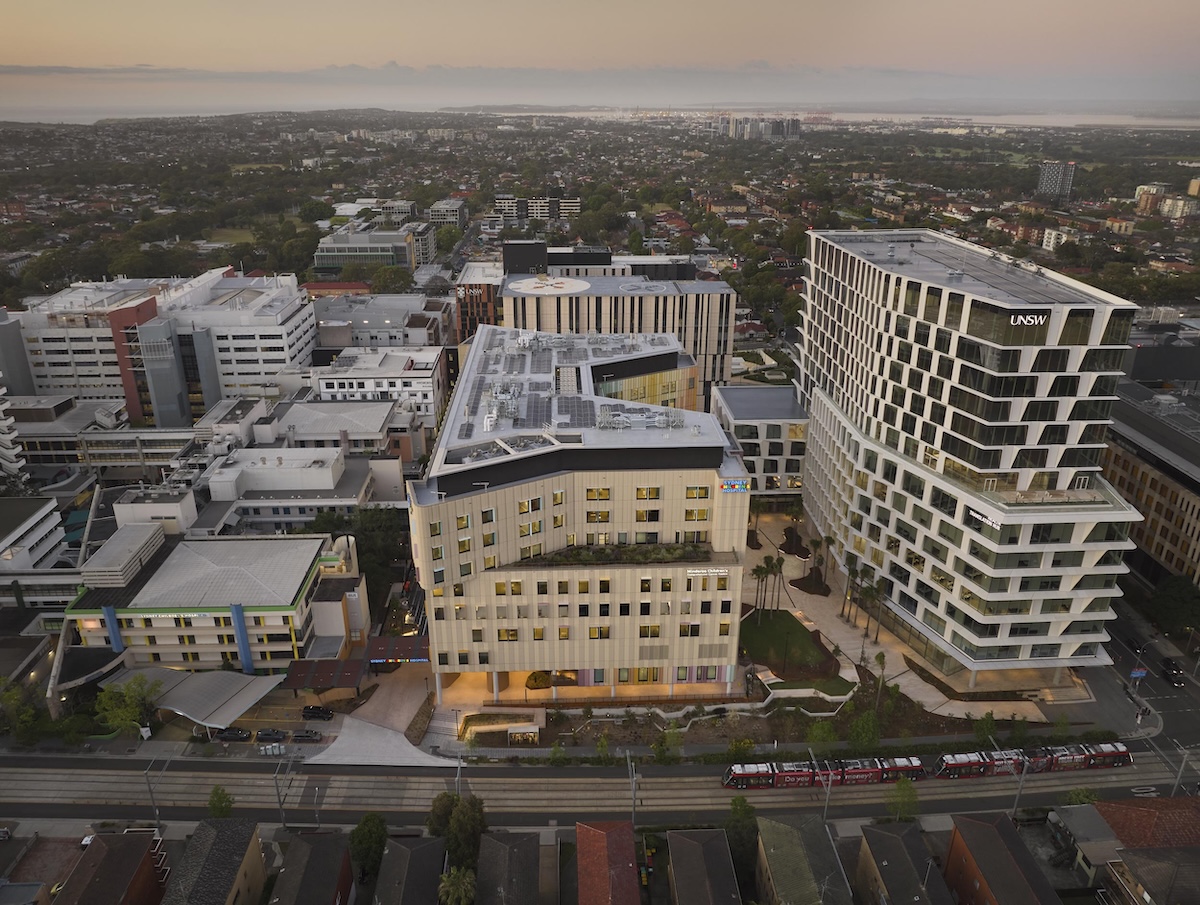
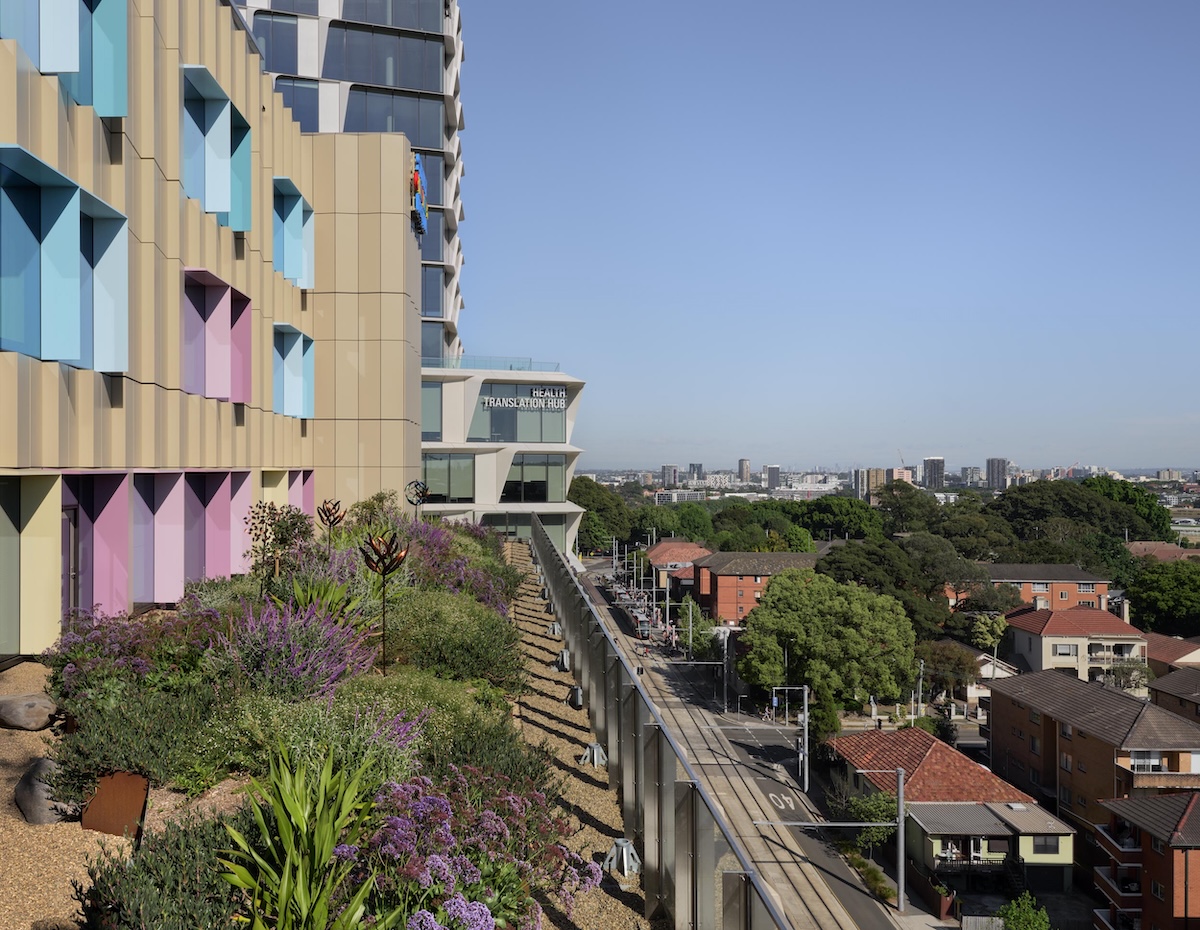
Located within the Randwick Health & Innovation Precinct, the facility connects seamlessly to Sydney’s light rail, creating an activated, pedestrian-friendly environment that extends the public domain through the building. A permeable ground plane with multiple entries ensures broader campus connectivity via multiple landscape spaces.
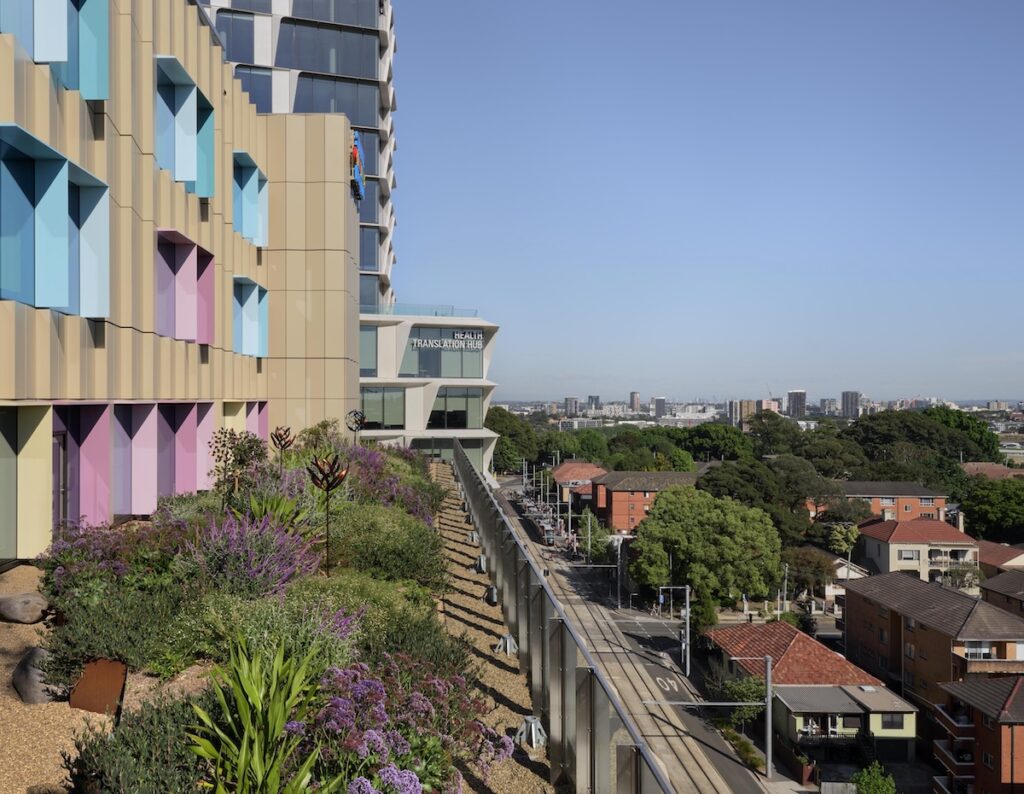
Within the precinct, a new public plaza between the children’s hospital and the adjacent UNSW Health Translation Hub offers landscaped places for people to engage actively and passively. These landscaped spaces, complemented by small food and beverage retail tenancies, provide opportunities for visitors and the general public to socialise and connect.
The new facility stitches into a ‘whole of campus’ approach, with bridge links providing above-ground access to the existing Prince of Wales Hospital Acute Services Building and the recently completed UNSW Health Translation Hub building.
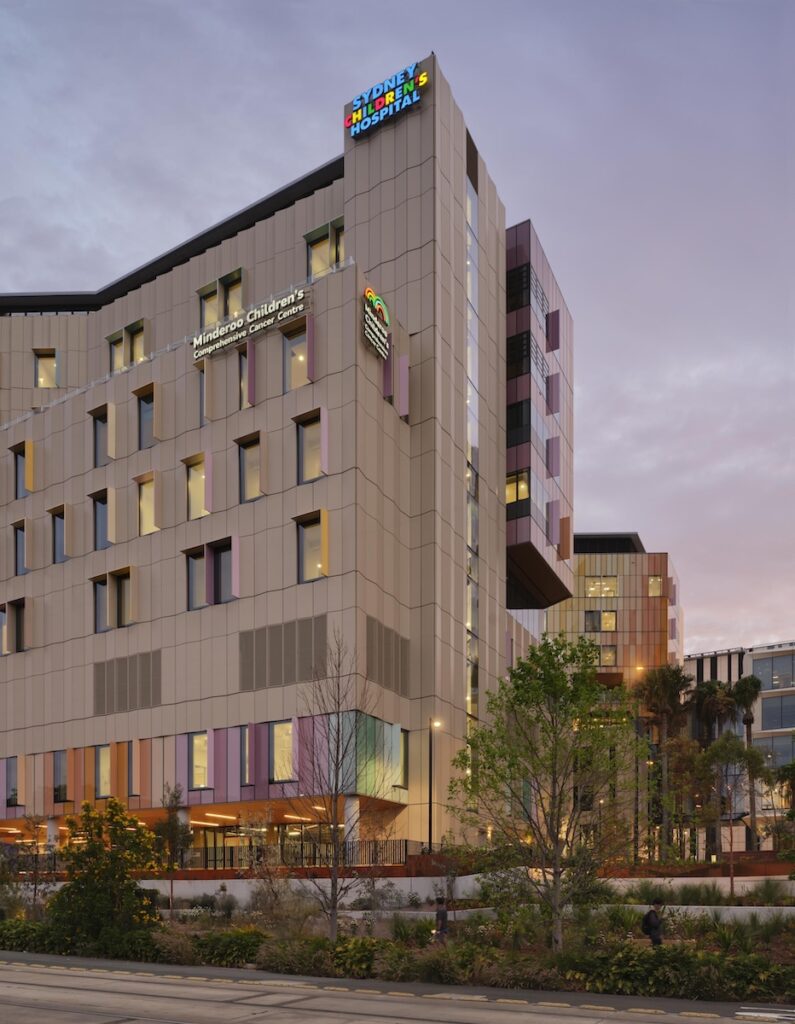
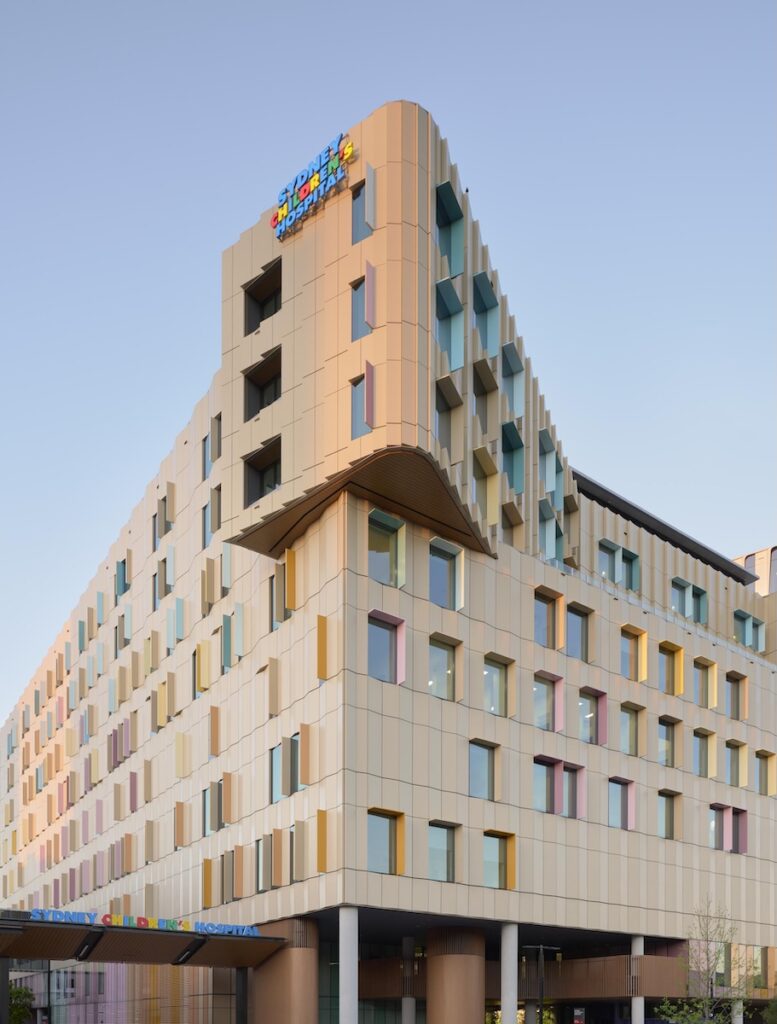
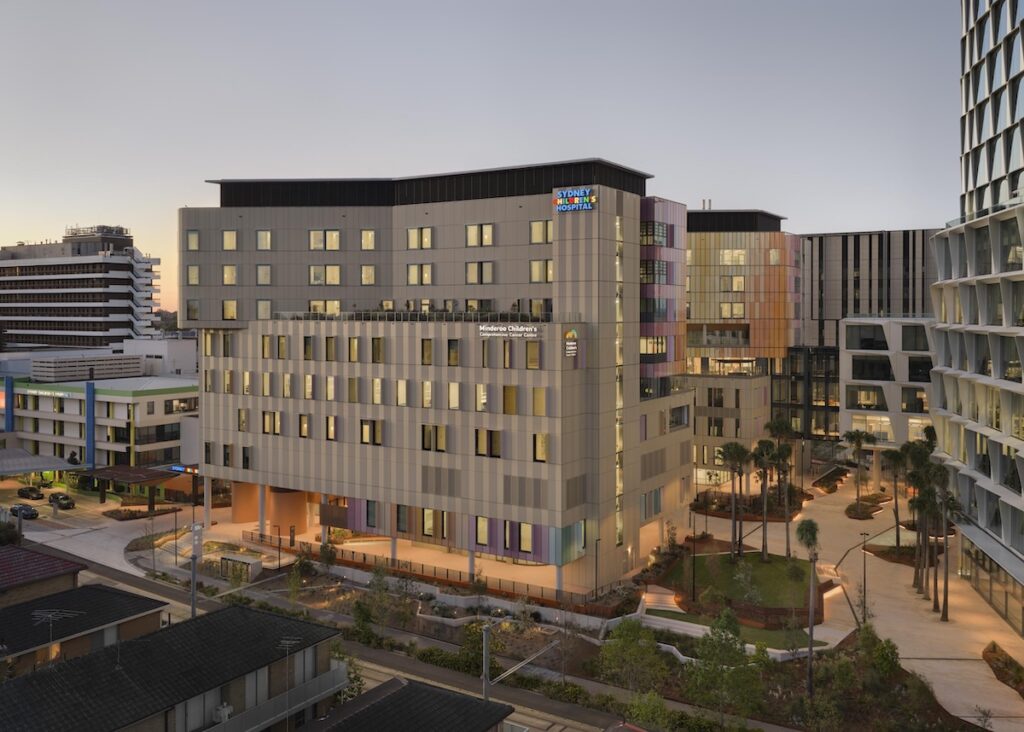
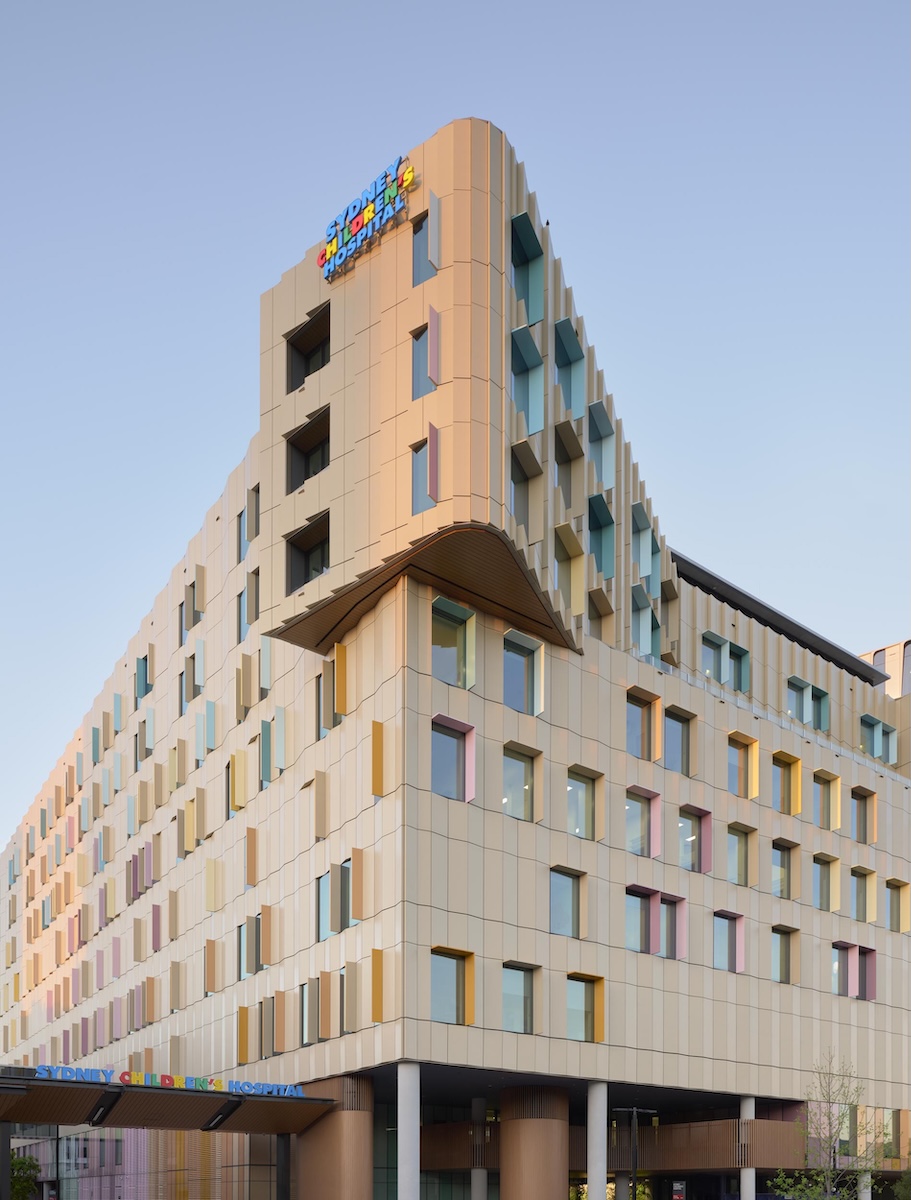
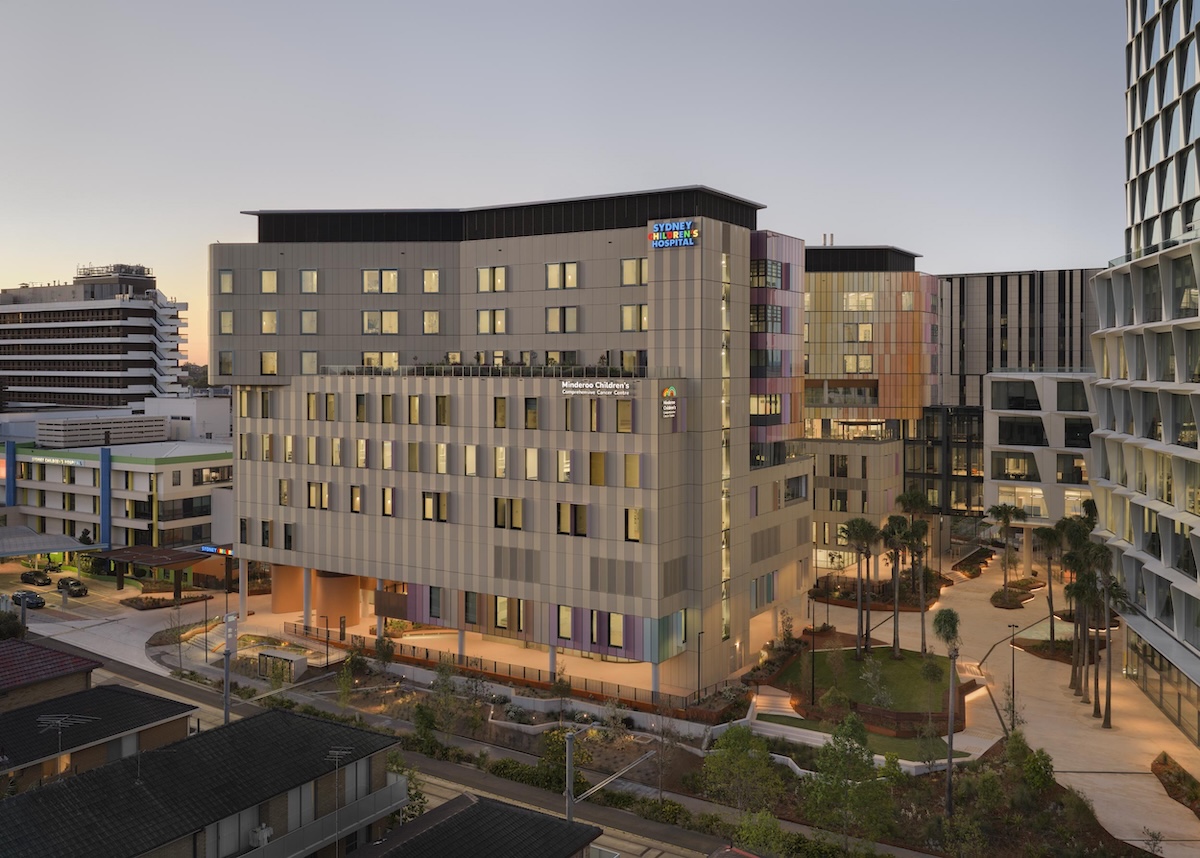
The hospital building, which reaches nine levels above ground, has been designed to respond deeply to Bidjigal Country. Its location near Sydney’s sea cliffs inspired the building form, material palette and façade composition, drawing on the colours, textures and shifting light of the surrounding landscape.
Brad Dorn, Design Lead at BLP, says that “through light, shadow, depth and pattern, the building design acknowledges the systems and cultural stories of the area,” and explains that, with community consultation, “the colours and materials were chosen for their resonance with Country, creating the uplifting, positive, coloured architectural response.”
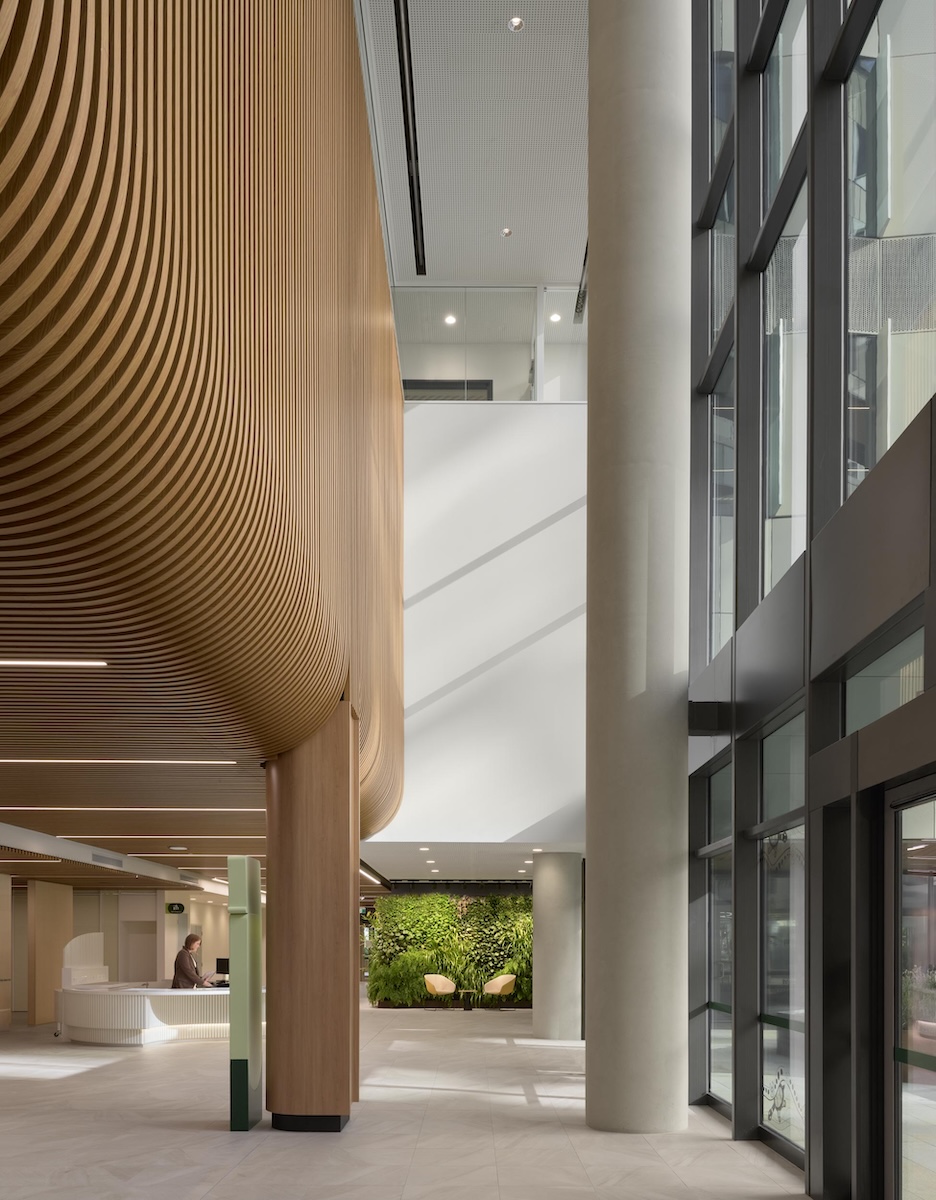
The building form is defined by two sculptural C-shaped floorplates wrapping around a central courtyard. These forms subtly shift and taper at upper levels, opening toward key view corridors while reducing overlooking from bedroom spaces. The primary High Street entry features a striking double-height volume – an intentional ‘erosion’ that draws visitors into the building’s central circulation spine.
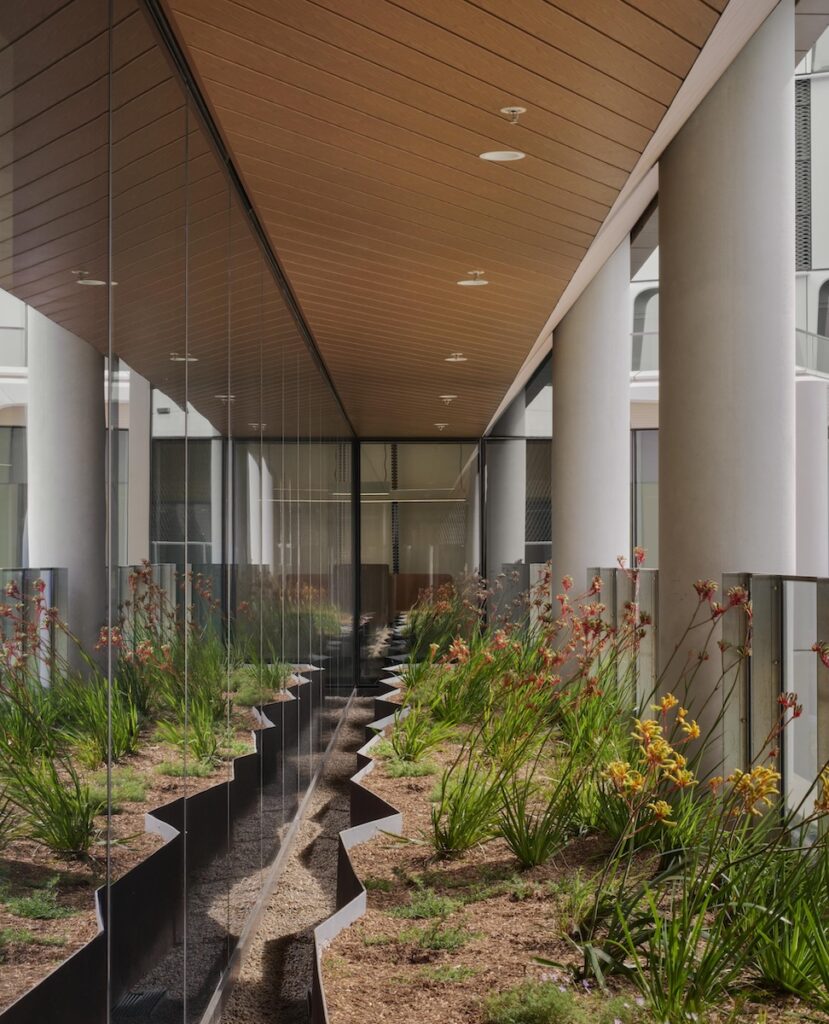
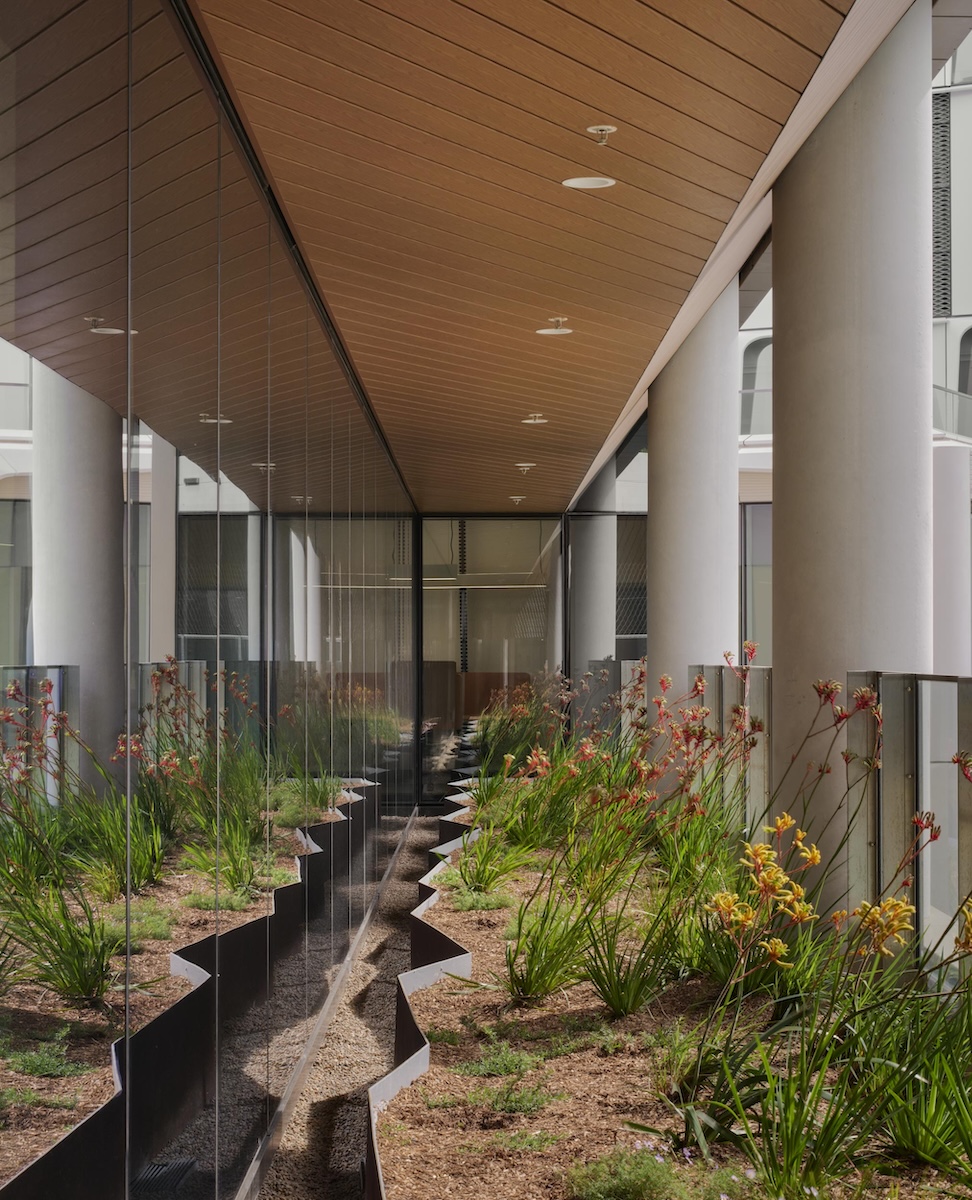
Centralised lift cores optimise circulation efficiency, while nearby balconies encourage passive engagement with the external environment, giving a sense of openness. The activated terrace spaces provide shared outdoor amenity including BBQ areas, pergolas, integrated seating and endemic plantings reflecting Sydney’s eastern suburbs native flora. These elements create functional spaces that foster social interaction and strengthen connection to place.
Landscaped terraces and balconies throughout emphasise the project’s biophilic goals, providing fresh air, local views and moments of respite in close proximity to patient rooms, laboratories and staff areas, delivering enhanced health and wellness benefits for all users.
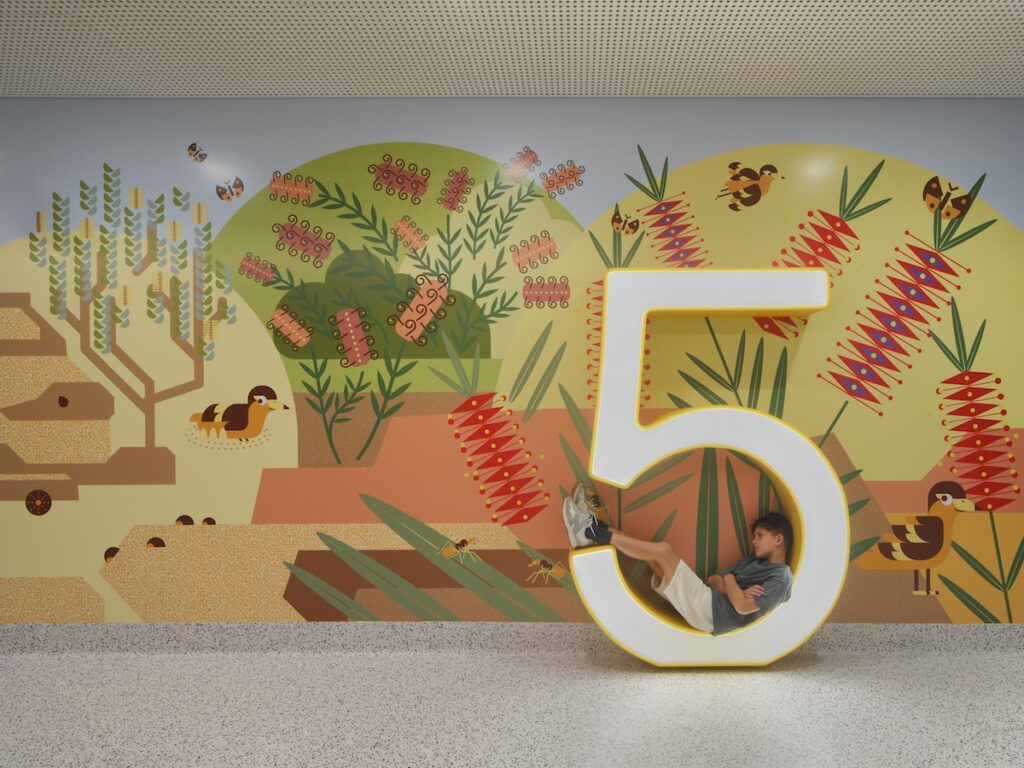
Working closely with Yerrabingin’s Wanggani Dhayar design process, the hospital design embeds authentic First Nations narratives across interiors and wayfinding. The curatorial theme of the project’s Arts, Play and Discovery Strategy, ‘Naya Ngurra’ (I am Country, Country is me), incorporates local ecology, language and cultural elements throughout.
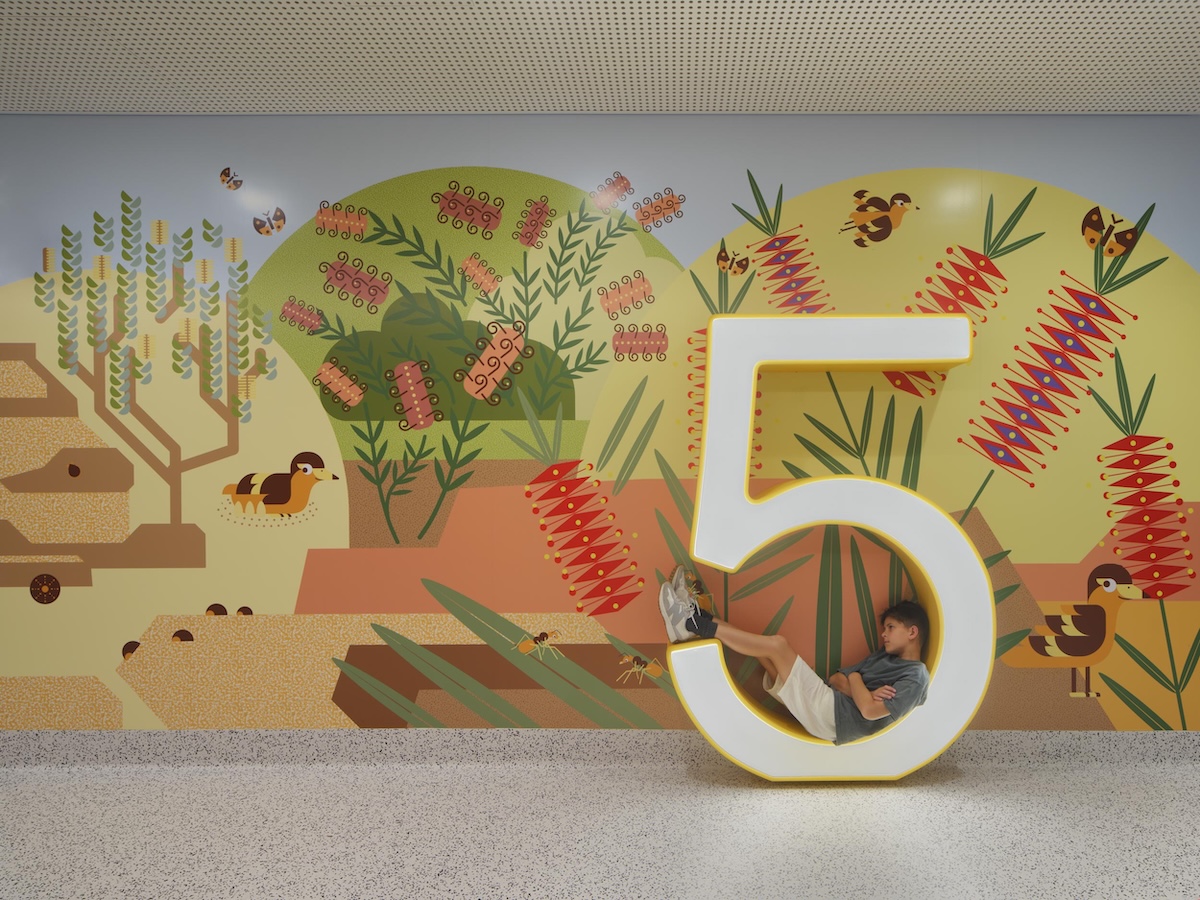
Interior design and wayfinding use colour, texture and envirographics inspired by Australian flora and fauna to support intuitive navigation and a sense of calm. These elements form part of a broader curatorial approach that provides moments of distraction, play and connection for paediatric patients.
The facility also includes dedicated Aboriginal and Torres Strait Islander gathering spaces, culturally responsive wayfinding in Dharawal language, and interactive features such as a multilingual Welcome to Country led by Bidjigal children. Artists have contributed works ranging from large-scale installations to digital interactives and soundscapes, creating inclusive experiences for children of all ages, abilities and cultural backgrounds.
Rebecca Yeo, Principal and Interior Design Lead at BLP, says that “designing a paediatric hospital is unlike designing any other healthcare facility – it demands a fundamentally different mindset.” Yeo notes that meaningful consultation with patients and their families has been central to shaping the approach, and that “for children, healing is closely tied to play, imagination and distraction. Our design reflects this understanding, addressing the distinct needs of patients from infancy through adolescence and supporting them at every stage of their care journey.”
The project embraces environmental and social sustainability through a comprehensive approach addressing UN Sustainable Development Goals. The facility’s ‘sustainability sandwich’ design strategically places laboratories between clinical floors, enabling the facility to triple its workforce while only doubling space requirements, using activity-based planning.
Environmental initiatives include modular laboratory systems, operational waste reduction strategies, a dedicated circular economy workshop for lab plastics recycling and 3D printing to minimise environmental impact.
Bettina Bartos, Principal and Science and Technology Lead at BLP, says that “the future of sustainable laboratories is about reducing energy consumption, but also designing spaces that adapt to changing research methods without requiring extensive renovation or replacement. It is an exciting time to see these developments for the future of our children’s health and their families.”
The Sydney Children’s Hospital and Minderoo Children’s Comprehensive Cancer Centre represents a transformative place of sanctuary, trust and playfulness, demonstrating that clinical excellence, integrated research and human-centred design are complementary aspects of truly effective healthcare addressing the full spectrum of clinical, emotional and social needs.
BLP has concurrently designed two tertiary paediatric hospital buildings in Greater Sydney – the new Sydney Children’s Hospital, Randwick building and The Children’s Hospital at Westmead Stage 2 Redevelopment – representing the largest investment in paediatric healthcare in NSW.
More information: blp.com.au/sydney-childrens-hospital-randwick
More green updates