
Enter the ‘Anti-Home’: Hassell’s New Worklab Champions ‘Sustainable Brutalism’
Wurundjeri Country MELBOURNE, AUSTRALIA — Studio 55, the new Melbourne workplace for international design firm Hassell, is designed as a living laboratory for regenerative design.
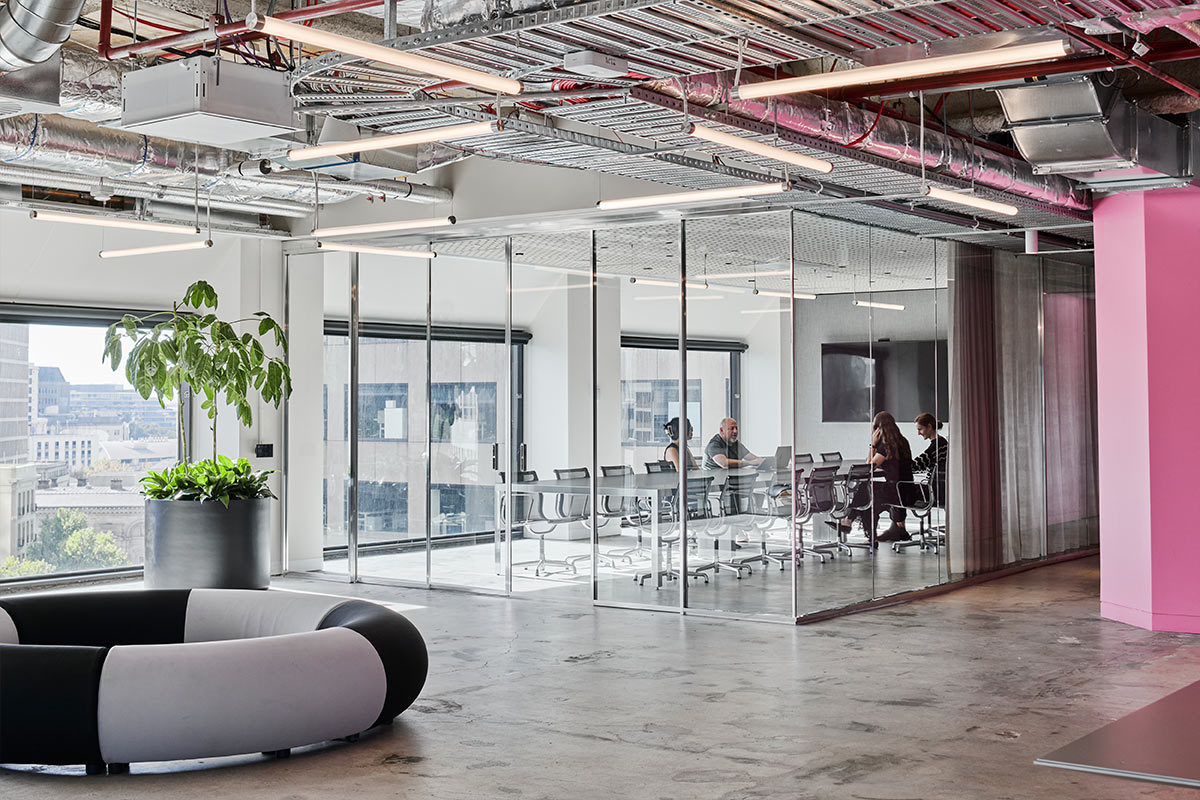
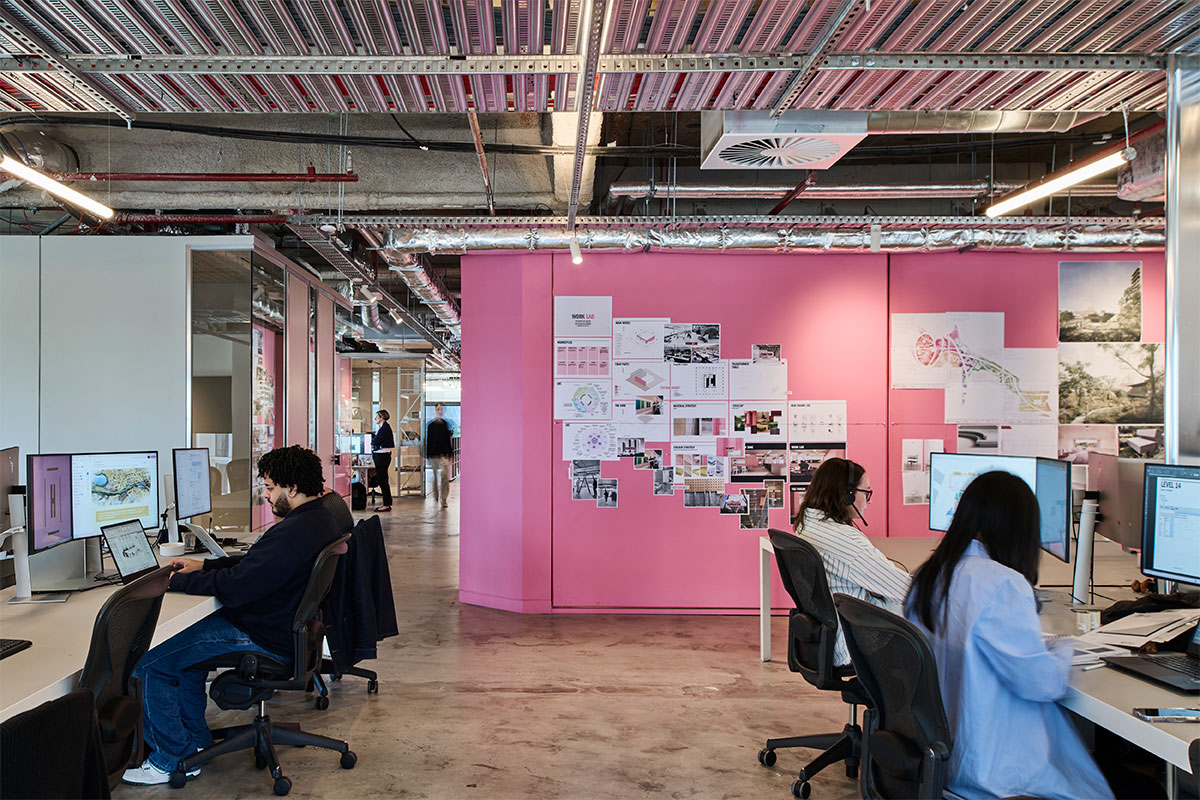
Located within I. M. Pei’s landmark 55 Collins Street, the office is conceived as a ‘worklab’ — a live, ongoing experiment in how workplace design can push past net-zero.
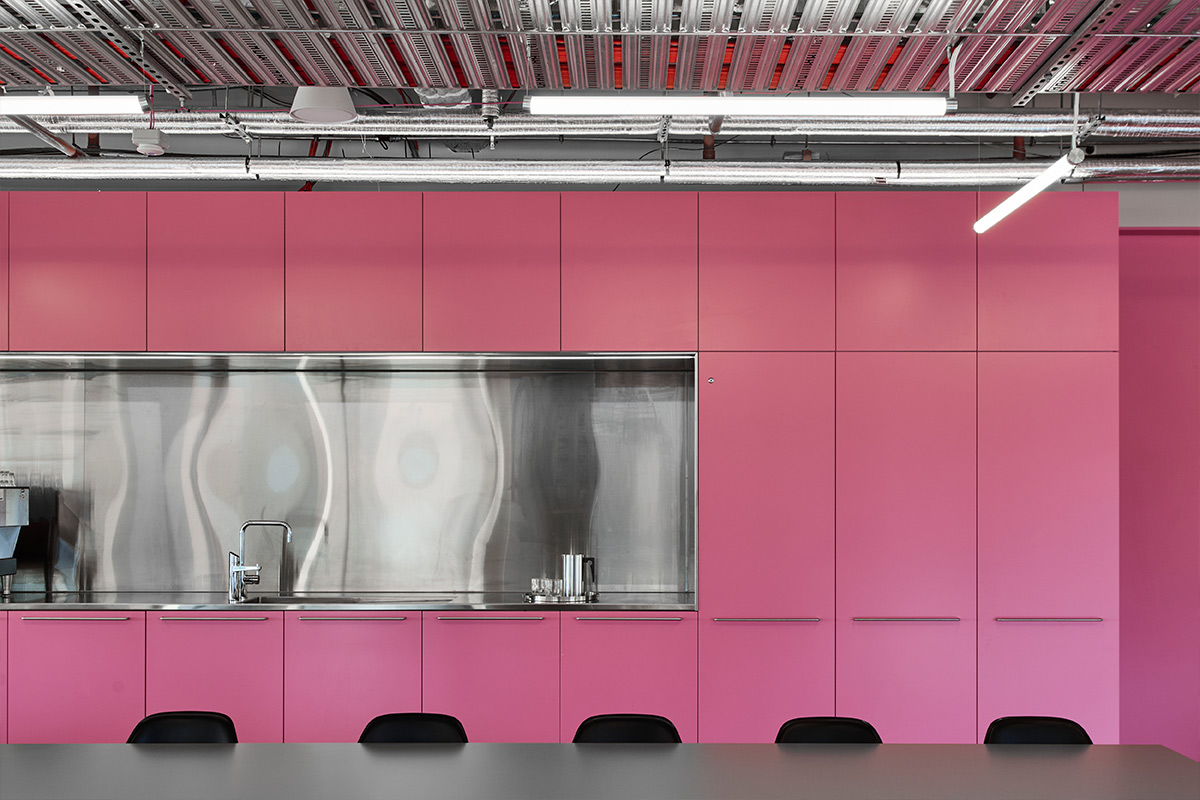
The studio challenges traditional corporate conventions through a ‘design with less’ philosophy that the firm has dubbed ‘sustainable brutalism’: an unexpected, distinctive, and environmentally responsible design language.
The project forms part of Hassell’s journey toward Living Building Challenge (LBC) certification, recognised as the world’s most rigorous sustainability standard, set by the International Living Future Institute. While conventional net-zero design aims simply to do no harm, Studio 55 is engineered to act as a truly regenerative space that gives back more to the environment than it takes.
Designing the ‘anti-home’ workplace
While the modern office has spent years trying to mimic the living room, Hassell’s Melbourne workplace takes a radically different stance. Enter the age of the ‘anti-home.’
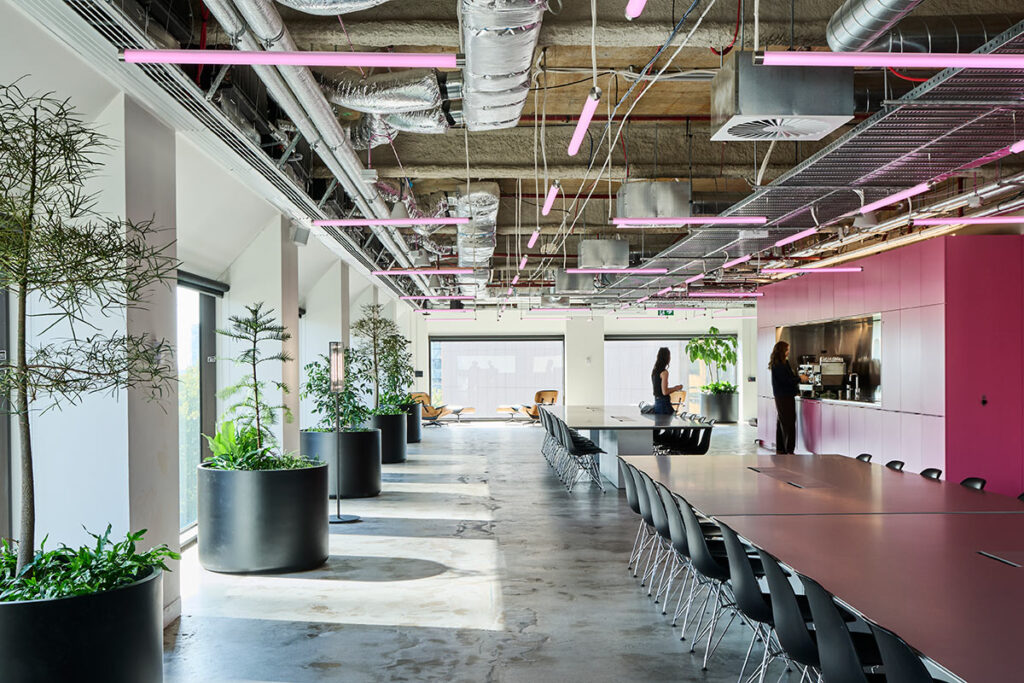
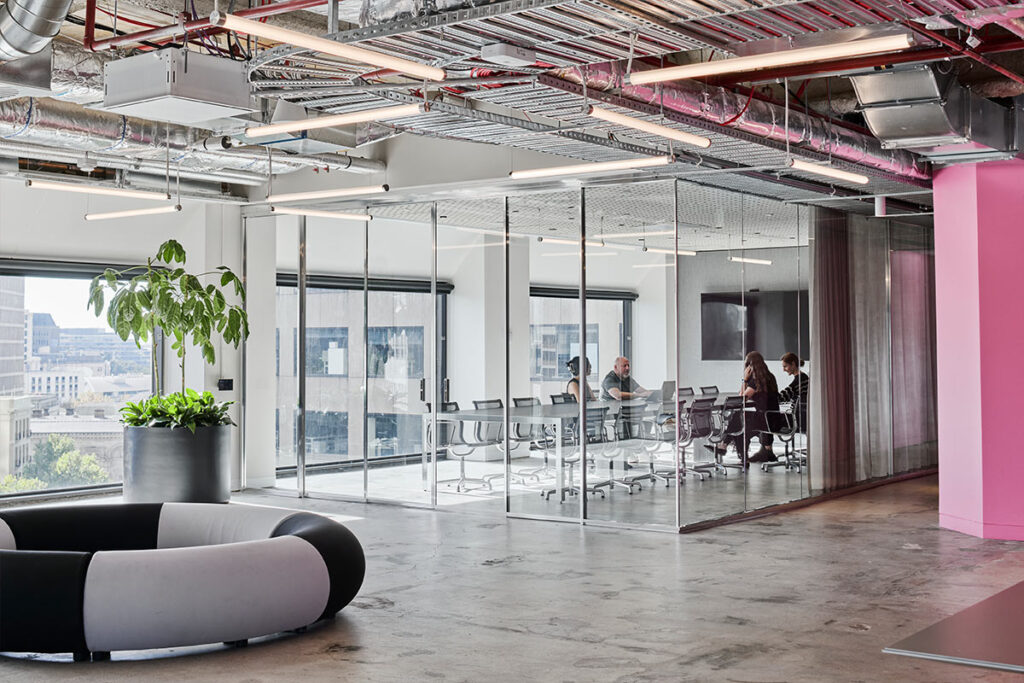
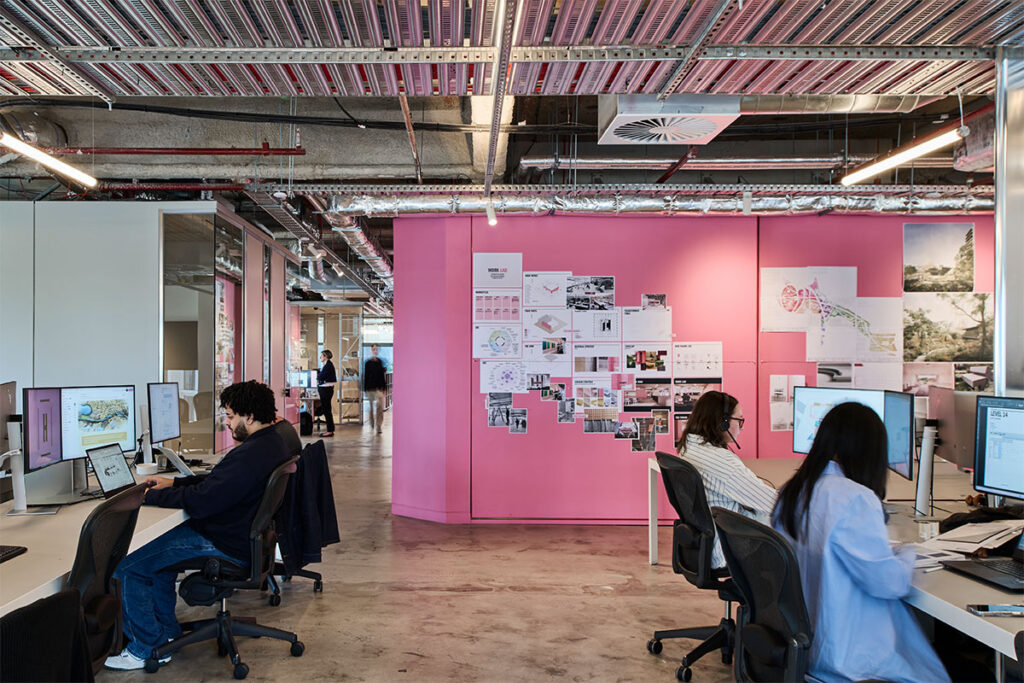
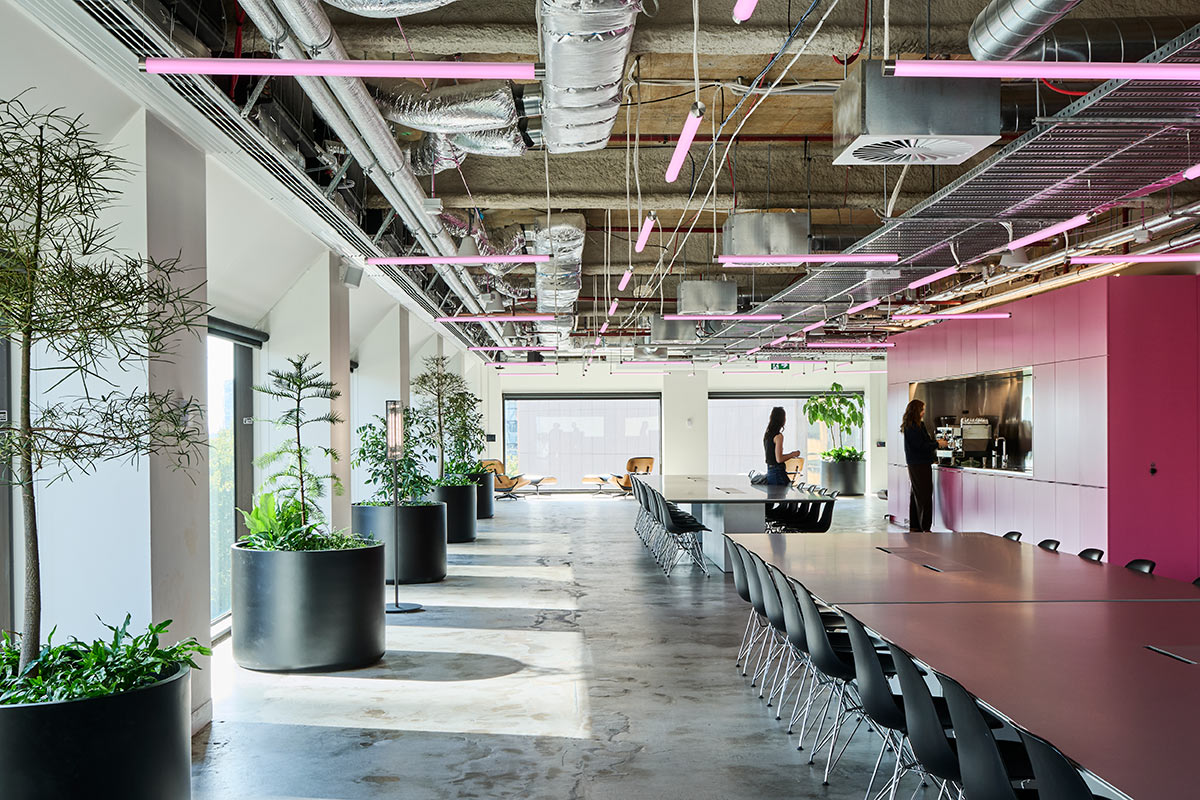
An intentional pivot away from the quiet, slipper-clad isolation of the home office, this space thrives on the creative energy of teamwork. It features highly adaptable elements — such as custom forum tables that transform into pin-up walls — that shift the space seamlessly from collaborative workshop to bar-like event mode.
Backed by a flexible attendance policy, the studio acts as a natural magnet, proving that the workplace shouldn’t compete with the home but offer exactly what the home lacks: a vibrant hub for social connection and rapid knowledge exchange.
Hassell Principal and Chair, Rob Backhouse, says Studio 55 is a working proof point for Hassell’s own design philosophy.
“We wanted a space that tests our own design thinking in real time. Every decision we made had to earn its place — what we kept, what we reused, what we left exposed. This rigorous approach, which we’ve dubbed ‘sustainable brutalism,’ transformed potential constraints into a creative challenge. By experimenting on our own workspace, we’ve proven this is a highly viable, resource-conscious strategy that we can apply to our clients’ projects at Hassell.”
The power of ‘sustainable brutalism’
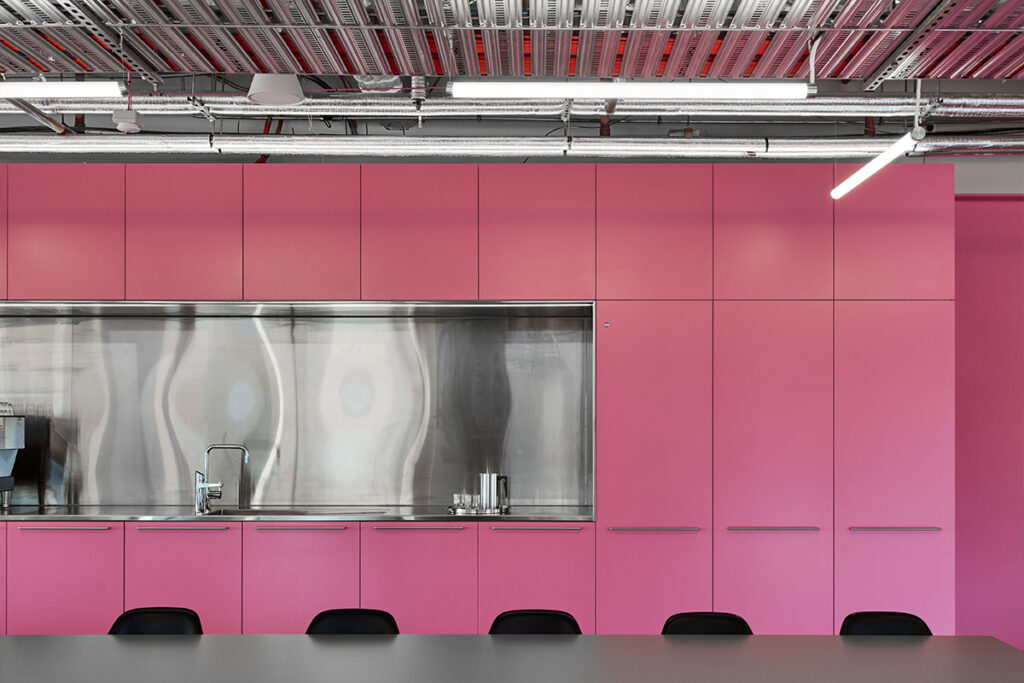
Stripped back and rigorously planned in collaboration with MPA Construction Group and Arup – who provided engineering services and consulting advice on the LBC – the studio reuses joinery, workstations, furniture and lighting salvaged from Hassell’s former Little Collins Street office. Every material was tracked from origin to installation, with full ingredient lists, emissions testing and chain-of-custody documentation — and every subcontractor completed dedicated LBC training to meet the brief.
Here’s how the results stack up:
• 41% reduction in embodied carbon compared to a conventional workplace fit out
• 98% of construction and fit-out waste diverted from landfill
• Over 90 bespoke light fittings by local designer Edward Linacre using recycled aluminium and hand-blown glass
• Recycled materials used throughout — new walls and ceilings made from recycled cartons, cups and soft plastics, with acoustic insulation from recycled PET
Hassell’s Head of Sustainability, Samantha Peart says regenerative design is a methodology that changes the quality of decisions from the beginning.
“Studio 55 is us pushing and stretching our own regenerative design values. It shows that many of the things our industry dismisses as ‘too hard’ are entirely achievable when systems thinking is embedded from the outset, and that using your purpose as a design driver can create real functional, commercial and cultural value.”
To offset its footprint, Hassell has partnered with Wilderlands and Cassinia Environmental to permanently protect roughly 4,000 sqm of high-biodiversity land in Alleena, New South Wales, secured in perpetuity through a Biodiversity Conservation Trust covenant.
Inside, a living planting strategy developed with Melbourne business Flora’s Daughter pairs established indoor species with Australian natives more commonly found outdoors — including the Wollemi Pine. The plants are monitored fortnightly as a working test of how resilient species adapt indoors.
For mire information go to Hassell Studios
More green updates