Shapeshifter
In Melbourne’s inner-north, a family home reinvents itself, opening up not just its footprint, but many possible future permutations.
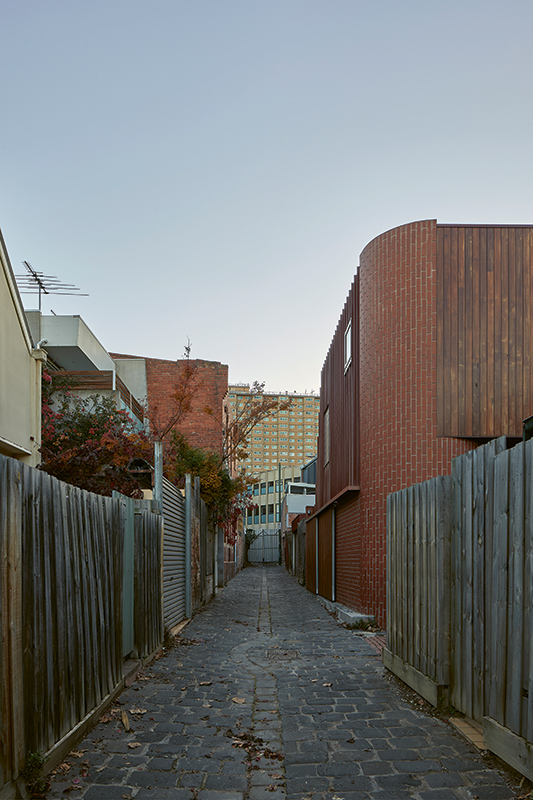
Wedged behind a Victorian terrace on a corner of two quiet bluestone laneways in Carlton, Laneway House occupies what was once a backyard pocket. To find it, you have to navigate a sequence of narrow back streets that feel like a remnant of Melbourne forgotten by most.
MRTN Architects principal Antony Martin describes the surrounding laneways as time capsules, layered with a bricolage of additions spanning every decade since the early 1970s, each with their own idiosyncratic materials and logic. As he points out, it’s the neighbourhood in Melbourne that has experienced the oldest continuous waves of gentrification. And it is this rich, slightly hodgepodge context that shapes everything about the project.
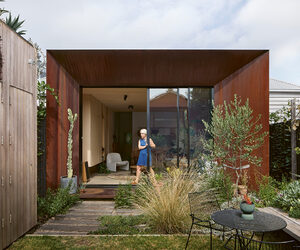
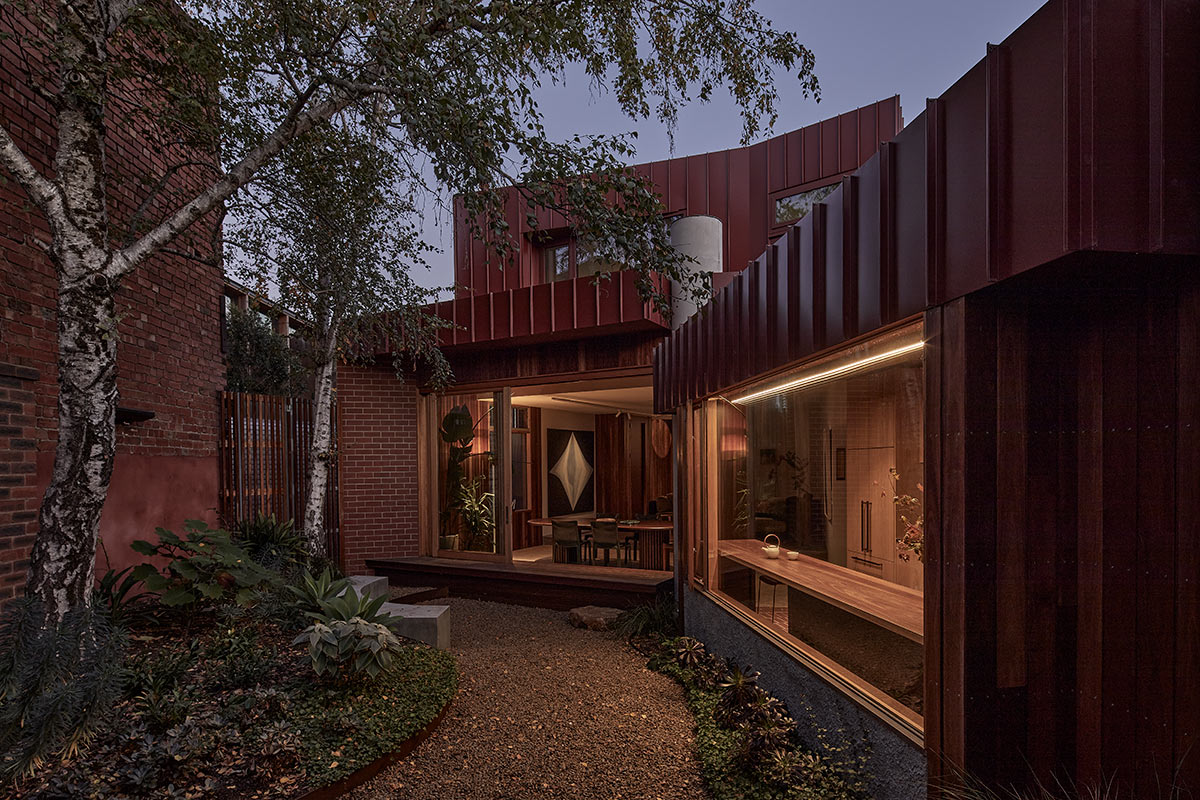
The clients came to MRTN with a straightforward request – more living space and a new parents’ retreat. The obvious answer would have been to extend the existing terrace into the south-facing backyard and add a garage to the laneway. However, this is not the one MRTN Architects gave them. Instead, the team proposed flipping the entire plan of the site. The design situates a new, self-contained two-storey volume all the way to the back of the block, abutting the laneway and leaving a green zone in between.
The move gives the new living spaces a north-facing orientation, captures light into a garden courtyard and creates a second, independent entry accessed directly from the lane. But most meaningfully, it enables the home to evolve with the family living inside it.
“When the clients came to me, they had two teenage boys at home,” Antony explains, adding, “I was in the same situation – my boys were at high school too. We were both realising that kids that age want greater independence, but they still need you nearby. And then thinking beyond that, there’s also the reality of housing affordability.”
The plan itself is an act of inventive problem solving. With a heritage overlay on the site and a tight footprint, the addition is governed in part by an unexpected constraint – the turning circle required for a car to access the garage. The arc of that movement sweeps through the ground floor, giving the plan its distinctive angled geometry.
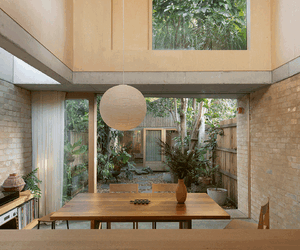
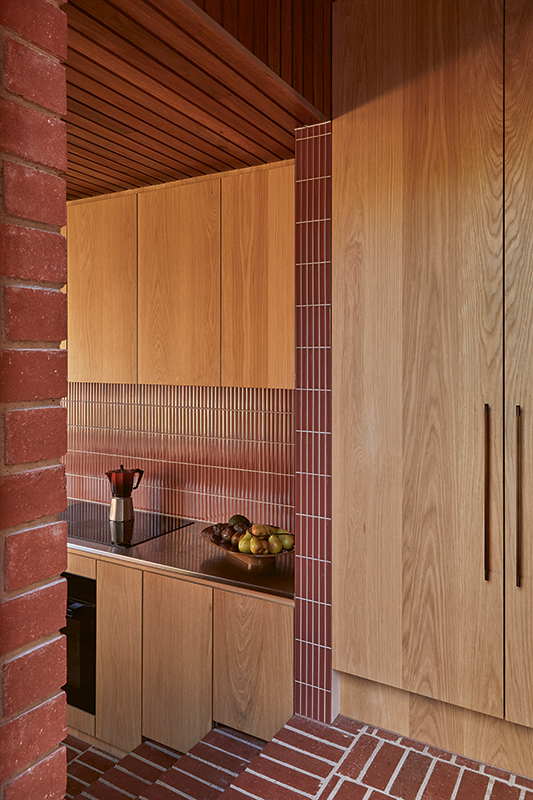
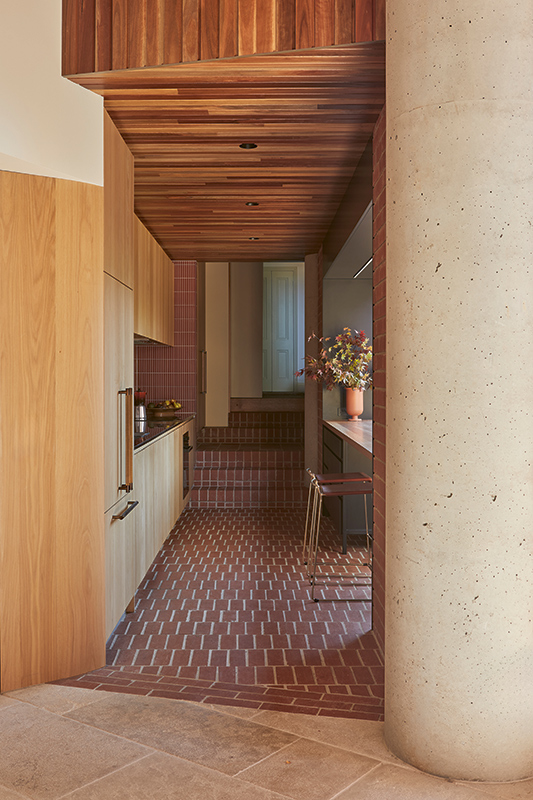
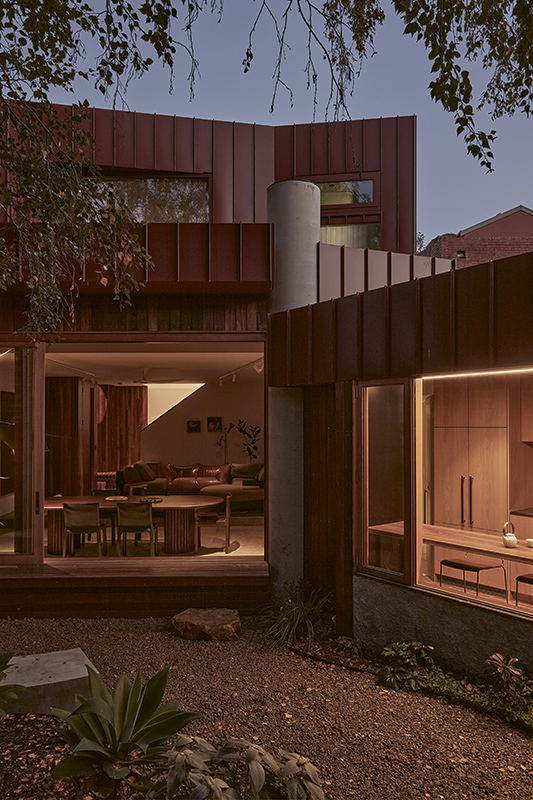
The solution to connecting old and new is similarly deft. The existing terrace required only one modification, a windowsill extended down to become a door. From there, the circulation space between the two volumes doubles as the kitchen: a galley-style run with brick floors, timber joinery and storage, and a sit-up counter overlooking the garden. It is, Antony acknowledges, a conceptual leap. “It was important that it feels like a kitchen rather than a corridor,” he says.
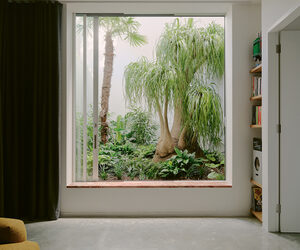
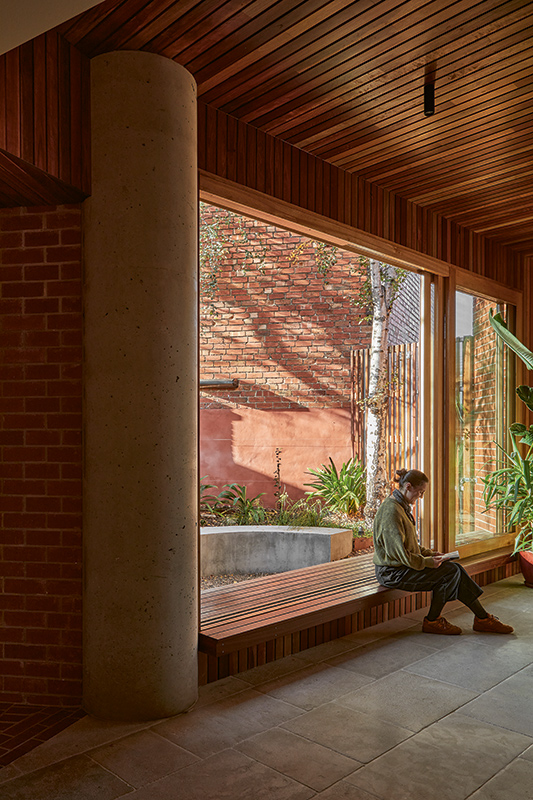
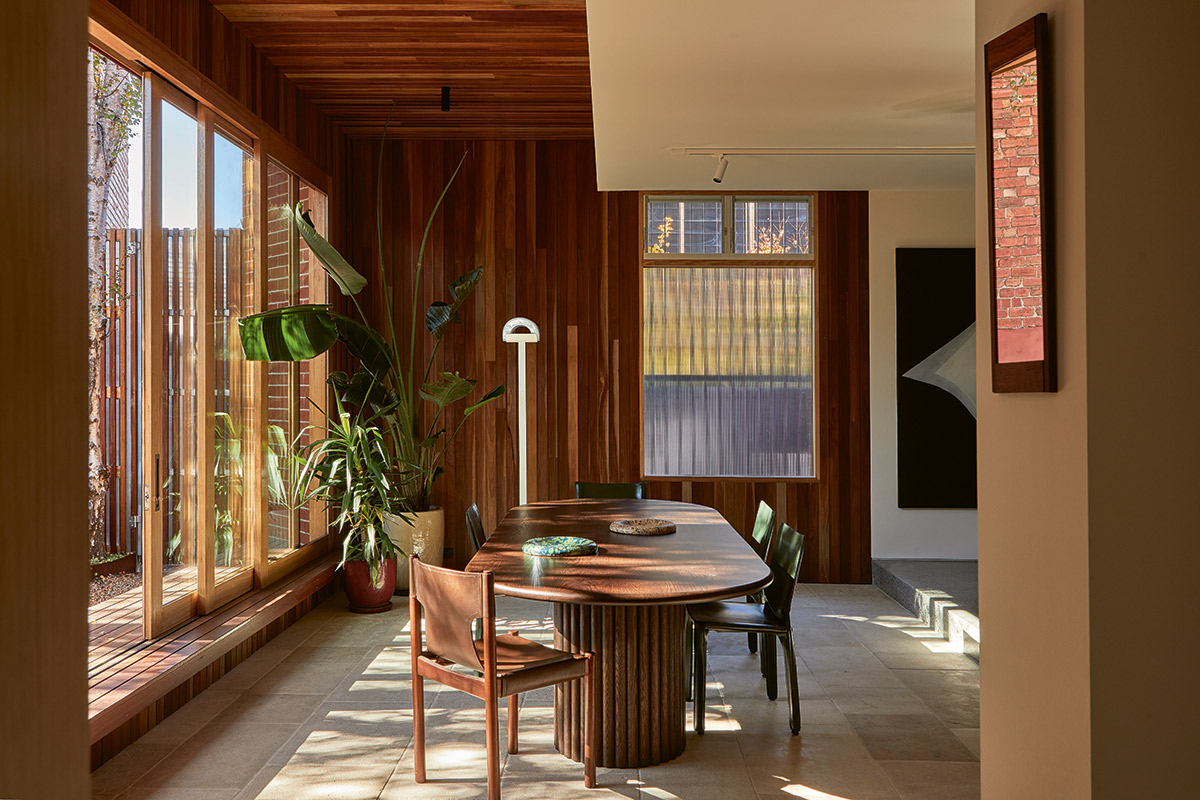
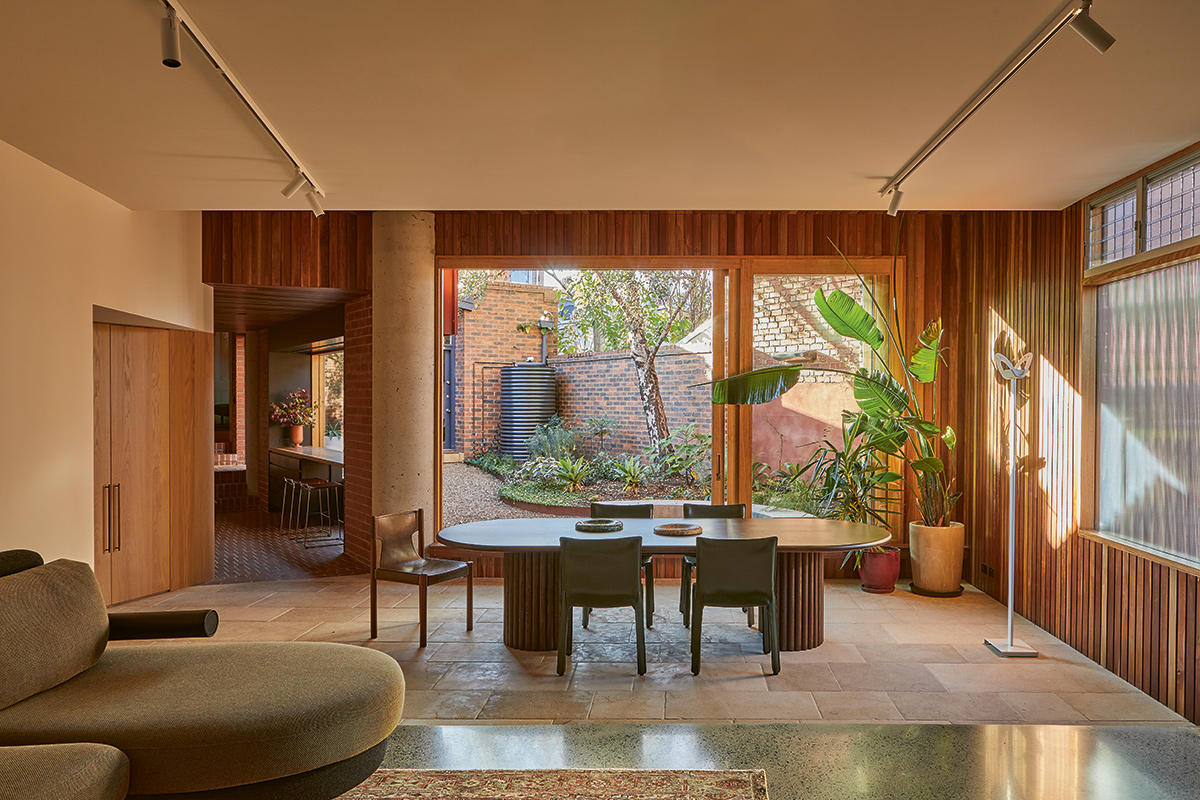
Where the plan bends around its corners, large concrete columns mark the pivot points, acting as hinging moments rather than awkward cranked walls. The threshold between inside and garden is handled with a deep window seat. This intervention offers a place to sit and read, to perch when friends come over, and it frames the garden view.
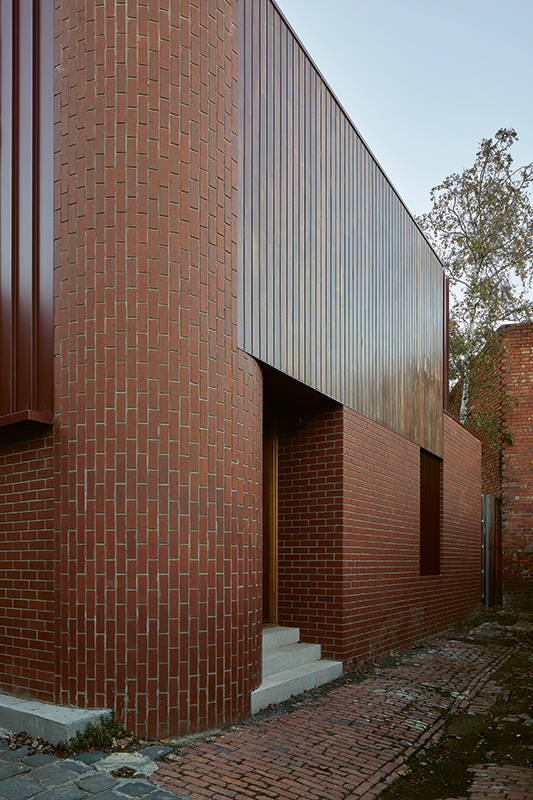
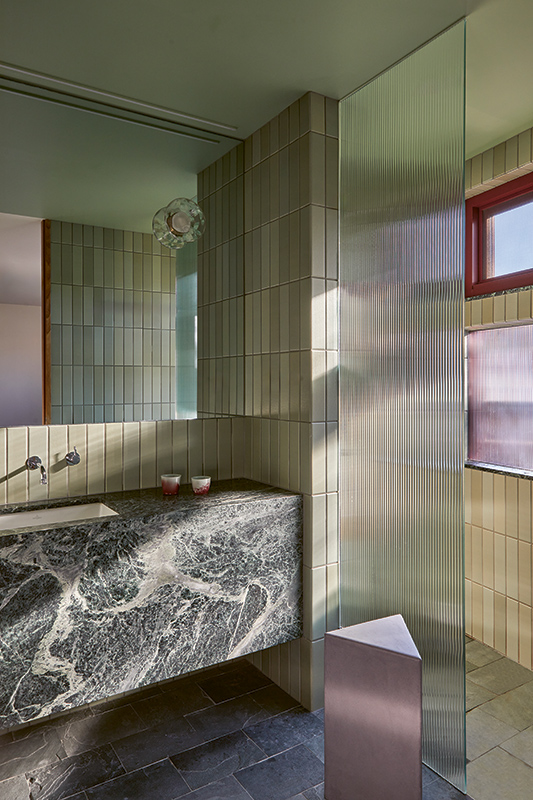
The material palette captures the layered references that surround it. An extensive photographic survey of the surrounding laneways informed an assemblage of brick, timber, metal cladding and glass block. A classic red brick closely matches the original masonry of the area, including the old stable wall of a neighbouring building that forms a prominent view within the courtyard. The curved turret at the corner of the two laneways – topped with a skylight that pulls natural light down through a glass circle on the first floor to the entry landing below – references the rounded corners common throughout the area. For the entrance to the new addition in the laneway, sweeping curves of brick and timber detailing create an added statement.
The addition is fully electric, with PV panels on the roof and an EV charging point in the garage. Passive design principles do much of the heavy lifting, with new north-facing living spaces dramatically changing how the whole home performs through the seasons. But the most significant environmental consideration, Antony notes, is structural. “The most important sustainability aspect is just the flexibility of living and ageing in place,” he says. A house that adapts to the people inside it, rather than requiring them to move on when circumstances shift, is a house that endures.
Right now, though, the home is being inhabited exactly as Antony sketched it out years before – the parents in their new retreat, the sons with their own zone at the front, and just enough distance and proximity between everyone.
Specs